BUSINESS
Davos 2026: World Economic Forum Annual Meeting Begins in Switzerland
- Newsyaar
- January 20, 2026
- 3:09 pm

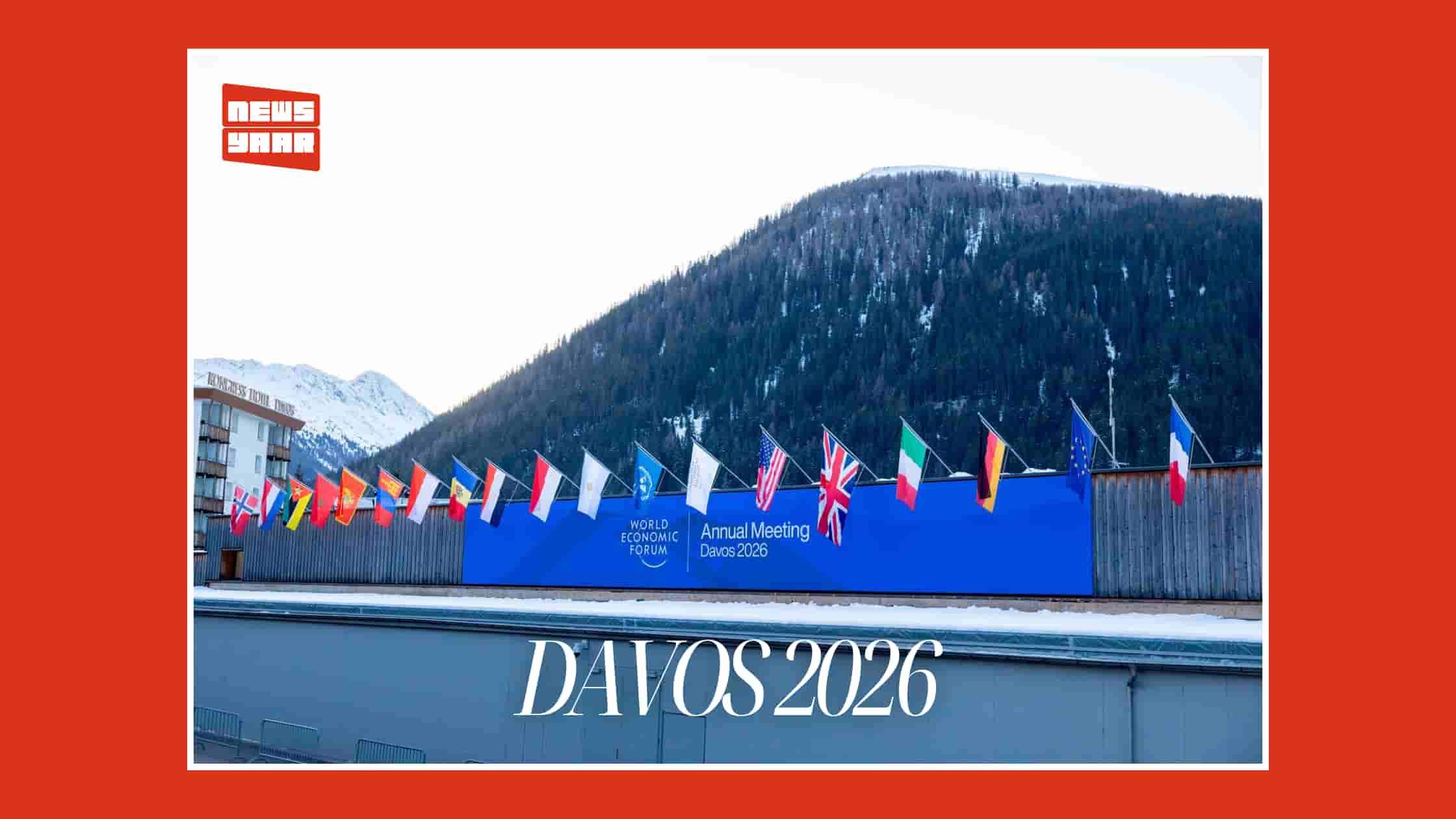
The 56th Annual Meeting of the World Economic Forum (WEF) — widely known as Davos 2026 — is underway in the Alpine resort town of Davos-Klosters, Switzerland, bringing together a wide spectrum of global leaders from government, business, civil society, academia and civil organisations. The Annual Meeting is the flagship event of the Forum and serves as a strategic platform for dialogue and collaboration on pressing global issues. The summit is scheduled to take place from 19 January to 23 January 2026.
Venue, Dates and Participation
- Event: World Economic Forum Annual Meeting 2026
- Location: Davos-Klosters, Switzerland
- Dates: 19–23 January 2026
- Expected Participants: Around 3,000 leaders from over 130 countries, including heads of state and government, global CEOs, chief policymakers, experts and representatives from civil society and academia.
This year’s edition of Davos is notable for its scale and diversity of participation. Organisers expect around 400 top political leaders, including approximately 65 heads of state and government, nearly 850 chief executives and chairs, and close to 100 leading unicorn founders and technology innovators attending sessions across multiple themes.
Theme and Agenda: ‘A Spirit of Dialogue’
The overarching theme for Davos 2026 is “A Spirit of Dialogue”, reflecting the Forum’s emphasis on multilateral communication, cooperation and trust building among diverse global stakeholders. The theme underscores the need for open discussion at a time of heightened geopolitical fragmentation, technological disruption and economic uncertainty.
Under this theme, sessions are structured to address a set of interconnected global priorities, including:
- Cooperation in a more contested world
- Unlocking new sources of inclusive growth
- Investing in people and workforce transformation
- Deploying innovation at scale and responsibly
- Building prosperity within planetary boundaries
These priorities reflect both current and long-term global challenges spanning geopolitics, economies, technology, health and sustainability.
Key Sessions and Public Engagement
While most sessions at Davos are invitation-only, a subset of discussions is available to the public through Open Forum Davos 2026, which runs from 19 to 22 January 2026 under the sub-theme “Visions of 2050: Tomorrow Starts Now”. These sessions encompass topics such as the future of space exploration, quantum science, food systems, medicine, and climate-affected mountain regions. Most of these sessions are livestreamed for global audiences.
The Annual Meeting also features a robust media and analyst presence, with over 400 journalists and reporters on site to cover proceedings, announcements, panel discussions and bilateral talks.
Who’s Attending and What’s on the Radar
Davos has attracted an unusually wide spectrum of influential attendees in 2026. Among expected speakers and delegates are top political leaders from major economies, including leaders from the United States, Europe and emerging markets, as well as CEOs from global corporations. According to reports, former U.S. President Donald Trump is attending and leading the largest-ever U.S. delegation to the forum, reflecting the political significance of this year’s agenda.
In addition to geopolitical representation, major industry figures — particularly from technology, finance and energy sectors — are participating in discussions on the future of AI, finance, sustainability and industrial transformation. Corporate engagement also includes private sector panels, roundtables and multi-stakeholder dialogues.
Key Issues and Global Context
Davos 2026 comes at a time of complex global challenges. A range of issues are dominating discussions:
- Economic Uncertainty: With slowing global growth, rising tariff pressures and evolving trade dynamics, economic cooperation and stability remain top priorities for policymakers and business leaders.
- Technology and Innovation: Debates on how to harness artificial intelligence, digital transformation and frontier technologies responsibly and for broad societal benefit are central, especially given the potential impacts on jobs, productivity and equity.
- Climate and Sustainability: Environmental priorities, including climate risk management, carbon pricing, clean energy transitions and resilient infrastructure, feature prominently in agenda sessions.
- Global Health Preparedness: World Economic Forum discussions include calls for improved pandemic readiness and global health system resilience, reflecting lessons learned in recent years about outbreak risks.
- Geopolitical Dynamics: Davos serves as a forum for dialogue on geopolitical tensions, security concerns and cooperation frameworks that influence international stability and economic integration.
Format and Structure
The Annual Meeting employs a mix of session formats including keynote addresses, panel discussions, private roundtables, bilateral meetings, press briefings, and networking forums. Participants can engage in both structured agenda sessions and more informal exchanges in designated WEF venues across Davos-Klosters. There are also numerous country-centric and sector-centric meetings that take place on the sidelines of the main agenda, facilitating high-level public-private partnerships.
How to Follow
While much of the Davos experience is invitation-only, the WEF provides livestreaming of key sessions, official summaries, press briefings and digital content accessible through its official website and social media channels using hashtags such as #WEF26. This helps global audiences stay informed about insights and commitments emerging from the meeting.
The World Economic Forum Annual Meeting 2026 in Davos, Switzerland (19–23 January 2026) convenes world leaders, policymakers and business influencers to address the most pressing global challenges under the theme “A Spirit of Dialogue.” With nearly 3,000 participants from over 130 countries, the summit centres on cooperation, innovation, inclusive growth, future technologies, climate resilience and social investment. Strategic discussions, public-accessible forums and high-level bilateral engagements position Davos 2026 as a pivotal global platform shaping economic, technological and geopolitical agendas for the coming year.
About the Author
Business Reporter