
Image: PTI
India has taken a major step toward modernising its highway infrastructure with the launch of the country’s first barrier-free toll collection system. The Multi-Lane Free-Flow (MLFF) toll system was introduced in early 2026 at the Choryasi toll plaza on National Highway-48 (NH-48) in Gujarat.
The new system allows vehicles to pass through toll points without stopping, marking a shift from conventional toll plazas with barriers and manual payment lanes. Instead, tolls are automatically deducted while vehicles continue moving at normal speeds.
The project has been implemented by the National Highways Authority of India as part of the government’s efforts to introduce advanced, technology-driven toll collection systems across the country.
Where the System Has Been Introduced
The pilot project is located on the Surat–Bharuch stretch of NH-48 in Gujarat, one of the busy highway corridors connecting major industrial and commercial centres. The installation of the barrier-free system at the Choryasi toll plaza is intended to test the efficiency of automated tolling on high-traffic routes.
Officials say that the project will serve as a model for future tolling infrastructure across India.
How the MLFF Toll System Works
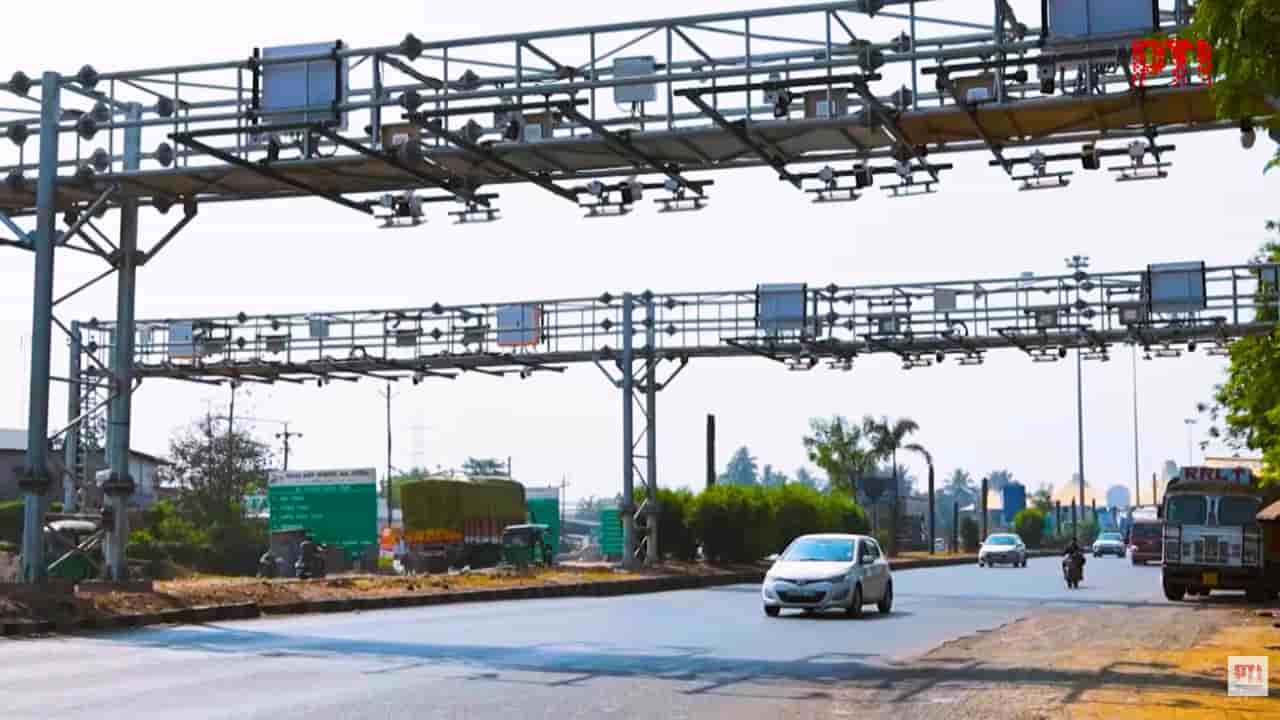
Under the Multi-Lane Free-Flow tolling system, vehicles do not need to stop or slow down at toll plazas. Instead of physical barriers, the system relies on advanced digital technologies installed on overhead gantries.
The system primarily uses Automatic Number Plate Recognition (ANPR) cameras and high-performance RFID readers to identify vehicles as they pass through the toll point.
Vehicles equipped with FASTag are automatically scanned, and the toll amount is deducted directly from the linked prepaid account. For vehicles without FASTag, the number plate is captured using ANPR cameras, and the toll charge can be recovered through the vehicle registration database.
This technology enables seamless toll collection while vehicles continue to move at highway speeds.
Benefits of Barrier-Free Tolling
The introduction of MLFF tolling is expected to bring several advantages for commuters and transport operators.
One of the primary benefits is the reduction of congestion at toll plazas. Long queues at toll booths often lead to delays and increased travel time, especially on busy highways. With the new system, vehicles can pass through toll points without stopping, ensuring smoother traffic flow.
The system can also help reduce fuel consumption and vehicle emissions, as cars and trucks will no longer need to idle in long lines waiting for toll payments. Additionally, automated tolling improves efficiency and transparency in toll collection.
Plans for Expansion
Authorities plan to expand the barrier-free tolling system to other parts of the national highway network if the pilot project proves successful.
According to officials, the National Highways Authority of India is considering implementing the MLFF tolling model at around 25 major toll plazas across India in the coming years.
The move is part of a broader push to modernise highway infrastructure and introduce intelligent transport systems that make road travel faster and more efficient.
A Step Toward Smart Highways
India has already introduced electronic toll collection through FASTag in recent years. The launch of the barrier-free MLFF system represents the next stage in that evolution, moving toward fully automated tolling without physical barriers.
If the system performs as expected, it could gradually replace conventional toll plazas and become a key component of the country’s future highway network.