
In recent years, conversations around mental health have become increasingly important across the world. Stress, anxiety, depression, and emotional burnout have emerged as significant challenges, particularly among younger generations navigating a fast-paced digital and professional environment. Against this backdrop, innovative approaches that combine art, culture, and therapy have begun to gain recognition. One such initiative is the “Sitar for Mental Health” India Tour, led by acclaimed sitarist Rishab Rikhiram Sharma, which aims to harness the healing power of music to promote emotional well-being and mindfulness.
The tour represents a unique intersection of Indian classical music, modern sound design, meditation practices, and mental health awareness. By using the traditional instrument of the sitar as a tool for introspection and emotional healing, the initiative attempts to reconnect audiences with the therapeutic potential of music.
About Rishab Rikhiram Sharma
Rishab Rikhiram Sharma is widely regarded as one of the most prominent young sitarists of his generation. Born into the renowned Rikhi Ram family of instrument makers in Delhi, he grew up surrounded by Indian classical music and craftsmanship. He began learning the sitar at the age of ten under the guidance of his father before eventually becoming the youngest disciple of legendary sitar maestro Ravi Shankar.
Over the years, Sharma has built a global reputation as a neo-classical musician who blends traditional ragas with contemporary sounds and digital elements. His performances have been staged in prestigious venues around the world, and he has attracted millions of followers across social media platforms. Beyond his musical achievements, Sharma is also known for openly discussing his personal experiences with anxiety and emotional struggles, which inspired him to launch a mental health initiative through music.
In 2020, he founded the “Sitar for Mental Health” movement, an initiative that uses music therapy and live performances to encourage mindfulness and emotional healing.
The Concept Behind “Sitar for Mental Health”
The core philosophy of the “Sitar for Mental Health” project is rooted in the belief that music possesses the power to heal, calm, and restore emotional balance. The initiative draws inspiration from ancient Indian traditions that associate musical vibrations with emotional and psychological well-being.
Through immersive performances, Sharma combines classical sitar compositions with guided breathing, meditative listening, and ambient soundscapes. The experience encourages audiences to slow down, disconnect from external noise, and reconnect with their inner emotional state.
Unlike conventional music concerts, these performances are structured as reflective experiences where sound becomes a medium for relaxation and introspection. The concerts often integrate elements such as:
- Guided breathing sessions
- Meditative soundscapes
- Traditional ragas performed on sitar
- Ambient and electronic musical layers
- Visual and sensory elements designed to create a calm atmosphere
The goal is not merely entertainment but a deeper emotional and mental engagement that allows audiences to experience music as a form of therapy.
The 2026 India Tour
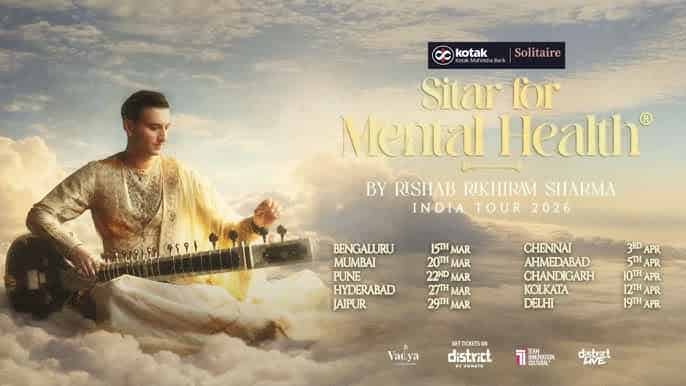
As part of the Asia leg of the global “Sitar for Mental Health” initiative, Sharma announced a 10-city India tour in 2026, bringing his immersive musical experience to audiences across the country.
The tour is scheduled to begin in Bengaluru on March 15, 2026, and will travel across major Indian cities before concluding in New Delhi on April 19, 2026.
Cities included in the tour
The performances will take place in the following cities:
- Bengaluru
- Mumbai
- Pune
- Hyderabad
- Jaipur
- Chennai
- Ahmedabad
- Chandigarh
- Kolkata
- New Delhi
Each event is designed as a multi-sensory experience lasting around two hours, allowing audiences to immerse themselves in calming sound environments and introspective musical journeys.
A Global Initiative
The India tour forms part of a larger international journey that has taken the “Sitar for Mental Health” concept to audiences in multiple countries. Sharma has previously performed the project across regions including North America, Europe, and Asia.
The initiative gained momentum through digital sessions during the pandemic, where Sharma streamed live sitar performances and discussions about emotional well-being. Over time, these sessions evolved into large-scale live events attended by thousands of people.
The tour has now become one of the most distinctive music-based wellness initiatives globally, redefining how audiences interact with classical music.
Music as a Tool for Emotional Healing
The concept of using music for emotional healing is not entirely new. In Indian tradition, the ancient practice of Raga Chikitsa suggests that specific ragas can influence emotional states and psychological well-being. Sharma’s project draws inspiration from this idea while presenting it in a contemporary format that resonates with modern audiences.
Through slow tempo compositions, deep resonant tones of the sitar, and immersive acoustic environments, the performances aim to stimulate calmness, reduce stress, and encourage mindfulness. The sound vibrations of the sitar, combined with ambient elements, are intended to create a deeply introspective experience.
This approach has attracted audiences beyond traditional classical music enthusiasts, particularly among young people who are increasingly exploring mindfulness practices such as meditation and yoga.
Growing Importance of Mental Health Awareness
The launch of the “Sitar for Mental Health” India tour comes at a time when mental health awareness is becoming a central global concern. Increasing work pressure, digital overstimulation, social isolation, and economic uncertainty have contributed to rising levels of stress and anxiety.
Initiatives like Sharma’s tour play an important role in normalizing conversations around mental health while providing accessible ways for people to engage with emotional well-being.
By combining art with advocacy, the project highlights how cultural traditions can contribute to contemporary discussions about mental health.
Bridging Tradition and Modern Innovation
One of the most distinctive aspects of Sharma’s work is his ability to bridge centuries-old musical traditions with modern creative expression. While deeply rooted in Indian classical music, his performances incorporate experimental sound design and contemporary storytelling.
This fusion allows the sitar—an instrument with a long historical legacy—to remain relevant for modern audiences while preserving its cultural essence.
Through “Sitar for Mental Health,” Sharma demonstrates how traditional art forms can evolve to address modern challenges such as emotional well-being and psychological resilience.
Summary
The “Sitar for Mental Health” India Tour by Rishab Rikhiram Sharma represents a unique cultural initiative that blends Indian classical music with mental health awareness. Rooted in the healing traditions of sound and mindfulness, the tour offers audiences an immersive musical experience designed to promote calmness, reflection, and emotional balance.
Spanning ten major cities across India, the tour brings together music, meditation, and storytelling to create a powerful platform for mental wellness. By transforming the sitar from a classical performance instrument into a medium for emotional healing, Sharma’s initiative highlights the enduring relevance of art and culture in addressing the psychological challenges of modern life.