


NexCAR19: How India Built the World’s Most Affordable Cancer Therapy — and Changed the Rules for the Global South
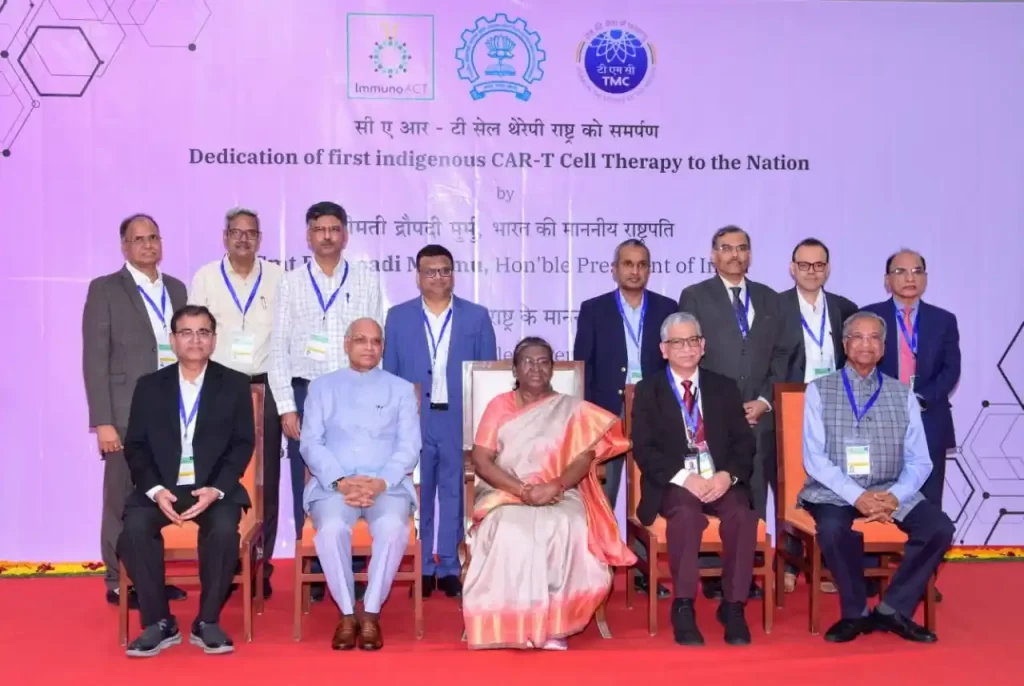
IntroductionFor most of human history, a cancer diagnosis in a low-income or middle-income country meant one of two things: treatment with whatever the public health system could afford, or no treatment at all. The world’s most advanced cancer therapies — the ones that could put terminal patients into complete remission — existed only in American and European hospitals, at price tags that put them beyond the reach of 90 percent of the world’s cancer patients.That equation began to change in October 2023, when India’s Central Drugs Standard Control Organisation approved NexCAR19 — the country’s first indigenous CAR-T cell therapy, developed by ImmunoACT, a spinoff from the Indian Institute of Technology Bombay in collaboration with the Tata Memorial Centre in Mumbai. It changed further when the therapy entered commercial use in April 2024. And it changed decisively when the numbers from that first year of commercial operations came in: over 350 patients treated across 70 hospitals, revenue of Rs 62 crore, and a profit before tax of Rs 12 crore in FY25 — marking rare profitability for an Indian biotech startup in its first full year of operations.A therapy that costs $400,000 in the United States. The same category of therapy, built entirely in India, costing Rs 30 lakh — approximately $36,000 — and falling. This is not incremental progress. This is a structural disruption of one of the most expensive categories of medicine ever created.What CAR-T Cell Therapy Actually IsBefore understanding why NexCAR19 matters, it helps to understand what CAR-T therapy is and why it has been so transformative — and so inaccessible.CAR-T stands for Chimeric Antigen Receptor T-cell therapy. It is a form of immunotherapy that does not use drugs in the conventional sense. Instead, it reprograms the patient’s own immune system to become the weapon.The process works as follows. A sample of T-cells — the immune system’s primary fighters — is extracted from the patient’s blood. These cells are then genetically engineered in a laboratory to express a Chimeric Antigen Receptor on their surface, a specially designed protein that enables them to recognise and bind to a specific marker on cancer cells. The modified cells are then multiplied into tens of millions and reinfused into the patient’s body, where they seek out and destroy cancer cells bearing that marker with a precision that conventional chemotherapy cannot approach.CAR-T therapy is not a treatment that reduces tumour size. In many cases, it eliminates tumours entirely. For patients with relapsed or refractory blood cancers — patients who have already failed multiple rounds of chemotherapy and have essentially run out of conventional options — it has produced complete remission rates that were previously considered impossible.The problem is the cost. Every step of the process — extracting T-cells, engineering them, manufacturing the viral vectors used to introduce the new genetic instructions, multiplying the cells under sterile conditions, quality-testing the final product, and infusing it — requires specialised equipment, expertise, and infrastructure that, until recently, existed only in a handful of countries.The Journey: A Decade from Research Lab to PatientImmunoACT was established in 2018 as a spinoff from IIT Bombay’s Biosciences and Bioengineering department, built on research that began in 2013. That five-year gap between research and company formation is itself a story. ImmunoACT was founded by immunologist Dr. Rahul Purwar following his research experience in the United States and Germany.Dr. Alka Dwivedi, along with her colleague Rahul Purwar and Gaurav Narula, sought guidance from the National Cancer Institute in Bethesda, Maryland, to advance their research. Through collaboration with leading experts at NCI’s Center for Cancer Research, including Dr. Nirali Shah, the team gained valuable insights and training in designing an effective CAR-T cell therapy suitable for the Indian healthcare system.The collaboration with Tata Memorial Centre — India’s premier cancer hospital — gave the research its clinical backbone. The CAR-T cell therapy was developed by Prof. Rahul Purwar and his team, with clinical investigations and translational studies led by Dr. Hasmukh Jain and Dr. Gaurav Narula and their teams at Tata Memorial Hospital.Atharva Karulkar, Alka Dwivedi and the team led by Rahul Purwar, IIT Bombay associate professor, designed and developed NexCAR19, which subsequently underwent integrative process development and manufacturing under current Good Manufacturing Practice, or cGMP, at ImmunoACT.The result of that decade of work was an indigenously developed CD19-targeted CAR-T cell therapy — meaning it targets the CD19 protein on the surface of B-cells, which is the marker present on the cancer cells in B-cell lymphomas and leukemias.The Clinical Trials: Results That Surprised the WorldThe multi-centre Phase I and Phase II pivotal clinical trial for NexCAR19 was led by Dr. Hasmukh Jain.The trial was conducted with 60 patients of relapsed or refractory B-cell lymphomas and leukemia. The clinical data indicated approximately 70 percent overall response rate.Clinical trials involving 64 patients with advanced lymphoma or leukemia showed promising results, with 67 percent experiencing significant cancer reduction and about half achieving complete remission.But the headline clinical achievement was not just the efficacy. It was the safety profile. Unlike US-approved therapies that use mouse-derived antibody fragments, India’s “humanised” CAR-T cells caused fewer severe side effects, with no reported neurologic complications and only 5 percent experiencing severe cytokine release syndrome.This distinction requires explanation. Cytokine release syndrome — essentially an immune system overreaction triggered by the infusion of millions of activated CAR-T cells — is the most dangerous side effect of CAR-T therapy and has historically required intensive care unit admission for many patients in US-based treatments. Neurological toxicity has also been a documented concern. The safety profile in terms of cytokine release syndrome and absence of neurotoxicity indicates a significant improvement over other commercially approved CD19-directed CAR-T cell therapies.Dr. Hasmukh Jain said: “NexCAR19 has shown an excellent balance of efficacy and low-toxicity, which is a significant advantage in clinical management of patients in our resource-constrained settings.”The humanised design of the CAR construct — using human antibody fragments rather than the mouse-derived sequences used in the original American CAR-T products — is believed to be a significant factor