


NEET Examination Controversy: The Crisis That Shook India’s Education System
IntroductionFor millions of students across India, the National Eligibility-cum-Entrance Test (NEET) is not merely an entrance examination—it is the gateway to a career in medicine. Every year, more than 24 lakh aspirants compete for a limited number of MBBS, BDS and other undergraduate medical seats, making NEET one of the most competitive and high-stakes examinations in the country. For many students, years of rigorous preparation, financial investment and personal sacrifice culminate in a single examination that determines their future.In 2024, however, the credibility of India’s premier medical entrance examination came under unprecedented scrutiny. Allegations of question paper leaks, irregularities in the declaration of results, the awarding of grace marks, and reports of organised examination fraud triggered one of the biggest education controversies in the country’s recent history. What initially began as concerns raised by a handful of students soon escalated into a nationwide issue involving protests across several states, political debates, multiple court petitions, a Supreme Court hearing, and a nationwide investigation by the Central Bureau of Investigation (CBI).The controversy shook public confidence in the examination process and raised larger questions about the transparency, security and accountability of India’s competitive examination system. More importantly, it highlighted the immense emotional and psychological pressure faced by lakhs of students whose academic futures depend on a single examination.Understanding the Importance of NEETIntroduced in 2013, NEET serves as the single national entrance examination for admission to undergraduate medical and dental courses in government and private institutions across India. Conducted by the National Testing Agency (NTA), the examination replaced multiple state and institutional medical entrance tests with the objective of creating a uniform and transparent admission process.Over the years, competition has intensified significantly. Every year, lakhs of students compete for a comparatively limited number of medical seats, making the examination one of the toughest in the country. Success in NEET often requires years of preparation, with many students enrolling in coaching institutes and dedicating considerable financial and emotional resources to achieving a high rank.Given its significance, any question regarding the fairness of the examination inevitably affects not only individual candidates but also the credibility of India’s entire medical admission system.When the Results Raised QuestionsThe controversy began shortly after the declaration of the NEET-UG 2024 results. Students, parents and education experts noticed several unusual patterns that immediately sparked concern.One of the first issues involved an unexpectedly high number of students securing top ranks. Alongside this, several candidates were awarded scores of 718 and 719 out of 720, marks that appeared mathematically impossible under NEET’s standard marking scheme.The National Testing Agency later clarified that these scores resulted from the award of grace marks to candidates who had reportedly lost examination time due to delays at certain examination centres. According to the agency, the compensation formula had been adopted following principles used in previous competitive examinations.However, the explanation failed to satisfy many students and experts. Questions were raised regarding the transparency of the process, the methodology used for awarding grace marks, and whether such decisions had compromised fairness for other candidates.The unusually high number of perfect scores further intensified public suspicion, turning what initially appeared to be isolated concerns into a nationwide controversy.Allegations of Paper LeakAs debates over the results continued, another development dramatically changed the course of the controversy.Reports began emerging from Bihar alleging that the NEET question paper had been leaked before the examination. Initial investigations by state police pointed towards an organised network involving middlemen who allegedly obtained confidential examination material and distributed it to selected candidates in exchange for substantial sums of money.Subsequent investigations uncovered evidence suggesting that the leak was not the work of isolated individuals but part of a larger organised racket involving brokers, candidates and others connected with examination logistics.As more arrests were made across multiple states, the controversy shifted from concerns about result irregularities to allegations of criminal conspiracy.The revelations significantly undermined public trust in the examination process, with many students questioning whether merit alone had determined the final rankings.Student Protests Across the CountryThe allegations triggered widespread protests by students and parents across India.Candidates who had spent years preparing for NEET demanded greater transparency from the authorities and called for an impartial investigation into the alleged irregularities. Demonstrations were organised in several cities, while students used social media platforms to share their concerns and demand accountability.Hashtags related to the examination dominated online discussions for several weeks, turning NEET into one of the country’s most debated issues.Many aspirants argued that the controversy had created uncertainty regarding admissions and left genuine candidates mentally exhausted after months of preparation and waiting.For students whose future depended entirely on their examination performance, the delay in resolving the issue added to already significant emotional stress.Political Debate and National AttentionAs public pressure mounted, the controversy moved beyond the education sector and entered the political arena.Opposition parties criticised the government over alleged lapses in conducting one of India’s most important entrance examinations. The issue was raised repeatedly in Parliament, where lawmakers demanded accountability from the National Testing Agency and sought explanations regarding the alleged paper leak.The controversy also reignited broader discussions about the functioning of the National Testing Agency, which is responsible for conducting several major national examinations, including NEET, JEE Main and CUET.Questions were raised regarding examination security, digital infrastructure, centre management and the mechanisms available to detect organised malpractice.Government Response and CBI InvestigationIn response to growing public outrage, the Union Government ordered a comprehensive investigation into the allegations.The case was subsequently handed over to the Central Bureau of Investigation (CBI), which launched a nationwide probe into the suspected paper leak and related irregularities.The investigation led to multiple arrests across different states. Authorities examined financial transactions, questioned suspects and seized electronic devices believed to have been used during the alleged leak.Investigators concluded that organised criminal networks had attempted to manipulate the examination process by illegally accessing confidential question papers and facilitating unfair means for selected candidates.Meanwhile, the National Testing Agency announced that the grace marks awarded to affected candidates would be withdrawn. Students who had received
CII Annual Business Summit 2026: Navigating Disruption, Charting India’s Path to Viksit Bharat
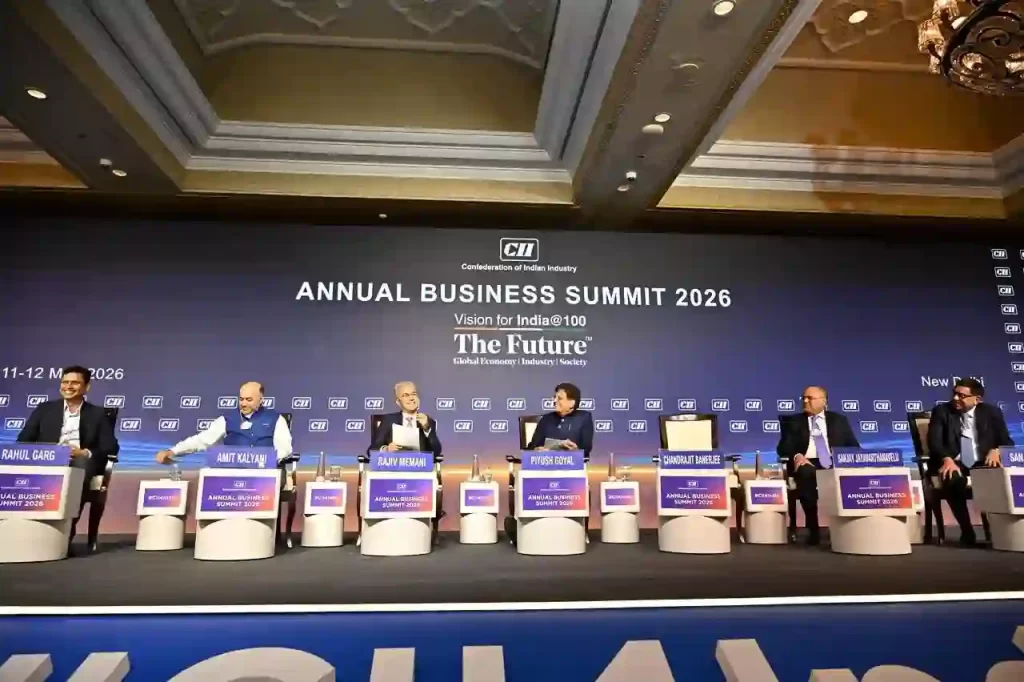
IntroductionThe Confederation of Indian Industry’s Annual Business Summit is one of India’s most consequential conversations between government and industry — a two-day forum where policy signals are sent, investment narratives are shaped, and the mood of Indian business leadership is read out loud for the entire economy to hear. The 2026 edition, held on May 11 and 12 in New Delhi, arrived at a moment of unusual global pressure: a war blocking the world’s most critical energy artery, a trade architecture being rewritten by American tariffs, an AI revolution reshaping every sector simultaneously, and India sitting at the precise intersection of all four.The CII Annual Business Summit 2026 convened under the theme “The Future | Global Economy, Industry, Society.” The focus was on navigating disruption and exercising leadership: aligning policy, industry, and society to translate this moment of inflection into sustained national advantage.The theme was not chosen casually. At a defining moment of global transformation, multiple forces including geopolitical shifts, technological change, climate urgency, and evolving societal expectations are reshaping the world. In this environment, trust, resilience, and effective governance are becoming central to long-term competitiveness. The challenge is no longer to resist change but to harness it through strong institutions, partnerships, and adaptive capabilities.About CII: The Institution Behind the SummitBefore the summit’s content can be fully appreciated, the institution organising it deserves its own introduction, because CII is not simply a trade body. It is one of India’s most influential policy-shaping institutions.Founded in 1895 as the Engineering and Iron Trades Association, the Confederation of Indian Industry has grown into India’s largest apex industry organisation, representing over 9,000 direct member companies and 300,000 companies within its associate and affiliated network through 65 sectoral industry bodies. It operates across 63 offices in India and 10 overseas offices, with institutional partnerships in 119 countries.CII works to create and sustain an environment conducive to the development of India by partnering industry, government, and civil society through advisory and consultative processes. It has been central to many of India’s significant economic policy transitions — from the liberalisation of the 1990s to the ease of doing business reforms of the 2010s to the PLI scheme architecture of the 2020s. When CII speaks, Finance Ministry officials, NITI Aayog planners, and cabinet ministers are typically in the room, listening. The Annual Business Summit is the highest-visibility manifestation of that engagement each year.The CII Annual General Meeting, which determines the organisation’s leadership and strategic direction for the year ahead, was held on May 12, the second day of the summit.The Context: Why the 2026 Summit Carried Extra WeightThe annual summit always takes place against the backdrop of the economic moment. The 2026 edition was held against a particularly demanding one.The Strait of Hormuz crisis, which had closed the world’s most critical oil transit route since late February, was still unresolved at the time of the summit. India, which imports nearly 85 percent of its crude oil and depends heavily on Hormuz-transiting Gulf supply, had been absorbing a significant cost shock to its energy import bill for months. Oil prices had spiked to record levels in March and remained elevated. The rupee had come under pressure. Inflation in fuel and logistics had fed through into manufacturing input costs and consumer prices.Simultaneously, the Trump administration’s tariff architecture — which had imposed sweeping duties on Indian exports in several categories — was creating both anxiety and opportunity for Indian industry. Anxiety because export competitiveness in affected sectors had been hurt. Opportunity because the same tariffs on Chinese goods were accelerating the global search for alternative manufacturing bases, and India remained the most credible alternative at scale.India’s own macroeconomic position entering the summit was one of relative resilience. The economy had maintained its position as the fastest-growing major economy through 2025-26, with GDP growth continuing to outperform most comparable peers. The Viksit Bharat 2047 agenda — India’s aspiration to be a fully developed economy by the centenary of independence — provided the long-term frame within which the short-term disruptions were being absorbed.As India approaches its centenary, India@100 provides a roadmap for inclusive and sustainable growth. The CII Annual Business Summit 2026 connects this long-term vision with the realities of a rapidly evolving global economy.The Theme: Three Questions for India’s FutureThe summit’s overarching theme — “The Future | Global Economy, Industry, Society” — was anchored in three interlocking questions that ran across every session of the two-day programme.Three system enablers were identified as decisive. First, governance must build trust, embed ethics, and sustain institutional legitimacy in an increasingly complex and risk-prone environment. Second, strong state capacity is essential to design coherent policy. Third, robust financial architecture must mobilise long-term capital, manage risk, and support sustained investment. Together, these enablers determine whether transformation becomes credible, resilient, and enduring across sectors, enabling growth that is both competitive and inclusive.Industry will play a central role in shaping India’s future economy as growth increasingly depends on how firms invest, innovate, and engage with society. The shift from shareholder value to broader responsibility calls for alignment with national priorities while remaining globally competitive. Leadership must extend beyond firms to ecosystems, driving R&D, integrating MSMEs, and strengthening trust through ethical governance.India’s energy transition is now a strategic economic advantage, with rapid growth in renewables reshaping cost structures and competitiveness. That last point carries particular weight in the context of the Hormuz crisis: India’s accelerating transition to non-fossil energy — non-fossil sources already account for over 50 percent of installed power capacity — is now seen not just as a climate obligation but as a strategic hedge against the kind of energy price shock that the Gulf war has delivered.Key Sessions and SpeakersLabour Reforms: Government’s CommitmentUnion Minister Mansukh Mandaviya addressed the session on “Next-Gen Labour Reforms: Driving Industry Growth and Job Creation.” He said social security coverage has increased from 29 crore people a decade ago to 94 crore at present. Highlighting the new labour codes, Mandaviya said the reforms are both labour-centric and industry-centric. He added that the
PM Modi’s Mann Ki Baat: Episode – 134th
PM Modi’s Mann Ki Baat: Episode – 134thVideo: YT/NaMo
Noida International Airport Officially Opens: Commercial Flights Begin June 15, Marking New Era for Viksit UP and Viksit Bharat
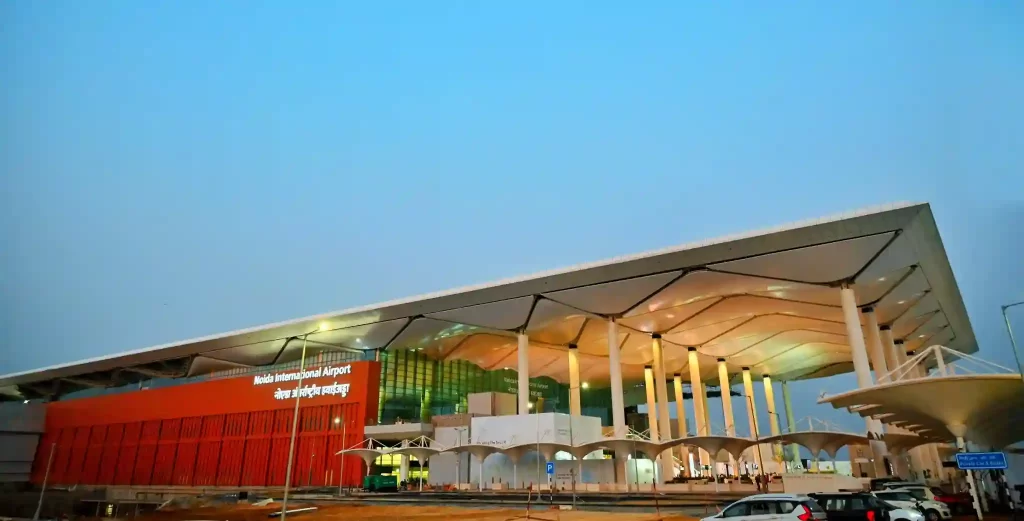
Noida, May 27, 2026 — Prime Minister Narendra Modi officially inaugurated Phase I of the Noida International Airport at Jewar in Gautam Buddha Nagar district of Uttar Pradesh on March 28, 2026, marking a transformative moment for India’s aviation sector and northern India’s connectivity. Noida International Airport at Jewar has officially opened for commercial operations, with flights scheduled to commence from June 15, 2026, marking a transformative moment for India’s aviation sector and northern India’s connectivity. Prime Minister Narendra Modi inaugurated the first phase of the airport earlier this month at Jewar in Gautam Buddha Nagar district of Uttar Pradesh, and the facility has now received final security clearance from the Bureau of Civil Aviation Security. The Prime Minister also laid the foundation stone for 40 acres of Maintenance, Repair, and Overhaul (MRO) facilities at the site during the inauguration ceremony. Speaking on the occasion, Modi declared this a new chapter for the Viksit UP and Viksit Bharat campaign, emphasizing that Uttar Pradesh has now emerged as one of the states with the highest number of international airports in India.Noida International Airport stands among the largest greenfield airport projects in the country, with Phase I developed at a total investment of approximately ₹11,200 crore under a Public-Private Partnership model. The airport will initially handle 12 million passengers per annum, with scalability up to 70 million passengers annually upon full development. Commercial flight operations officially begin June 15, following receipt of approval for its Aerodrome Security Programme from the Bureau of Civil Aviation Security, which certified that the airport’s security framework meets regulatory requirements for commercial operations. IndiGo will operate the first flight from NIA, marking the start of scheduled passenger services, followed shortly by Akasa Air and Air India Express.From Vision to Reality: A 23-Year Journey to CompletionThe airport project was first approved in 2003 during the tenure of former Prime Minister Atal Bihari Vajpayee, making this operational launch the culmination of a 23-year vision. Prime Minister Modi recalled that as soon as the current government was formed, the foundation was laid, construction happened, and now it has started operations. He expressed feeling doubly proud, first for having laid the foundation stone of this airport and now seeing it operational, and second because the name of this grand airport is linked to Uttar Pradesh, the state that chose him as its representative and made him a Member of Parliament.The airport will benefit numerous districts across western UP, including Agra, Mathura, Aligarh, Ghaziabad, Meerut, Etawah, Bulandshahr, and Faridabad, bringing new opportunities for farmers, small and medium enterprises, and the youth of the region. The site is positioned near freight corridors and logistics networks, supporting the movement of goods by air and rail. The area around Dadri, where freight routes converge, has been identified as a key logistics point for northern India. Prime Minister Modi pointed out that this area is becoming the hub of two major freight corridors with special railway tracks laid for goods trains, enhancing North India’s connectivity with the seas of Bengal and Gujarat.Economic Impact Connecting Western UP to Global MarketsPrime Minister Modi emphasized that airports are not just basic facilities in any country but give wings to progress. Due to the expansion of connectivity in the region, agricultural products of western UP will reach the global market in a much better way. The airport will bring numerous new opportunities for farmers, small and medium industries, and the youth of western Uttar Pradesh, with aircraft flying from here to the world, and the airport becoming a symbol of a developed Uttar Pradesh taking flight.The expansion of modern connectivity will further boost food processing prospects in western UP. Prime Minister Modi expressed gratitude to the farmers who gave up their lands to make this project a reality, noting that agriculture and farming hold great importance in the region’s economy. He highlighted that today, Noida is ready to welcome the entire world, and this whole area is strengthening the resolve of Aatmanirbhar Bharat. This multi-modal connectivity is making UP a major attraction for investors worldwide, as whatever farmers grow and industries produce here can now reach every corner of the world swiftly by land and by air.MRO Facility Lays Foundation for Aviation Self-RelianceAddressing a critical gap in India’s aviation ecosystem, Prime Minister Modi drew attention to the Maintenance, Repair, and Overhaul sector, noting that 85 percent of Indian aircraft still have to go abroad for MRO services. The government has resolved to make India self-reliant in the MRO sector, and the foundation stone of an MRO facility was laid at Jewar during the inauguration. When ready, it will serve aircraft from India and abroad, generating revenue for the country, keeping money within India, and creating numerous jobs for the youth.This facility will support aircraft servicing within India, where a significant share of such work is currently carried out overseas, reducing dependency on foreign MRO providers and saving foreign exchange. The government has decided to make India self-reliant in this sector as part of its broader economic policy framework, positioning India as a global hub for aircraft maintenance services.Operational Timeline and First Year ProjectionsThe airport will commence commercial flight operations from June 15 after appointing an Indian CEO, following the security regulator’s approval for its Aerodrome Security Programme. An airport official stated they are looking at 50-60 lakh passengers in the first year of operations. After domestic operations stabilize, they will launch international services, confident of going international before the end of 2026. The airport currently features one runway and one passenger terminal with a capacity to handle 12 million passengers annually, with its master plan including future expansion to accommodate over 70 million passengers each year.The launch follows the DGCA’s clearance granted in March, with PM Modi inaugurating the airport in late March. The airport said the June 15 start date marks the final stage of security clearance after regulatory concerns over a foreign CEO were addressed by appointing Chief Financial Officer Nitu Samra as interim CEO, replacing Swiss national
PM Modi Launches Five-Nation Tour to Secure Energy, Tech Ties Amid Iran War
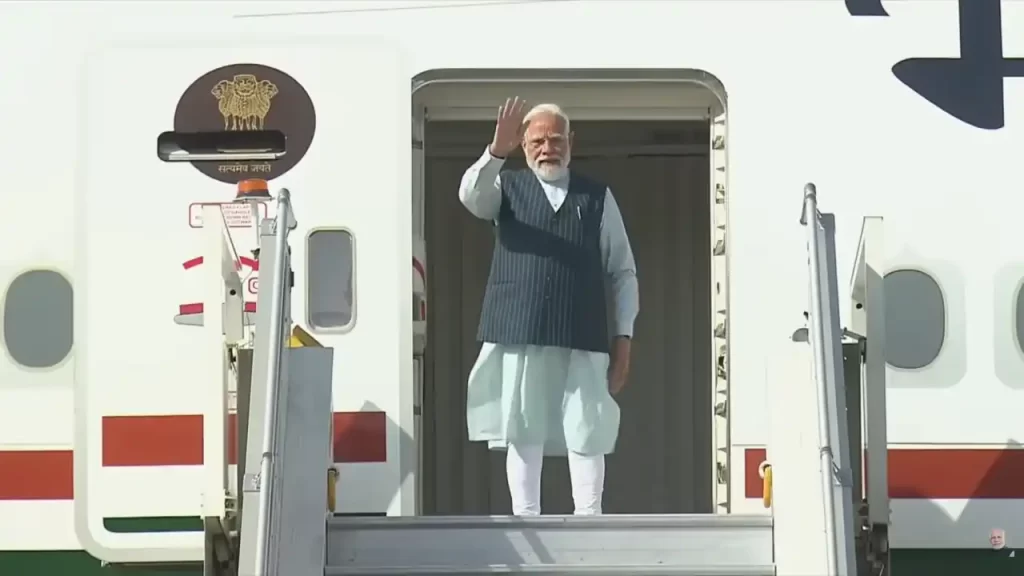
Prime Minister Narendra Modi has begun a massive five-nation tour starting in the United Arab Emirates (UAE). The trip runs from May 15 to May 20, 2026. It includes visits to the UAE, the Netherlands, Sweden, Norway, and Italy. The Prime Minister travels at a critical time when the ongoing war between the US and Iran has disrupted global shipping routes. Tensions around the Strait of Hormuz have caused oil prices to rise. This tour aims to secure India’s energy supply and strengthen technology partnerships. The visit comes right after India and the European Union signed a historic free trade agreement. Modi calls this deal the “mother of all deals.”The journey highlights India’s effort to build strong economic ties while managing global instability. Experts say diplomacy can reduce market panic, but oil prices will stay high until the war ends. Until then, India must focus on energy security and protecting its economy from rising costs.Visit to UAE: Fortifying Energy and Strategic TiesPM Modi landed in the UAE on May 15 to meet President Sheikh Mohamed bin Zayed Al Nahyan. Since 2014, Modi has visited the UAE seven times. President Sheikh Mohamed has visited India five times. Their relationship has only grown stronger over the years. The UAE has remained one of India’s most reliable energy partners even during this Gulf crisis. Long-term oil and gas supply agreements protect India’s energy security.Two important Memorandums of Understanding (MoUs) are likely to be signed during this visit. One deals with Liquefied Petroleum Gas (LPG). The other focuses on Strategic Petroleum Reserves. These deals will help India store more fuel for emergencies. Bilateral trade between India and the UAE crossed $101.25 billion in the last financial year. Both nations aim to double this trade to $200 billion by 2032. The UAE is India’s seventh-largest investor, with over $25 billion in cumulative investment.The UAE also hosts the largest group of Indian expatriates in the world. Over 4.5 million Indians live there. They form the backbone of the UAE economy. The leaders will discuss their welfare and safety. Remittances from these workers help India’s foreign exchange reserves. A Local Currency Settlement system allows trade in Indian Rupees and UAE Dirhams. This reduces dependence on the US dollar.Netherlands: Chip Deals and Water TechnologyThe Prime Minister arrived in the Netherlands from May 15 to 17. This is only his second visit since 2017. The partnership focuses on “innovation meets scale.” Dutch technology combines with India’s massive market size. Areas like semiconductors, water management, hydrogen, and maritime tech are key.A major business highlight is the agreement between Tata Electronics and ASML Netherlands. They will sign a deal to equip a semiconductor fabrication plant in Dholera, Gujarat. This boosts India’s chip-making capabilities. PM Modi and the Dutch Prime Minister visited the Afsluitdijk Dam together. This site shows cooperation in clean energy and sustainable fisheries. The Netherlands is India’s largest trading partner in Europe. Trade reached $27.8 billion in FY 2024-25. It is also India’s fourth-largest investor.The PM addressed the Indian community of over 90,000 NRIs. The visit also reached out to over 200,000 Surinami Hindustanis, the largest Indian-origin group in mainland Europe. Both nations are streamlining migration and mobility. Tourism between the two countries is set to grow.Sweden: Defense, AI, and Strategically De-risking from ChinaModi visited Sweden after an eight-year gap. He last went there in April 2018 for the first India-Nordic Summit. Sweden invests over 3 percent of its GDP in research and development. It ranks among the top innovators in Europe. Sweden has taken a firm stance to reduce its reliance on China. They removed Chinese vendors from their telecom networks. This makes India a key strategic partner.Bilateral trade reached $7.75 billion in 2025. Over 280 Swedish companies work in India. A major project is the Saab manufacturing plant in Jhajjar. Saab is building its first Carl-Gustaf weapon plant outside Sweden here. This is India’s first 100 percent FDI-driven defense project. Sweden also holds large critical mineral deposits. This helps India secure supply chains for electric vehicles and defense electronics.A new Statement of Intent created the Sweden-India Technology and AI Corridor (SITAC). It covers 6G, Artificial Intelligence, quantum computing, and life sciences. Over 80 Swedish companies attended the AI Impact Summit 2026. The Maharashtra government signed an MoU for electric boat investment worth Rs 1,990 crore.Norway: First Solo Visit in 43 Years and Arctic TechThis trip marks the first standalone visit by an Indian Prime Minister to Norway in 43 years. Modi attended the third India-Nordic Summit in Oslo. This summit places India in a high tier of Nordic engagement, joining only the United States. The India-EFTA TEPA agreement is now in force. It promises $100 billion in investment and one million jobs over 15 years.Norway’s sovereign wealth fund, the world’s largest at $2 trillion, has invested nearly $30 billion in India. Indian shipyards now hold 11 percent of Norwegian ship orders. Cochin Shipyard is building eco-friendly vessels for Norway. An MoU between GRSE and Kongsberg Maritime will deliver India’s first indigenous Polar Research Vessel.ISRO antennas at Svalbard became operational in 2026. They support India’s Arctic research. Norwegian tunneling technology helps the Char Dham railway project. Clean energy cooperation will diversify India’s energy mix. Norway also sees opportunities for Indian talent due to its aging population.Italy: Strategic Partnership and Submarine CablesPM Modi travels to Italy from May 19 to 21. He meets Prime Minister Giorgia Meloni to reaffirm their strategic partnership. The visit follows the Joint Strategic Plan of Action 2025-29. Italy views India as a major power and an indispensable partner.Italy champions the India-Middle East-Europe Economic Corridor (IMEEC). A new submarine cable, Sparkle-Airtel Blue-Raman, connects Genoa to India. This secures supply chains and boosts energy security. Bilateral trade reached $16.77 billion in 2025. The target is 20 billion euros by 2029. Tata Motors acquired the Iveco Group for 3.8 billion euros. This is the largest Indian investment in Italy. Italy opened a SIMEST office in Delhi to support SMEs.Energy Crisis and Global ImpactThe Iran war has caused
PM Modi Celebrates Nari Shakti at National Sammelan in Delhi
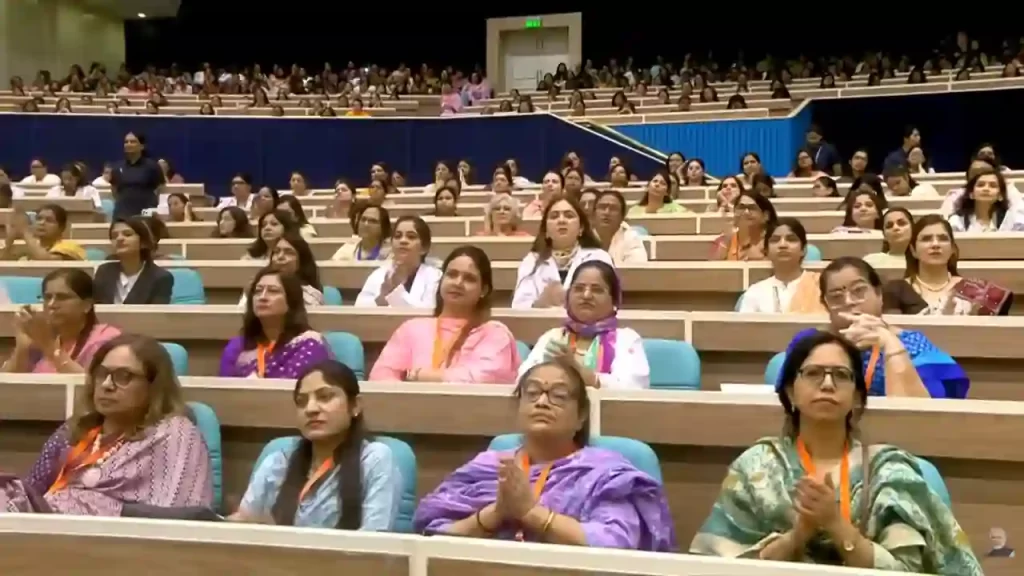
Prime Minister Narendra Modi addressed a large gathering of women achievers in New Delhi. The event, called Nari Shakti Vandan Sammelan, took place at Vigyan Bhawan on April 13, 2026. He spoke at around 11 AM to honor India’s women’s power, known as Nari Shakti. The program brought together successful women from many fields. These included government, science, sports, business, media, social work, arts, and education. The Sammelan showed India’s strong push for women-led growth as part of the Viksit Bharat 2047 vision.The Prime Minister called the day historic. It came just before a special Parliament session on April 16, 2026. That session focused on rolling out the Nari Shakti Vandan Adhiniyam. Parliament passed this law in September 2023. It reserves one-third of seats for women in the Lok Sabha and state assemblies. PM Modi stressed that all parties agreed to implement it by 2029 at the latest. He urged women to stay active and talk to their MPs about their hopes. This law ends decades of waiting for equal say in law-making.Event Highlights Women’s Rise from Panchayat to ParliamentThe Sammelan gathered top women leaders and everyday heroes. They shared stories of breaking barriers. PM Modi praised their hard work, courage, and confidence. He said India’s Nari Shakti has reached new heights. Now, the nation must open more doors for them. The event linked local wins to national goals. Over 14 lakh women lead panchayats today. In 21 states, nearly half of panchayat seats go to women. Their work surprises global experts and boosts India’s image.Women in power bring fresh views, said the PM. They focus on water, health, schools, and food. The Jal Jeevan Mission succeeds because panchayat women push it. These leaders have years of experience. The new law gives them a path to bigger roles. The journey from village councils to Parliament will get easier.Government Schemes Support Women at Every Life StagePM Modi listed many programs his government has started since 2014. They cover women from birth to old age. Beti Bachao Beti Padhao fights female foeticide. Mothers get Rs 5,000 under the Matru Vandan Yojana for good nutrition. Sukanya Samriddhi Yojana saves for girls’ education with high interest.Kids get Mission Indradhanush vaccines on time. Swachh Bharat builds toilets. Nearly free sanitary pads help teens. Khel India funds sports. Sainik Schools and NDA now welcome girls. Adults gain from Ujjwala’s gas connections. Har Ghar Nal Se Jal brings water home. Free rations ensure food. Ayushman Bharat gives Rs 5 lakh health cover. Jan Aushadhi cuts medicine costs by 80 percent.Homes under PM Awas Yojana register in women’s names first. Over 3 crore women own houses now. This makes them strong financially. Jan Dhan opened bank accounts for 32 crore women. Mudra loans go 60 percent to women. Startups list women directors in 45 percent of cases. Maternity leave lasts 26 weeks. Drone Didis teaches farmers with tech. Ten crore women join self-help groups. Three crore are Lakhpati Didis, earning lakhs yearly. They promote Vocal for Local.Women Break into Male-Dominated FieldsIndia leads the world with the highest share of women pilots. Daughters fly fighter jets. PhD enrollments for women doubled since 2014. Half of higher education spots go to women. In math and science, girls make up 43 percent. PM Modi said old mindsets are changing fast.Safety gets top focus, too. Fast-track courts speed justice. Bharatiya Nyaya Sanhita protects women. File e-FIR or Zero-FIR anywhere. Record statements with audio-video. The government acts on women’s dreams.PM’s Call to Action for All WomenThe Prime Minister paid tribute to the Jallianwala Bagh martyrs on Baisakhi. He tied the event to social justice. India wants real equality, not just words. Women from the freedom fights to today’s leaders have built the nation. The President and Finance Minister show women’s mark.PM Modi appealed to all women. Take this message to every village. Use meetings and social media. Help every woman know her power. Dream big for assemblies and Parliament. He promised the nation stands with mothers, sisters, and daughters.Bigger Picture: Women-Led Development for Viksit BharatThe Sammelan fits India’s big plan. Viksit Bharat 2047 means a developed India by 2047. Women lead it. From panchayats to Parliament, their voice grows. The law strengthens democracy. It ensures decisions reflect half the population.Similar events happened elsewhere. In Mumbai, actor Raveena Tandon was honored. Maharashtra CM Devendra Fadnavis praised women from teaching, music, films, and fashion. They back the quick rollout of the Act. Rouble Nagi, Vaishali Samant, Prajakta Mali, and Archana Kochhar joined.The Sammelan builds excitement nationwide. Women voice hopes for Parliament seats. A positive wave spreads. PM Modi wants dialogue and teamwork. This honors Parliament and empowers Nari Shakti.India nears a landmark choice for women. The Sammelan lights the path. It celebrates past wins and future roles. Nari Shakti will shape a strong, fair India.Video: @YT/NaMo
Mumbai’s Mahalaxmi Racecourse Transforms into a Giant Central Park
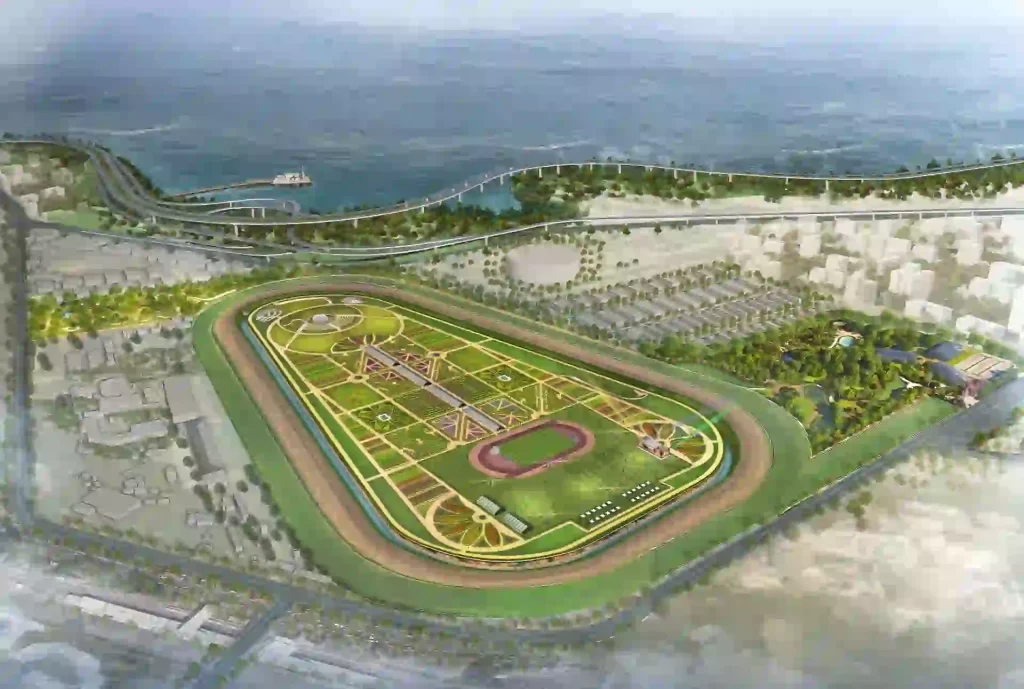
Mumbai, a city famous for its crowded streets and tall buildings, is about to gain a massive green escape. The historic Mahalaxmi Racecourse, a 211-acre colonial-era landmark leased to the Royal Western India Turf Club (RWITC), will become Mumbai Central Park. This ambitious project promises to create India’s largest urban park at 295 acres, blending vast green spaces, world-class sports facilities, and entertainment hubs. Deputy Chief Minister Eknath Shinde announced the plan, calling it the “biggest central park in Indian city history.” The now controls 120 acres of racecourse land after the old lease expired, adding 175 acres from the nearby Coastal Road project. No buildings will rise on the surface, just eco-friendly greenery modeled after New York’s and London’s iconic Central Parks.A Historic Site Gets a Green RebirthThe Mahalaxmi Racecourse opened in 1883 as Mumbai’s premier horse-racing venue, facing the Arabian Sea with grandstands and stables. The BMC owns the land but leases it long-term to RWITC. That lease ended recently, sparking a new 30-year deal from June 2023 to May 2053 for RWITC’s 91 remaining acres, keeping the racing track, stables, and heritage clubhouse intact. Architect Hafeez Contractor submitted the blueprint to BMC in August 2025, envisioning a park that honors history while serving millions.The park expands Mumbai’s green cover from 3,917 acres to 4,212 acres. Shinde stressed: “No construction on the racecourse. It will be a pure oxygen park for Mumbaikars.” An underpass links it to Annie Besant Road at Haji Ali, making it walkable from Worli to Breach Candy.Vast Green Spaces and Themed GardensAt the heart lies 125 acres of racecourse greens turning into lush landscapes:70-acre Topiary Garden: Artfully clipped shrubs, hedges, and sculptures.31-acre Botanical Garden: Medicinal trees/herbs, giant water-lily pond, palm grove, hillock, arboretum, kids’ play area, food kiosks.Diverse gardens: Perennial, annual, monsoon, seasonal, aquatic, succulent, organic farm, and a fun maze.Add an amphitheatre for 900 people, events lawn, stage, perfect for festivals, yoga, concerts. Coastal Road land adds wetlands, lakes, jogging tracks, and cycle paths. Imagine families picnicking under banyans, seniors strolling shaded paths, amid Mumbai’s concrete jungle.Underground Wonders: Sports and Parking GaloreSurface stays green, but below ground? High-tech action:10 lakh sq ft Sports Complex (Olympic-standard): 11 volleyball courts, 4 basketball/handball, 14 cricket nets, 2 gymnastics, 6 kho-kho, 14 badminton, 18 squash courts, 2 skating rinks, velodrome.Three-level Parking: Space for 5,000 cars, easing traffic.9-acre Convention Centre: Three 7,440 sq m halls, 50,000 sq ft pre-function area for expos, weddings, global summits.These stay hidden, preserving open skies. RWITC gets Rs 100 crore from the government for stable upgrades, no BMC burden.Political Fire and Public DebateNot everyone cheers. Shiv Sena (UBT) leader Aaditya Thackeray slammed it as a “BJP-mindhe regime” ploy to favor builders. He accused forced terms on RWITC’s 1,718 members, vowed probes if MVA returns: No underground builds, protect heritage, scrap “bribe-like” membership clauses, BMC-free stables. RWITC’s January 2025 vote approved a new clubhouse and repairs, but critics fear open-space grabs.Why Mumbai Needs This Oxygen BoostMumbai’s air chokes on pollution; lungs like Shivaji Park strain under 2 crore people. This park fights climate change, cools heat islands, and boosts biodiversity. Health perks: Sports for youth, walks for elders. Economy: Conventions draw business; tourism spikes with sea views. RWITC races continue uninterrupted.Hafeez Contractor’s vision: “A game-changer.” From horses to habitats, Mahalaxmi evolves, green, active, alive. If built right, Mumbai Central Park becomes the city’s beating heart, rivaling global icons.
Mumbai Water Metro: Sailing to Ease Traffic and Revive Island City’s Waterways
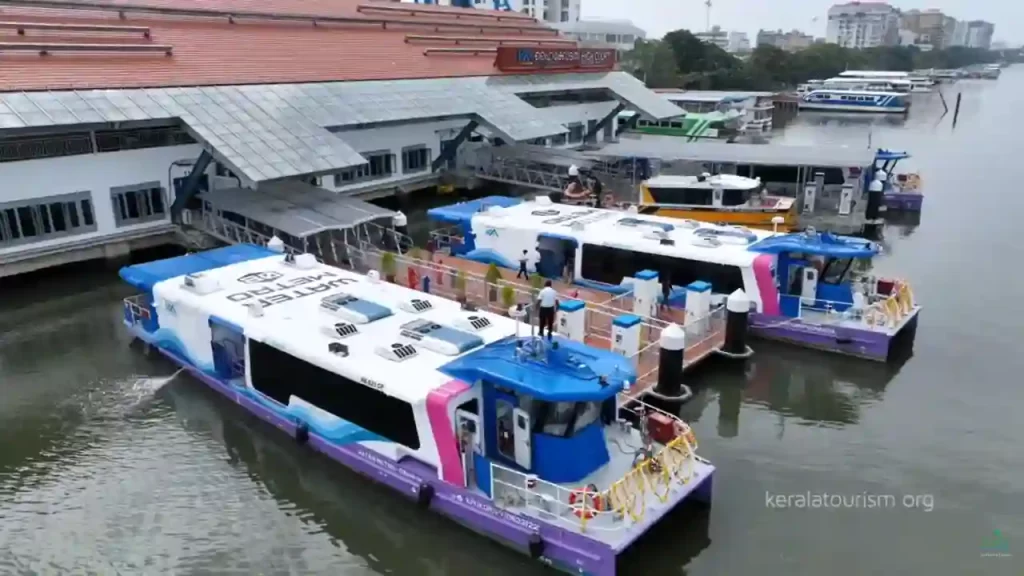
Mumbai, India’s bustling financial hub built on seven islands, faces daily chaos from overcrowded trains, jammed roads, and rising seas of cars. Commuters waste hours in gridlock, while ferries, once a lifeline, faded after failed tries like 1990s hovercrafts and a short-lived Belapur-Gateway run. Enter the Mumbai Water Metro: an ambitious 36-route network across the Mumbai Metropolitan Region (MMR) to ferry up to 18 million passengers yearly. Chief Minister Devendra Fadnavis gave in-principle nod on March 17, 2026, calling it a “coastal transport revolution.” Modelled on Kerala’s hit Kochi system, this Rs 6,592-crore plan taps Mumbai’s 340 km of waterways for scenic, green rides, slashing commute times, boosting tourism, and building shipyards.A Vision to Turn Tides on CongestionMumbai’s locals pack 75 lakh daily; roads choke with 40 lakh vehicles. Water Metro offers breezy escapes: 21 initial routes over 125-340 km (Phase 1: 215 km new + 125 km upgraded), with 25-44 terminals. Daily riders: 44,000; yearly: 18 million, rising to 75 million by 2031. Electric ferries zip between islands, bypassing potholes for sea views of Marine Drive, Bandra-Worli Sea Link.Fadnavis envisions it as the world’s largest water transport network, easing suburban rail pressure (already 1.6 crore water passengers yearly). Ports Minister Nitesh Rane: Start Mumbai city core, expand MMR, linking to Navi Mumbai Airport in 40 minutes from Gateway jetty.Key Routes: From Commutes to CruisesPhase 1 spotlights high-demand hops (6-10 initially):City Core: Nariman Point-Worli-Bandra-Juhu-Versova (coastal buzz).North Links: Versova-Madh, Marve-Manori, Gorai-Borivali (beaches, suburbs).Harbour Hops: Gateway-Mandwa, Belapur-Elephanta (tourist gems).Creek Crossings: Thal-Khanderi, Vasai Creek, Thane Creek, Ulhas River.Airport Express: Gateway to Navi Mumbai International Airport.Outer Reaches: Vasai-Kalyan-Kalher-Bandra-Vashi-Nariman Point.Later: Ro-Pax (car ferries), tourism circuits to Vasai Fort, bird sanctuaries, and parks. Fixed schedules like metro: Peak-hour frequency, digital tickets, rail-metro links.Green Fleet and Smart Tech for Smooth Sails207 vessels mix electrics (zero emissions), hydrofoils (fast), hovercrafts, hybrids, handling 3.5m tides. Private ops under PPP: Govt funds Rs 3,436 crore (civils, safety, jetties); privates Rs 3,156 crore (boats). Operations Control Centre at Kalher (Bhiwandi), backup Fountain Junction (Mira-Bhayandar); dedicated boatyard for local builds.Phases roll steadily:Phase 1 (by 2029): Rs 1,500 crore core network.Phase 2 (2030): Expansion.Phase 3 (2036): Full glory.Kochi Metro Rail Ltd’s DPR (submitted early 2026) guides; the consultant will be appointed in 4 months, then clearances, tenders.Kochi Model: Mumbai’s Fare GuideMumbai Water Metro ticket costs are not yet finalized, as the project is in planning (DPR stage, rollout eyed December 2026 onward). Officials aim for affordable fares like Kochi’s model (its blueprint), to beat past flops from high prices. Expect Rs 10-50 per short hop (e.g., 5-10 km), scaling with distance, cheaper than taxis (Rs 200+), on par with buses (Rs 10-30), and scenic vs. trains. Daily passes, monthly options, and UPI/app tickets planned.Kochi Water Metro (Mumbai’s inspiration) sets the benchmark:Single journey: Rs 20 minimum to Rs 40-50 maximum (e.g., Vytilla-High Court: Rs 40; Fort Kochi: Rs 40).Kochi1 Card: Rechargeable smart card (metro+water), 20% discount.Passes:Pass TypeCostValidityWeeklyRs 1807 daysMonthlyRs 60030 daysQuarterlyRs 1,50090 daysPast Flops to Future Wins: Learning from Waves1990s hovercrafts sank on costs; 2024 Belapur-Gateway fizzled on low uptake. This time? Affordable fares (Rs 20-50?), eco-focus, integration fix it. Kochi’s success (78 boats, 5 lakh riders/month) proves demand; Mumbai’s waterways are unused despite island roots.Hurdles and HorizonsEco-clearances, tides, and monsoons challenge, but tidal-proof jetties and weather-resilient boats are ready. By 2036, imagine: Skip Virar trains, sail Versova-Bandra in 20 minutes; tourists yacht Worli sunsets. Mumbai sails again, cleaner, calmer, connected.
Zojila Tunnel: Asia’s Longest High-Altitude Road Link Burrowing Through Himalayan Fury
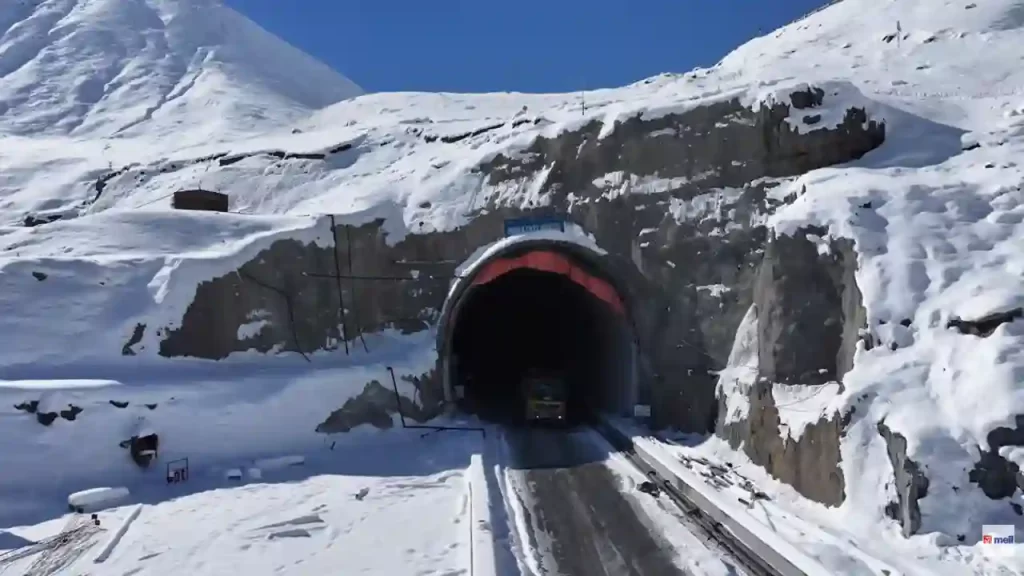
High in the snow-capped Himalayas, where blizzards rage and temperatures plunge to minus 25 degrees Celsius, workers are carving out one of India’s boldest engineering feats. The Zojila Tunnel, set to be Asia’s longest bidirectional highway tunnel at high altitude, promises to end Ladakh’s winter isolation forever. Stretching 13.15 kilometers under the notorious Zojila Pass, this horseshoe-shaped, single-tube, two-lane tunnel will connect Srinagar in Jammu & Kashmir to Drass in Ladakh’s Kargil district. As of April 2026, excavation stands at an impressive 90-95% complete, with just 1-1.25 kilometers left before the big breakthrough in April-May 2026. Led by Hyderabad’s Megha Engineering and Infrastructures Limited (MEIL), the Rs 6,809 crore project defies avalanches, rockfalls, and extreme cold to deliver year-round road access, a game-changer for civilians, soldiers, and the economy.The Perilous Zojila Pass: Why the Tunnel is a LifesaverZojila Pass sits at 11,578 feet (3,528 meters) on the Srinagar-Kargil-Leh highway – a narrow, twisting nightmare prone to heavy snow, landslides, and avalanches. For seven months each winter (October to April), it shuts down completely, stranding Ladakh. Army convoys crawl at 10-15 km/h; civilians face 3-4 hour ordeals over 40 km of ice. Fresh tragedies, like the March 2026 avalanche killing seven near Zero Point, highlight the urgency.The tunnel changes everything. Vehicles zip 13 km straight at safe speeds, slashing Srinagar-Leh travel by 3.5 hours (to about 11-12 hours total). No more seasonal blockades, apples, saffron, and tourists flow freely; troops rush heavy gear to borders with Pakistan and China. It’s strategic gold for India’s Line of Actual Control security.Drilling Through Hell: Progress Amid Sub-Zero BattlesWork kicked off in April 2021 after PM Modi laid the foundation in 2018. MEIL took over in 2020, beating initial Rs 12,000 crore estimates down to Rs 5,500-6,809 crore using smart tech. Divided into two parts:Part 1 (100% done): 17 km approach road from Sonamarg Tunnel to Zojila’s western portal – includes two mini-tunnels, seven avalanche shelters, snow galleries, and four bridges.Part 2 (Main Tunnel): 12 km excavated from both ends (Baltal in Kashmir, Minamarg in Ladakh). Concrete lining covers over 2 km already.Breakthrough ahead: Tunnellers meet mid-2026, then 8-10 fronts tackle finishing, safety gear. Full opening? February-May 2028, ahead of the old 2030 deadlines despite COVID, a 2024 militant attack, and brutal weather. 1,200 workers battle -18°C nights, snowdrifts, water ingress, and fragile geology using New Austrian Tunneling Method (NATM) – drill-blast-support cycles.Winter warrior mode: Heated camps with 24/7 power/hot water, on-site cabins, machine heaters. Recent snows (over a foot) didn’t stop them – teams clear paths round-the-clock.Engineering Marvel: Safe, Smart, and Storm-ProofSpain-designed with European/North American standards, the tunnel is not a basic bore:Specs: 7.57m high/wide, two lanes + 1.5m emergency walkway.Every 750m: 40m refuge bays for breakdowns.Tech wonders: SCADA smart system (CCTV, radio, UPS, ventilation); auto fire detection/suppression.Snow shield: 6 km of catch dams, blast walls, deflectors outside.Seismic savvy: Faces Zone V quakes, high winds; sensors monitor health.Union Minister Nitin Gadkari hailed it in Parliament: 70% done (earlier 2026 update), inviting Speaker Om Birla to see. Ladakh’s Chief Secretary reviewed in 2025: 12 km done, on the 2028 track.Boom for Ladakh: Tourism, Trade, and TroopsZojila Tunnel will transform Ladakh’s tourism from a short summer rush into a year-round magnet. Currently, Zojila Pass closes for 6-7 winter months due to blizzards, limiting visitors to June-September. The 13.15 km tunnel (Asia’s longest high-altitude bidirectional road tunnel) ensures all-weather access from Srinagar, slashing 40 km windy pass to 15-30 minutes smooth drive. Ladakh Lieutenant Governor Kavinder Gupta calls it a “dream project” for tourism boom.Year-Round Access Opens New SeasonsSnow blocks roads now, stranding tourists and locals. Tunnel means winter travel anytime:Winter Wonderland: Snow safaris, ice skating, frozen Pangong Lake views without risks.Shoulder Seasons (Oct-May): Off-peak hikes, photography – cheaper stays, fewer crowds.Travel time Srinagar-Leh drops 3.5 hours; Sonamarg-Minamarg from 4 hours to 40 minutes.This extends Ladakh’s tourist window, like Z-Morh Tunnel did for Sonamarg’s skiing.Easier, Safer Journeys Draw More VisitorsFrom India: Delhi-Leh road trip safer (no avalanches); buses/cars anytime.Adventure Boost: Bikers, SUVs access Nubra Valley, Tso Moriri easier.Pilgrims/Trekkers: Amarnath Yatra, Markha Valley treks less daunting.Fuel savings (shorter route) and comfort lure families, seniors, not just thrill-seekers.Economic Ripple: Jobs, Hotels, Local WinsVisitor Surge: Experts predict double tourists; Leh hotels full year-round.New Spots: Winter festivals, heli-skiing, cultural tours in Kargil/Drass.Local Gains: Homestays, guides, handicrafts boom; women-led enterprises grow.Leh businessman Farooq Misger: “More tourists will experience our beauty, boost economy.”Challenges Conquered, Finish Line in SightDelays? Yes, geology surprises, monsoons, terror hit. Cost savings? Rs 5,000+ crore via modern methods. MEIL’s CEO Harpal Singh: “Zero risk, maximum safety.” Workers’ grit shines, from engineers plotting blasts to laborers in snow gear.As drills echo under Zojila, Ladakh’s winter woes fade. This tunnel isn’t just concrete, it’s a lifeline, linking valleys to the world. By 2028, drive to Leh in comfort, watch border hawks soar safely.
India’s Women’s Reservation Bill: A 30-Year Journey from Parliament’s Margins to Its Centre

IntroductionFew pieces of legislation in India’s post-independence history have travelled as far, fallen as many times, and returned as persistently as the Women’s Reservation Bill. First introduced in Parliament in 1996, the bill seeking to reserve one-third of seats in India’s legislature for women spent nearly three decades being introduced, disrupted, shelved, lapsed, revived, and deferred — a legislative saga that became as much about India’s political fault lines as it was about gender equality.In September 2023, the bill finally crossed its highest hurdle when it was passed by both houses of Parliament and signed into law by President Droupadi Murmu, becoming the Constitution (One Hundred and Sixth Amendment) Act, 2023, officially named the Nari Shakti Vandan Adhiniyam. But the story did not end there. The Act came with a critical condition: the reservation would only take effect after a fresh national census and the subsequent delimitation of constituencies. That condition sparked a fresh chapter of political conflict, and in April 2026, a government attempt to accelerate implementation was defeated in the Lok Sabha, pushing the effective realisation of women’s reservation into a future that remains uncertain.What follows is the full account of this bill’s journey — its origins, its repeated failures, its historic passage in 2023, and where things stand today.The Pre-Legislative History: Why the Demand AroseIndia’s Constitution, adopted in 1950, guarantees universal adult franchise and prohibits discrimination on the basis of sex. Yet from the very first general election, women remained dramatically underrepresented in Parliament and state legislatures. The question of reserving seats for women was actually debated in the Constituent Assembly as early as 1946, but members, including prominent women leaders like Hansa Mehta, argued against it. Their position rested on the belief that universal franchise would, over time, correct historical imbalances on its own.Fifty years later, that belief had only been partially realised. By the mid-1990s, women constituted barely 6.5 percent of Lok Sabha membership. The state assemblies fared no better, with many registering single-digit female representation for decades.Meanwhile, India had taken decisive steps in the other direction at the local governance level. In 1992, Prime Minister P. V. Narasimha Rao’s government passed the 73rd and 74th Constitutional Amendment Acts, which mandated 33.3 percent reservation for women in Panchayati Raj Institutions. The results were transformative. Women went on to constitute over 46 percent of elected representatives at the grassroots level, totalling more than 1.4 million women in elected local governance roles across India.The Panchayati Raj experiment demonstrated what reservation could achieve at scale. It also strengthened the argument that structural barriers, not a lack of capable women, explained the gap between the grassroots and Parliament.Seven Attempts: The Legislative History from 1996 to 2026First Attempt: 1996The first formal bill was introduced on September 12, 1996, as the Constitution (81st Amendment) Bill under the United Front government led by Prime Minister H. D. Deve Gowda. It was referred to a Joint Parliamentary Committee chaired by Communist Party of India leader Geeta Mukherjee, who reviewed the bill extensively, but no consensus emerged. The bill lapsed with the dissolution of the 11th Lok Sabha.Within minutes of its introduction, the bill ran into fierce opposition. Male MPs questioned whether reservation could produce “enough capable women.” OBC leaders from parties like the RJD and SP demanded a sub-quota for women from backward communities within the 33 percent — a demand that would become the bill’s recurring stumbling block for the next three decades.Second and Third Attempts: 1998 and 1999The second attempt was in 1998 under Atal Bihari Vajpayee’s NDA government, when then Law Minister M. Thambidurai introduced it. Opposition parties, especially the RJD and SP, strongly opposed it, demanding a quota within a quota for OBC reservation. The bill lapsed again when the 12th Lok Sabha was dissolved. The third attempt was in 1999 when the Vajpayee government tried again. Both times it failed to progress. The Vajpayee government required the support of Congress and other parties to secure the two-thirds majority required for a constitutional amendment, and that support was conditional or absent.Fourth and Fifth Attempts: 2002 and 2003Two more attempts during the Vajpayee era met the same fate. The pattern was now clear: no government had been able to build the two-thirds parliamentary consensus necessary for a constitutional amendment on this issue.The 2008 Bill and the 2010 Rajya Sabha PassageThe United Progressive Alliance government under Prime Minister Manmohan Singh introduced a revised version of the bill in the Rajya Sabha in 2008. The most significant legislative progress came in 2010, where the bill secured the mandated two-thirds majority in the Rajya Sabha with 186 votes in favour. In 2010, the bill’s passage in Parliament was derailed after Samajwadi Party and Rashtriya Janata Dal MPs tore documents amid loud protests. The then UPA government under Prime Minister Manmohan Singh was unable to pass the bill in the face of resistance from allies.Despite the Rajya Sabha approval, the UPA government never brought the bill to the Lok Sabha floor. It was repeatedly deferred, with the government citing a lack of consensus among coalition partners. When the 15th Lok Sabha was dissolved in 2014, the bill lapsed for the fifth time.The Nari Shakti Vandan Adhiniyam: How the 2023 Bill Was PassedA Special Session in the New Parliament BuildingOn September 18, 2023, the government called a special session of Parliament. The Constitution (One Hundred and Sixth Amendment) Act, popularly known as the Women’s Reservation Bill, 2023, was introduced in Lok Sabha on September 19, 2023 during the special session of Parliament. The bill was the first to be considered in the new Parliament building.The political backdrop was significant. The BJP-led NDA held a strong parliamentary majority on its own, making it the first time any government in Indian history had the independent parliamentary strength to push through a constitutional amendment of this kind without depending on opposition cooperation.The Lok Sabha Vote: September 20, 2023The Lok Sabha took up the bill for debate on September 20, 2023. The discussion saw broad cross-party support in