


Government Approves E85 and E100 Fuels: India Opens the Door to a New Ethanol-Driven Mobility Era
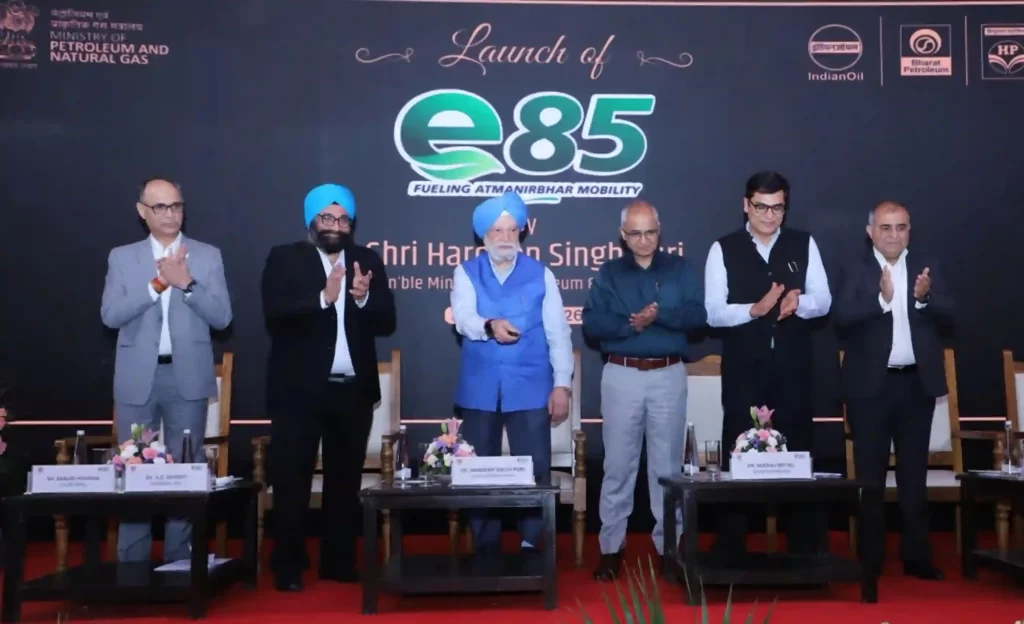
India has taken a significant step toward cleaner and more diversified transport energy by clearing the regulatory framework for E100 fuel, while E85 has already begun appearing in the market in limited form. The move is important not only because it gives legal backing to ethanol-only vehicles, but because it signals that India’s fuel strategy is no longer just about blending ethanol into petrol, it is now about creating a parallel mobility ecosystem around biofuels.The announcement by Union Road Transport and Highways Minister Nitin Gadkari, made at the Sugar, Ethanol & Bio-Energy India Conference in Nagpur, marks a turning point for automakers, fuel retailers, and policy makers alike. Gadkari said he signed the file authorising the use of 100 percent ethanol at 8 pm, giving manufacturers the regulatory certainty they need to invest in flex-fuel platforms and ethanol-compatible powertrains. What E85 and E100 MeanE85 is a high-ethanol fuel blend that contains roughly 85 percent ethanol and a smaller share of petrol or additives, while E100 refers to fuel that is essentially pure ethanol for transport use, though in practice it usually includes a small amount of petrol and additives to support cold starts and handling. These fuels are very different from India’s current E20 programme, which uses 20 percent ethanol blended with petrol.That distinction matters because E20 can be used in vehicles designed or calibrated for it, while E100 requires much more specialised hardware, fuel-system materials, and engine tuning. In other words, this is not a simple switch at the pump; it is a structural shift in how vehicles are designed, tested, and supplied.Why the Approval MattersThe biggest significance of the E100 approval is that it gives the market a legal framework for ethanol-only mobility, something India has been inching toward for years through its broader ethanol-blending push. By creating a formal pathway for E100, the government has effectively opened another route for low-carbon transport alongside electric, CNG, hybrid, and hydrogen technologies. It also sends a strong signal to manufacturers. When policy becomes clearer, investment typically follows, and that is especially true in the auto sector, where new engine families and fuel systems cannot be developed without regulatory certainty. Gadkari said that flex-fuel vehicles are already entering the market, citing Maruti Suzuki’s WagonR flex-fuel model and Hero’s ethanol-compatible motorcycles, with Toyota and Hyundai expected to launch E100-capable vehicles soon. The Technology Behind Flex-Fuel VehiclesFlex-fuel vehicles are built to run on multiple fuel mixes, often ranging from petrol-heavy blends to high-ethanol fuels. To do that safely and efficiently, they need specific changes in engine calibration, corrosion-resistant fuel-system components, and software that can manage combustion differently depending on the blend.This is especially important because ethanol behaves differently from petrol. It absorbs moisture more readily, can be more corrosive to certain materials, and contains less energy per litre than petrol, which means fuel consumption tends to rise when vehicles run on higher ethanol blends. That is one reason E100-compatible vehicles cannot simply be older petrol cars with a software update. Why India Is Pushing EthanolIndia’s ethanol strategy is not just about cleaner tailpipes; it is also about energy security and rural economics. The country imports more than 85 percent of its crude requirement, so every litre of domestic biofuel that replaces imported petrol or diesel helps reduce exposure to volatile global oil prices and improves the trade balance. At the same time, ethanol creates a stronger market for agricultural feedstocks such as sugarcane and maize. Gadkari described the sugar and bio-energy sector as the backbone of rural development, arguing that higher ethanol production can support farm incomes, stimulate bio-refinery investment, and create more value in the countryside rather than only in refineries and fuel-import channels. What Still Needs to HappenFor E100 to move from regulation to widespread use, India will need more than a policy announcement. Oil marketing companies will have to build dedicated E100 dispensing infrastructure, and storage and transportation systems may need upgrades because ethanol’s moisture sensitivity and handling requirements differ from conventional petrol.There is also a vehicle-readiness challenge. Existing E20-compatible vehicles cannot simply be switched to E100, and consumers will need clear guidance on which cars and two-wheelers are certified for which fuel. Emission certification, homologation standards, and warranty frameworks will also need to align before E100 can become a normal part of the retail fuel network. Market Impact for AutomakersFor automakers, the E100 framework creates a new option at a time when the industry is already balancing electrification, hybridisation, CNG, and conventional ICE innovation. That matters because not every market or customer will move to EVs at the same pace, and ethanol-based mobility gives manufacturers an additional decarbonisation path that can be localised more quickly than imported technology chains.It may also accelerate component localisation. If India builds a strong ethanol vehicle ecosystem, suppliers of fuel injectors, seals, sensors, elastomers, and engine control systems could all develop new product lines around alcohol-compatible mobility. In practical terms, that means E100 could become not just a fuel story but a manufacturing story as well.The Consumer QuestionFor consumers, the immediate question is simple: will E100 be cheaper to run? The answer is not straightforward. Ethanol is usually domestically produced and can help reduce dependency on imported fuel, but because it has lower energy density than petrol, a vehicle typically consumes more of it to travel the same distance.So while the policy may improve energy security and support farmers, ownership economics will depend on the final pump price, vehicle efficiency, and how widely the fuel is available. In the short term, the appeal of E100 is likely to be strongest for fleet operators, fuel-conscious early adopters, and buyers who want to support alternative-fuel mobility without moving fully to electric.ConclusionIndia’s approval of the E100 regulatory framework is a major policy shift because it moves ethanol from being only a blending ingredient to being a standalone transport fuel with its own future in the mobility market. Combined with the rollout of E85 in limited markets and the growth of flex-fuel vehicles, the decision shows that the government wants ethanol to play a
Bharatgas Lite: BPCL Launches India’s Lighter, Safer LPG Cylinder for Modern Homes
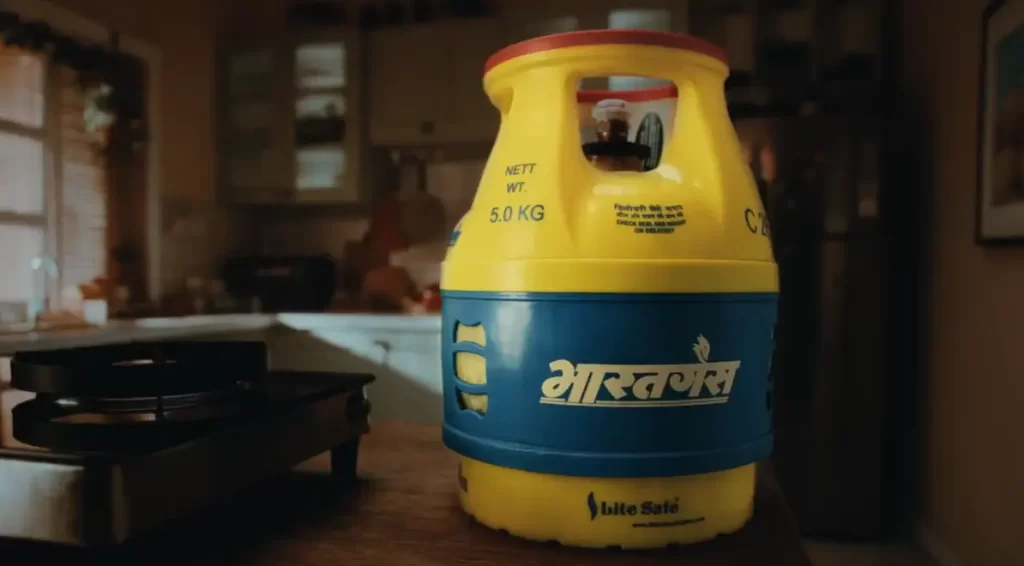
Cooking gas cylinders have been a staple in Indian kitchens for decades, but they come with familiar hassles. Heavy mild steel cylinders are tough to lift, rust over time, and hide how much gas remains until it’s too late. Bharat Petroleum Corporation Limited (BPCL), a Fortune Global 500 Maharatna company, has now solved these problems with Bharatgas Lite. Launched on January 28, 2026, in Goa, this next-generation LPG cylinder uses advanced composite materials to make life easier, safer, and cleaner for households. Union Minister of Petroleum and Natural Gas Hardeep Singh Puri inaugurated it alongside Goa Chief Minister Dr. Pramod Sawant, BPCL leaders, and dignitaries. Branded as “Naye Bharat Ka Naya Cylinder”, Bharatgas Lite promises over 50% less weight, see-through gas levels, rust-free design, and explosion resistance, all tailored for India’s busy families.A Smarter Cylinder Born from Everyday NeedsImagine carrying a full LPG cylinder without back strain or calling a neighbor for help. Bharatgas Lite weighs more than 50% less than traditional 14.2 kg mild steel (MS) cylinders, making it simple for women, seniors, and anyone to handle, transport, and install. Its translucent body lets you peek inside and check gas levels instantly, no more surprises during dinner prep or unexpected refills. The rust-free composite build keeps kitchens hygienic, free from corrosion stains or leaks. Plus, it resists explosions even in extreme heat or impacts, adding peace of mind.BPCL’s Business Head LPG, T.V. Pandiyan, called it a “reimagined energy solution.” Designed for modern India, it fits sleek kitchens while prioritizing safety and convenience. Launched at India Energy Week, it showcases BPCL’s push for practical innovations in refining, marketing, and customer service – backed by 35.3 MMTPA refining capacity and networks of 24,000+ fuel stations and 6,200+ LPG distributors.Safer, Lighter, and User-Friendly: Key Features ExplainedBharatgas Lite stands out with thoughtful engineering:Ultra-Lightweight: Half the weight of MS cylinders – lift it solo, no delivery delays.Visible Gas Gauge: Translucent design shows exact LPG left, plan refills smartly.Rust-Proof and Hygienic: Composite material prevents corrosion, keeps burners clean.Explosion-Resistant: Survives drops, fire, or pressure, minimizes leak risks.Modern Aesthetics: Sleek look suits urban homes, easier storage.These fix common pains: Heavy lifting injuries, gas runouts mid-cooking, and rusty leaks in monsoons. It’s non-subsidized, aligning with BPCL’s premium Bharatgas focus.Easy Access: New Connections and Smart SwappingBPCL makes switching simple, the only Oil Marketing Company (OMC) with a cylinder swapping scheme:Existing Bharatgas Customers (Non-Subsidized): Request exchange, pay Rs 300 extra security deposit per cylinder. Get Bharatgas Lite immediately.New Domestic Connections: Opt for Lite at signup. Security Deposit: Rs 2,500. Same documents/onboarding as MS cylinders.Starting in Goa, it rolls nationwide via Bharatgas distributors. Refills follow the uFill app or SMS, seamless as always.A Milestone for India’s Energy FutureThe Goa launch highlights government-industry synergy. Minister Puri praised BPCL’s innovation; CM Sawant welcomed safer homes for Goans. Secretary Dr. Neeraj Mittal, Director (Refineries) Sanjay Khanna (Addl. Charge Chairman), and Director (Marketing) Subhankar Sen joined, signaling national rollout.BPCL leads LPG evolution: From jumbo cylinders to composites, prioritizing women (80% users). It cuts carbon footprints indirectly via efficient use, and fits “Viksit Bharat” goals. Challenges like higher upfront cost? Offset by durability, safety savings.Bharatgas Lite isn’t just a cylinder, it’s lighter burdens, visible futures, safer stoves. For Goan homemakers boiling rice or Delhi families hosting dinners, it delivers reliable energy with modern ease. BPCL proves: Innovation powers progress, one lighter lift at a time.