


Leadership Turmoil in India’s Aviation Sector: IndiGo and Air India CEOs Exit Amid Crisis
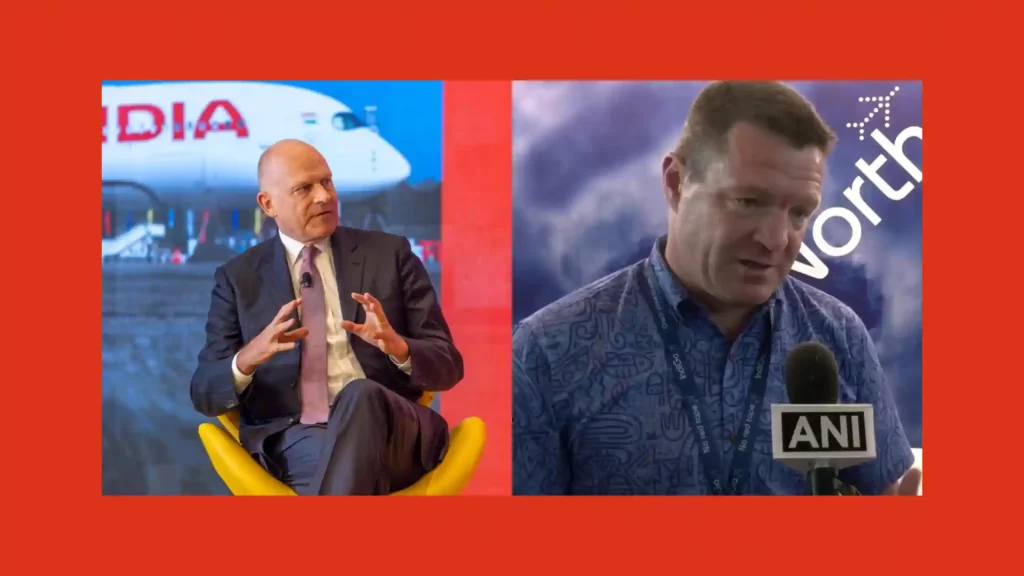
Two of India’s largest airlines are seeing simultaneous leadership changes at a time when the aviation sector faces one of its most testing phases in recent years. IndiGo’s CEO Pieter Elbers stepped down after the airline faced its worst operational crisis in two decades, while Air India’s CEO Campbell Wilson has resigned even though his term was set to run until 2027. Together, IndiGo and Air India dominate the market with close to 60 percent and nearly 30 percent market share, respectively, accounting for roughly 90 percent of India’s aviation sector. The exits of their CEOs are not isolated events but come as the aviation sector grapples with a mix of domestic setbacks and global shocks, raising questions about whether the industry is entering a reset phase.IndiGo’s Operational Crisis Forces Quick Leadership ShiftIndiGo’s CEO Pieter Elbers stepped down after the airline faced its worst operational crisis in two decades. In December, the airline cancelled 4,500 flights during the holiday season after failing to prepare for stricter pilot rest rules, stranding thousands of passengers. The disruption exposed gaps in crew planning and severely damaged the airline’s reputation for reliability that had been built over decades of consistent operations.The airline has now brought in aviation veteran Willie Walsh as its next CEO, a move analysts see as a clear signal that IndiGo’s board wants quick corrective action. Brokerage Jefferies said in a March 31 note that the fast appointment shows “urgency and clarity” at the airline, adding that restoring operational reliability and fixing crew-planning weaknesses will be key priorities. Walsh’s appointment is being seen as a move to support IndiGo’s major push into long-haul international travel, with his experience in building International Airlines Group and managing long-haul operations proving useful for IndiGo’s next phase of global expansion.Safety Concerns and Regulatory PressureAir India’s CEO Campbell Wilson has resigned, stepping down before the end of his five-year term that was due to run until 2027. His exit comes as the airline continues to report losses and faces increased scrutiny following a fatal crash last year that killed 241 of 242 people on board a London-bound Boeing 787-8 Dreamliner shortly after take-off from Ahmedabad. The crash added immense pressure on the airline’s management, with investigations ongoing and the final report yet to be released.The carrier has also been pulled up by regulators for safety lapses, including flying an aircraft eight times without an airworthiness certificate and operating planes without checking emergency equipment. Air India admitted in December that there was a “need for urgent improvements in process discipline, communication, and compliance culture.” Despite these challenges, industry experts say Wilson played a key role in stabilizing the airline after Tata Group took over in 2022. “Over the last four years, Campbell did a good job in very tough circumstances,” independent aviation analyst Brendan Sobie told Reuters. “Finding the right candidate to complete Air India’s transformation will not be easy.”Wilson took charge months after Tata Sons acquired the airline with a mandate to overhaul operations, modernize systems, and restore Air India’s reputation. In his departure statement, he highlighted that the four years since privatization saw the acquisition and successful merger of four airlines, evolution from public to private sector practices, renewal of leadership team and workforce culture, complete modernization of systems, launch of new physical products, and deployment of elevated service standards. Under Wilson, Air India also saw the merger of Vistara into the airline and inducted more than 100 aircraft.Global Conflicts Driving Costs Higher and Routes LongerBeyond company-specific issues, global tensions are adding significant pressure on airlines. The ongoing West Asia conflict, especially the Iran war, has pushed fuel prices higher and forced airlines to take longer routes, increasing both flying time and operating costs. Airlines are having to carry extra fuel and trim schedules to deal with the situation. Brent crude prices have surged, directly impacting aviation turbine fuel costs, which are up by 8-10 percent between March and April.To manage the impact on passengers, the Indian government has capped monthly increases in aviation fuel prices for domestic flights at 25 percent. Analysts at Motilal Oswal said higher fuel costs, rupee depreciation, and weaker international operations could hit IndiGo’s earnings for the current financial year, cutting their profit estimate for the airline by 15 percent. Air India revised its fuel surcharge structure, introducing a distance-based surcharge on domestic routes and increasing charges on international ones, with revised rates coming into effect from April 8.Airspace Closures Add to Operational BurdenThe situation has been made worse by regional tensions closer to home. After the India-Pakistan conflict in May last year, Pakistan shut its airspace to Indian airlines, forcing carriers like IndiGo and Air India to take longer routes, especially for west-bound flights. These detours have increased fuel use and reduced profitability on key international routes. Air India, which is already scaling back some international operations, is expected to face further pressure if the Iran conflict continues.Competition and Expansion Add Execution PressureAt the same time, both airlines are trying to grow despite these challenges. IndiGo is planning a major push into long-haul international travel, having ordered Airbus A321XLR and A350 aircraft and already flying to over 40 international destinations. Walsh’s leadership experience will be crucial for this expansion phase. Air India, meanwhile, has ordered more than 500 aircraft as part of its turnaround plan, but currently operates a fleet of 191 planes while continuing to face delivery delays and supply chain issues.The airline and its low-cost arm Air India Express reported a combined loss of ₹98.08 billion in FY25, showing the scale of financial pressure facing the Tata Group’s aviation venture. Within the Air India group, leadership gaps persist, with Air India Express having been without a head since March 19, following the exit of its MD Aloke Singh after completing his tenure.India’s Aviation Future: Final ThoughtsThe back-to-back leadership changes at IndiGo and Air India point to a wider shift in India’s aviation sector. Airlines are no longer just dealing with demand recovery but are managing higher costs, tighter
IndiGo’s December 2025 Meltdown: What Really Happened?
In early December 2025, IndiGo, India’s biggest budget airline, faced one of the worst aviation breakdowns the country has seen in years. Starting around December 2, thousands of flights were cancelled across major cities. Airports were filled with stranded passengers, long queues, and growing frustration. What looked like a crisis was actually the result of a deeper planning failure.Why Did Everything Collapse?The core issue began with new rules introduced by the Directorate General of Civil Aviation (DGCA). These updated regulations required airlines to:Strictly limit pilot flying hoursGive longer rest breaks between flightsReduce fatigue risks, especially on late-night schedulesWhile these rules had been planned for months, it appears IndiGo didn’t reorganise its crew schedules, standby pilots, or rosters in time.The result?Many flights simply had no pilot or co-pilot who was legally eligible to fly. Without meeting DGCA requirements, IndiGo was forced to cancel entire sets of flights, creating a ripple effect across the network.IndiGo flies over 2,200 flights daily, including many night operations. So even a small scheduling disruption hit the airline on a massive scale.The Passenger Impact: A Domino Effect Across IndiaWhat began as a few hundred cancellations quickly escalated. On some of the worst days:550–560 flights were cancelled within hoursBengaluru alone saw around 150 flight cancellationsDelhi, Mumbai, Hyderabad, and Kolkata experienced severe chaosPassengers experienced:Sudden last-minute cancellationsExtremely long lines at help desksDelayed or misplaced luggageStruggles to find alternate flights during the busy winter and wedding seasonHow IndiGo Tried to RecoverFacing public anger, media pressure, and regulatory scrutiny, IndiGo moved into crisis-recovery mode. They claimed rapid improvements:About 1,800 flights were operating again within daysOn-time performance slowly improvedThey released ₹827 crore in refunds to affected passengersBaggage delays and customer complaints were prioritisedMost routes were restored by mid-DecemberThe airline also deployed additional staff to manage queues and customer support.Final Words IndiGo’s December 2025 crisis wasn’t a one-day glitch; it was a major systems failure. Safety rules triggered the disruption, but weak internal preparation turned it into a nationwide travel meltdown. Strong safety regulations must be matched with strong operational readiness. Otherwise, passengers end up paying the price.