


Rahul Mishra’s Devi Collection at Paris Couture Week: When Indian Craft Meets Myth, Sculpture, and Modern Couture
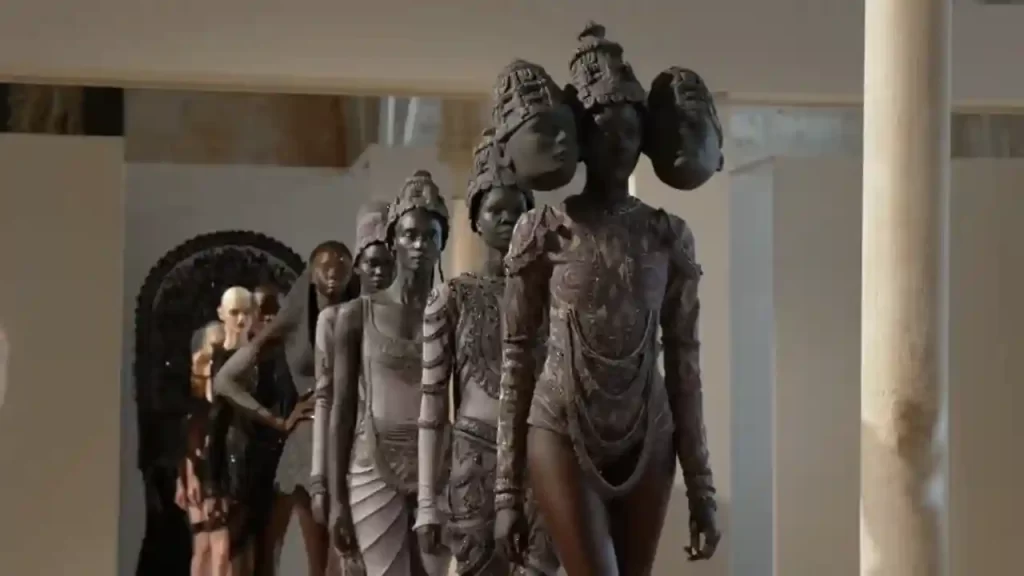
Rahul Mishra’s Devi: The Eternal Muse at Paris Haute Couture Week was not just another runway presentation; it was a carefully staged meditation on divinity, craftsmanship, and the emotional power of Indian heritage translated into contemporary couture. Inspired by the carved stone figures of ancient South Indian temples, the collection felt less like a fashion show and more like a reverent act of transformation, where history, sculpture, and handwork were reimagined as garments that moved like living art. The collection arrived with the kind of visual confidence that has become Mishra’s signature, but this season it carried an added poetic charge. By framing the work around the idea of the eternal feminine and describing it as “almost like time travel,” Mishra positioned couture not as decoration, but as a medium through which centuries-old cultural memory could be revived on a Paris runway.A Collection Rooted in HeritageAt the heart of Devi: The Eternal Muse lies a distinctly Indian idea of the sacred feminine, one that draws from temple sculpture, devotional iconography, and the visual language of ancient South Indian architecture. Rather than directly replicating the past, Mishra interpreted these references through silhouette, surface, and structure, turning devotional imagery into a modern couture vocabulary that still felt emotionally tied to its origins.That choice matters because it separates the collection from simple nostalgia. Mishra was not presenting “Indian-ness” as a museum artifact; he was showing how living craft traditions can become the basis for new luxury, new drama, and new forms of artistic expression. In a city like Paris, where couture is often measured by innovation and technical refinement, that kind of cultural specificity becomes a strength rather than a constraint. Sculptural Couture on the RunwayThe most immediate visual effect of the collection was its sculptural quality. Models appeared in tones of stone grey, black, ivory, beige, and antique gold, many of them resembling living temple carvings animated into motion by fabric, embroidery, and silhouette. Skin-toned bodysuits created the illusion of the body being partially absorbed into the garment, while dense surface work gave the clothing the presence of carved stone. Temple-inspired crowns, built-in jewellery, dramatic headpieces, and architectural shoulder forms reinforced the impression that each look was meant to be seen as a complete artistic object rather than a conventional outfit. This is where Mishra’s couture language becomes especially compelling. His garments do not merely dress the body; they shape the atmosphere. A collar, a shoulder line, or a frame around the face becomes part of the storytelling, and in Devi, that storytelling was about sanctity, power, and feminine presence rendered with almost ceremonial precision. Craft as the Soul of the ShowThe craftsmanship in Devi: The Eternal Muse was central to its impact. Mishra’s signature embroidery appeared on an even grander scale, with layers of thread work, zardozi, dabka, freshwater pearls, crystals, and bugle beads used to mimic the texture and gravitas of temple stone while preserving the softness and movement that couture requires. What made the embroidery remarkable was not only its density, but its discipline. Instead of overwhelming the silhouette, the embellishment often worked like shadow and relief, echoing the way sculpture catches light across carved surfaces. That interplay between material richness and architectural restraint is one reason Mishra’s couture is so distinct in the global fashion conversation.Collaborations That Expanded the VisionThe collection also drew strength from collaboration, which gave the runway a multidimensional artistic identity. Mishra worked with clay artisan Sumant Kumar to create ceremonial headpieces inspired by temple crowns, while his ongoing partnership with Tanishq brought natural diamonds and temple-style jewelry into the garments. British milliner Stephen Jones added sculptural headwear that pushed certain looks into surreal, almost mythic territory. These partnerships mattered because they reinforced a central theme of the show: that couture is strongest when it becomes a meeting point between disciplines. Jewelry, millinery, embroidery, and artisanal craft were not accessory elements here; they were part of the same visual grammar, contributing to a world in which every detail seemed to belong to the same sacred universe. The Meaning of “Time Travel”Mishra’s comment that the collection felt “almost like time travel” captures why the show resonated so strongly. He was referring to the symbolic power of ancient sculpture, some of it more than 2,000 years old, and to the way those forms still generate aesthetic and emotional inspiration today. That idea gives the collection a rare kind of depth. Fashion often borrows from history in a surface-level way, but Mishra’s work suggested a deeper continuity, as if the act of embroidery itself could become a way of remembering how earlier generations understood beauty, divinity, and form. In that sense, the collection was not about reviving the past exactly as it was, but about entering into conversation with it. Global Couture, Indian CenterOne of the most important aspects of this collection is what it says about Indian couture on the world stage. Rahul Mishra has presented 14 collections at Paris Haute Couture Week since his debut in January 2020, a remarkable consistency that signals both artistic ambition and international credibility. That longevity matters because it places Indian craftsmanship at the center of an elite global platform without forcing it to dilute its identity. Instead of conforming to Paris couture’s expectations, Mishra has steadily expanded them, showing that Indian craft can be luxurious, conceptual, technically advanced, and culturally specific all at once. Cardi B and the Front Row EffectThe front row added another layer of visibility to the collection, with Cardi B attending the show in a custom Rahul Mishra ivory couture look that showcased the designer’s sculptural sensibility. Her presence reinforced the global pop-cultural relevance of the brand, while also underlining how strongly Mishra’s work speaks to celebrity dressing and red-carpet spectacle.That intersection of craftsmanship and celebrity matters because couture today exists in both the atelier and the public imagination. A collection like Devi must succeed as an artistic statement, but it also needs to travel visually across social media, press coverage, and cultural conversation, and Mishra’s show did that with ease. Why Devi Stands OutWhat makes Devi: The