


Modi at G7 Summit 2026: Maritime Security, Global Solidarity, and International Relations
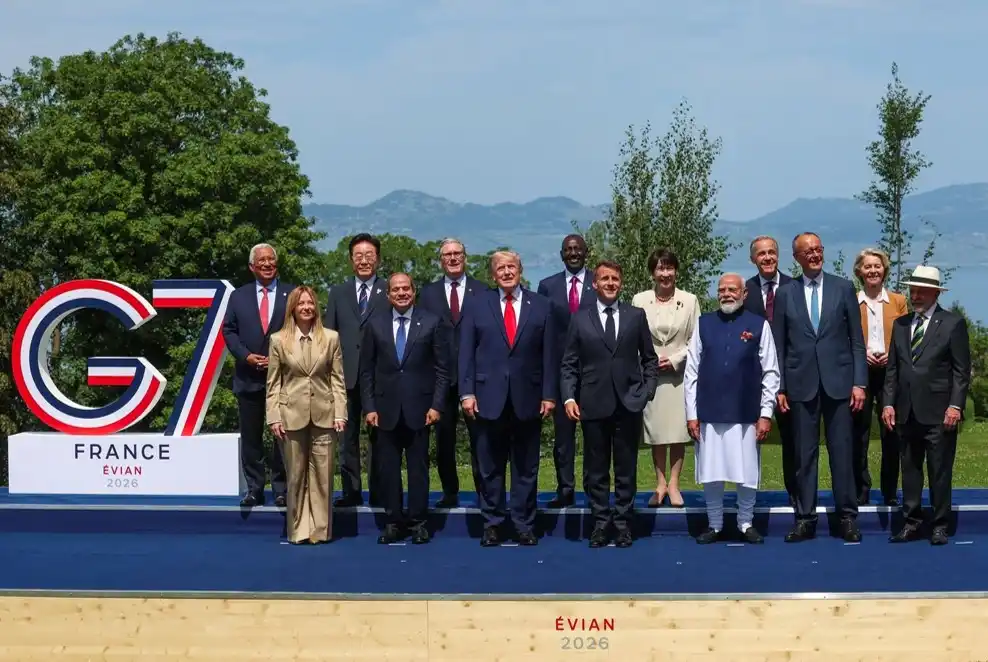
Prime Minister Narendra Modi delivered a powerful address at the 52nd G7 Summit in Evian-les-Bains, France, on Tuesday, June 16, 2026, voicing India’s firm concern over disruptions to maritime trade through the Strait of Hormuz and highlighting that several Indian civilians lost their lives during the West Asia conflict. Speaking at the outreach session on “Forging New Partnerships and Rebuilding International Solidarity,” Modi emphasized that lasting solutions to conflicts can only be achieved through dialogue, diplomacy, and international cooperation, while calling for the safety of seafarers who connect all nations through global maritime trade.The summit, held from June 15 to 17 on the shores of Lake Geneva, brings together leaders of France, Britain, Canada, Germany, Italy, Japan, and the United States alongside the European Union, with India invited as a partner country for its 13th participation and PM Modi’s 7th consecutive attendance. During his extensive diplomatic outreach on the sidelines, Modi held bilateral meetings with Canadian Prime Minister Mark Carney, British Prime Minister Keir Starmer, UAE President Sheikh Mohamed bin Zayed Al Nahyan, Kenyan President William Ruto, Egyptian President Abdel Fattah El-Sisi, Japanese Prime Minister Sanae Takaichi, and South Korean President Lee Jae-myung, while also exchanging greetings with U.S. President Donald Trump ahead of their scheduled bilateral meeting.Maritime Security and the Strait of Hormuz: India’s Core ConcernPM Modi’s remarks on the need to protect seafarers came amid growing anger in India over the deaths of three Indian crew members in a U.S. military attack on a merchant vessel off the coast of Oman last week. The U.S. Central Command said it had taken action against three vessels, Marivex on June 8, Settebello on June 9, and Jalveer on June 11, alleging that they were attempting to violate the U.S. blockade of Iranian ports. Modi raised this issue a day before his bilateral talks with President Trump, underscoring how conflicts in West Asia have disrupted global trade and caused loss of life.“We welcome the progress made in peace efforts in West Asia. This conflict has caused loss of life and property in our friendly countries in the region. Disruptions to maritime trade through the Strait of Hormuz have affected the global economy. Several Indian civilians have also lost their lives,” Modi said during his address. “It is our responsibility to ensure the safety of the seafarers who connect all nations through global maritime trade. We must ensure that maritime routes remain secure and that seafarers can perform their duties without fear,” he added.Modi’s concerns reflect India’s strategic dependence on the Strait of Hormuz, one of the world’s most critical maritime chokepoints for oil shipments and global commerce. As a major importer of energy and a nation with significant maritime trade volumes, disruptions in Hormuz directly impact India’s economic security, energy prices, and the safety of its nationals working in global shipping. The deaths of three Indian mariners in the U.S. strike have heightened domestic pressure on the government to address maritime security and protect Indian citizens abroad.Trust as the Ultimate Strategic Asset: Modi’s Vision for International RelationsIn his address, Modi underscored the importance of trust in international relations, saying that confidence among nations has become a more valuable strategic asset than minerals, technology, or markets. He argued that in an increasingly interconnected world, where energy, food, health, cyber, and economic security are closely linked, stronger international partnerships are essential for humanity’s progress and prosperity. Warning that trade and technology were being used to pursue narrow interests, Modi said such practices had contributed to a growing trust deficit in the international system.Modi wrote in an X post: “Shared my thoughts at the Outreach Session on ‘Forging New Partnerships and Rebuilding International Solidarity’ at the G7 Summit in Evian. In a world that is getting more interconnected and interdependent than ever before, this subject becomes all the more vital.” His emphasis on trust reflects India’s diplomatic philosophy that international cooperation must be founded on mutual respect, reciprocity, and shared interests rather than coercion or unilateralism.The trust deficit Modi highlighted is particularly relevant in the current global context, where geopolitical tensions, trade restrictions, technology bans, and security concerns have led nations to prioritize national interests over collective action. As the G7 discusses issues ranging from AI access to critical minerals supply chains, India’s call for trust-based partnerships offers an alternative framework that emphasizes inclusivity, cooperation, and shared prosperity for all nations, not just the wealthy few.Bilateral Outreach: Strengthening India’s Strategic PartnershipsIndia-Canada: Forward-Looking Strategic PartnershipDuring his meeting with Canadian Prime Minister Mark Carney, PM Modi and his counterpart welcomed the positive momentum in India-Canada relations and reaffirmed their commitment to building a forward-looking strategic partnership. The two leaders reviewed progress in economic cooperation, including commercial arrangements relating to Liquefied Natural Gas (LNG), Liquefied Petroleum Gas (LPG), and metallurgical coal. They expressed satisfaction over ongoing negotiations for a Comprehensive Economic Partnership Agreement, with both sides aiming to conclude the pact this year.The leaders also welcomed growing cooperation in science and technology, defence, finance, and migration. To further strengthen defence and security ties, the two countries agreed to launch negotiations on a General Security of Information Agreement. PM Modi expressed India’s support for Canada becoming a Dialogue Partner of the Indian Ocean Rim Association, and both leaders announced the establishment of Raisina Americas as a platform to enhance dialogue and cooperation.India-UK: Vision 2035 and Comprehensive Economic PartnershipDuring his meeting with British Prime Minister Keir Starmer, PM Modi reviewed progress in India-UK relations under Vision 2035. The two leaders welcomed cooperation across trade, defence, technology, education, and people-to-people ties, looking forward to the early implementation of the Comprehensive Economic and Trade Agreement. They expressed satisfaction over the strong education partnership, noting recent progress in establishing campuses of British universities in India, including the University of Liverpool in Bengaluru and the Universities of York and Bristol in Mumbai.The leaders exchanged views on regional and global developments and reaffirmed their commitment to further strengthening the India-UK Comprehensive Strategic Partnership, demonstrating how both nations are working to deepen their bilateral
FIFA World Cup 2026 in Crisis: Wars, Cartels, and Trade Fights Threaten Historic Tournament
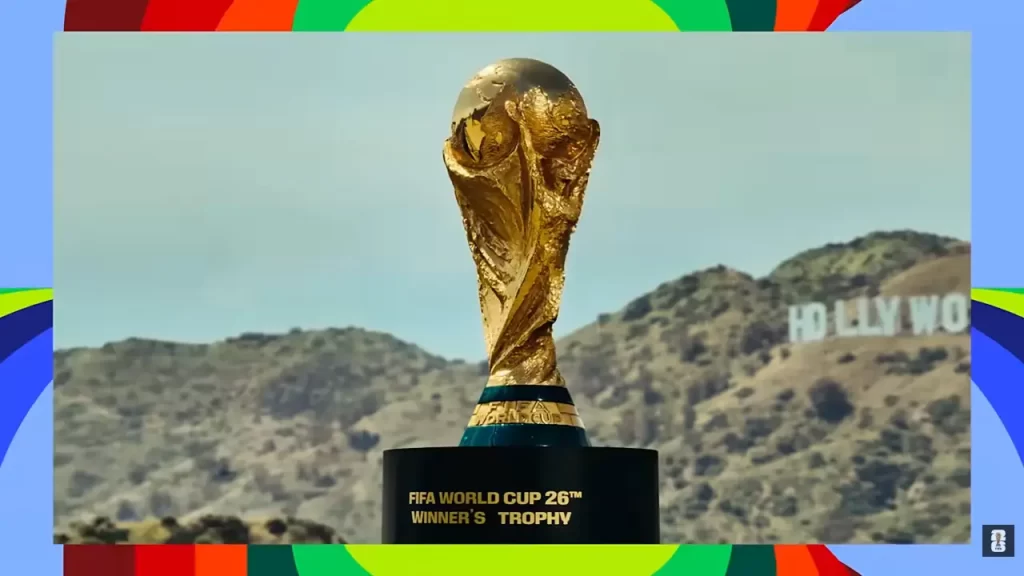
The 2026 FIFA World Cup will be the biggest ever, with 48 teams, 104 matches from June 11 to July 19 across 16 cities in the US, Canada, and Mexico. But today, just months away, it’s facing huge problems. Wars in the Middle East, killings by drug gangs in Mexico, fights between the host countries, and even a funny award to US President Donald Trump are making things very hard. Let’s break it all down in simple terms.Trump’s Peace Prize and the Wars That FollowedIn December 2025, at the World Cup group draw, FIFA President Gianni Infantino gave Trump the first-ever FIFA Peace Prize. They called him a “dynamic leader” for talks that brought “dialogue, de-escalation, and stability.” A video praised him for four minutes. Trump put on the medal happily.But three months later, Trump started big wars. He and Israel launched airstrikes on Iran called Operation Epic Fury, killing Iran’s top leader, Ayatollah Khamenei. Iran fired missiles at Israel, Qatar, Saudi Arabia, and Iraq. Trump also hit ISIS in Nigeria on Christmas, sent troops to Venezuela to catch President Nicolás Maduro, threatened to take Greenland from Denmark, and joked about making Canada the 51st US state by calling PM Mark Carney “governor.”Now, FIFA’s peace award looks bad. The World Cup could be ruined if the war in the Middle East escalates. Iran qualified first from Asia and plans a base in Arizona, but now they’re at war with the US. Iran Soccer Federation president Mehdi Taj said: “We can’t hope for the World Cup after these attacks.”FIFA has not said anything about the prize or wars.Mexico’s Drug War Hits World Cup CitiesMexico hosts the opening match in Mexico City (Mexico vs South Africa) and games in Guadalajara and Monterrey. But violence exploded near Guadalajara. Mexican forces killed “El Mencho,” boss of the Jalisco New Generation cartel, with US help from Trump. At least 70 people died.Trump pushed Mexico’s President Claudia Sheinbaum to fight cartels. Now, Monterrey has inter-confederation playoffs on March 31: Iraq vs winner of Bolivia vs Suriname (semifinal March 26). Guadalajara hosts another playoff with New Caledonia, Jamaica, and DR Congo.FIFA’s Infantino said, “Mexico is great. Governments and police will keep it safe.” Some talk moved matches to Qatar’s Lusail stadium (the last final site), but Iran attacked Qatar too—their jets shot down Iranian planes.Iraq Wants Playoffs Delayed Because of WarIraq coach Graham Arnold asked FIFA to postpone the Monterrey game. Iran’s war closed Iraqi airspace; no players or staff can fly out. “It won’t be our best team. Iraq hasn’t been to the World Cup since 1986. This is our big dream,” he said from the UAE.Arnold suggests: Bolivia vs Suriname now; winner vs Iraq in the US a week before the World Cup. Iraq president Adnan Dirjal works non-stop. FIFA has no answer yet.Host Countries Fighting Over Trade—USMCA Ends Mid-TournamentThe “United Bid” was sold as three friends together, like old NAFTA. But the USMCA trade deal ends July 1, right in the middle of the World Cup. Trump calls it “irrelevant” and might let it die. He pressures Mexico on cartels (even military help), backs Canada’s Alberta to break away (vote October), and Canada PM Carney promises to “stand up to Trump.”Leaders met once at the draw: Trump, Sheinbaum, and Carney. Trump met FIFA boss Infantino 8 times. Money problems too:US: Cities pay alone, no big federal help. Shutdown stops FEMA grants. No big fan fests in Jersey City or Seattle.Mexico: Tax breaks for World Cup cities.Canada: Over $300M federal money, mostly to Toronto/Vancouver cities.FIFA has 1,000 staff in three countries (4,000 during the event) for security and plans. They train local teams.How the United Bid Started, and Why It’s BreakingIn 2016, US Soccer boss Sunil Gulati said: Join forces, US gets 75% games, win sure. Canada/Mexico agreed. Pitch: “Neighbors unite for inclusive World Cup.” Won in 2018 vs Morocco.What Happens Next for the World Cup?Playoffs: March 26-31 in Mexico, will they move?Iran/Iraq teams: Travel bans? Boycotts?Security: Cartels, wars, and drones worry US cities.Fans: 39 days, millions travel, flights, borders tense.FIFA says it’s one tournament, three cultures. But glue is thin. Soccer unites the world, or will wars win?World Cup 2026 tests if football beats real fights. Fans wait, pray for goals over bombs.