


Leadership Turmoil in India’s Aviation Sector: IndiGo and Air India CEOs Exit Amid Crisis
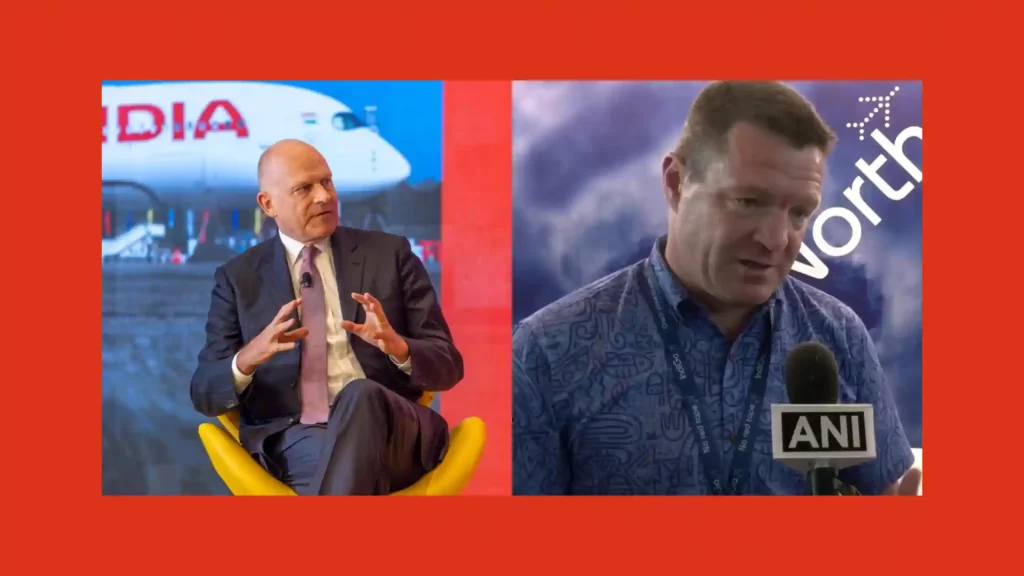
Two of India’s largest airlines are seeing simultaneous leadership changes at a time when the aviation sector faces one of its most testing phases in recent years. IndiGo’s CEO Pieter Elbers stepped down after the airline faced its worst operational crisis in two decades, while Air India’s CEO Campbell Wilson has resigned even though his term was set to run until 2027. Together, IndiGo and Air India dominate the market with close to 60 percent and nearly 30 percent market share, respectively, accounting for roughly 90 percent of India’s aviation sector. The exits of their CEOs are not isolated events but come as the aviation sector grapples with a mix of domestic setbacks and global shocks, raising questions about whether the industry is entering a reset phase.IndiGo’s Operational Crisis Forces Quick Leadership ShiftIndiGo’s CEO Pieter Elbers stepped down after the airline faced its worst operational crisis in two decades. In December, the airline cancelled 4,500 flights during the holiday season after failing to prepare for stricter pilot rest rules, stranding thousands of passengers. The disruption exposed gaps in crew planning and severely damaged the airline’s reputation for reliability that had been built over decades of consistent operations.The airline has now brought in aviation veteran Willie Walsh as its next CEO, a move analysts see as a clear signal that IndiGo’s board wants quick corrective action. Brokerage Jefferies said in a March 31 note that the fast appointment shows “urgency and clarity” at the airline, adding that restoring operational reliability and fixing crew-planning weaknesses will be key priorities. Walsh’s appointment is being seen as a move to support IndiGo’s major push into long-haul international travel, with his experience in building International Airlines Group and managing long-haul operations proving useful for IndiGo’s next phase of global expansion.Safety Concerns and Regulatory PressureAir India’s CEO Campbell Wilson has resigned, stepping down before the end of his five-year term that was due to run until 2027. His exit comes as the airline continues to report losses and faces increased scrutiny following a fatal crash last year that killed 241 of 242 people on board a London-bound Boeing 787-8 Dreamliner shortly after take-off from Ahmedabad. The crash added immense pressure on the airline’s management, with investigations ongoing and the final report yet to be released.The carrier has also been pulled up by regulators for safety lapses, including flying an aircraft eight times without an airworthiness certificate and operating planes without checking emergency equipment. Air India admitted in December that there was a “need for urgent improvements in process discipline, communication, and compliance culture.” Despite these challenges, industry experts say Wilson played a key role in stabilizing the airline after Tata Group took over in 2022. “Over the last four years, Campbell did a good job in very tough circumstances,” independent aviation analyst Brendan Sobie told Reuters. “Finding the right candidate to complete Air India’s transformation will not be easy.”Wilson took charge months after Tata Sons acquired the airline with a mandate to overhaul operations, modernize systems, and restore Air India’s reputation. In his departure statement, he highlighted that the four years since privatization saw the acquisition and successful merger of four airlines, evolution from public to private sector practices, renewal of leadership team and workforce culture, complete modernization of systems, launch of new physical products, and deployment of elevated service standards. Under Wilson, Air India also saw the merger of Vistara into the airline and inducted more than 100 aircraft.Global Conflicts Driving Costs Higher and Routes LongerBeyond company-specific issues, global tensions are adding significant pressure on airlines. The ongoing West Asia conflict, especially the Iran war, has pushed fuel prices higher and forced airlines to take longer routes, increasing both flying time and operating costs. Airlines are having to carry extra fuel and trim schedules to deal with the situation. Brent crude prices have surged, directly impacting aviation turbine fuel costs, which are up by 8-10 percent between March and April.To manage the impact on passengers, the Indian government has capped monthly increases in aviation fuel prices for domestic flights at 25 percent. Analysts at Motilal Oswal said higher fuel costs, rupee depreciation, and weaker international operations could hit IndiGo’s earnings for the current financial year, cutting their profit estimate for the airline by 15 percent. Air India revised its fuel surcharge structure, introducing a distance-based surcharge on domestic routes and increasing charges on international ones, with revised rates coming into effect from April 8.Airspace Closures Add to Operational BurdenThe situation has been made worse by regional tensions closer to home. After the India-Pakistan conflict in May last year, Pakistan shut its airspace to Indian airlines, forcing carriers like IndiGo and Air India to take longer routes, especially for west-bound flights. These detours have increased fuel use and reduced profitability on key international routes. Air India, which is already scaling back some international operations, is expected to face further pressure if the Iran conflict continues.Competition and Expansion Add Execution PressureAt the same time, both airlines are trying to grow despite these challenges. IndiGo is planning a major push into long-haul international travel, having ordered Airbus A321XLR and A350 aircraft and already flying to over 40 international destinations. Walsh’s leadership experience will be crucial for this expansion phase. Air India, meanwhile, has ordered more than 500 aircraft as part of its turnaround plan, but currently operates a fleet of 191 planes while continuing to face delivery delays and supply chain issues.The airline and its low-cost arm Air India Express reported a combined loss of ₹98.08 billion in FY25, showing the scale of financial pressure facing the Tata Group’s aviation venture. Within the Air India group, leadership gaps persist, with Air India Express having been without a head since March 19, following the exit of its MD Aloke Singh after completing his tenure.India’s Aviation Future: Final ThoughtsThe back-to-back leadership changes at IndiGo and Air India point to a wider shift in India’s aviation sector. Airlines are no longer just dealing with demand recovery but are managing higher costs, tighter
Soaring Heights: How Tata-Airbus H-125 Facility Marks India’s Aerospace Leap
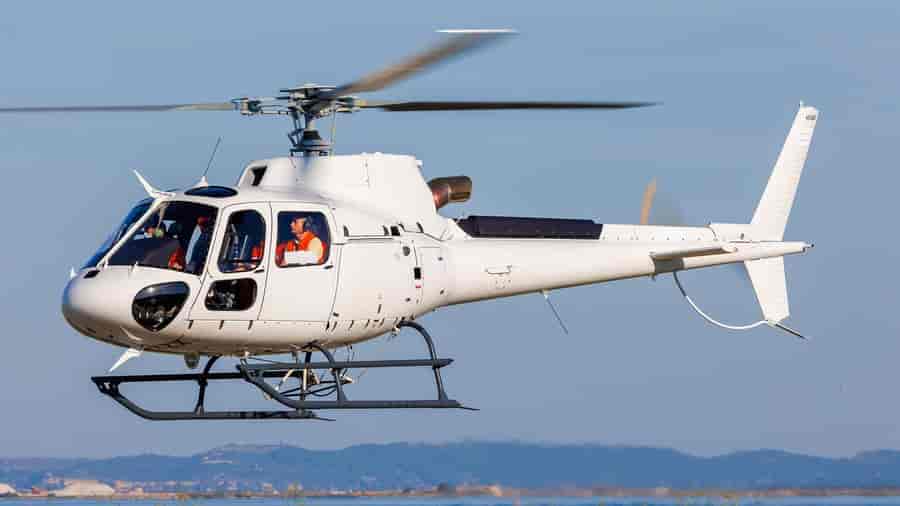
India’s aerospace ambitions just touched new heights, literally. On February 17, 2026, Prime Minister Narendra Modi and French President Emmanuel Macron virtually inaugurated the Tata Advanced Systems Limited (TASL) Final Assembly Line (FAL) for Airbus H-125 light utility helicopters in Vemagal, Karnataka, from Mumbai. This isn’t mere infrastructure; it’s a fusion of strategic trust, technological prowess, and economic firepower, propelling India’s Make-in-India and Aatmanirbhar Bharat visions skyward.A Historic Virtual Ribbon-CuttingPicture this: Leaders from two global powers, Modi and Macron, hitting the digital button to unveil a facility that symbolises Indo-French synergy. Raksha Mantri Rajnath Singh, on-site at Vemagal, called it a “milestone in the strategic partnership between India and France,” quipping that “even the sky is not the limit.” Joining him were French Minister of Armed Forces and Veterans Affairs Catherine Vautrin, Union Civil Aviation Minister KR Naidu, Karnataka’s Minister for Large & Medium Industries MB Patil, Chief of Air Staff Air Chief Marshal AP Singh, Defence Secretary Rajesh Kumar Singh, and Secretary (Defence Production) Sanjeev Kumar.This event builds directly on TASL-Airbus’ prior triumph: the C-295 military transport aircraft FAL, India’s first private-sector final assembly for military planes. Now, the H-125 line cements a full-spectrum military aerospace ecosystem, blending French engineering with Indian manufacturing muscle.H-125: The Everest-Conquering WorkhorseAt its core, the H-125 is no ordinary chopper; it’s the world’s most trusted single-engine light utility helicopter, with unmatched reliability across brutal conditions. The military-optimised H-125M variant acts as a high-altitude force multiplier: stealthy low acoustic and thermal signatures enable tactical reconnaissance and surveillance. It delivers logistics to remote frontline outposts, rushes search-and-rescue (SAR) or medical evacuations (MEDEVAC), and thrives where others falter.Why? It’s the only helicopter to land on Mount Everest’s summit, proof of its extreme performance ceiling. For India’s armed forces, battling “hot-and-high” terrains from Ladakh’s icy peaks to Siachen’s glaciers, this is gold. Traditional fleets struggle above 6,000 meters; the H-125 powers through, ensuring supply drops, troop insertions, and rapid response in oxygen-starved zones. Globally, over 9,000 H-125 family units fly missions, from VIP transport to firefighting, logging 45+ million flight hours.PM Modi captured the pride: “We take pride in manufacturing in India the world’s only helicopter capable of flying to the heights of Mount Everest and exporting it worldwide.” Raksha Mantri echoed, praising its “exceptional reliability, versatility, and outstanding performance.”Economic Engine: Jobs, Investment, and ExportsThis FAL isn’t just about rotors; it’s an economic turbocharger. Projected investment surpasses ₹1,000 crore, igniting direct and indirect jobs for India’s “skilled and hardworking youth.” It supercharges the MSME ecosystem, now boasting 16,000+ defence-linked units supplying global giants.Since 2014, under Modi, reforms have flipped the script: Ordnance Factories corporatised into seven DPSUs, liberalised FDI (up to 74% on the automatic route), and twin Defence Industrial Corridors (Uttar Pradesh-Tamil Nadu). Private sector share? A robust 25% of total defence production. Exports? Multi-fold surge, ranking India among the top global defence exporters. Foreign OEMs now tap Indian MSMEs for components, with Rajnath Singh inviting deeper tech transfers to fuel security solutions worldwide.Schemes like Production Linked Incentives (PLI), massive infrastructure (roads, ports), and startup boosts have slashed gestation periods, drawing high-capital plays like this. Result: Holistic growth, from domestic self-reliance to export powerhouse.Economic Impact MetricsDetailsInvestment>₹1,000 croreEmploymentDirect + indirect jobs for youth; boosts 16,000+ MSMEsDefence ReformsPrivate share at 25%; exports up manifoldBroader EcosystemPLI schemes, FDI liberalisation, industrial corridorsGlobal ReachComponent sourcing by foreign firms; export-ready H-125sMake-in-India’s Aerospace AscentLaunched in 2014, Make-in-India targeted manufacturing revival; Aatmanirbhar Bharat amplified it post-COVID, prioritising critical tech. Defence exemplifies: From 65% import dependence, India now produces 70%+ indigenously. Private players like TASL lead, absorbing complex tech via offsets and partnerships.This H-125 FAL exemplifies “mutually beneficial partnerships.” Airbus gains India as a low-cost hub; TASL masters final assembly, testing, and avionics integration. Future? Potential exports to friendly nations, plus civilian H-125 variants for tourism, charters, and disaster relief. Karnataka’s Vemagal, near Bengaluru’s aerospace cluster, optimises logistics, skills, and supply chains.Indo-French Ties: Boundless HorizonsIndia-France defence bonds run deep: Rafale jets, Scorpene submarines, joint exercises. Macron’s visit layered geopolitics, countering China in Indo-Pacific, onto tech ties. Vautrin’s presence signals sustained commitment. As Singh noted, collaborations are “limitless,” eyeing AI, drones, and sixth-gen fighters.Charting the Future SkiesThe Vemagal FAL isn’t an endpoint; it’s a launchpad. For troops in unforgiving Himalayas, it means swifter rescues. For workers, stable careers. For India, a louder global voice in aerospace. As helicopters hum off the line, they carry more than passengers; they ferry self-reliance, innovation, and unbreakable partnerships into tomorrow’s skies.