


PM Modi Launches Five-Nation Tour to Secure Energy, Tech Ties Amid Iran War
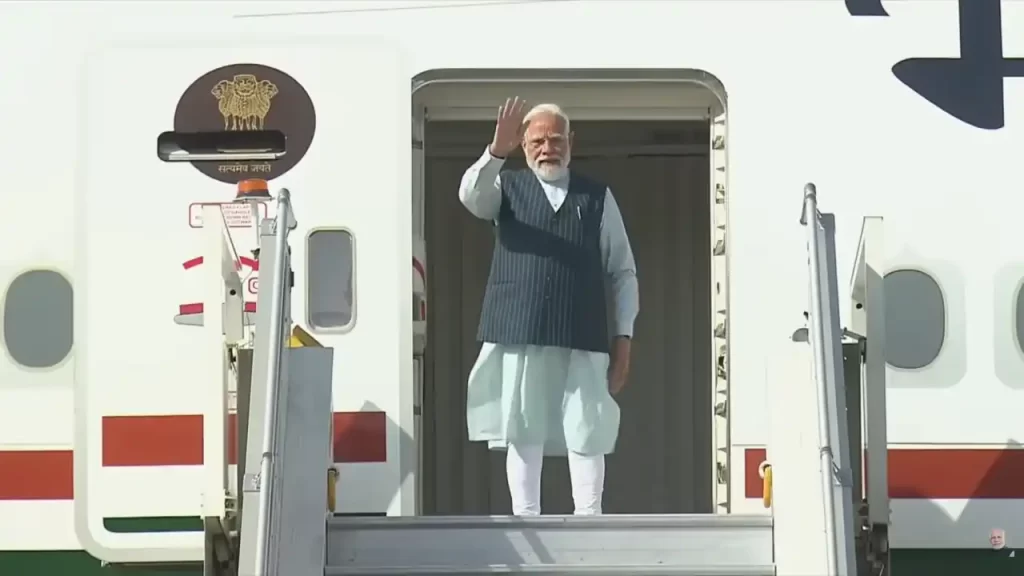
Prime Minister Narendra Modi has begun a massive five-nation tour starting in the United Arab Emirates (UAE). The trip runs from May 15 to May 20, 2026. It includes visits to the UAE, the Netherlands, Sweden, Norway, and Italy. The Prime Minister travels at a critical time when the ongoing war between the US and Iran has disrupted global shipping routes. Tensions around the Strait of Hormuz have caused oil prices to rise. This tour aims to secure India’s energy supply and strengthen technology partnerships. The visit comes right after India and the European Union signed a historic free trade agreement. Modi calls this deal the “mother of all deals.”The journey highlights India’s effort to build strong economic ties while managing global instability. Experts say diplomacy can reduce market panic, but oil prices will stay high until the war ends. Until then, India must focus on energy security and protecting its economy from rising costs.Visit to UAE: Fortifying Energy and Strategic TiesPM Modi landed in the UAE on May 15 to meet President Sheikh Mohamed bin Zayed Al Nahyan. Since 2014, Modi has visited the UAE seven times. President Sheikh Mohamed has visited India five times. Their relationship has only grown stronger over the years. The UAE has remained one of India’s most reliable energy partners even during this Gulf crisis. Long-term oil and gas supply agreements protect India’s energy security.Two important Memorandums of Understanding (MoUs) are likely to be signed during this visit. One deals with Liquefied Petroleum Gas (LPG). The other focuses on Strategic Petroleum Reserves. These deals will help India store more fuel for emergencies. Bilateral trade between India and the UAE crossed $101.25 billion in the last financial year. Both nations aim to double this trade to $200 billion by 2032. The UAE is India’s seventh-largest investor, with over $25 billion in cumulative investment.The UAE also hosts the largest group of Indian expatriates in the world. Over 4.5 million Indians live there. They form the backbone of the UAE economy. The leaders will discuss their welfare and safety. Remittances from these workers help India’s foreign exchange reserves. A Local Currency Settlement system allows trade in Indian Rupees and UAE Dirhams. This reduces dependence on the US dollar.Netherlands: Chip Deals and Water TechnologyThe Prime Minister arrived in the Netherlands from May 15 to 17. This is only his second visit since 2017. The partnership focuses on “innovation meets scale.” Dutch technology combines with India’s massive market size. Areas like semiconductors, water management, hydrogen, and maritime tech are key.A major business highlight is the agreement between Tata Electronics and ASML Netherlands. They will sign a deal to equip a semiconductor fabrication plant in Dholera, Gujarat. This boosts India’s chip-making capabilities. PM Modi and the Dutch Prime Minister visited the Afsluitdijk Dam together. This site shows cooperation in clean energy and sustainable fisheries. The Netherlands is India’s largest trading partner in Europe. Trade reached $27.8 billion in FY 2024-25. It is also India’s fourth-largest investor.The PM addressed the Indian community of over 90,000 NRIs. The visit also reached out to over 200,000 Surinami Hindustanis, the largest Indian-origin group in mainland Europe. Both nations are streamlining migration and mobility. Tourism between the two countries is set to grow.Sweden: Defense, AI, and Strategically De-risking from ChinaModi visited Sweden after an eight-year gap. He last went there in April 2018 for the first India-Nordic Summit. Sweden invests over 3 percent of its GDP in research and development. It ranks among the top innovators in Europe. Sweden has taken a firm stance to reduce its reliance on China. They removed Chinese vendors from their telecom networks. This makes India a key strategic partner.Bilateral trade reached $7.75 billion in 2025. Over 280 Swedish companies work in India. A major project is the Saab manufacturing plant in Jhajjar. Saab is building its first Carl-Gustaf weapon plant outside Sweden here. This is India’s first 100 percent FDI-driven defense project. Sweden also holds large critical mineral deposits. This helps India secure supply chains for electric vehicles and defense electronics.A new Statement of Intent created the Sweden-India Technology and AI Corridor (SITAC). It covers 6G, Artificial Intelligence, quantum computing, and life sciences. Over 80 Swedish companies attended the AI Impact Summit 2026. The Maharashtra government signed an MoU for electric boat investment worth Rs 1,990 crore.Norway: First Solo Visit in 43 Years and Arctic TechThis trip marks the first standalone visit by an Indian Prime Minister to Norway in 43 years. Modi attended the third India-Nordic Summit in Oslo. This summit places India in a high tier of Nordic engagement, joining only the United States. The India-EFTA TEPA agreement is now in force. It promises $100 billion in investment and one million jobs over 15 years.Norway’s sovereign wealth fund, the world’s largest at $2 trillion, has invested nearly $30 billion in India. Indian shipyards now hold 11 percent of Norwegian ship orders. Cochin Shipyard is building eco-friendly vessels for Norway. An MoU between GRSE and Kongsberg Maritime will deliver India’s first indigenous Polar Research Vessel.ISRO antennas at Svalbard became operational in 2026. They support India’s Arctic research. Norwegian tunneling technology helps the Char Dham railway project. Clean energy cooperation will diversify India’s energy mix. Norway also sees opportunities for Indian talent due to its aging population.Italy: Strategic Partnership and Submarine CablesPM Modi travels to Italy from May 19 to 21. He meets Prime Minister Giorgia Meloni to reaffirm their strategic partnership. The visit follows the Joint Strategic Plan of Action 2025-29. Italy views India as a major power and an indispensable partner.Italy champions the India-Middle East-Europe Economic Corridor (IMEEC). A new submarine cable, Sparkle-Airtel Blue-Raman, connects Genoa to India. This secures supply chains and boosts energy security. Bilateral trade reached $16.77 billion in 2025. The target is 20 billion euros by 2029. Tata Motors acquired the Iveco Group for 3.8 billion euros. This is the largest Indian investment in Italy. Italy opened a SIMEST office in Delhi to support SMEs.Energy Crisis and Global ImpactThe Iran war has caused
U.S. Arrest of Venezuelan President Nicolás Maduro: A Comprehensive Overview
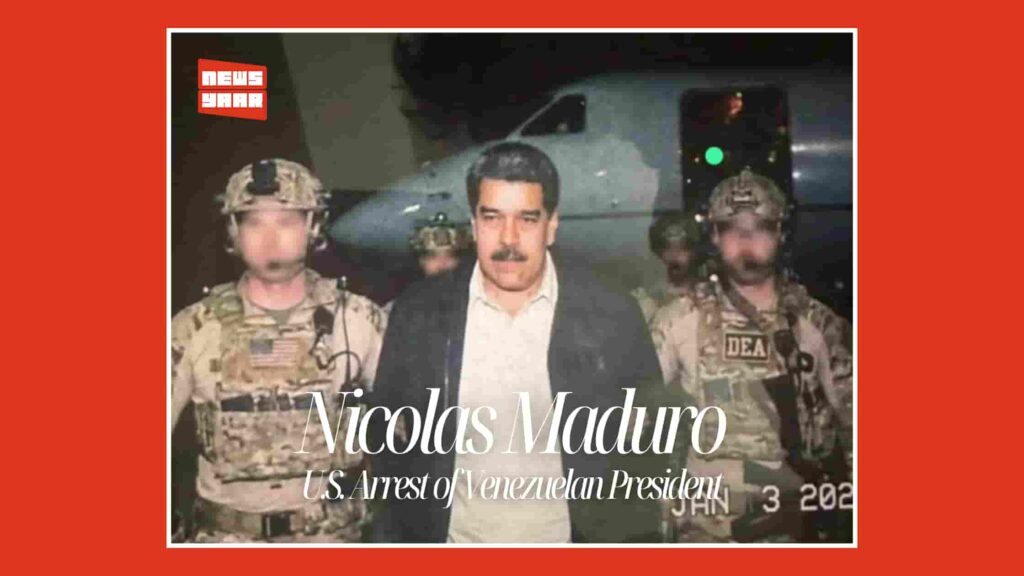
In one of the most dramatic international developments of 2026, the United States military captured Venezuelan President Nicolás Maduro in a large-scale operation on January 3, 2026, removed him from power, and brought him to the United States to face criminal charges. The operation has had far-reaching political, legal and diplomatic implications for Venezuela, the United States, and global geopolitics. What Happened and When In the early hours of January 3, 2026, U.S. forces launched a major military operation in Caracas, Venezuela’s capital, known as “Operation Absolute Resolve.” Using air strikes and special operations units, U.S. troops seized President Nicolás Maduro and his wife, Cilia Flores, in what Washington described as the execution of arrest warrants related to drug trafficking and narco-terrorism. Maduro and Flores were transported to the United States, where they appeared in federal court in Manhattan, New York, on January 5, 2026, and pleaded not guilty to multiple serious charges, including leading a corrupt government and involvement in extensive drug trafficking. Why the U.S. Acted The Trump administration has long accused Maduro’s government of corruption, human rights abuses and facilitating large-scale drug trafficking into the United States. The U.S. Department of Justice had prosecuted Maduro in absentia on these charges and the U.S. issued a series of increasing bounties for information leading to his arrest. In November 2025, Washington designated the shadowy criminal network linked to the Venezuelan regime — often referred to as the “Cartel of the Suns” — as a Foreign Terrorist Organization, amplifying pressure on the Maduro government. A detailed U.S. government timeline shows the operation followed months of military buildup off the Venezuelan coast, where warships, aircraft and strike groups were deployed, signaling escalating tensions and intent. How It Happened According to experts and official accounts, the operation involved: U.S. Army and special forces units engaged in strikes and capture operations in Caracas. Initial detainment aboard a U.S. Navy ship before transfer to New York. Charges brought in a federal court linked to narcotics trafficking, weapons, and narco-terrorism. The Trump administration framed the seizure as a law enforcement action supported by military force, although critics argue it constitutes a direct intervention in a sovereign state. Legal Charges and Court Proceedings Maduro and his wife were charged with multiple federal crimes in the Southern District of New York. These included: Narcotics trafficking Conspiracy to import large quantities of cocaine Narco-terrorism and organized crime offenses. In court, Maduro maintained he was still Venezuela’s legitimate leader and repeatedly insisted on his innocence, describing himself as a victim of U.S. political action rather than a criminal defendant. Who Is Nicolás Maduro? Nicolás Maduro first became president of Venezuela in 2013 after the death of Hugo Chávez and consolidated power through increasingly authoritarian measures. His rule has been marked by widespread economic crisis, allegations of election manipulation, suppression of opposition, and mass migration from Venezuela. Despite winning a third term in a disputed election in July 2024, recognized by Maduro’s government but denounced as illegitimate by many nations, criticism of his leadership and accusations of corruption and repression continued. Immediate Aftermath in Venezuela Following Maduro’s removal, Venezuela’s Supreme Court appointed Vice President Delcy Rodríguez as interim president for 90 days. Rodríguez has sought to consolidate power amid internal factional tensions. Various military and political elites remain influential, notably Interior Minister Diosdado Cabello, who has not been detained despite prior U.S. warnings. Rodríguez, a long-time Maduro ally, has moved quickly to reorganize government leadership while maintaining resistance to U.S. intervention. Her rise has intensified internal political divisions and raised concerns about stability. International and Regional Reactions The operation elicited a wide range of reactions: Supporters: Some U.S. lawmakers and allied leaders hailed the capture as a victory against corruption and narco-terrorism. Critics: Many Latin American governments and international legal experts condemned the U.S. action as a violation of international law and Venezuelan sovereignty, arguing the U.S. had no legal justification without Security Council authorization. Countries like Russia explicitly criticized the operation as destabilizing, while some regional governments warned of broader geopolitical consequences. Impact on Oil and Economy Venezuela sits atop some of the world’s largest proven oil reserves, and control of these resources has long been a major strategic focus. Following Maduro’s ouster, the U.S. has moved to sell Venezuelan oil assets, starting with a $500 million sale aimed at benefiting both U.S. and Venezuelan citizens while stabilizing markets. The U.S. plans further sales with revenues held under U.S. oversight. This shift underscores the interplay of energy strategy with geopolitical goals and highlights the economic stakes involved in the crisis. Legal and International Law Debate The U.S. Department of Justice released internal memos asserting that international law compliance was not required for the operation, given domestic authority — a position sharply criticized by legal scholars who argue a foreign head of state’s forcible capture violates the United Nations Charter prohibitions on use of force without Security Council approval. Humanitarian and Domestic Concerns Venezuela’s population has endured a profound humanitarian crisis for years, with severe shortages of food, medicine, and basic services, resulting in one of the largest migrations in the Western Hemisphere in recent history. The removal of Maduro has sparked mixed reactions domestically — some Venezuelans see it as a hopeful moment, while others fear renewed instability and uncertainty about future governance. What’s Next Maduro’s next court date is scheduled, keeping international attention on his criminal case. Political transition plans remain unsettled, with Rodríguez’s interim leadership drawing scrutiny. U.S. involvement in Venezuelan governance, including oil and economic reconstruction, is likely to continue to be a major issue in diplomatic and regional politics. International opposition and legal challenges could shape the broader geopolitical fallout of the operation.