


Tim Cook: The CEO Who Transformed Apple
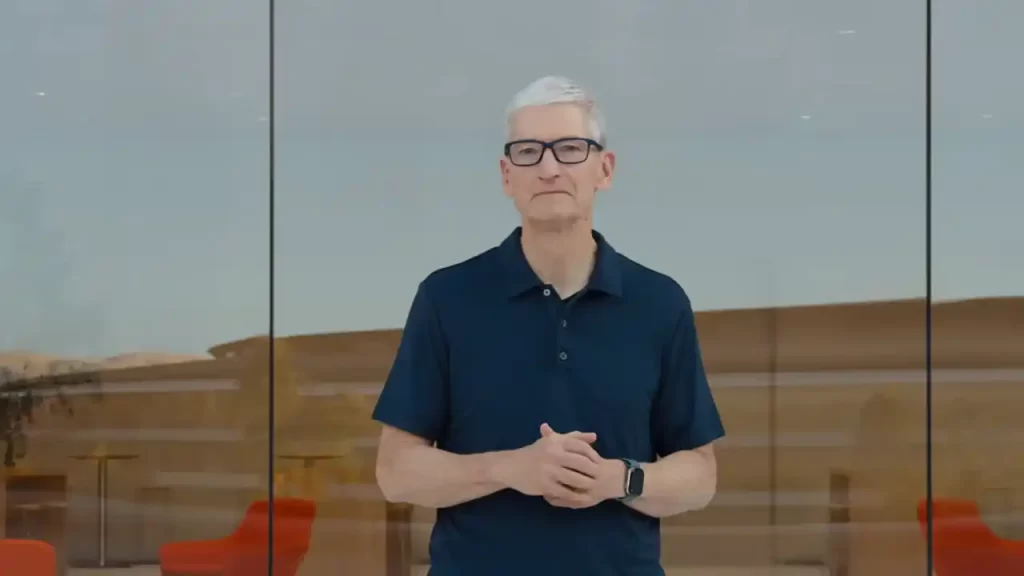
Part 1: The Man Who Had to Follow a LegendWhen Steve Jobs resigned as Apple’s Chief Executive Officer on August 24, 2011, the announcement sent shockwaves across the technology industry. Jobs was not merely a CEO; he was the face of Apple and the visionary behind products that had transformed personal computing, music, smartphones and digital entertainment. His return to Apple in 1997 had rescued the company from near bankruptcy and turned it into one of the world’s most admired businesses. Few believed anyone could fill his shoes.The person chosen to succeed him was Timothy Donald Cook, Apple’s Chief Operating Officer. Unlike Jobs, Cook was not known for dramatic product launches or charismatic keynote speeches. He rarely appeared in the media and had built his reputation behind the scenes by transforming Apple’s operations and supply chain into one of the most efficient in corporate history. Many investors questioned whether an operations expert could successfully lead the world’s most innovative technology company. Analysts wondered whether Apple would continue to innovate without Steve Jobs at its helm.More than a decade later, those doubts have largely disappeared. Under Tim Cook’s leadership, Apple has become the first publicly traded company to cross market capitalizations of $1 trillion, $2 trillion and $3 trillion, while expanding into new businesses including wearables, digital services, custom silicon, healthcare technologies and mixed reality. The company’s annual revenue has more than doubled since Cook became CEO, and Apple today serves more than two billion active devices worldwide.Cook did not try to become the next Steve Jobs. Instead, he transformed Apple in his own way—through operational excellence, strategic expansion, disciplined execution and long-term planning. His tenure represents one of the most successful CEO transitions in modern corporate history.Early Life: Growing Up in AlabamaTim Cook was born on November 1, 1960, in the small town of Mobile, Alabama, and grew up in nearby Robertsdale, a close-knit community in southern Alabama. His father, Donald Cook, worked at a shipyard, while his mother, Geraldine Cook, worked at a pharmacy. Unlike many Silicon Valley entrepreneurs, Cook did not grow up surrounded by technology or venture capital. His upbringing was modest, grounded in discipline, education and hard work.From an early age, Cook developed a reputation for being quiet, analytical and highly organized. Teachers described him as diligent rather than flamboyant. While many future technology leaders displayed entrepreneurial instincts during childhood, Cook’s strengths lay in problem-solving, planning and attention to detail—qualities that would later define his management style.After completing high school, he enrolled at Auburn University, where he studied Industrial Engineering. The discipline combines engineering principles with business management and focuses on improving systems, increasing efficiency and optimizing production processes. These concepts would later become central to Cook’s transformation of Apple’s global operations.He graduated from Auburn University in 1982 with a Bachelor of Science degree in Industrial Engineering.Recognizing the importance of business education, Cook later pursued a Master of Business Administration (MBA) at Duke University’s Fuqua School of Business, earning his degree in 1988. At Duke, he graduated as a Fuqua Scholar, an honour awarded to students who graduate in the top ten percent of their class.His educational background—combining engineering with business management—prepared him for a career focused on operational excellence rather than product design.The IBM Years: Learning Global OperationsCook began his professional career at IBM, one of the world’s largest technology companies during the 1980s.He spent twelve years at IBM, working primarily in manufacturing, logistics and supply chain management. These years proved crucial in shaping his understanding of how global technology businesses operate.Rather than designing products, Cook focused on ensuring they could be manufactured efficiently, delivered quickly and produced at competitive costs. His responsibilities included managing inventory, improving manufacturing systems and coordinating international operations.IBM exposed him to complex global supply chains long before globalization became a defining feature of the technology industry. He learned how to manage suppliers across multiple countries, forecast demand, reduce operational inefficiencies and improve manufacturing productivity.These skills rarely attracted public attention, but they laid the foundation for what would later become one of Apple’s greatest competitive advantages.Moving Beyond IBMAfter leaving IBM in 1994, Cook joined Intelligent Electronics, where he served as Chief Operating Officer of its reseller division.Although his tenure lasted only a few years, it broadened his understanding of technology distribution and commercial operations.In 1997, Cook accepted a position as Vice President of Corporate Materials at Compaq Computer Corporation, then one of the world’s leading PC manufacturers.At the time, Compaq appeared to offer everything a senior executive could want. The company was financially strong, rapidly growing and one of the dominant players in the personal computer market.Cook had little reason to leave.Yet less than a year later, he accepted what many considered one of the riskiest career decisions of his life.Joining Apple: A Company Fighting for SurvivalWhen Steve Jobs approached Tim Cook in 1998, Apple was a very different company from the global giant it is today.Although Jobs had returned as CEO after Apple’s acquisition of NeXT, the company was still recovering from years of declining sales, poor product decisions and financial instability.Apple had recently reported heavy losses and was widely viewed as a struggling computer manufacturer facing an uncertain future. Microsoft dominated personal computing, while Dell and Compaq controlled much of the PC market.Friends and colleagues questioned Cook’s decision to leave Compaq for Apple.By every conventional business measure, it appeared irrational.Cook himself later recalled that joining Apple was one of the easiest and most important decisions of his career because Steve Jobs convinced him that Apple had the opportunity to change the world—not simply sell computers.He joined Apple as Senior Vice President for Worldwide Operations in March 1998.Transforming Apple’s Supply ChainIf Steve Jobs was responsible for creating extraordinary products, Tim Cook became responsible for ensuring those products reached customers efficiently.When Cook arrived, Apple maintained large inventories of finished products.This created major problems because technology products depreciate rapidly. Every week a computer sat in storage reduced its market value.Cook immediately began restructuring Apple’s manufacturing strategy.He closed numerous factories and warehouses.Instead