
Introduction
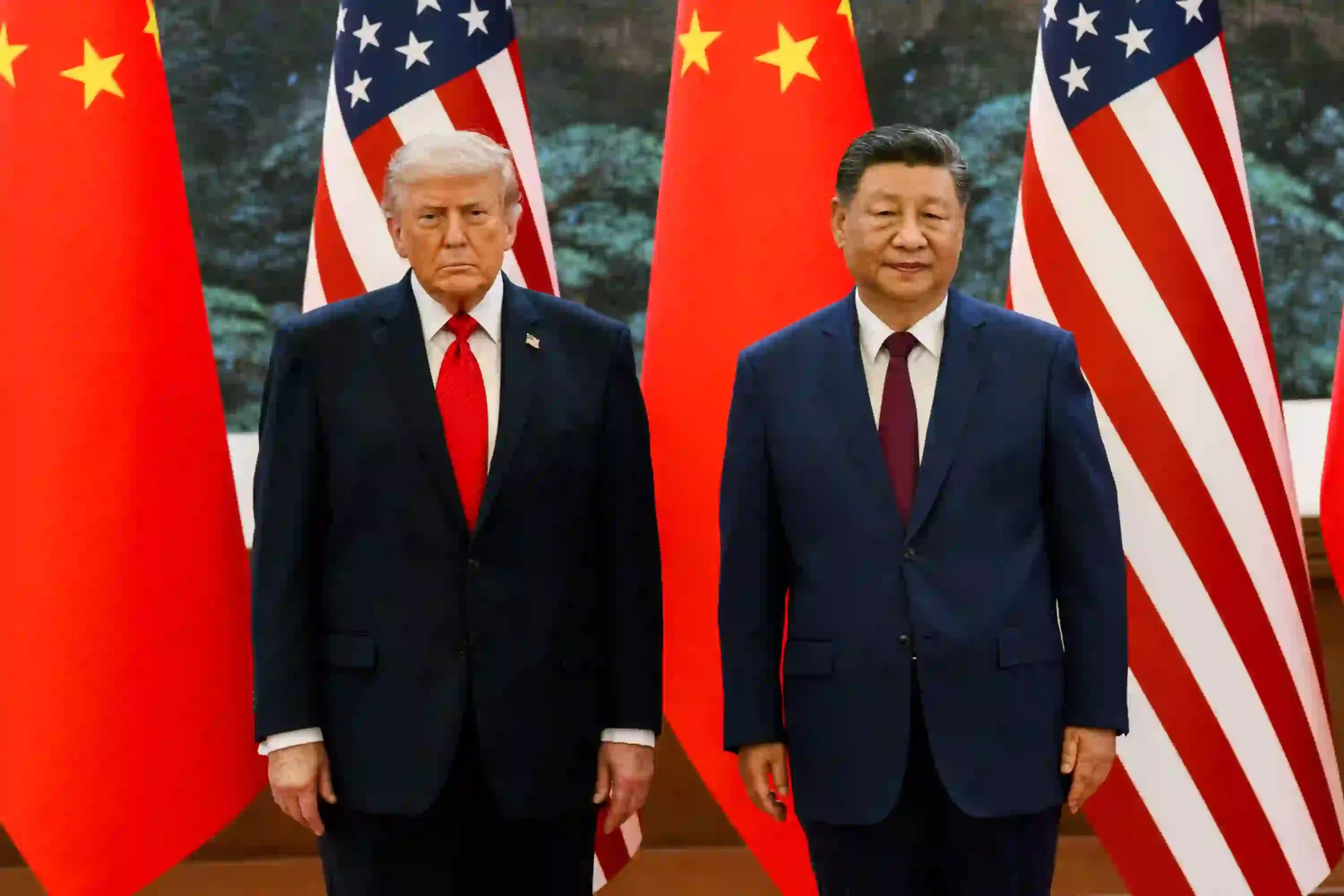
For three days in May 2026, the most consequential bilateral relationship in the world was conducted in person, on Chinese soil, for the first time in nearly nine years. President Donald Trump's state visit to China — the first by an American president since his own November 2017 trip during his first term — was equal parts diplomatic theatre and strategic test, wrapped in the symbolism of Zhongnanhai gardens, Peking duck, and the careful grammar of superpower summitry.
Trump called the trip "incredible," but while it was big on pageantry, it fell short on concrete agreements. Still, Trump hailed business deals for American companies and farmers, while Chinese leader Xi Jinping touted a new era for the stability of China-US relations.
The gap between those two descriptions — one transactional, one strategic — captures the essential character of what happened in Beijing. Enough was accomplished to make the visit a diplomatic success by the standards of the moment. Not enough was accomplished to resolve the crises that brought both leaders to the table.
The Road to Beijing: How the Visit Was Made
The roots of this visit go back to the Busan Summit of October 30, 2025, held on the sidelines of a regional gathering in South Korea. Trump and Xi held their first meeting during Trump's second presidency at the Busan Summit. At the meeting, Trump announced plans to visit China in April of the following year and invited Xi to visit the United States at an appropriate time.
The April timeline did not hold. The state visit was planned for the first week of April, but the meeting was postponed to May due to the 2026 Iran war. The conflict that had closed the Strait of Hormuz and sent oil prices to record highs became both the reason for delay and the dominant agenda item when the visit finally happened.
The diplomatic preparation was extensive. On April 16, Defense Secretary Pete Hegseth announced that Beijing had provided high-level assurances to the White House that it would not send weapons to Iran, explicitly ruling out the potential transfer of surface-to-air missiles to the Iranian military. Hegseth attributed this breakthrough to the "strong and direct relationship" between President Trump and Xi Jinping. Secretary of State Marco Rubio had met Chinese Foreign Minister Wang Yi in February and held a further phone call on April 30 to prepare the ground for the summit.
The Chinese Foreign Ministry confirmed Trump would pay a state visit to China from May 13 to 15 at President Xi Jinping's invitation. It marked the first visit to China by an American president in almost nine years, coming at a time of heightened bilateral tensions over a range of issues, including trade, technology, and defence, and intersecting with a precarious US-Iran ceasefire and a dual blockade of the Strait of Hormuz that was driving up energy prices and weighing on global economic growth.
The Arrival: Red Carpets and 300 Waving Children
Beijing rolled out the literal and figurative red carpet for Trump as he arrived in China on Wednesday evening local time. Three hundred Chinese children dressed in blue and white uniforms waved American and Chinese flags as Trump descended the steps of Air Force One. He was also joined on the tarmac by his son, Eric Trump, and daughter-in-law, Lara Trump.
Trump was greeted at the airport by Chinese Vice President Han Zheng, Chinese Ambassador to the US Xie Feng, Executive Vice Foreign Minister Ma Zhaoxu, and US Ambassador to China David Perdue, as well as a military honour guard, a military band, and around 300 Chinese students waving Chinese and American flags. Trump and his entourage then boarded a motorcade to the Four Seasons Beijing Hotel.
The visual grammar of this welcome was deliberate. Han Zheng, as China's Vice President, is a figure of considerable standing, and his presence on the tarmac signalled the importance Beijing attached to the visit. The children chanting in Mandarin "Welcome, welcome, enthusiastically welcome" was choreography, but choreography that conveyed a message: China wanted this summit to succeed, or at least to be seen to succeed.
The last time Trump visited Beijing — in November 2017 during his first term — he was given a tour of the Forbidden City and a dinner inside it, an honour granted to no other foreign leader since 1949. It remains to be seen whether this trip matched the pomp and circumstance of last time, but already there were significant events on Trump's schedule: a welcome ceremony, a tour of the Temple of Heaven, a UNESCO World Heritage Site, and a state banquet.
The Summit: The Great Hall, the Temple, and Zhongnanhai
At 10 AM, Trump arrived at the Great Hall of the People, where he was greeted by Xi Jinping and received an opening ceremony featuring the national anthems of the United States and China, after which they inspected troops of the People's Liberation Army and then greeted children waving Chinese and American flags.
The formal bilateral meetings between Trump and Xi took place across two days, with the agenda covering trade and economic relations, the Iran war and the Strait of Hormuz, Taiwan, North Korea, rare earths and technology, and the broader structure of the bilateral relationship.
On the final day, Trump headed back to the US after having lunch with Xi at Zhongnanhai, a rare visit to the Beijing compound where top Chinese officials live and work. Xi said it was meant to reciprocate Trump's hosting him at Mar-a-Lago during his first term. "It means that China attaches great importance to this visit by President Trump to China," said one analyst who attended the dinner banquet. "It also reflects the positive personal relationship between the two leaders."
At their last meeting, the two leaders toured the gardens at Zhongnanhai, with Trump admiring the roses. "These are the most beautiful roses anyone's ever seen," Trump said. Xi said he would share some Chinese rose seeds for Trump to have planted in the White House Rose Garden.
The menu of the state banquet was circulated online afterward. It included cold dishes, golden lobster soup, crispy beef, Peking duck, bean soup with fresh vegetables, salmon with mustard sauce, pan-fried buns with ice flowers, conch pastry, tiramisu, fruit, and ice cream, as well as Great Wall Chief Winemaker's Selected Cabernet Sauvignon 2009 from Hebei and Changyu Reserve Chardonnay 2016 from Beijing.
The Deals: What the White House Said Was Agreed
The White House released a formal Fact Sheet on May 17 detailing what it described as "historic deals." The official record of agreements is as follows.
The US-China Boards of Trade and Investment
As the cornerstone of the historic agreement, Trump and Xi chartered two new institutions to optimise the bilateral economic relationship: the US-China Board of Trade and the US-China Board of Investment. The Board of Trade will allow the United States Government and the Government of China to manage bilateral trade across non-sensitive goods. The Board of Investment will provide a government-to-government forum for discussing investment-related issues.
Boeing Aircraft
China approved an initial purchase of 200 American-made Boeing aircraft for Chinese airlines. This tranche of aircraft — China's first commitment to purchase American-made Boeing aircraft since 2017 — will drive high-paying, high-skilled US manufacturing jobs and enable the Chinese people to fly on American-made planes for decades to come.
Agricultural Purchases
China will purchase at least $17 billion per year of US agricultural products in 2026 (prorated), 2027, and 2028, in addition to the soybean purchase commitments it made in October 2025.
Beef and Poultry
China restored market access for US beef by renewing expired listings of more than 400 US beef facilities and adding new listings. China will work with US regulators to lift all suspensions of US beef facilities. China also resumed imports of poultry from US states determined by the USDA to be free of highly pathogenic avian influenza.
Rare Earths and Critical Minerals
China will address US concerns regarding supply chain shortages related to rare earths and other critical minerals, including yttrium, scandium, neodymium, and indium. China will also address US concerns regarding prohibitions or restrictions on the sale of rare earth production and processing equipment and technologies.
Strategic and Security Commitments
Both leaders agreed Iran cannot have a nuclear weapon, called to reopen the Strait of Hormuz, and agreed that no country or organisation can be allowed to charge tolls. President Trump and President Xi confirmed their shared goal to denuclearize North Korea. President Trump will welcome President Xi for a visit to Washington on September 24, 2026. The two countries will support each other as the respective hosts of the G20 and APEC Summits later this year.
The Gap Between Announcement and Reality
Between the White House's confident Fact Sheet and the market's response to the summit lay a considerable distance.
Investors decried the lack of specifics from Trump's meeting with Xi. Trading on their disappointment, stock investors were ready to sell the morning after the summit concluded. Dow futures were down more than 300 points, or 0.6%. The broader S&P 500 futures fell 1%, and Nasdaq futures were 1.4% lower. With no firm resolution to reopen the Strait of Hormuz, Brent oil futures rose 3%, above $108 a barrel. Soybean futures sold off sharply after the US spoke of a vague commitment from China to buy from US farmers — a promise it has made in the past without following through.
The market's scepticism had historical justification. China made significant agricultural purchase commitments under the Phase One trade deal reached in Trump's first term in 2020. Those commitments were never fully honoured. The creation of a Board of Trade was, in this reading, an acknowledgement of that failure — a new mechanism to try to ensure compliance with commitments that the existing framework had failed to enforce.
Recognising China's failure to follow through on previous purchase commitments from his 2020 Phase One trade deal, the president announced the creation of a "Board of Trade" comprising senior officials from both countries to oversee implementation, aiming to show that this time the commitments would be tracked and enforced.
On the Strait of Hormuz — the single most important issue on the table given its impact on global energy prices — the outcome was genuinely ambiguous. Asked by reporters aboard Air Force One if Xi made any firm commitment to put pressure on Iran to reopen the Strait of Hormuz, Trump said: "I'm not asking for any favours, because when you ask for favours, you have to do favours in return." Trump added that he thinks Xi would like to see the strait opened up, noting that China gets a significant portion of its oil from the Gulf.
Trump also disclosed a significant prior decision: the United States allowed three Chinese tankers filled with Iranian oil out of the Strait of Hormuz earlier that week. The tankers were allowed to transit the waterway "because we allowed that to happen," the president said in a Fox News interview. The vessels were allowed out of the Strait before the trip, Trump said. This concession — made without announcement before the summit — was, many analysts noted, the most concrete action taken on Hormuz during the entire visit.
Trump also disclosed during his return journey that he was considering lifting sanctions on Chinese companies that had been buying Iranian oil. "I'm going to make a decision over the next few days. We did talk about that," Trump told reporters as he flew back from the state visit.
Taiwan: The Issue Xi Would Not Let Go
China brought up what it considers a red line — Taiwan, the self-governing island that Beijing claims as its own territory. In a Chinese statement on the visit, Xi stressed that if the Taiwan question is mishandled by America it could put the stability of China-US relations in "jeopardy."
The US readout did not mention Taiwan. But Secretary of State Marco Rubio said in an interview with NBC that US policy on Taiwan remained "unchanged." He also said it would be a "terrible mistake" for China to take Taiwan by force. Trump said Xi asked during his trip if the US would defend Taiwan. "I said I don't talk about that," he told reporters aboard Air Force One on his way back to the US.
In a Fox interview, Trump said Taiwan was the "most important" issue for Xi during their talks. The US leader said he'd like the situation with the island to "stay the way it is."
On May 11, Trump had announced he would have a discussion with Xi on the matter of arms sales to Taiwan, breaking with the Six Assurances — the longstanding framework established by President Ronald Reagan that prohibited the US government from consulting with China on arms sales to Taiwan. That announcement had alarmed Taipei before the summit. The post-summit US readout did not disclose what, if anything, was agreed. Taipei's concern that Trump's personal confidence in his relationship with Xi could lead to concessions on Taiwan remained unresolved.
Context: The Changed Landscape of US-China Relations
On returning to Washington in 2025 for a second term, Trump launched an even more aggressive tariff war against Beijing that some feared would cripple China's economy. But the world's second-largest economy displayed striking levels of durability. It expanded by a better-than-expected 5% in 2025, which extended into the first quarter of 2026 as exporters successfully pivoted to markets outside the United States, as China's push for technological self-sufficiency began to bear fruit in chips and advanced mechanical products. Chinese leader Xi Jinping had not merely played defense — he was one of the few world leaders to respond in kind to Trump's tariffs. He turned the tide of the trade war by weaponizing China's dominance over rare earths — critical elements necessary for everything from consumer electronics to vehicles and fighter jets. The leverage paved the way for the two leaders' summit in South Korea last October.
China feels confident enough to be able to stand up to Trump on many key issues, including sanctions, technology controls, critical minerals, and Iran. However, the PRC's eagerness to hold a summit between Trump and Xi signals that it is much less confident than many observers believe. The recent Beijing visit by Iranian Foreign Minister Abbas Araghchi showed China positioning itself as having already weighed in with Iran to reopen the Strait of Hormuz.
That positioning matters. China receives approximately one-third of its oil through the Strait of Hormuz. The blockade hurts Beijing as much as it hurts any other major economy, and China's interest in a resolution is therefore genuine, not merely performative diplomacy at Trump's request. Whether China has the leverage or inclination to translate that interest into actual Iranian policy changes is a separate question — one the summit left conspicuously open.
What Both Sides Claimed Publicly
Trump, on Air Force One: "I think a lot of good has come from this visit. We've made some fantastic trade deals, good for both countries."
China's foreign ministry touted the summit as "historical" and said Xi would visit the US in the fall. President Trump and President Xi agreed that the United States and China should build a constructive relationship of strategic stability on the basis of fairness and reciprocity.
Trump invited Xi and his wife, Peng Liyuan, to visit the White House on September 24, 2026.
What the Visit Did Not Resolve
A clear-eyed accounting of the summit requires noting what it did not produce as plainly as what it did.
There was no firm agreement on reopening the Strait of Hormuz. There was no resolution to the Iran nuclear question beyond a shared statement of intent that Tehran cannot have a nuclear weapon, a position both sides already held before the visit. Tariffs were not discussed. Trump said so explicitly: "Tariffs didn't even come up." The microchip export control question — central to the technology competition between the two countries — produced some talk of opening up sales but no firm commitment. On Taiwan, the US position was maintained publicly, but the private conversations remain undisclosed. The soybean purchase commitment drew immediate market scepticism given China's history of not following through on such pledges.
The visit will likely represent a relatively modest step toward greater stability and predictability in the world's most important bilateral relationship. Like every president who goes to Beijing, Trump faces outsized expectations against the backdrop of a much more complex and challenging relationship.
The Road Ahead
The diplomatic calendar that flows from the Beijing summit is significant. Xi is expected to visit Washington on September 24, 2026. Both countries will co-manage the G20 and APEC Summits as the respective hosts — China hosts APEC, the United States hosts the G20. Those shared hosting obligations give both sides a structural incentive to maintain the momentum of the Beijing visit at least through the end of the year.
The Board of Trade and the Board of Investment, if they function as designed, represent a structural upgrade to the management of the bilateral economic relationship. Whether they succeed where the Phase One deal's enforcement mechanisms failed will be determined not by the communiqués issued in May 2026 but by the monthly and quarterly reviews of purchase compliance that follow.
On the Iran war and the Hormuz blockade, the Beijing visit produced neither a resolution nor a roadmap. What it produced was a shared statement of principle — no nuclear weapon, no tolls, reopen the strait — against the backdrop of a conflict that neither the US nor China has the ability or willingness to end unilaterally. China's positioning as a quiet broker, having hosted Iranian Foreign Minister Araghchi before Trump arrived and signalled its preference for a negotiated reopening, may be the most consequential diplomatic product of the visit, even if it was never formally announced.
Trump said he could tell Xi "really enjoyed his exchanges" with the American president, and that this is the warmest US-China relations have been in years. Warmth, in the context of the world's most contested bilateral relationship, is not nothing. It is also not a ceasefire, a trade deal, or a reopen Hormuz order. Whether the warmth of Beijing in May 2026 translates into the concrete actions that global markets, American farmers, and the nations stranded behind the Hormuz blockade need is the question that will define the legacy of this visit.