
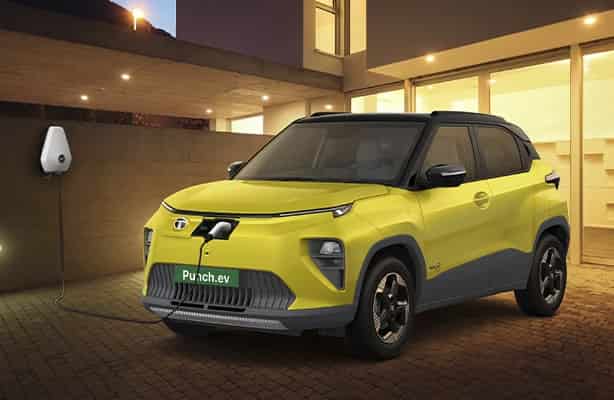
Image: TATA Motors
Tata Motors has rolled out an updated version of the Tata Punch EV, strengthening its position in India’s fast-evolving electric vehicle market. The update is not a cosmetic refresh alone; it is part of a broader strategy to make electric mobility more flexible, more affordable at entry, and less intimidating for first-time EV buyers.
The Punch EV continues to sit at the entry level of Tata’s electric portfolio, below the Nexon EV, but the latest changes indicate a clear effort to address two persistent concerns among buyers: range anxiety and long-term battery ownership costs.
Battery Options Explained: Which Variant Gets What
A key update in the new Punch EV is the clearer separation of battery options across variants, allowing buyers to choose based on usage rather than paying for excess capacity upfront.
The model is offered with two battery pack choices:
- A smaller battery pack, aimed primarily at city users with predictable daily commutes.
- A larger battery pack, intended for buyers who want extended real-world range and greater flexibility for longer drives.
Each battery option is tied to specific variants rather than being freely configurable. This helps Tata streamline pricing while guiding buyers toward a battery size that realistically matches their needs. The smaller battery is positioned as a practical urban solution, while the larger pack targets customers transitioning fully away from internal combustion vehicles.
Range, Performance and Urban Focus
While Tata continues to quote competitive certified range figures, the company’s emphasis with the Punch EV remains on real-world usability rather than headline numbers. The vehicle is engineered for:
- Daily city commutes
- Stop-start traffic efficiency
- Predictable charging cycles
The electric motor output and tuning are designed to prioritise smooth acceleration and ease of driving rather than outright performance, aligning with the Punch EV’s role as an everyday compact SUV.
Design Updates and Cabin Changes
Visually, the updated Punch EV receives subtle exterior revisions rather than a complete redesign. The front fascia, lighting elements and alloy wheel designs have been refreshed to align with Tata’s newer EV design language, giving the car a slightly more premium and contemporary look without altering its familiar proportions.
Inside the cabin, the focus is on technology and ease of use. Updates include:
- A larger touchscreen infotainment system in higher variants
- An improved digital instrument cluster
- Connected-car features that allow users to monitor vehicle status remotely
The cabin layout continues to emphasise space efficiency, upright seating and practicality, which have been strong selling points of the Punch platform.
Lifetime Battery Warranty: Addressing Long-Term EV Anxiety
One of the most significant announcements with the new Punch EV is the introduction of a lifetime battery warranty under Tata’s Battery Assurance and Support System (BAAS).
This move directly addresses concerns around:
- Battery degradation over time
- Replacement costs after warranty expiry
- Resale value of electric vehicles
By offering long-term battery coverage, Tata Motors is attempting to reduce psychological barriers for buyers who are hesitant about EV ownership beyond the first few years.
Dual Loan Scheme: How It Works
To further improve affordability, Tata has introduced a dual-loan financing structure. Under this system:
- One loan covers the vehicle excluding the battery
- A second, separate loan is taken for the battery pack
This structure lowers the initial loan amount for the car itself and can result in reduced monthly EMIs, especially for buyers opting for the larger battery. It also provides flexibility for future financing and ownership decisions.
Market Positioning and Competition
The Punch EV operates in a highly competitive and rapidly expanding segment. Tata Motors already leads India’s EV market, and the updated Punch EV is designed to:
- Attract first-time EV buyers
- Serve as a second car for urban households
- Offer a safer and more robust alternative to smaller city EVs
Its closest competition comes from compact electric offerings and upcoming entry-level EVs, but Tata’s advantage lies in its charging ecosystem, brand trust, and after-sales network.
Why the Updated Punch EV Matters
The changes to the Punch EV reflect a broader shift in India’s EV market. Buyers are no longer asking only about range; they are asking about ownership clarity, long-term costs, and reliability. By restructuring battery options, offering lifetime warranty coverage and introducing flexible financing, Tata Motors is redefining what an entry-level electric SUV can offer.