


India’s EV Revolution: Still Gathering Speed, But the Direction Is Unmistakable
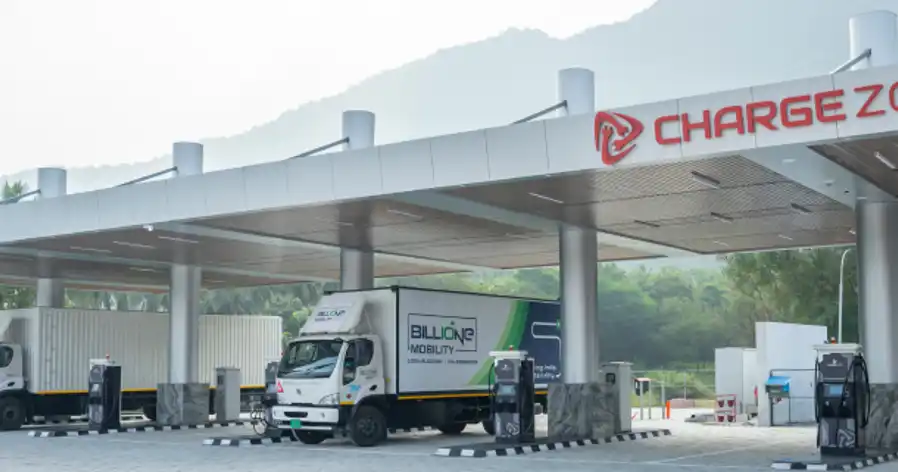
The Numbers Tell the Story FirstIn 2020, India sold roughly 156,000 electric vehicles of all categories. In 2025, it sold 2.36 million. That is a fifteen-fold increase in five years, and it happened without the kind of aggressive government subsidies that drove adoption in China, without the dense network of home chargers that made EVs viable in Europe, and in a market where a significant portion of buyers are choosing their first vehicle and price is the dominant consideration.India’s total EV sales surpassed 2.36 million units in 2025, representing 8.36 percent of overall automobile sales. The sector recorded year-on-year growth of 16.62 percent, moving beyond early adoption into a phase of diverse, segment-led expansion.According to data from the government’s Vahan Portal, a report by the India Energy Storage Alliance said electric two-wheelers remained the biggest driver of growth, with sales of 1.28 million units, making up 57 percent of total EV sales. Electric three-wheelers, including L3 and L5 categories, followed with 0.8 million units, or 35 percent of the market. Electric four-wheeler sales stood at around 1.75 lakh units during the year.Those proportions matter. India’s EV story is not, at its core, a car story. It is a two-wheeler and three-wheeler story. And that makes it a story about the 1.4 billion people who actually travel on Indian roads every day, not just the fraction who buy passenger cars.Who Is Actually Buying and WhereThe adoption map is as uneven as India’s geography suggests it would be.EV adoption is not uniform across India. Uttar Pradesh remains the top contributor to total Indian EV sales, accounting for 17.15 percent of total sales, largely due to its massive e-rickshaw base. For the highest EV penetration relative to total sales, Tripura leads at 18.27 percent, followed by Assam at 14.3 percent and Delhi at 13.91 percent. West Bengal exhibited the highest year-on-year EV sales growth of 121.3 percent among the top ten states. Bengaluru solidified its status as the electric two-wheeler capital with 90,215 sales.These numbers reveal something important. The states with the highest EV penetration by percentage — Tripura, Assam, Delhi — are very different places with very different reasons for being early adopters. Delhi’s adoption is policy-driven: the capital has one of India’s most aggressive EV incentive programmes and a severe air quality crisis that makes the case for cleaner transport viscerally obvious to every resident. Tripura and Assam’s adoption, by contrast, reflects a practical reality: in states with high fuel costs due to distance from refining centres, an electric two-wheeler that runs on grid power simply costs less per kilometre to operate, regardless of ideology or policy.In January 2026, electric car sales surged to 30,314 units — a 51 percent jump from 20,088 units a year earlier and a 27 percent month-on-month growth. The four-wheeler segment is accelerating, but from a smaller base.The electric goods carrier segment recorded a 77.52 percent year-on-year sales increase, with Maharashtra leading among all states. The commercial logistics sector’s turn toward electrification is arguably the most structurally significant development in the 2025 data. Fleet operators — particularly those running last-mile delivery vehicles in dense urban areas — have a clearer return-on-investment calculation for EVs than individual consumers. Fuel savings are predictable, usage patterns are consistent, and charging can be centrally managed overnight. When logistics companies electrify their fleets, they do not do it for reasons of environmentalism. They do it because the numbers work.The Vehicles Driving Growth: Tata, Mahindra, Ola, TVS, BajajIndia’s EV market is being built by Indian companies, which is itself one of the more consequential industrial stories of this decade.Domestic manufacturers Tata and Mahindra account for around 60 percent of India’s electric car sales. Tata Motors was effectively the pioneer of the mass-market electric car in India with the Nexon EV, followed by the Tiago EV which brought the entry price for an electric car closer to the price of a conventional hatchback. In February 2026, Tata Motors expanded its electric passenger vehicle portfolio with new long-range models aimed at improving affordability and adoption, incorporating enhanced battery management systems and localised lithium-ion battery packs.In September 2025, Mahindra Electric introduced new electric commercial vehicles targeting last-mile delivery and logistics operations, integrating telematics systems and fleet management platforms to improve operational efficiency. Mahindra’s BE and XEV series of electric SUVs have added a premium dimension to India’s electric car market that creates aspirational pull at the higher end while Tata holds the volume end.In the two-wheeler segment, the competitive picture changed significantly through 2025. Top players for April 2026 are TVS Motors, Bajaj Auto, and Ather Energy. The emergence of Bajaj Auto — one of India’s most traditional and largest two-wheeler manufacturers — as a top EV player is symbolically important. Bajaj built its brand on petrol two-wheelers for six decades. Its aggressive entry into electric scooters confirms that the mainstream motorcycle industry now treats electrification as an operational necessity, not a niche experiment.In November 2025, Ola Electric commissioned a large-scale battery manufacturing facility to strengthen domestic supply chains, focusing on cell manufacturing capabilities and advanced battery chemistry development for cost reduction and performance improvement. In June 2025, Ather Energy launched next-generation electric two-wheelers with improved battery range and fast-charging capability, utilising upgraded lithium-ion battery architecture and smart connectivity features for urban mobility.The Policy Architecture: Three Layers Working SimultaneouslyIndia’s EV momentum did not emerge purely from market forces. It was shaped, deliberately and over time, by a layered policy architecture that has become the most comprehensive framework India has built for any industrial transition.Three layers of policy support are simultaneously active in 2026 — the strongest combined push since FAME-I launched in 2015. The PM E-DRIVE scheme, the ACC PLI Scheme, and the Auto and Components PLI collectively represent over Rs 54,000 crore in government support committed to the EV transition.The PM E-DRIVE scheme replaced FAME-II when the latter was discontinued in September 2024. Active from October 2024, the scheme allocates Rs 3,679 crore for vehicle subsidies, Rs 2,000 crore for 72,300 charging points,
Royal Enfield Flying Flea C6: The Bullet Goes Electric
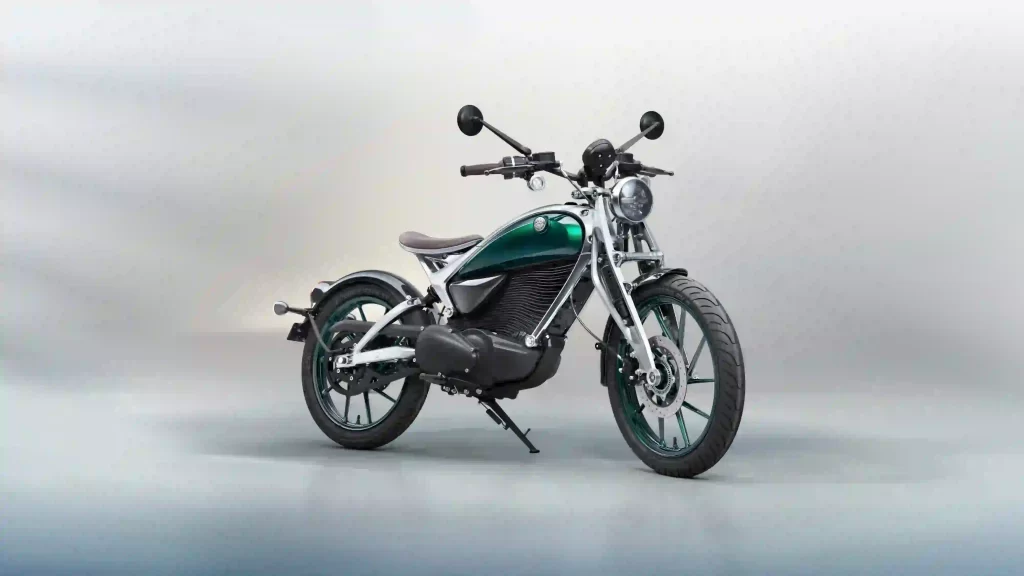
Royal Enfield has been making motorcycles since 1901. In 125 years, every single one of them ran on petrol. That changed on April 10, 2026, when the company officially launched the Flying Flea C6 — its first electric motorcycle — at a dedicated showroom in Jayanagar, Bengaluru. Bookings opened at noon, with deliveries set to begin by the end of May.Speaking at the launch, CEO B. Govindarajan said: “We are excited to introduce the Flying Flea C6, marking our first step into electric motorcycling in our 125th year. This is not just about going electric — it is about creating a new category of urban mobility that is rooted in experience, not just specifications or numbers.”The Name and the History Behind ItThe Royal Enfield Flying Flea takes its name from the 125cc, single-cylinder motorcycle used by British army paratroopers in World War II. Designed to be dropped behind enemy lines, it delivered messages between troops when radio communications were not possible. Royal Enfield has resurrected the name for a motorcycle that shares the original’s core qualities: lightweight, narrow, urban, and now silent.Design and BuildThe C6 was first shown at EICMA 2024 in Milan and has remained largely unchanged from concept to production — a sign that Royal Enfield meant what it showed.The standout visual feature is the forged aluminium girder fork, a suspension setup rarely seen on modern motorcycles that gives the C6 a distinct neo-retro silhouette. The bike is built on an all-new cage frame made from forged aluminium, keeping weight in check. The battery casing is magnesium. The result is a kerb weight of just 124 kilograms — the lightest Royal Enfield ever built. For context, the Classic 350 weighs around 195 kg.The C6 is available in two colours: Storm Black and Flea Green.Performance and RangeThe C6 carries a 3.91 kWh lithium-ion battery paired with a permanent magnet synchronous motor producing 15.4 kW peak power and 60 Nm of torque, with drive going to the rear wheel via a belt drive. Claimed IDC range is 154 km, with a 0-60 kmph time of 3.7 seconds and a top speed of 115 kmph.Realistically, Indian media testing puts urban range at closer to 100 to 110 km in mixed city conditions — adequate for daily commuting, but this is clearly a city machine, not a tourer.A full charge takes 2 hours and 16 minutes, while a 20 to 80 percent top-up takes about 65 minutes from a standard 16A home socket. Riders can also choose between Rapid, Standard, and Trickle charging speeds via the mobile app.TechnologyThe C6 brings features Royal Enfield has never offered before. It is the first Royal Enfield to get traction control and cornering ABS. A 3.5-inch circular TFT touchscreen with a Qualcomm Snapdragon processor powers Google Maps navigation, SMS and call alerts, and music control. Under the tank panel sits a 15W wireless phone charger plus a 27W USB-C port. Five riding modes — City, Rain, Highway, Sport, and Custom — are available, along with a bidirectional crawl mode, hill-start assist, keyless ignition, tip-over alert with location sharing, and over-the-air software updates.PriceThe Flying Flea C6 is priced at Rs 2.79 lakh ex-showroom. Customers can also opt for Battery-as-a-Service, which brings the price down to Rs 1.99 lakh, with a monthly subscription covering battery usage and maintenance.At Rs 2.79 lakh, it costs more than every 350cc Royal Enfield currently on sale. The premium is justified by materials, technology, and the fact that this is genuinely a new kind of product — but it is a premium nonetheless, and buyers need to weigh that honestly.What’s NextFlying Flea is Royal Enfield’s dedicated EV sub-brand, and the C6 is only its first product. The Flying Flea S6, a scrambler variant built on the same platform, is expected to follow later in 2026, likely around EICMA in November. The first Flying Flea showroom outside India is planned to open in Paris in 2026.The C6 is not trying to replace what Royal Enfield has built over 125 years. It is an opening statement — carefully made, deliberately positioned, and aimed at a new kind of rider. Whether that rider exists in sufficient numbers to justify the ambition is a question only the market can answer. The wait for that answer begins today.Key SpecDetailMotorPMSM, 15.4 kW / 60 NmBattery3.91 kWh lithium-ionClaimed Range154 km IDCTop Speed115 kmph0-60 kmph3.7 secondsWeight124 kgSeat Height823 mmGround Clearance207 mmFull Charge2 hrs 16 minsPrice (Outright)Rs 2.79 lakh ex-showroomPrice (BaaS)Rs 1.99 lakh ex-showroomColoursStorm Black, Flea GreenFirst DeliveriesEnd of May 2026, Bengaluru
Bajaj Chetak 2026 Electric Scooter Launched in India: Price, Range, Features and What You Need to Know
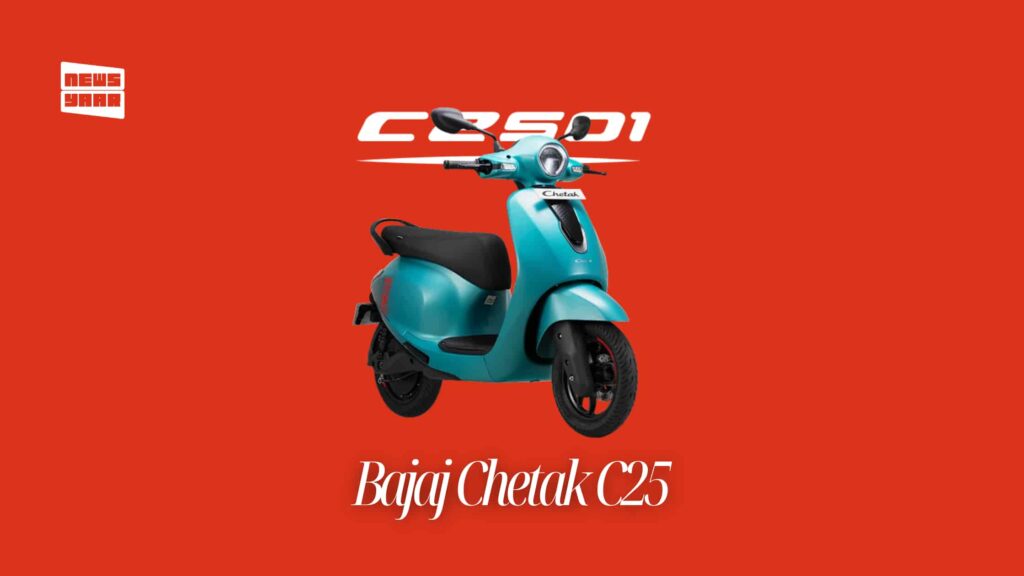
Bajaj Auto has expanded its electric scooter portfolio with the launch of the Bajaj Chetak C25 in India, bringing a more accessible and city-focused variant to its popular Chetak electric lineup. The new model, priced competitively in the growing electric two-wheeler segment, is designed specifically for urban commuters and daily use. Entry-Level Electric Mobility: What’s New in 2026On 14 January 2026, Bajaj Auto officially introduced the Bajaj Chetak C25, marking a strategic push to make electric scooters more affordable without compromising core Chetak attributes such as build quality and reliability. The C25 model joins the existing 35 Series and other Chetak variants as part of Bajaj’s effort to capture a larger share of India’s rapidly growing EV market. With competition intensifying from brands like Ola, Hero and TVS, Bajaj’s move towards budget-friendly electrics targets everyday riders who want a dependable city commuter. Price, Battery and RangeEx-showroom price: ₹91,399 (Bengaluru)Battery capacity: 2.5 kWhClaimed range: Up to 113 km on a single charge (IDC certified)Charging time: Approximately 80% in about 2 hours 25 minutes using a suitable charger This range and pricing position the Chetak C25 as one of the most affordable electric scooters in its category, making it attractive for daily city travel and short commutes. Performance and DesignThe Chetak C25 retains many of the styling cues and build philosophy of earlier Chetak models while introducing features tailored for urban ease:Motor: Hub-mounted electric motor designed for city cruisingTop speed: Around 55 km/hBody: Metal frame construction, characteristic of Chetak’s durabilityDisplay: LCD instrument console with essential ride informationStorage: Around 25 litres under-seat space Bajaj Auto has retained the signature metal body and sturdy build quality that Chetak is known for, even as it aims for a lighter, more agile feel suited to dense city traffic. Features and TechnologyWhile not as feature-rich as higher-end models, the C25 offers practical kit for daily use:Hill Hold Assist for easier starts on slopesGuide-Me-Home lighting for safety at nightBluetooth and LCD display with basic connectivityUSB charging port for mobile devices These features are aimed at balancing practicality with value, ensuring riders get essential EV tech without paying a premium.Availability and BookingThe Bajaj Chetak C25 is available for booking online and at official dealerships across India. As stocks reach showrooms, deliveries are expected to begin soon, giving early adopters an advantage in a segment where demand continues to grow. How it Compares with Other ModelsThe new Chetak wariant sits below the established 35 Series in both price and specifications, making it a strong competitor to other affordable electric scooters such as the Hero Vida VX2 Go and TVS Orbiter in the sub-₹1 lakh category. Compared to more premium Chetak variants (which offer larger batteries, longer range and advanced features), the C25 focuses on efficiency and everyday practicality, making it ideal for 9-to-5 commuters and urban families looking for a reliable second vehicle.What This Launch Means for the EV MarketWith this launch, Bajaj Auto aims to strengthen its position in the electric two-wheeler ecosystem. The company has previously held significant market presence with its older combustion-engine scooters, and the Chetak name carries strong brand equity among Indian riders.The C25’s accessible pricing and competitive range are likely to attract first-time EV buyers and riders seeking an upgrade from conventional scooters, reinforcing the shift toward electrification in India’s personal mobility landscape.Video credit: YT@/ChetakOfficial