


The Longest-Serving Indian PM: Narendra Modi Surpasses Nehru’s Record with 4,399 Days
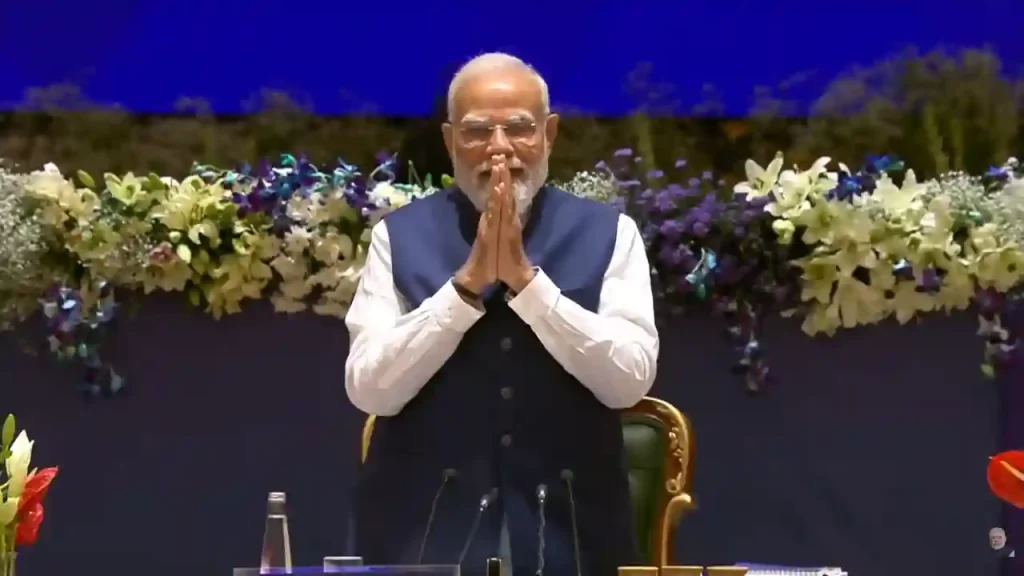
Prime Minister Narendra Modi has officially become India’s longest continuously serving elected Prime Minister, completing 4,399 consecutive days in office on June 10, 2026, surpassing the previous record of 4,398 days held by Jawaharlal Nehru after the country’s first general elections, with the Union Cabinet passing a historic resolution marking this milestone as a symbol of India’s democratic consciousness and public trust. Mr Modi took the oath of office on 26th May 2014 and has surpassed Pandit Jawaharlal Nehru, who first took the oath as an elected Prime Minister on 13th May 1952 and served until 27th May 1964, with Nehru’s tenure amounting to 4,398 days while Modi’s continuous tenure from 26th May 2014 to 10th June 2026 now stands at 4,399 days, making him the longest-serving elected Prime Minister in India’s history.The Historic Milestone: 4,399 Days of Continuous Service Surpassing Nehru’s 1952-1964 RecordThe achievement of Prime Minister Narendra Modi is particularly noteworthy given the scale and complexity of governance in India, a nation of over 1.4 billion people characterized by extraordinary diversity in language, culture, religion, and geography, making sustained leadership across three consecutive national mandates in the world’s largest democracy unprecedented in Indian political history. At a time when many countries have witnessed political churn, frequent changes in government, and policy uncertainty, India has experienced continuity in leadership and governance, reflecting sustained public trust across three consecutive national mandates that demonstrates the unprecedented support bestowed by the people upon a leader guided by the ‘Nation First’ resolve.The Union Cabinet today passed a resolution marking June 10, 2026, as an historic milestone in the journey of Indian democracy, applauding Shri Narendra Modi for becoming the longest-serving elected Prime Minister of the country by establishing a record of 4,399 days of continuous service as an elected PM, surpassing the previous record held by Shri Jawaharlal Nehru, who served for 4,398 continuous days from 1952 to 1964. This occasion stands as a symbol of India’s democratic consciousness, public trust, and the power of public participation, with the resolution extending heartfelt congratulations and best wishes to the Prime Minister while highlighting that this achievement coincides with the NDA government completing 12 years under his leadership.From Humble Beginnings to the Nation’s Highest OfficePrime Minister Modi’s rise from a humble socio-economic background to the highest elected office without the support of a political dynasty is widely seen as an illustration of the opportunities and social mobility offered by India’s democratic system, marking a departure from traditional political patterns where family connections often determined leadership trajectories. Shri Narendra Modi served as the Chief Minister of Gujarat for 14 years and was applauded for the economic growth and setting up advanced infrastructure in the state, among other key developments, before ascending to the nation’s highest office, where he is known for campaigns like Swachh Bharat, Make in India, Digital India, and many more.Amongst his several accolades, he is also famous for being the first Indian to win the Seoul Peace Prize award in 2018, while Independent global surveys have consistently ranked Prime Minister Modi among the world’s most popular democratic leaders, with him also being conferred with the highest civilian honours of more than 30 countries. Harivansh Narayan Singh, Deputy Chairman of the Rajya Sabha, praised PM Modi’s leadership, describing him as a “visionary” who has successfully translated ideas into action, remarking to ANI that “since independence, he is perhaps the first politician and a visionary who didn’t just dream but actually implemented those dreams, bringing them to reality on the ground”.Poverty Eradication and Inclusive Development:During Prime Minister Modi’s tenure, nearly 250 million Indians moved out of multidimensional poverty, with the resolution acknowledging that the welfare of the poor has been placed at the center of governance, detailing an unprecedented scale of amenities delivered including pucca houses, electricity, clean water, and direct benefit transfers, alongside free rations for over 80 crore citizens and free medical treatment for over 60 crore poor individuals. These efforts collectively boosted national self-confidence and enabled over 25 crore people to defeat poverty, expressing gratitude for the policies that have enabled more than 25 crore poor people in India to defeat poverty under his leadership.The resolution maps the empowerment of key demographics, recognizing the focus on youth power that propelled India into becoming the world’s third-largest startup ecosystem and a scientific power through Mission Chandrayaan, while a new chapter of ‘Women-Led Development’ is detailed through comprehensive policies ranging from smoke-free kitchens and the Lakhpati Didi campaign to the historic 33 percent reservation for women in legislative bodies. Affirming farmers as a core pillar of a ‘Viksit Bharat’, the text applauds initiatives like PM Kisan Samman Nidhi and the provision of Kisan Credit Cards to pastoralists and fishermen, which have helped propel agricultural exports past the Rs 5 lakh crore mark, appreciating his efforts directed towards inclusive growth and social justice.Digital Infrastructure and Economic TransformationDuring this period, India has strengthened its position as the world’s fastest-growing major economy, concluded major trade agreements with leading economies, and emerged as a more influential voice on global issues, including development, technology, climate action, and the priorities of the Global South, with people seeing rapid expansion of digital public infrastructure, large-scale infrastructure development, improvements in welfare delivery, and broad-based socio-economic progress. The resolution attributes the advancement of India’s manufacturing capabilities in sectors from defense to AI to the momentum gained by the ‘Make in India’ and ‘Aatmanirbhar Bharat’ campaigns, underlining that political stability, dynamic governance, and far-sighted policies of the last 12 years have transformed India into the world’s fastest-growing large economy.Union Minister Sukanta Majumdar also celebrated PM Modi’s historic milestone, emphasizing its significance in Indian political history, saying “There is a special day in the political history of India. Prime Minister Narendra Modi has set the record for the longest tenure as India’s Prime Minister.” Singh highlighted key policy initiatives under Modi’s tenure, including the introduction of a 33 per cent reservation for women in the Lok Sabha and State Legislative Assemblies, the implementation of