


Borivali–Thane Tunnel Project: Mumbai’s Underground Connectivity Revolution
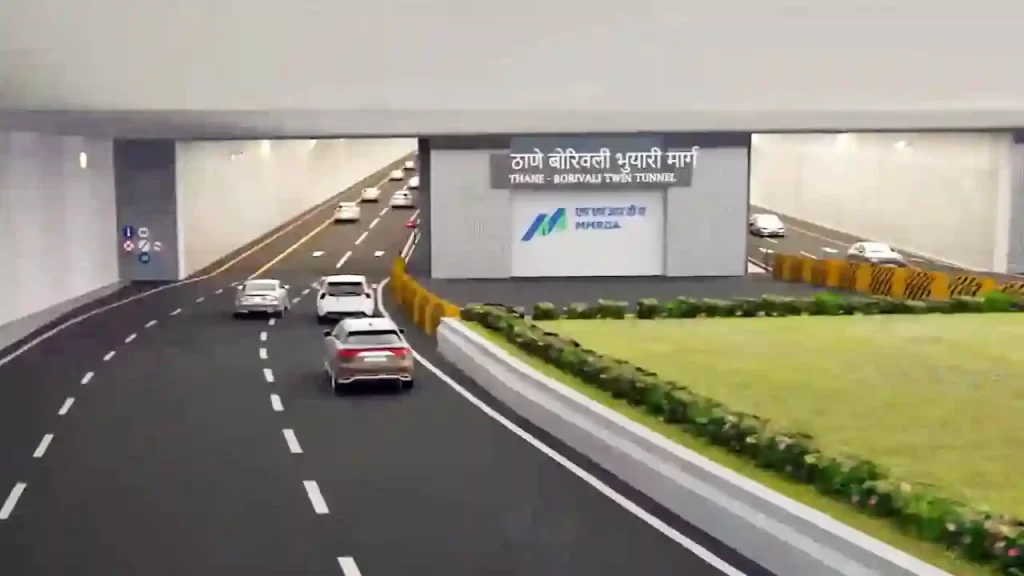
IntroductionThe Borivali–Thane Tunnel Project has emerged as one of the most ambitious urban infrastructure initiatives in India, promising to redefine mobility across the Mumbai Metropolitan Region (MMR). Designed to establish a direct underground road link between Borivali in Mumbai’s western suburbs and Thane city, the project aims to address one of the region’s most persistent transportation challenges—long travel times caused by severe traffic congestion.For decades, commuters travelling between Mumbai’s western suburbs and Thane have depended largely on Ghodbunder Road, a corridor that has become synonymous with bottlenecks, delays, and increasing traffic pressure. As residential development expanded rapidly in both Thane and the western suburbs, existing road infrastructure struggled to keep pace with growing demand.The Borivali–Thane Tunnel Project was conceived as a transformative solution to this problem. By creating a direct underground route beneath the Sanjay Gandhi National Park, the project seeks to reduce travel time dramatically while enhancing regional connectivity and supporting future urban growth.Infrastructure experts have described the tunnel as a game-changing project that could reshape commuting patterns across the Mumbai Metropolitan Region in much the same way that metro rail networks and expressways have transformed mobility in other major cities.Why the Project Became NecessaryMumbai and Thane together form one of India’s largest urban agglomerations. Every day, lakhs of people travel between the two cities for employment, education, business, healthcare, and other purposes.However, despite their geographical proximity, road connectivity between Borivali and Thane has historically been inadequate.The primary route connecting the two locations passes through Ghodbunder Road, a stretch that experiences some of the highest traffic volumes in the region. During peak hours, commuters often spend more than an hour travelling between the two destinations, with travel times occasionally extending beyond ninety minutes due to congestion.The situation has worsened over the years because of rapid urbanisation. Areas such as Thane, Mira-Bhayandar, Borivali, Kandivali, and Dahisar have witnessed substantial residential and commercial growth, leading to a significant increase in vehicular traffic.Urban planners recognised that simply widening existing roads would not be sufficient to address future transportation needs. A new high-capacity corridor was required—one that could bypass congested surface roads while preserving environmentally sensitive areas.This led to the concept of an underground tunnel connecting Borivali and Thane.Project Design and Technical SpecificationsThe tunnel system will be equippeThe project is being implemented by the Mumbai Metropolitan Region Development Authority (MMRDA) and represents one of the most technically complex road infrastructure projects currently underway in India.The tunnel will consist of twin underground tubes carrying traffic in opposite directions. Each tunnel has been designed to accommodate multiple lanes, allowing a large volume of vehicles to move efficiently between Mumbai and Thane.The alignment has been planned carefully to minimise disruption to existing urban areas while ensuring the shortest possible route between the two destinations.One of the most notable features of the project is that it passes beneath the Sanjay Gandhi National Park, enabling a direct connection without disturbing large portions of the protected forest at the surface level.The tunnel system will be equipped with state-of-the-art infrastructure, including: Modern ventilation systemsIntelligent traffic management systemsHigh-definition surveillance camerasEmergency communication networksFire detection and suppression mechanismsDedicated evacuation passagesAdvanced lighting systemsReal-time monitoring and control centresThese features are intended to ensure both operational efficiency and passenger safety. The Engineering Challenge Beneath a National ParkConstructing a tunnel beneath a protected national park presents extraordinary engineering challenges.The Sanjay Gandhi National Park is one of the few national parks located within a major metropolitan area and serves as an important ecological zone. It is home to diverse flora and fauna, including leopards and numerous bird species.Engineers must therefore ensure that tunnelling activities do not adversely affect wildlife habitats or destabilise the geological structure of the region.Extensive geotechnical surveys were conducted before finalising the alignment. These studies examined rock formations, soil characteristics, groundwater movement, and seismic conditions.The project is expected to rely on advanced Tunnel Boring Machines (TBMs), which allow underground excavation with minimal surface disturbance. These machines can cut through rock and soil while simultaneously installing tunnel lining segments, making construction safer and more efficient.Experts have noted that the project represents one of the most sophisticated applications of underground transportation engineering in India.Travel Time Reduction: The Biggest BenefitPerhaps the most significant advantage of the Borivali–Thane Tunnel Project is the dramatic reduction in travel time it promises.At present, a journey between Borivali and Thane can take anywhere between 60 and 90 minutes depending on traffic conditions.Once operational, the tunnel is expected to reduce travel time to approximately 15–20 minutes.This reduction will fundamentally change commuting patterns across the region.For daily commuters, it means:Less time spent in trafficReduced fuel consumptionLower transportation costsImproved productivityBetter work-life balanceFor businesses, faster connectivity translates into improved logistics, reduced delays, and greater operational efficiency.Environmental Debate and ConcernsDespite its expected benefits, the project has attracted considerable environmental scrutiny.The Sanjay Gandhi National Park is regarded as one of Mumbai’s most important green lungs, and environmental groups have raised concerns regarding potential impacts on biodiversity and ecological balance.Project authorities have argued that the underground alignment was specifically chosen to minimise ecological disruption.Compared with conventional road construction through forest land, tunnelling offers several advantages:Reduced tree cuttingMinimal disturbance to wildlife movementLower land acquisition requirementsPreservation of surface ecosystemsNevertheless, environmental clearances were subject to detailed assessments, and various mitigation measures have been incorporated into project planning.Balancing infrastructure development with environmental conservation remains one of the most closely watched aspects of the project.Economic Significance for the Mumbai Metropolitan RegionThe Borivali–Thane Tunnel is expected to generate substantial economic benefits extending far beyond transportation.Improved connectivity often acts as a catalyst for economic activity. Regions that become easier to access typically attract higher levels of investment, commercial development, and real estate growth.The tunnel is expected to strengthen economic integration between Mumbai’s western suburbs and Thane, creating new opportunities for businesses and industries.Real estate experts anticipate that enhanced connectivity could increase demand for residential and commercial properties in both regions.The project is also expected to create employment opportunities during construction and operation, benefiting multiple sectors including engineering, construction, materials manufacturing, and services.Integration with Mumbai’s Expanding Infrastructure NetworkThe tunnel
Mumbai to Have India’s First Pod Taxi: A Driverless AI-Powered Revolution in Urban Mobility
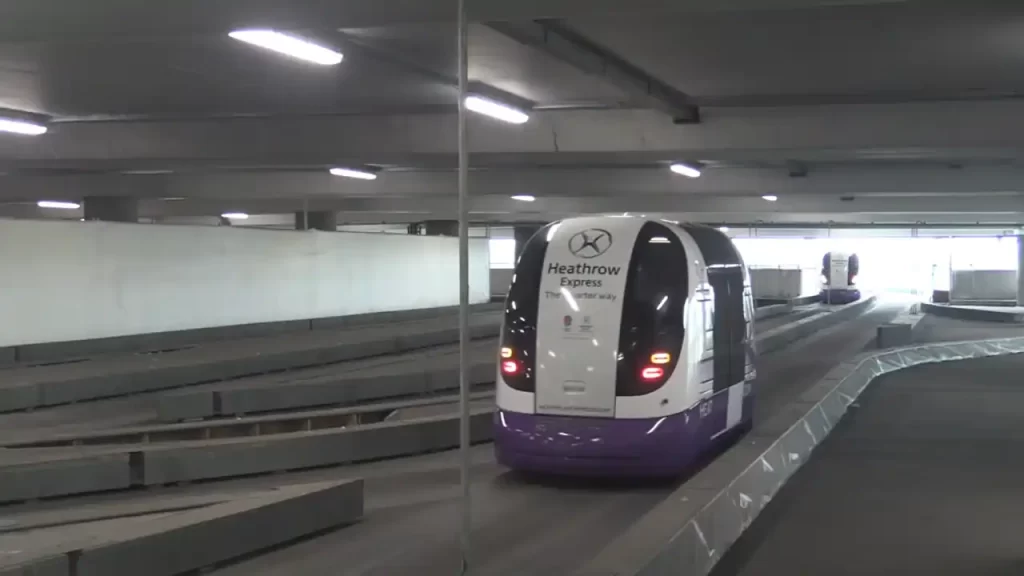
Maharashtra Chief Minister Devendra Fadnavis laid the foundation for India’s first Pod Taxi project, an Automated Rapid Transit System (ARTS), in Mumbai, marking a transformative moment for the city’s urban transport infrastructure. The groundbreaking ceremony was performed with Deputy Chief Ministers Eknath Shinde and Sunetra Pawar, formally launching work on this futuristic, driverless pod taxi system. The 8.85-kilometer elevated, driverless corridor will connect Bandra (East) and Kurla, providing seamless first- and last-mile connectivity to suburban rail and metro stations while aiming to decongest one of Mumbai’s busiest business districts, the Bandra-Kurla Complex (BKC).The project aims to provide seamless last-mile connectivity between Kurla and the Bandra Kurla Complex, serving an estimated four to six lakh commuters traveling to BKC daily. Planned with 22 air-conditioned stations spaced roughly 200 meters apart, the system will be implemented in phases, with Phase I covering 3.36 kilometers between Kurla Terminal and Bandra (East) terminals, expected to be completed within 20 months. Key stations in the first phase include Kurla (Terminal), LBS Marg, MMRDA Pay & Park (G Block), BDB Gate-11, Kalanagar, Old MMRDA Building, and the Excise Department, before terminating at Bandra (East).AI-Driven, Zero-Carbon Transportation SystemThe pods are driverless and AI-powered, running on battery power along a dedicated guideway. Each pod can carry up to six passengers with a maximum speed of 40 km/h and a headway of just 15 seconds, ensuring high frequency and minimal waiting time. Unlike conventional systems, pods stop only at stations chosen by passengers, bypassing others to reduce travel time through an innovative on-demand stop mechanism.Each pod measures 3.9 meters in length, 2.01 meters in width, and 1.8 meters in height, and will be fully air-conditioned for passenger comfort. Operations will be monitored from a central control room to maintain safety and efficiency, while a dedicated depot is planned at the RLDA Plot in Bandra East. Speaking at the foundation-laying ceremony, Chief Minister Fadnavis said, “The Pod Taxi project reflects Mumbai’s move towards future-ready, sustainable transport solutions. It will ease congestion in BKC and offer fast, eco-friendly connectivity to thousands of commuters.”Transforming Urban Mobility in Mumbai’s Business HubDescribing the project as a “game-changer for urban mobility,” a senior official from the Mumbai Metropolitan Region Development Authority (MMRDA) said, “The Pod Taxi will transform the way people move within BKC. It is designed to provide fast, predictable, and green transport while significantly reducing pressure on roads.” The fully automated system will operate on AI-based, driverless technology, representing a major advancement in Mumbai’s transformation into a smart city and aligning its urban mobility with tech-savvy global centers such as London and Dubai.Urban transport experts believe the system will drastically cut short intra-BKC travel times that often stretch due to heavy vehicular congestion. By offering a zero-carbon, battery-operated alternative, the project is also expected to contribute to sustainable mobility goals and improved air quality in one of India’s most polluted metropolitan areas. An MMRDA official added, “This is not just a transport project; it is a step towards smart, future-ready infrastructure for Mumbai. The Pod Taxi will strengthen connectivity between Bandra and Kurla stations while making travel within BKC smooth, quick, and environmentally friendly.”Strong Metro Integration Creating Multi-Modal Transport GridThe Pod Taxi corridor will integrate with Mumbai Metro Line 3 at the BKC metro station and connect with ITO and IL&FS stations on Mumbai Metro Line 2B, creating a multi-modal transport grid in the commercial hub. This integration will improve multimodal access for commuters, allowing seamless transfers between different modes of transportation and reducing overall travel time for daily commuters navigating Mumbai’s complex transport network.Officials said the service will cater to 1.09 lakh daily commuters by 2031, with fares proposed at ₹21 per kilometer (2022 rates). The project is being implemented under a Public-Private Partnership (PPP) model, with no financial burden on the state government or MMRDA, while still generating revenue for the authority. With an estimated budget of approximately ₹1,017 crore, this project is set to transform daily commuting for the estimated four to six lakh commuters traveling to BKC.Implementation Timeline and Phased DevelopmentThe project in Mumbai is being executed by the Mumbai Metropolitan Region Development Authority (MMRDA) to strengthen urban transport. The project will be developed in phases, with the first phase covering 3.36 kilometers between Kurla Terminal and Bandra East terminals. CM Fadnavis directed officials to immediately escalate any hurdles posed by government agencies or departments, assuring such issues would be resolved at the highest level to ensure the project is executed in a hassle-free environment and within the deadline.Once completed by 2031, the Automated Rapid Transit System is expected to redefine short-distance urban commuting in Mumbai, positioning the city among global adopters of next-generation personal rapid transit solutions. The full system will span approximately 8.85 kilometers, establishing Mumbai as a pioneer in India’s urban mobility landscape and setting a precedent for other metropolitan cities to follow.A Vision for Future-Ready Sustainable TransportChief Minister Fadnavis described the project as reflecting Mumbai’s move towards future-ready, sustainable transport solutions that will ease congestion in BKC and offer fast, eco-friendly connectivity to thousands of commuters. The Pod Taxi represents India’s entry into advanced personal rapid transit technology, demonstrating the country’s commitment to adopting cutting-edge urban mobility solutions that combine sustainability, efficiency, and technological innovation.