


Amit Kshatriya: The NASA Lifer Who Became America’s Point Man for the Moon
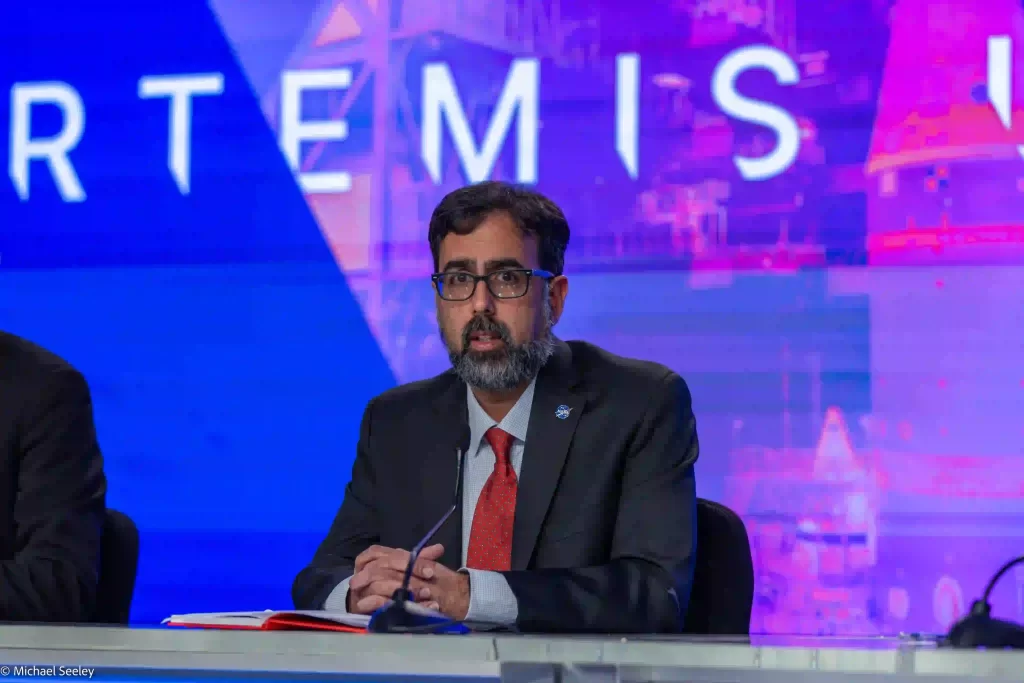
A Wisconsin Kid Who Grew Up to Run NASAThere is a particular kind of American origin story that begins in the heartland and ends somewhere extraordinary. Amit Kshatriya’s version goes from Wisconsin to the highest civil service position in the United States space agency — and the path between those two points runs through twenty-two years of calculated, relentless work at the place he always wanted to be.Kshatriya was born in Wisconsin to first-generation Indian immigrants. Growing up in Houston, he admired rocket launches as a child — which, given that Houston is home to NASA’s Johnson Space Center, meant he was watching the real thing, not television footage. That proximity to actual space operations made a future at NASA feel less like a fantasy and more like a direction.He holds a Bachelor of Science in mathematics from the California Institute of Technology in Pasadena, California, and a Master of Arts in mathematics from the University of Texas at Austin. Two degrees in mathematics. No aerospace engineering, no physics at the undergraduate level. Just the discipline that underlies all of it, pursued at two of the most demanding institutions in the United States.On September 3, 2025, acting NASA Administrator Sean P. Duffy named Amit Kshatriya as the new Associate Administrator of NASA, the agency’s top civil service role. He was, at that moment, the highest-ranking civil servant in the history of the American space agency to have Indian roots. More importantly, he was the person now responsible for making sure humans get back to the Moon.Twenty-Two Years: How You Actually Get to Run NASAThe title of NASA Associate Administrator does not come from a single impressive moment. It comes from two decades of doing every job in front of you extremely well. Kshatriya’s career at NASA is worth tracing in detail because it explains not just who he is, but how the most complex human endeavour on earth actually functions — one competent, patient professional at a time.Beginning his time at the space agency in 2003, he worked as a software engineer, robotics engineer, and spacecraft operator, primarily focused on the robotic assembly of the International Space Station. Robotic assembly of the ISS is not a glamorous assignment. It is exacting, technically demanding work with zero margin for error and very little public visibility. It is exactly the kind of work that tells you whether someone actually understands how spacecraft systems integrate, or whether they just understand the theory.From 2014 to 2017, he served as a space station flight director, where he led global teams in the operations and execution of the space station during all phases of flight. The flight director role at NASA is one of the most pressure-intensive jobs in any industry. The flight director is the person in Mission Control who, when something goes wrong, makes the call. Every system, every trade-off, every risk assessment on a mission runs through the flight director’s judgment. Kshatriya did this job for three years.He was awarded the NASA Outstanding Leadership Medal for his actions as the lead flight director for the 50th expedition to the space station. Kshatriya is also the recipient of a Silver Snoopy, an award that astronauts themselves bestow for outstanding performance contributing to flight safety. The Silver Snoopy is unusual among NASA’s many awards because it comes from the astronauts — the people whose lives depend on the quality of work done on the ground. Getting one means the people in the most dangerous seats trusted you with their lives and wanted you to know it.He also served as lead robotics officer for the SpaceX Dragon demonstration mission under the Commercial Orbital Transportation Services programme. That assignment placed him at the intersection of NASA and the commercial space industry at the precise moment that intersection became the most consequential territory in space policy. Understanding both the agency’s institutional culture and the operational culture of commercial partners is a skill set that very few people in NASA had developed at the time.From 2017 to 2021, he became deputy, and then acting manager, of the ISS Vehicle Office, where he was responsible for sustaining engineering, logistics, and hardware programme management.Then the biggest assignment of his career arrived.Moon to Mars: The Job That Defined HimIn 2021, Kshatriya was assigned to the Exploration Systems Development Mission Directorate at NASA Headquarters in Washington, D.C., where he became deputy associate administrator for the Moon to Mars Programme. In this role, he was responsible for programme planning and implementation for human missions to the Moon and Mars. He directed and led the programmes to ensure Artemis and Mars planning, development, and operations were consistent with ESDMD requirements, and served as the single point of focus for risk management.Prior to his ESDMD role, Kshatriya served as the acting deputy associate administrator for the Common Exploration Systems Development Division, where he directed and provided leadership and integration for the Space Launch System, Orion, and Exploration Ground Systems programmes, as well as associated Artemis Campaign Development Division initiatives linking the agency’s Moon to Mars objectives.In practical terms, this means Kshatriya was the person overseeing the three most expensive and technically complex elements of Artemis: the Space Launch System rocket, the Orion capsule, and the ground systems at Kennedy Space Center. The fact that those systems worked on Artemis I — the uncrewed test mission that circled the Moon in November 2022 and returned safely — reflected, among other things, the quality of the programme management he had led.In 2021, Kshatriya was assigned to NASA Headquarters as an assistant deputy associate administrator for the Exploration Systems Development Mission Directorate, where he was an integral part of the team that returned a spacecraft designed to carry humans to the Moon during the Artemis I mission.The Appointment: Why His Elevation Sent a MessageThe announcement was made by Acting NASA Administrator Sean P. Duffy: “Amit has spent more than two decades as a dedicated public servant at NASA, working to advance American leadership in space. Under his leadership,
NASA Astronaut Sunita Williams Retires After Nearly Three Decades of Spaceflight Service
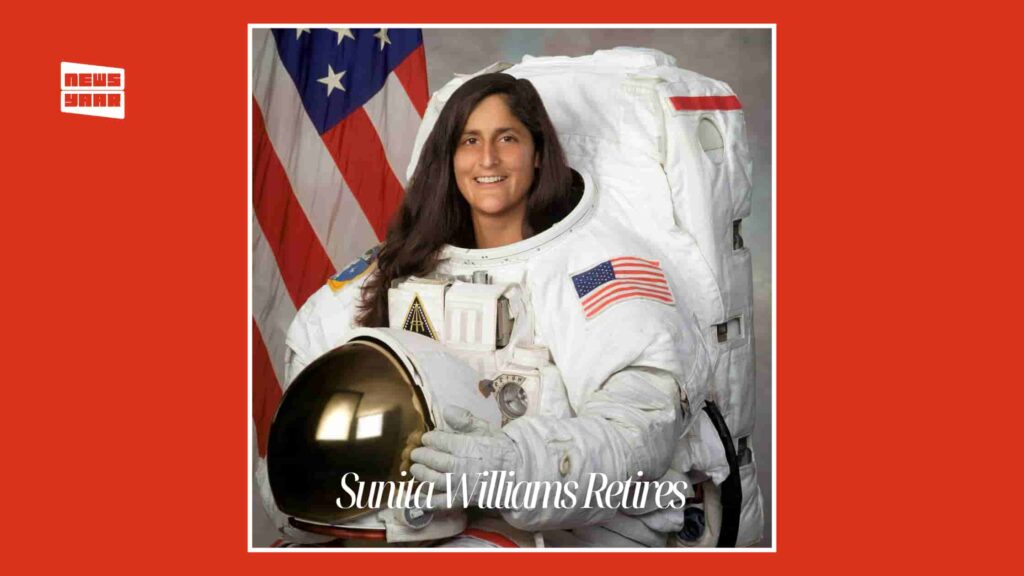
NASA astronaut Sunita “Suni” Williams has formally retired after a distinguished 27-year career with the United States space agency, closing a chapter that spans some of the most significant phases of modern human spaceflight — from the Space Shuttle programme to the International Space Station (ISS) and the emergence of commercial crew missions. NASA announced her retirement in late 2025, acknowledging Williams’ extensive contributions to space exploration, mission leadership, astronaut training and long-duration human spaceflight operations. Early Life and Professional Background Born on September 19, 1965, Sunita Williams is of Indian-Slovenian descent and grew up in the United States. She graduated from the United States Naval Academy with a degree in physical science and later earned a master’s degree in engineering management from the Florida Institute of Technology. Before joining NASA, Williams served as a commissioned officer in the US Navy, where she became a helicopter pilot and later a test pilot, flying more than 30 aircraft types. Her operational and technical experience in aviation played a key role in her selection as an astronaut. Selection as NASA Astronaut Williams was selected as part of NASA’s 1998 astronaut class, one of the agency’s most competitive intakes. She underwent extensive training in spacecraft systems, robotics, spacewalks, Russian language and survival operations — a reflection of NASA’s increasingly international mission structure at the time. Her training coincided with the early assembly years of the International Space Station, positioning her at the forefront of long-duration orbital missions. Space Missions and Time in Orbit Over the course of her career, Williams flew on three space missions, spending a cumulative 608 days in space, making her one of NASA’s most experienced astronauts in terms of time spent in orbit. Her first spaceflight came in 2006 aboard Space Shuttle Discovery (STS-116), where she joined Expedition 14 and later Expedition 15 aboard the ISS. During this mission, she played a major role in station construction and systems maintenance. Williams returned to the ISS in 2012 as part of Expedition 32, later assuming command during Expedition 33, becoming one of the few astronauts — and one of the few women — to lead the orbiting laboratory. Record-Breaking Spacewalks One of Williams’ most notable achievements was her contribution to extravehicular activity (EVA). She conducted nine spacewalks, accumulating over 62 hours outside the ISS — a record for the most spacewalk time logged by a woman astronaut at the time. Her spacewalks involved complex tasks such as station assembly, repair of external systems, installation of scientific instruments and upgrades to power and cooling infrastructure critical to ISS operations. Leadership and Scientific Contributions As Commander of the ISS, Williams was responsible for crew safety, operational coordination, scientific mission execution and liaison with ground teams across multiple countries. Her tenure coincided with an intensive research phase aboard the station, with experiments spanning human physiology, material science, fluid dynamics and Earth observation. NASA officials have consistently cited her leadership style, operational discipline and technical proficiency as instrumental in sustaining continuous human presence aboard the ISS. Role in Commercial Crew and Training In the latter part of her career, Williams supported NASA’s transition toward commercial crew programmes, contributing to astronaut training, mission evaluations and operational readiness planning. Her experience across different spacecraft platforms made her a valuable resource during this transitional period. She was also involved in mentoring younger astronauts and supporting mission simulations, ensuring continuity of institutional knowledge within NASA’s astronaut corps. Retirement and Post-Service Benefits Williams retired at the age of 60, making her eligible for federal retirement benefits based on years of service. According to public disclosures, retired NASA astronauts receive pensions under standard US federal employee retirement systems, along with healthcare and post-service benefits. While she has not announced formal post-retirement plans, retired astronauts often continue contributing through education, public engagement, advisory roles, research collaborations and private-sector aerospace initiatives. Legacy and Impact Sunita Williams’ retirement marks the end of a career that bridged multiple eras of US space exploration. Her achievements place her among the most accomplished astronauts in NASA history, particularly in the areas of long-duration missions, spacewalk operations and international cooperation aboard the ISS. Her career has also held symbolic importance for aspiring scientists and engineers worldwide, particularly in India and among the global Indian diaspora, where her achievements have long been followed with pride. As NASA prepares for future missions to the Moon, Mars and beyond, Williams’ contributions remain embedded in the operational foundations of long-duration human spaceflight.