


Ravi Tamta: The Almora Innovator Behind India’s New Flying Vehicle Prototype

For years, the idea of a flying car has existed somewhere between science fiction and engineering ambition. In India, that idea has now taken an unusual turn in the hills of Uttarakhand.Ravi Tamta, an innovator from Almora, has developed and test-flown a single-seater electric flying vehicle prototype called HAPIDA SKYNeX. The prototype, developed under his venture Hapida Sky, has attracted attention after videos of its test flight in Almora surfaced online.The achievement is particularly striking because Tamta’s work has emerged from Kaflikhan village in Almora, rather than from a large aerospace company or a major metropolitan technology hub. His journey reflects a growing interest in grassroots innovation in India’s smaller towns and hilly regions.At the same time, the vehicle is still a prototype. It is not a commercially available flying car, and its development should not be confused with the large-scale electric vertical take-off and landing aircraft programmes being pursued by established aerospace companies around the world.What makes the story interesting is the attempt itself: using electric propulsion and modified drone technology to explore personal air mobility in a region where terrain can make conventional transportation difficult.Who Is Ravi Tamta?Ravi Tamta is a young entrepreneur and innovator based in Almora, Uttarakhand. His company, Hapida, describes him as its founder and says his work focuses on developing technology and products suited to hilly areas and village life. His earlier work has included several unconventional inventions. Hapida’s website lists products and projects ranging from a smart bamboo stick and mobile-chargeable shoes to an electrolyte pump that the company describes as an electric vehicle charging technology. This background is important to understanding Tamta’s latest project.His work has consistently focused on using relatively accessible technology to address problems associated with difficult terrain, mobility and everyday life in hill regions.The flying vehicle is an extension of that approach, although on a considerably more ambitious scale.HAPIDA SKYNeX: What Has Been Developed?The vehicle developed by Tamta is known as HAPIDA SKYNeX.It is described as a single-seater electric personal flying vehicle prototype. Unlike the conventional image of a flying car that can drive on roads and then take off, SKYNeX is better understood at its current stage as a compact electric vertical-flight vehicle.The prototype uses multiple electric motors and propellers to generate lift and manoeuvre through the air. Its design draws on principles used in multirotor drones, allowing the vehicle to take off vertically rather than requiring a conventional runway.The recent test flight in Almora demonstrated that the prototype could become airborne with a person onboard. Reports said the test was conducted in an open field in the Almora region.That distinction matters.SKYNeX is currently a flying vehicle prototype, not a road-going car that can seamlessly switch between driving and flying.Calling it a “flying car” is useful for describing the broader idea behind the project, but the technology demonstrated so far is closer to a personal electric aerial vehicle.The Almora Test FlightThe test flight became the moment when Tamta’s project moved from an experimental concept to something that could be seen operating in the real world.The prototype was flown in an open area in Almora, with Tamta demonstrating its ability to lift off and remain airborne.The test attracted attention because of the location.Almora is part of Uttarakhand’s mountainous Kumaon region, where steep slopes, winding roads and difficult terrain can make road connectivity time-consuming.For such regions, the concept of short-distance aerial mobility has obvious appeal.A journey that requires considerable time by road could theoretically be shortened dramatically if a small electric aircraft could travel directly from one point to another.Reports surrounding the prototype have cited the possibility of reducing journeys that could take around 90 minutes by road to roughly 10 minutes through the air. These figures represent the potential being discussed around the concept, rather than an established commercial service. Why Build a Flying Vehicle in the Hills?The geography of Uttarakhand provides an interesting context for the project.Mountainous terrain makes transportation fundamentally different from transportation across plains.Roads often have to follow the contours of mountains rather than taking a straight route between two locations. Building new roads can involve tunnels, bridges, land acquisition and significant construction costs.Air travel, in principle, can bypass some of these geographical constraints.This is one reason small electric aircraft and vertical-flight technologies are attracting interest globally.For a state such as Uttarakhand, potential applications could extend beyond personal transportation.Such aircraft could eventually have applications in emergency response, medical transportation, tourism, logistics and connectivity to remote areas.However, turning that potential into a safe and economically viable transportation system would require considerably more development.From Drone Technology to Personal Air MobilityThe basic technology behind SKYNeX draws on the rapid development of electric drone systems.Multirotor drones have demonstrated that multiple electronically controlled propellers can provide vertical lift and directional movement without the need for conventional aircraft wings or runways.The challenge becomes much greater when the system has to carry a human being.A passenger-carrying aircraft needs considerably higher levels of reliability, redundancy, structural strength, battery capacity, flight control and safety.A drone that weighs a few kilograms can tolerate design limitations that a vehicle carrying a person cannot.That is why a successful prototype flight is only an early stage in the development process.The Biggest Challenge: SafetyThe most important question surrounding any passenger-carrying flying vehicle is not whether it can take off.It is whether it can take off safely, remain controllable and land safely under a wide range of conditions.A human-carrying electric aircraft must account for motor failures, battery problems, electronic failures, weather conditions, loss of control, emergency landings and structural stresses.It also needs systems capable of preventing a single component failure from immediately becoming a catastrophic event.For commercial deployment, aviation regulators would also need to establish appropriate certification and operating requirements.Therefore, the successful flight of SKYNeX should be seen as a demonstration of a prototype’s capability, not as proof that the vehicle is ready for public transportation.The Battery ProblemElectric propulsion offers an important advantage because electric motors are mechanically simpler than conventional combustion engines and can produce power efficiently.But batteries remain one of the
Adani–Embraer Tie-Up Signals a New Chapter in India’s Commercial Aircraft Manufacturing

India is set to make a landmark entry into commercial aircraft manufacturing as the Adani Group partners with Brazilian aerospace major Embraer to assemble regional passenger jets in the country. This development marks the first time India will host a final assembly line for commercial fixed-wing aircraft, placing it among a select group of nations with such advanced aerospace capabilities. The collaboration is widely seen as a significant boost to the government’s Make in India programme and a major step towards building a self-reliant aviation ecosystem.Under the partnership, Embraer’s widely used regional jets, designed for short- to medium-haul routes and seating between 70 and 146 passengers, will be assembled in India through a final assembly line operated by Adani Aerospace. While details regarding the exact location, investment size, and production timeline have not yet been formally announced, industry sources indicate that a comprehensive announcement is expected at the Hyderabad Air Show scheduled later in January 2026. Once operational, the facility will enable aircraft to be assembled, tested, and delivered from Indian soil.The timing of the partnership is particularly significant given India’s rapidly expanding aviation market. India is currently the world’s fastest-growing civil aviation market, with domestic airlines having placed orders for more than 1,800 aircraft to meet rising passenger demand. Until now, the country has depended almost entirely on global manufacturers for commercial aircraft imports. The establishment of a final assembly line is expected to reduce this dependence, generate skilled employment, and catalyse the growth of an indigenous aerospace manufacturing ecosystem.Government officials have indicated that policy support and fiscal incentives may be extended to airlines that place orders for aircraft assembled in India. Such incentives are likely to be structured on a declining basis as order volumes increase, helping the programme gain early traction while encouraging long-term sustainability. The success of this initiative is also expected to strengthen India’s case as a viable global manufacturing hub for high-value aviation products.Beyond commercial aircraft assembly, the Adani Group is positioning itself as a comprehensive aviation services provider. The group has already announced plans to expand into aircraft engine maintenance, repair and overhaul (MRO) services, as well as passenger-to-freighter conversions. By consolidating its aviation assets, including Indamer and Air Works, Adani aims to create a large integrated MRO platform serving both civilian and defence customers. This broader approach is expected to complement the aircraft assembly line by supporting lifecycle services and long-term operational needs.For Embraer, the partnership represents a strategic expansion in one of its fastest-growing markets. The Brazilian manufacturer has operated in India since 2005 and currently has close to 50 aircraft in the country serving the Indian Air Force, government agencies, business jet operators and regional airline Star Air. In October 2025, Embraer strengthened its commitment by opening an office in New Delhi to support its commercial aviation, defence, services and emerging urban air mobility segments.Industry experts believe the Adani–Embraer collaboration could have wider implications for the global aviation industry. By demonstrating the viability of commercial aircraft assembly in India, the project may encourage larger manufacturers such as Airbus and Boeing to consider setting up similar facilities in the country. If successful, the initiative could redefine India’s role in the global aerospace value chain and mark the beginning of a new era in domestic aircraft manufacturing.
IndiGo’s December 2025 Meltdown: What Really Happened?
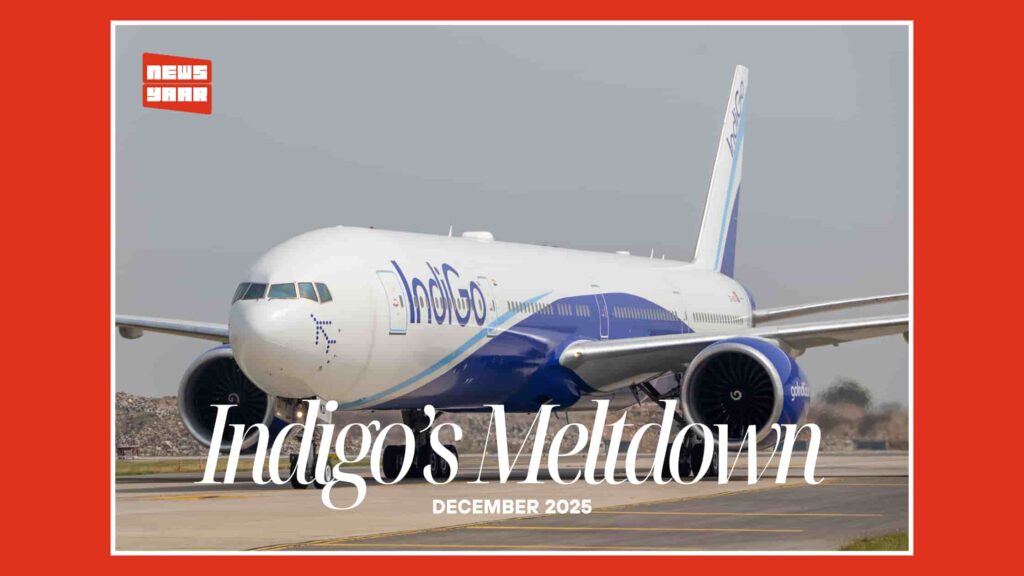
In early December 2025, IndiGo, India’s biggest budget airline, faced one of the worst aviation breakdowns the country has seen in years. Starting around December 2, thousands of flights were cancelled across major cities. Airports were filled with stranded passengers, long queues, and growing frustration. What looked like a crisis was actually the result of a deeper planning failure.Why Did Everything Collapse?The core issue began with new rules introduced by the Directorate General of Civil Aviation (DGCA). These updated regulations required airlines to:Strictly limit pilot flying hoursGive longer rest breaks between flightsReduce fatigue risks, especially on late-night schedulesWhile these rules had been planned for months, it appears IndiGo didn’t reorganise its crew schedules, standby pilots, or rosters in time.The result?Many flights simply had no pilot or co-pilot who was legally eligible to fly. Without meeting DGCA requirements, IndiGo was forced to cancel entire sets of flights, creating a ripple effect across the network.IndiGo flies over 2,200 flights daily, including many night operations. So even a small scheduling disruption hit the airline on a massive scale.The Passenger Impact: A Domino Effect Across IndiaWhat began as a few hundred cancellations quickly escalated. On some of the worst days:550–560 flights were cancelled within hoursBengaluru alone saw around 150 flight cancellationsDelhi, Mumbai, Hyderabad, and Kolkata experienced severe chaosPassengers experienced:Sudden last-minute cancellationsExtremely long lines at help desksDelayed or misplaced luggageStruggles to find alternate flights during the busy winter and wedding seasonHow IndiGo Tried to RecoverFacing public anger, media pressure, and regulatory scrutiny, IndiGo moved into crisis-recovery mode. They claimed rapid improvements:About 1,800 flights were operating again within daysOn-time performance slowly improvedThey released ₹827 crore in refunds to affected passengersBaggage delays and customer complaints were prioritisedMost routes were restored by mid-DecemberThe airline also deployed additional staff to manage queues and customer support.Final Words IndiGo’s December 2025 crisis wasn’t a one-day glitch; it was a major systems failure. Safety rules triggered the disruption, but weak internal preparation turned it into a nationwide travel meltdown. Strong safety regulations must be matched with strong operational readiness. Otherwise, passengers end up paying the price.