


Amaravati: Andhra Pradesh’s New Capital City Finally Coming to Life After Years of Drama
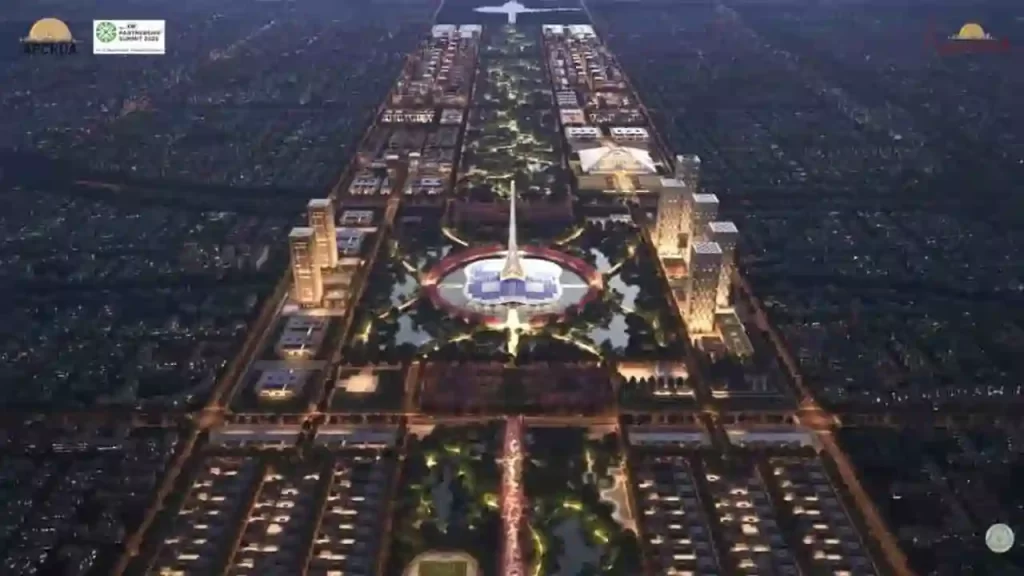
Imagine building a brand-new capital city from scratch – a modern wonder along a mighty river, designed by global experts, powered by green energy, and home to millions. That’s the dream of Amaravati, Andhra Pradesh’s greenfield capital project led by Chief Minister N. Chandrababu Naidu. Once stalled for five long years, this ambitious “people’s capital” or Praja Rajadhani is now buzzing with activity. As of April 2026, projects worth Rs 57,821 crore are underway, with Rs 50,943 crore already grounded. Prime Minister Narendra Modi laid the foundation stone recently, and Naidu promises that Phase 1 will be ready in months. After a decade of twists, turns, protests, and court battles, Amaravati is rising again on the Krishna River banks, ready to be India’s most sustainable city.A Dream Born in 2014: From Bifurcation Blues to Bold VisionAndhra Pradesh lost Hyderabad as its capital after the 2014 bifurcation with Telangana. The state needed a fresh start. Naidu, then Chief Minister, picked Amaravati, a 2,300-year-old site in Guntur district with deep history. Ancient Satavahanas ruled here around 225 BCE, and Emperor Ashoka’s Buddhist stupa (Amaravati Mahachaitya) still whispers of Gautama Buddha’s visits. In the 18th century, zamindar Raja Vasireddy Venkatadri Naidu revived it as a thriving town, building palaces amid fertile Krishna delta lands.Why here? Perfect spot, central, near Vijayawada and Guntur, with great roads, rails, and river views. Naidu announced it on October 22, 2015, with Modi’s foundation stone. The name “Amaravati” means “abode of immortals,” linked to the Amareswara Shiva temple. Singapore’s experts (like Foster + Partners) crafted the masterplan: 217 square km of nine themed sub-cities, Government, Justice, Knowledge, Finance, Health, Sports, Culture, Tourism, and Electronics. At the heart? A green spine like New York’s Central Park, with the Assembly as a 250-meter lily-shaped tower.The Land Pooling Magic: Farmers as True PartnersNo forced takeovers, that’s Naidu’s genius Land Pooling Scheme (LPS) from 2015. Over 27,000 farmers voluntarily gave 33,000 acres. In return:Wet land owners: 1,000 sq yd residential + 450 sq yd commercial plots per acre, plus Rs 50,000/year annuity (rising 10% yearly for 10 years).Dry land owners: 250 sq yd commercial plots per acre + Rs 30,000/year annuity.Landless farmers: Rs 2,500/month pension for 10 years.The Andhra Pradesh Capital Region Development Authority (APCRDA) manages it. Bhoomi puja happened in June 2015; the secretariat and assembly moved to temporary sites by 2017. The Big Halt: Politics, Protests, and a Three-Capitals Twist (2019-2024)Joy turned to pain in 2019. YSR Congress’s Jagan Mohan Reddy won, suspended annuities for 2,903 farmers, canceled pensions for 4,422 families, and ditched LPS for 33,000 acres. He pushed a “three capitals” plan: Amaravati (legislative), Visakhapatnam (executive), Kurnool (judicial). World Bank and AIIB pulled $1 billion in funding. Farmers protested 1,630 days straight, facing lathi charges. The High Court ruled in 2022: Amaravati stays the sole capital. Reddy withdrew the bill in 2021 amid legal heat.The five-year freeze? Cost overruns of 40-45%, roads up 25-28%, buildings 35-55%. The original Rs 51,000 crore budget swelled to Rs 64,910 crore. Infrastructure rusted; investors fled.Revival Under Naidu 2.0: Money Flows, Work Speeds Up (2024-Now)Naidu’s TDP won big in June 2024. He restarted annuities, pensions, and bank loans for plots. Farmers invited to events, Naidu calls them “heroes.” Parliament passed the Andhra Pradesh Reorganisation (Amendment) Bill 2026 on April 1, making Amaravati the permanent sole capital.Funding floodgates opened:World Bank: $800M (first $205M in March 2025) for urban infra, jobs, flood-proofing.ADB: $788.8M loan + $3.64B commitment (2025-2029) via Results-Based Lending.HUDCO: Rs 11,000 crore loan.Centre: Rs 4,200 crore released; state budget Rs 15,000 crore (2024-25), Rs 6,000 crore (2026-27).Land monetization for more cash. A World-Class Green Dream City: What’s PlannedAmaravati won’t just be offices, a smart, carbon-neutral hub for 3.5 million people and 1.5 million jobs by 2050:Renewable power: 2,700 MW from solar, wind, hydro – world’s first 100% green capital. Rooftop solar is mandatory.Transport: Metro, e-buses, EV stations, cycle paths.Tech: Smart grids, IoT traffic, flood drains.Layout: 13 plazas for districts; themed hubs like Knowledge City (universities) and Finance City (banks).Inspired by Amsterdam (canals), Singapore (gardens), and Tokyo (efficiency).Naidu: “Rome wasn’t built in a day, but Amaravati will be India’s growth engine.” Economic survey 2025-26 calls it AP’s powerhouse.Main Features of Amaravati’s Master Plan It is an ambitious blueprint for a world-class, sustainable capital city in Andhra Pradesh. Designed by global experts like Singapore’s Housing and Development Board (HDB) and Foster + Partners, it transforms 217 square kilometers along the Krishna River into a “people’s capital” called Praja Rajadhani. The plan focuses on green living, smart technology, and economic growth for 3.5 million people by 2050. Here are the main features, explained simply.1. Nine Themed Sub-Cities for Balanced GrowthThe city is divided into nine specialized zones, each with a clear purpose:Government City: Core hub with assembly, high court, and offices.Justice City: Courts, legal institutions, and related services.Knowledge City: Universities, research centers, and schools.Finance City: Banks, stock exchanges, and business towers.Health City: Hospitals, medical research, and wellness centers.Sports City: Stadiums, training facilities, and parks.Culture and Tourism City: Museums, heritage sites, and hotels.Electronics and IT City: Tech parks and innovation hubs.Recreational and Residential Zones: Homes, shopping, and leisure areas.These clusters group jobs and homes smartly, cutting travel time and boosting efficiency.2. Central Green Spine: The City’s LungsA massive green spine runs north-south through the heart, like New York’s Central Park or Lutyens’ Delhi. This 5.5 km long, 1 km wide corridor includes:Parks, lakes, and gardens covering at least 60% greenery or water.Walking paths, cycle tracks, and shaded streets.Waterfront development along the Krishna River with promenades and water taxis.It cools the city naturally and hosts events.3. Iconic Architecture and Urban GridGovernment Complex: Star attraction with a 250-meter lily-shaped Assembly tower (inverted lotus symbolizing democracy). High Court and secretariats nearby.13 Urban Plazas: One for each of Andhra’s districts, public squares for markets and festivals.Grid road network: Wide avenues (up to 60 meters), underground utilities (no messy wires), and elevated expressways.Mixed-use neighborhoods blend homes, shops, and offices. 4. 100% Green Energy and SustainabilityAmaravati aims to be the world’s first fully renewable-powered capital:2,700 MW clean power