


Lagaan at 25: How a Film Nobody Wanted Became a Film Nobody Can Forget
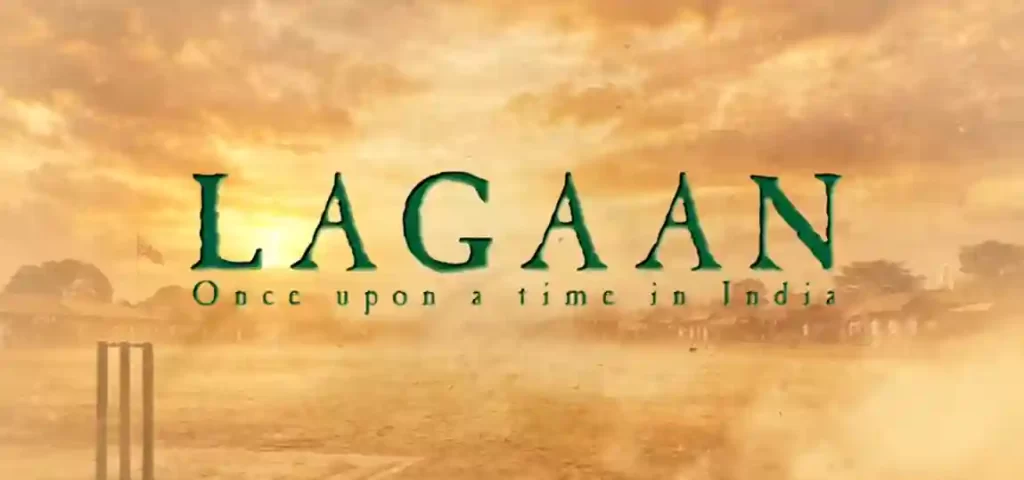
A quarter of a century ago, the Hindi film industry largely passed on a four-hour period musical about villagers playing cricket against the British Raj. This weekend, that same film returns to cinemas for a special three-day run, marking 25 years since its original release on 15 June 2001, and it will do something that a 224-minute historical sports drama has no business doing in the streaming age: it will fill halls. That is the real story of Lagaan. It is not just that the film was nominated for an Oscar, won national awards, or became a cultural touchstone. It is that a film almost nobody wanted to fund has become a film almost nobody can forget, surviving not as a museum piece but as a living, breathing part of India’s pop culture, re-watched by people who were not even born when it first released. The Bet That Became a ClassicLagaan was always a risky proposition. It combined a colonial-era setting, a village story, a cricket match as the central plot device, and a runtime that stretched beyond the usual commercial limits. In an industry that often prefers safer formulas, Ashutosh Gowariker’s vision, backed by Aamir Khan as both producer and lead, felt like a gamble that could have easily collapsed under its own ambition. Yet the film’s confidence is what makes it endure. It does not apologise for its length, its music, or its emotional grandeur. Instead, it leans into them, using the epic scale to tell a story that is at once about cricket, taxation, caste, colonialism, unity, and hope, without ever feeling like a lecture. The Songs That Carried the StoryMuch of Lagaan’s staying power lies in its soundtrack. At a recent Spotify event celebrating the album, A.R. Rahman, Javed Akhtar, Gowariker, and Khan walked through how each song came together, and their stories reveal how carefully the music was crafted to serve both the period and the present. “Ghanan Ghanan” was the first song Khan heard, and it set the tone by establishing the importance of rain for the narrative. Rahman presented nearly three hours of music and asked the team to choose what they liked, while Javed Akhtar’s lyrics arrived almost like a revelation for a fast-paced melody that initially had no words. “O Rey Chhori” was originally a slower tune from Rahman’s Maa Tujhe Salaam album, but Khan pushed for a faster version, fearing it would be overshadowed by other big romantic releases at the time. The playful English lines in the song were written by Farhan and Zoya Akhtar, a detail that now feels like a small but charming footnote in the film’s history. “Mitwa” hinged on a single word that Rahman insisted on as a hook, even though Akhtar initially felt it was not part of the intended lyric. That instinct turned out to be crucial, because “Mitwa” became one of the album’s most memorable motifs, blending period texture with modern appeal.”Radha Kaise Na Jale” was designed as the film’s central romantic track, capturing the emotional triangle between Bhuvan, Gauri, and Elizabeth. Akhtar’s lyrics introduced a surprisingly modern argument about love and devotion, with lines that felt contemporary even in a period setting.”Chale Chalo” almost became “Nasha Nasha” because Khan and Gowariker had grown so attached to Rahman’s original humming. Akhtar refused, insisting that the situation demanded a rallying cry rather than a euphoric chant, and the final lyric became not just a song but a slogan for the film itself. “O Paalanhaare” remains the spiritual anchor of the album, a devotional piece so pure in its composition that Akhtar admitted it intimidated him. Rahman wanted timeless singers for a timeless song, which is why Lata Mangeshkar and Asha Bhosle were approached, giving the track a gravity that still resonates 25 years later. A Reunion That Felt Like HomeThe 25th anniversary celebrations in Mumbai were less a nostalgia event and more a reminder that Lagaan still belongs to the present. Aamir Khan, Ashutosh Gowariker, and much of the cast gathered for a special bash, joined by industry friends such as Salman Khan, Kareena Kapoor, Juhi Chawla, Kajol, Zoya Akhtar, and others. The warmth of that reunion mattered because it showed how the film has aged in the collective memory. Salman Khan, with his rugged look, drew comparisons to his Tere Naam days, while Kareena Kapoor, elegant in a blush-pink traditional outfit, highlighted how the film’s stars have moved through different phases of their careers while still being associated with this one landmark work. Cast members like Rajendranath Zutshi, Yashpal Sharma, Aditya Lakhia, and Akhilendra Mishra were present, alongside veterans such as Suhasini Mulay, Kulbhushan Kharbanda, and Raghubir Yadav, whose careers have only grown more respected with time. The event also acknowledged those who are no longer here, A.K. Hangal, Rajesh Vivek, Shri Vallabh Vyas, Javed Khan Amrohi, and most recently Pradeep Rawat, whose Deva Singh Sodhi remains one of the film’s most powerful performances. Where the Team of Champaner Is TodayLagaan turned out to be a defining film for many of its actors, even if their careers took very different paths afterwards. Aamir Khan went on to strengthen his position as one of Hindi cinema’s biggest stars with films like 3 Idiots, PK, and Dangal, and has also produced critically acclaimed work such as Laapataa Ladies. Gracy Singh, who played Gauri, became an overnight star and later moved into television and regional cinema, making a rare public appearance at the 25-year celebration. Paul Blackthorne, remembered as the ruthless Captain Andrew Russell, built a successful career in Hollywood television, especially through Arrow, before returning to India for the anniversary.Rachel Shelley, who played the empathetic Elizabeth Russell, became known globally through The L Word and more recently appeared in the Netflix series Kohrra. Pradeep Rawat, whose Deva Singh was central to Team Champaner, went on to become one of Indian cinema’s most recognisable villains before passing away in August 2026 after a battle with cancer. Aditya Lakhia, who portrayed Kachra, continued working steadily in film and television while also mentoring aspiring actors. Yashpal Sharma, remembered