


India Shines at Inaugural Asian U23 Athletics Championships: A Strong Step Toward the Future
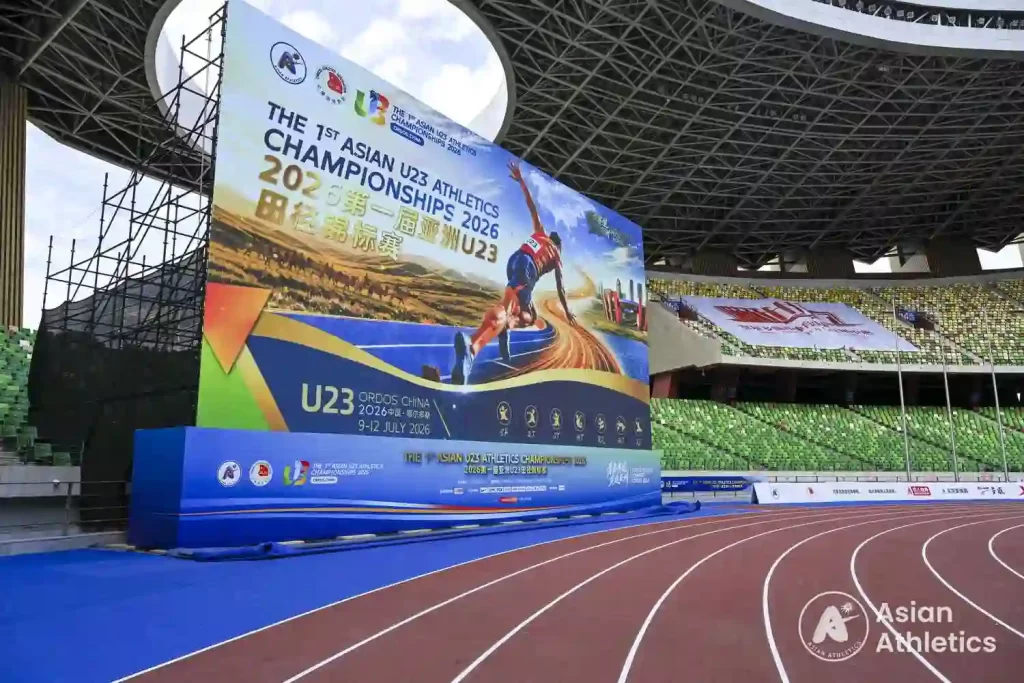
India ended the first-ever Asian U23 Athletics Championships 2026 in Ordos, China, with a solid 16-medal haul, three gold, four silver, and nine bronze, signalling that the country’s next generation of track and field talent is ready to step into the spotlight. The meet, held from July 9 to 12, brought together close to 50 Indian athletes across track and field events, and while the results were not always dominant, the overall performance showed depth, resilience, and a clear upward trajectory for Indian athletics beyond the senior level. What made this championship particularly important was its context. The U23 category sits between junior and senior levels, often acting as the final proving ground before athletes enter the senior international circuit. For India, which has long sought to build a more consistent pipeline of world-class track and field competitors, a strong showing here is not just about medals; it is about building belief, experience, and a stronger bench for future continental and global meets. Relays Lead the ChargeIndia’s relay teams were the standout performers in Ordos, accounting for four medals and two of the country’s three golds. The mixed 4x400m and women’s 4x400m teams both won gold, while the men’s 4x400m and women’s 4x100m squads added silver medals. This dominance in relays is significant because it reflects not only individual speed and endurance, but also the ability to work as a unit under pressure, a skill that is crucial in senior championships. Shravani Sachin Sangle emerged as the most successful Indian athlete, winning three medals: gold in both the mixed and women’s 4x400m relays, and a bronze in the 400m hurdles. Her performance was a reminder that India’s strength in middle-distance running and hurdles is growing, and that athletes like Sangle can carry multiple responsibilities across events without losing sharpness. Other relay stalwarts such as Sandramol Sabu, Setu Mishra, Astik Pradhan, and Nofisa Khatun also featured in multiple medal-winning teams, underlining the depth in India’s sprint and middle-distance pools. The women’s 4x400m quartet of Sangle, Sabu, Pravallika Narimalla, and Khatun clocked a strong time to claim gold, while the mixed relay team of Pradhan, Sabu, Mishra, and Sangle won India’s first gold of the meet with a time of 3:18.64. Gold on the Final DayIndia’s other two gold medals came on the final day of competition, providing a strong finish to the campaign. Anand Singh won the men’s javelin throw with a new personal best of 80.57m, a performance that shows India’s throwing events are continuing to produce athletes capable of competing at a high continental level. Shivam Lohakare added to the javelin success by claiming bronze in the same event, giving India a rare double-medal finish in a field event. Javelin has long been one of India’s most reliable disciplines, especially after the global success of senior athletes in recent years. Anand Singh’s performance in Ordos suggests that this strength is filtering down to the U23 level, which is a positive sign for the future. Distance Running and ConsistencyShivaji Parashuram’s two silver medals in distance events highlighted another area of growth: endurance running. India has traditionally been stronger in middle-distance and relays, but consistent performances in longer events at the continental level are a promising development. Parashuram’s ability to deliver across multiple races shows that India’s distance-running base is becoming more competitive, not just in isolation but in sustained tournaments. This matters because endurance events often require a different kind of preparation, long training cycles, tactical racing, and mental toughness. Success here indicates that India’s coaching structures and athlete development pathways are starting to produce more well-rounded competitors. Notable Absences and What They MeanWhile the medal tally was encouraging, a few notable absences were also part of the story. Shaili Singh, one of India’s most promising young long jumpers, was included in the entry list but did not compete. Similarly, senior pole vault national record holder Dev Kumar Meena and his rival Kuldeep Kumar were initially named in the squad but eventually did not participate. These absences are not necessarily alarming, but they do highlight the challenges of managing a large and diverse athletics ecosystem. Injuries, form cycles, selection decisions, and scheduling conflicts can all play a role in who actually competes at a meet like this. For India to build a truly robust U23 pipeline, it will need to ensure that top prospects are not only identified but also consistently supported through competition calendars that maximise their development.Why U23 MattersThe U23 category is often overlooked in public discourse, but it is one of the most important stages in an athlete’s career. By this age, athletes have moved beyond junior competition but are not yet fully established seniors. This is the phase where technique is refined, mental toughness is built, and international exposure becomes crucial. For India, which has historically struggled to convert junior success into senior consistency, a strong U23 performance is a positive sign. It suggests that the gap between age-group success and senior competitiveness may finally be narrowing. If athletes like Sangle, Parashuram, Anand Singh, and others can continue to progress, they could form the core of India’s senior team in the next few years. Bigger Picture: India’s Athletics TrajectoryThe 16-medal finish in Ordos should be seen as part of a larger upward trend in Indian athletics. Over the past decade, India has invested more in training infrastructure, coaching, sports science, and international exposure. Results have started to show not only in individual events but also in team competitions like relays, where coordination and depth matter. The relay success in particular is encouraging because it requires a strong domestic circuit, consistent competition, and a pool of athletes capable of running at similar speeds. India’s ability to field multiple competitive relay teams at the U23 level suggests that the domestic system is producing more than just isolated stars. ConclusionIndia’s performance at the inaugural Asian U23 Athletics Championships was a clear statement of progress. Three golds, 16 medals overall, and strong showings in relays, javelin, and distance events point to a generation that is ready to challenge for more at