


India’s First Semi-High-Speed Rail Corridor: The Ahmedabad–Dholera Project Set to Transform Gujarat
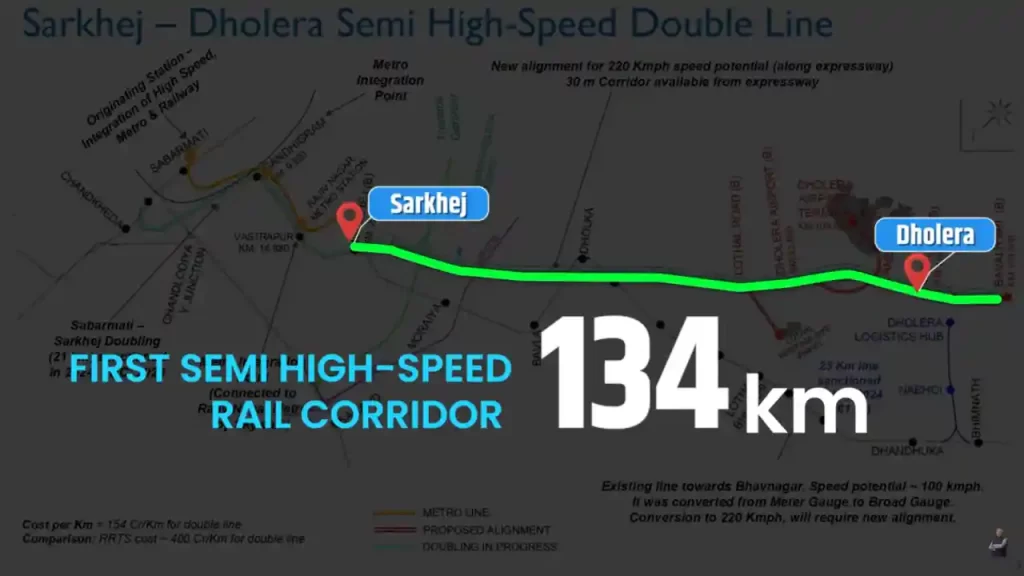
In a landmark decision that marks a new chapter in India’s railway modernization, the Cabinet Committee on Economic Affairs (CCEA), chaired by Prime Minister Narendra Modi, approved the ₹20,667 crore Ahmedabad (Sarkhej)–Dholera Semi High-Speed Double Line Rail Project on May 13, 2026. This 134-kilometer corridor will be Indian Railways’ first semi-high-speed rail project developed entirely with indigenously engineered technology, embodying the nation’s “Aatmanirbhar Bharat” vision while setting a reference model for phased semi-high-speed rail expansion across the country. By slashing travel time between Ahmedabad and Dholera to under an hour, potentially as fast as 34 minutes from Sarkhej to Dholera and 48 minutes from Sabarmati to Dholera, the corridor will enable comfortable daily commuting, same-day business trips, and seamless connectivity to Dholera Special Investment Region (SIR), the upcoming Dholera International Airport, and the Lothal National Maritime Heritage Complex.The project, implemented under the PM Gati Shakti National Master Plan, emphasizes multi-modal connectivity and logistical efficiency through integrated planning and stakeholder consultations. It will expand Indian Railways’ network by approximately 134 km, enhance mobility for around 284 villages with a combined population of 5 lakh people, and support both passenger and freight movement. Officials projecting completion by 2030–31 highlight that trains will operate at speeds up to 200 kmph, with the line designed for 220 kmph, making it a pioneering initiative that will accelerate industrial growth, strengthen Dholera’s position as a smart city and investment hub, and significantly boost employment and regional development under the government’s vision for a New India.Indigenous Technology and the Aatmanirbhar Bharat VisionThis historic corridor is planned with indigenously developed technology, reflecting the government’s strategic push toward “Aatmanirbhar Bharat” and reducing dependence on foreign systems for critical infrastructure. By relying on domestic engineering expertise, the project showcases India’s capability to design and deploy semi-high-speed rail systems without external dependency, setting a benchmark for future railway expansions. The Railways Ministry stated that this initiative will act as a pioneer model for phased semi-high-speed rail expansion across the country, demonstrating how indigenous innovation can drive large-scale infrastructure development while maintaining cost efficiency and technological sovereignty.The emphasis on indigenous technology also aligns with Prime Minister Modi’s vision of making people in the region “Atmanirbhar” through comprehensive development that enhances employment and self-employment opportunities. By integrating local engineering firms, manufacturing units, and research institutions into the project’s execution, the corridor will foster a domestic ecosystem capable of delivering next-generation rail infrastructure, transferring skills, and creating high-value jobs in Gujarat and beyond.Transforming Connectivity: Ahmedabad, Dholera SIR, Airport, and LothalThe corridor will provide seamless connectivity to Ahmedabad, the Dholera Special Investment Region (SIR), the upcoming Dholera International Airport, and the Lothal National Maritime Heritage Complex (NHMC), creating a multi-modal transport network that integrates rail, air, and maritime infrastructure. Dholera SIR, being developed as a major industrial and manufacturing hub, will gain direct access to Ahmedabad’s urban and economic infrastructure, enabling businesses to locate operations in Dholera while maintaining easy access to Ahmedabad’s markets, logistics networks, and skilled workforce. The upcoming Dholera Airport will further enhance connectivity, positioning the region as a hub for aviation, trade, and tourism, while the Lothal National Maritime Heritage Complex will benefit from improved rail access, promoting cultural tourism and heritage preservation.Connecting Ahmedabad with Dholera will drastically cut passenger travel time, enabling comfortable daily commuting and same-day return trips. This semi-high-speed railway will not only bring two cities closer but also connect people living hundreds of kilometres away, fostering greater social and economic integration across the region. Government estimates suggest the project will improve mobility for nearly 284 villages with a combined population of around 5 lakh people, boosting employment opportunities, enabling access to education and healthcare, and strengthening regional development under the PM Gati Shakti National Master Plan.Industrial Growth, Logistics Efficiency, and Economic ImpactThe corridor is expected to support both passenger and freight movement, improving access to Dholera SIR and enhancing logistics efficiency for industries operating in the region. By providing faster and more reliable rail transport, the project will reduce logistics costs, minimize dependency on road transport, and enable manufacturers to move goods more efficiently between Ahmedabad, Dholera, and other industrial hubs. This will accelerate industrial growth, attract investment to Dholera SIR, and strengthen the region’s position as a leading smart city and investment destination, contributing to Gujarat’s and India’s broader economic development goals.The project is aligned with Prime Minister Modi’s vision of a New India, which emphasizes comprehensive development that enhances employment and self-employment opportunities. By improving connectivity to 284 villages and enabling easier access to urban markets, education, and healthcare, the corridor will empower rural communities, create new economic opportunities, and support the government’s goal of inclusive growth. The semi-high-speed rail project will also facilitate the movement of people, goods, and services seamlessly, integrating regional economies and fostering greater economic integration across Gujarat.Environmental Sustainability and Climate GoalsAs an environment-friendly and energy-efficient mode of transportation, the rail corridor will contribute significantly to India’s climate goals by reducing oil consumption and lowering carbon emissions. Official projections estimate the project will reduce oil imports by 0.48 crore litres and lower CO₂ emissions by 2 crore kg, equivalent to planting 10 lakh trees, demonstrating its potential to mitigate environmental impact while supporting sustainable development. By encouraging rail-based travel and logistics instead of road transport, the corridor will reduce greenhouse gas emissions, lower air pollution, and promote cleaner, greener transportation aligned with India’s long-term climate commitments.The environmental benefits extend beyond emission reductions. The project will minimize land degradation and habitat disruption associated with road expansion, reduce noise pollution in urban and rural areas, and promote sustainable urban planning by integrating rail infrastructure with smart city development in Dholera. This aligns with the PM Gati Shakti National Master Plan’s focus on enhancing multi-modal connectivity and logistical efficiency through integrated planning, ensuring that infrastructure development balances economic growth with environmental sustainability.Project Timeline, Speed, and Operational HighlightsThe 134-km broad-gauge semi-high-speed rail corridor is targeted for completion by 2030–31, with trains expected to operate at speeds up to 200 kmph, while the line is
Rann Utsav: What It Is, Why It Is Celebrated and Everything You Need to Know About Gujarat’s White Desert Festival
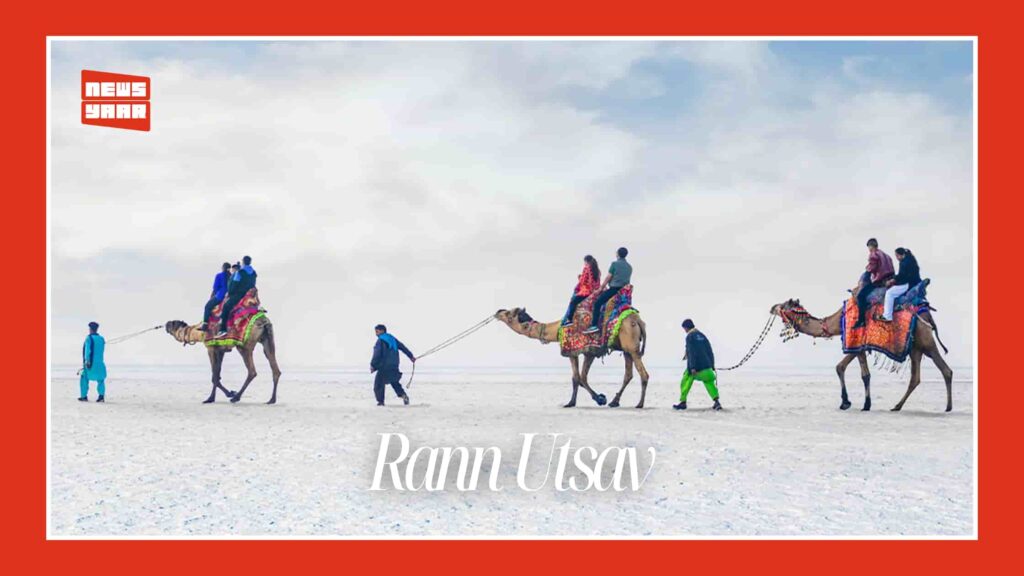
Rann Utsav is Gujarat’s iconic cultural and tourism festival held annually at the Great Rann of Kutch, one of India’s most extraordinary natural landscapes. Organised by the Gujarat Tourism Department, the festival celebrates the region’s rich heritage, crafts, music, food and desert life, while transforming the vast white salt desert into a globally recognised travel destination. For those unfamiliar with it, Rann Utsav is not just an event—it is a season-long cultural experience that brings together art, community and landscape in a setting found nowhere else in the country. What Is Rann Utsav and Why Is It Celebrated? The Great Rann of Kutch remains largely inaccessible during the monsoon season, but from winter onwards, the dried salt flats reveal a surreal white expanse. Rann Utsav was conceptualised to showcase this natural phenomenon while promoting Kutchi culture, rural livelihoods and sustainable tourism. The festival highlights local artisans, folk performers and traditional communities, allowing visitors to experience Gujarat’s cultural diversity beyond urban centres. Over the years, Rann Utsav has emerged as a symbol of India’s living heritage, blending tourism with cultural preservation. Rann Utsav Dates and Duration Rann Utsav is generally held from November to February, lasting nearly three to four months during the winter season. The official dates are announced by Gujarat Tourism every year, allowing travellers to plan visits across weekends, holidays and full moon nights. The long duration helps manage tourist flow while offering flexibility for visitors. Where Rann Utsav Takes Place The festival is hosted near Dhordo village, located about 80 kilometres from Bhuj. Dhordo serves as the main festival site and accommodation hub for visitors attending Rann Utsav. In recognition of its community-led tourism model, Dhordo village received the ‘Best Tourism Village’ award from the United Nations World Tourism Organization (UNWTO), highlighting India’s growing focus on sustainable and inclusive rural tourism. How to Reach Rann Utsav By Air:The nearest airport is Bhuj Airport, connected to major Indian cities like Ahmedabad, Mumbai and Delhi. Dhordo is approximately 80 km from Bhuj. By Rail:Bhuj Railway Station is the closest railhead, with regular trains from Ahmedabad and other cities. By Road:Bhuj is well connected via highways. From Bhuj, visitors can reach the Rann Utsav site by taxi, private vehicle or Gujarat Tourism transport services. Theme and Cultural Experience Each edition of Rann Utsav focuses on celebrating Kutchi traditions, including folk art, handicrafts and indigenous lifestyles. While the core theme remains cultural heritage, the festival also emphasises sustainability, community participation and responsible tourism. Entertainment, Music and Cultural Shows Key attractions include: Folk dance and music performances from Kutch and other regions of Gujarat Evening cultural shows under the open desert sky Live music events and traditional storytelling sessions Craft exhibitions featuring embroidery, mirror work, textiles and pottery Adventure, Fun and Desert Activities Rann Utsav offers a mix of leisure and adventure experiences: Camel rides and camel cart journeys across the white desert Desert safaris and guided exploration walks Adventure activities like ATV rides and paramotoring (subject to availability) Photography opportunities during sunrise, sunset and full moon nights Food and Culinary Experience Visitors can enjoy authentic Kutchi and Gujarati cuisine, along with multi-cuisine options. The festival promotes local flavours while catering to diverse tastes, making food an integral part of the experience. Accommodation and Stay Options The Rann Utsav Tent City at Dhordo offers multiple accommodation categories, combining comfort with traditional aesthetics. Hotels and guesthouses in Bhuj are also available for travellers preferring off-site stays. Places to Visit Around Rann Utsav A visit to Rann Utsav can be combined with nearby attractions in Kutch: Kala Dungar (Black Hill): The highest point in Kutch with panoramic views of the White Rann Dholavira: A UNESCO World Heritage Site and an important Harappan civilisation settlement Bhuj: Known for museums, palaces, temples and local markets Mandvi Beach: A coastal destination with historic shipyards and beach views Kutch Desert Wildlife Sanctuary: Famous for migratory birds during winter Why Rann Utsav Is Important for India’s Cultural Tourism Rann Utsav plays a crucial role in promoting India’s cultural tourism, rural livelihoods and heritage preservation. It has created sustainable income opportunities for local communities, artisans and performers, while placing Kutch on the global tourism map. The international recognition of Dhordo village further underlines how community participation and cultural pride can drive responsible tourism. In Summary Rann Utsav is not just a festival, but a window into India’s desert heritage, community spirit and artistic traditions. From the shimmering salt plains of the White Rann to the cultural richness of Dhordo village, the festival offers an experience that blends tourism with tradition. As India continues to highlight sustainable and inclusive travel, Rann Utsav stands out as a model of how cultural celebrations can preserve heritage while shaping modern tourism narratives.