


SpaceX IPO: How Elon Musk’s Rocket Company Made Stock Market History
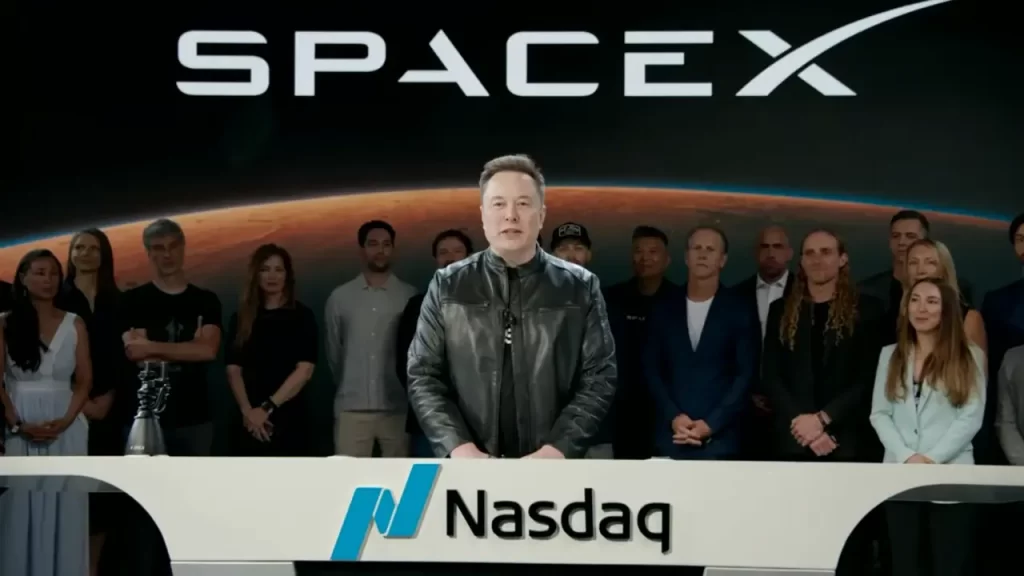
SpaceX spent nearly 24 years as one of the world’s most valuable private companies before entering the public markets. When it finally did, the company did not simply launch another initial public offering. It produced the largest IPO in history.On June 12, 2026, SpaceX began trading on the Nasdaq under the ticker SPCX, following a $75 billion share sale that valued the company at about $1.77 trillion. The stock opened at $150, above its IPO price of $135, and closed its first day at $160.95, pushing SpaceX’s market value beyond $2.1 trillion.The listing instantly placed SpaceX among the world’s largest companies and turned its founder, Elon Musk, into the first person ever to reach an estimated net worth of $1 trillion.But the IPO was about far more than Musk’s wealth.It marked a defining moment for the commercial space industry. A company that began in 2002 with the goal of reducing the cost of space transportation had grown into a business spanning rockets, satellite internet, spacecraft, government launches and, through its 2026 acquisition of xAI, artificial intelligence.The SpaceX IPO demonstrated how dramatically the global space economy has changed.A sector once dominated almost entirely by governments and established aerospace contractors is now home to a publicly traded company worth more than $2 trillion.The Biggest IPO in HistorySpaceX priced its initial public offering at $135 per share on June 11, 2026.The company sold approximately 555.56 million shares, raising $75 billion and giving SpaceX an implied valuation of around $1.77 trillion before trading began.The offering was the largest initial public offering ever completed, surpassing previous records for public-market fund-raising. The scale of the listing also meant that SpaceX entered the market as one of the most valuable listed companies in the United States from its first day of trading. Investor demand was enormous.Reports before the listing suggested that demand for the offering had reached around $250 billion, significantly exceeding the amount of stock being sold. Retail investors also placed orders worth more than $100 billion, reflecting the extraordinary level of public interest in the company. The numbers reflected a rare market moment.IPOs normally raise money for companies that are growing into public-market maturity. SpaceX entered the market already operating at an extraordinary scale.What Happened on Listing DaySpaceX began trading on the Nasdaq on June 12, 2026.The shares opened at $150, immediately trading above the $135 IPO price. The stock continued rising during the day, reaching an intraday high of $176.52 before closing at $160.95, up roughly 19% from the IPO price. The first-day rally pushed SpaceX’s market capitalisation above $2 trillion.That made the company one of the largest publicly traded businesses in the world, despite the fact that it had only just entered the stock market.The IPO also created a rare situation in which a company’s market debut immediately altered global wealth rankings.The rise in SpaceX’s publicly traded value pushed the estimated value of Elon Musk’s holdings above the $1 trillion mark.Why SpaceX Went PublicFor years, SpaceX had remained private despite its enormous valuation.Private ownership allowed the company to focus on ambitious, capital-intensive projects without the constant pressure of quarterly public-market expectations.That was particularly important for programmes such as:StarshipStarlinkReusable launch technologyHuman spaceflightMars explorationAdvanced satellite systemsBut the company’s scale had reached a point where access to public capital offered a new opportunity.The IPO raised $75 billion, giving SpaceX enormous financial resources for expansion and future projects.The public listing also created a market through which investors could buy and sell shares in a company that had previously been accessible mainly through private investment.The Unconventional IPOSpaceX’s offering differed from a conventional Wall Street IPO in several ways.The company set a fixed price of $135 per share rather than using the traditional process of marketing a price range and adjusting it based on investor feedback.The sale also attracted unusually high interest from retail investors.Retail buyers were allocated a significant share of the offering, while major institutional investors also competed for shares. The offering was underwritten by major Wall Street banks including Goldman Sachs and Morgan Stanley.SpaceX also held a historic bell-ringing event at both Nasdaq MarketSite in New York and the company’s Starbase facility in Texas, highlighting the unusual scale and symbolism of the moment. For Wall Street, the IPO was not just another large listing.It was the public-market arrival of one of the most closely watched private companies of the modern era.From a Rocket Startup to a $2 Trillion CompanySpaceX was founded by Elon Musk in 2002.Its early objective was to reduce the cost of access to space.The company entered an industry dominated by national space agencies and large aerospace contractors. Its early years were marked by financial pressure and repeated launch failures.The first three launches of the Falcon 1 rocket failed.The fourth succeeded in 2008, making it the first privately developed liquid-fuel rocket to reach orbit.That success helped establish SpaceX as a serious player in the aerospace industry.The company then developed the Falcon 9, the Dragon spacecraft and one of its most important innovations: reusable rocket technology.By recovering and reusing major parts of its launch systems, SpaceX challenged the traditional assumption that rockets had to be discarded after a single mission.That changed the economics of space launches.The Falcon ProgrammeThe Falcon rocket programme became the foundation of SpaceX’s launch business.Falcon 9 became one of the most frequently used orbital launch vehicles in the world, carrying satellites, commercial payloads, government missions and astronauts.SpaceX’s ability to recover and reuse Falcon boosters helped reduce launch costs and increase launch frequency.The company later developed Falcon Heavy for heavier payloads.But SpaceX’s ambitions continued to move beyond traditional rocket launches.Dragon and Human SpaceflightThe Dragon spacecraft established SpaceX as an important partner in human spaceflight.The company became the first private operator to regularly transport astronauts to and from the International Space Station.This was a significant shift in the relationship between governments and private aerospace companies.Human spaceflight had once been almost entirely the domain of national governments.SpaceX demonstrated that private companies could become major participants in the sector.NASA became one of the company’s most important customers, while SpaceX also
Tesla’s India Entry: Retail Expansion and Customer Response So Far
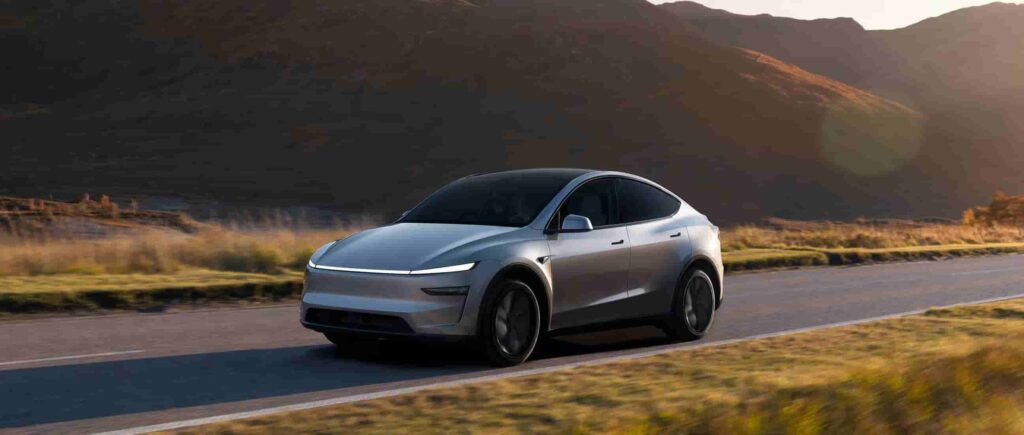
Tesla’s long-anticipated entry into India finally materialised in 2025, marking a significant moment for the country’s evolving electric vehicle (EV) ecosystem. After years of discussions around import duties, localisation, and policy frameworks, the company adopted a measured, retail-first approach, choosing to test the market before committing to large-scale manufacturing.A Strategic Entry into a Price-Sensitive MarketTesla officially began its India journey with the launch of the Model Y, positioning it in the premium electric SUV segment. However, unlike other automakers that localised production early, Tesla opted to import vehicles as completely built units (CBUs).This decision has directly impacted pricing. Due to India’s high import duties on electric vehicles, the Model Y has been priced upwards of ₹60 lakh, placing it firmly in the luxury bracket. In a market where the majority of car buyers operate within a much lower price range, Tesla’s initial strategy clearly targets high-net-worth individuals and early adopters rather than the mass market.Retail Expansion Through Experience CentresA defining feature of Tesla’s India entry is its direct-to-consumer retail model, which eliminates traditional dealerships. The company opened its first experience centre in Mumbai’s Bandra-Kurla Complex (BKC), one of the country’s most premium commercial hubs.These experience centres are designed not just as showrooms but as brand spaces, allowing customers to interact with Tesla’s technology, design, and ecosystem. Expansion plans have focused on metro cities such as Delhi and Bengaluru, where demand for premium electric vehicles is relatively higher.Tesla’s retail approach aligns with its global strategy—maintaining control over customer experience while integrating online bookings and minimal physical sales infrastructure.Building the Charging EcosystemRecognising that infrastructure is key to EV adoption, Tesla has also begun laying the groundwork for its charging network in India. The company has introduced its fast-charging Supercharger technology in select urban locations, enabling quicker turnaround times for users.However, the broader challenge remains. India’s EV charging infrastructure is still developing, with uneven availability across regions. While metro cities are gradually improving, range anxiety and accessibility continue to influence customer decisions.Tesla’s approach, therefore, appears incremental—expanding infrastructure in tandem with demand rather than investing aggressively upfront.Early Sales Trends and Market RealityInitial data suggests that Tesla’s entry has generated strong curiosity but limited scale in actual sales.In the months following its launch:The company recorded a few hundred initial ordersBookings crossed the 1,000 mark over timeActual registrations remained relatively low compared to overall EV sales in IndiaThis gap between interest and conversion highlights a key reality: while Tesla enjoys strong brand recall, pricing and infrastructure constraints are slowing adoption.Customer Response: Aspirational Yet CautiousCustomer response to Tesla in India has been a mix of excitement and hesitation.On the positive side, the brand continues to carry significant aspirational value. For many consumers, owning a Tesla is associated with innovation, sustainability, and global status. Demand has been particularly visible in metro cities like Mumbai, Delhi, and Bengaluru, where premium vehicle buyers are more concentrated.At the same time, several concerns have emerged. The high price point remains the biggest barrier, limiting Tesla’s reach to a niche segment. Additionally, buyers are still evaluating practical aspects such as charging convenience, service network availability, and long-term maintenance.As a result, while interest levels remain high, purchase decisions are being made cautiously.Competitive Landscape and Market PositioningTesla’s entry has come at a time when India’s EV market is already witnessing rapid growth, led primarily by domestic and mid-range players.Companies like Tata Motors have established dominance in the affordable EV segment, while brands such as MG Motor and Hyundai are strengthening their presence in the mid-premium category.In this landscape, Tesla currently operates as a luxury niche player, rather than a volume-driven competitor.Policy Environment and the Manufacturing QuestionA critical factor shaping Tesla’s future in India is government policy. The Indian government has introduced incentives for global EV manufacturers, including reduced import duties, provided companies commit to local manufacturing investments.So far, Tesla has not announced a concrete manufacturing facility in India, choosing instead to evaluate market conditions through imports. This decision has kept costs high but allows the company flexibility in its early stages.However, industry experts widely agree that local manufacturing will be essential for Tesla to scale meaningfully in India.The Road AheadTesla’s India journey is still in its early phase. Its current strategy reflects caution—focusing on brand establishment, limited retail expansion, and gradual infrastructure development.Going forward, the company’s growth will depend on several key factors:Introduction of more affordable modelsExpansion of charging infrastructureStrengthening of after-sales and service networksClarity on local manufacturing plansConclusionTesla’s entry into India has been significant, not for its immediate scale but for its symbolic and strategic impact on the EV ecosystem. It has reinforced the premium electric vehicle segment and contributed to increasing consumer awareness around EV technology.However, the initial response also underlines the realities of the Indian market—price sensitivity, infrastructure gaps, and strong domestic competition.For now, Tesla remains an aspirational brand with limited reach. Whether it can transition into a mainstream player will depend on how effectively it adapts to India’s unique market dynamics in the coming years.