


Bharat Innovates 2026: Showcasing India’s Deep-Tech Ambitions on the Global Stage
IntroductionAs countries around the world compete to lead the next wave of technological innovation, India has increasingly positioned itself not only as a hub for software and digital services but also as a growing centre for deep-tech research and entrepreneurship. Bharat Innovates 2026, held in Nice, France, marked an important step in that journey by providing Indian startups, researchers and academic institutions with a global platform to showcase indigenous technologies and build international partnerships.Organised under the Ministry of Education with strategic guidance from the Office of the Principal Scientific Adviser to the Government of India, Bharat Innovates 2026 brought together India’s innovation ecosystem—including startups, higher educational institutions, investors, industry leaders and policymakers—to demonstrate the country’s capabilities in emerging technologies. The initiative reflected India’s broader vision of transforming itself from a technology consumer into a global technology developer and exporter.What is Bharat Innovates 2026?Bharat Innovates 2026 is India’s first large-scale international deep-tech showcase designed to present the country’s most promising innovations before a global audience. The event featured around 120 carefully selected deep-tech startups, research institutions and universities working across strategic technology sectors.Unlike traditional startup exhibitions that primarily focus on fundraising, Bharat Innovates was conceived as a global accelerator to facilitate research collaborations, pilot projects, technology commercialisation, manufacturing partnerships and international market access. It also sought to strengthen links between Indian innovators and investors, industries, universities and governments from around the world. Why the Initiative MattersIndia has emerged as one of the world’s fastest-growing startup ecosystems, with thousands of technology companies working in areas such as artificial intelligence, biotechnology, space technology, robotics and semiconductor design. However, many deep-tech startups often face challenges in accessing international markets, research partnerships and long-term investments.Bharat Innovates 2026 was designed to bridge this gap by providing a dedicated international platform where Indian innovators could directly interact with global venture capital firms, multinational corporations, research organisations and government agencies.The initiative also highlights a shift in India’s innovation strategy. Instead of focusing only on information technology services, the country is increasingly investing in technologies that require advanced scientific research, intellectual property development and long-term industrial applications. Key Focus AreasThe event showcased innovations across a wide range of strategic sectors that are expected to shape the future global economy.Artificial Intelligence and machine learning emerged as major focus areas, with startups presenting solutions in healthcare diagnostics, language technologies, automation and industrial applications.Space technology formed another important segment, reflecting India’s growing capabilities following the success of missions such as Chandrayaan and Aditya-L1. Several startups demonstrated satellite technologies, earth observation solutions and launch-related innovations.Other sectors included:Semiconductor technologiesDefence and aerospaceBiotechnologyClimate and clean energyQuantum technologiesAdvanced manufacturingRobotics and automationAgritech and food securityHealthcare technologiesThe diversity of innovations reflected the growing maturity of India’s research and startup ecosystemIndia-France CollaborationOne of the defining aspects of Bharat Innovates 2026 was its role in strengthening technology cooperation between India and France.The event was inaugurated by Prime Minister Narendra Modi and French President Emmanuel Macron during the India-France Year of Innovation. Both leaders emphasised the importance of collaborative research, innovation-driven economic growth and stronger partnerships in emerging technologies.France has become an important strategic partner for India in areas such as defence, aerospace, artificial intelligence and clean energy. Bharat Innovates expanded this cooperation by creating opportunities for joint research projects, technology transfer and industrial collaboration between institutions from both countries. Opportunities for Indian StartupsFor participating startups, Bharat Innovates represented far more than an exhibition.The event provided opportunities to pitch technologies before global investors, establish commercial partnerships, explore international markets and collaborate with universities and research laboratories.Many startups working in advanced technologies often require long-term funding and access to specialised expertise rather than traditional venture capital alone. By bringing together investors, research institutions and industry leaders under one platform, Bharat Innovates aimed to accelerate the commercialisation of Indian innovations.The initiative also sought to encourage Indian startups to think globally from the early stages of product development instead of limiting themselves to domestic markets. Role of Higher Educational InstitutionsUniversities and research institutions formed a significant part of Bharat Innovates 2026.Premier institutions including the Indian Institutes of Technology (IITs), research laboratories and innovation centres showcased technologies developed through academic research. Projects ranged from healthcare solutions and advanced materials to artificial intelligence, defence technologies and sustainable engineering.The participation of academic institutions reflected the growing emphasis on translating scientific research into commercially viable technologies and supporting innovation-driven entrepreneurship within higher education.Supporting the Vision of Atmanirbhar BharatBharat Innovates also aligns closely with the Government of India’s vision of Atmanirbhar Bharat by promoting indigenous innovation in strategically important sectors.Rather than depending entirely on imported technologies, India is encouraging domestic research, intellectual property creation and advanced manufacturing capabilities.This approach has become particularly important in sectors such as semiconductors, defence equipment, artificial intelligence, cybersecurity and quantum technologies, where technological self-reliance is increasingly viewed as a strategic necessity.Through initiatives such as Bharat Innovates, the government aims to strengthen India’s position as both an innovation hub and a technology exporter.Challenges AheadWhile Bharat Innovates represents an important milestone, several challenges remain.Deep-tech startups typically require larger investments, longer development timelines and stronger research infrastructure compared to conventional technology startups. Commercialising advanced scientific innovations also involves regulatory approvals, manufacturing capabilities and sustained industry collaboration.Maintaining global competitiveness will require continued investment in research and development, stronger university-industry partnerships and policies that encourage innovation while supporting entrepreneurs through different stages of growth.Looking AheadBharat Innovates 2026 represents more than a single international event. It reflects India’s broader ambition to become a leading contributor to global technological advancement.As emerging technologies continue to reshape industries worldwide, initiatives that connect Indian researchers and startups with international partners are expected to play an increasingly important role in driving innovation-led economic growth.By providing a global platform for indigenous technologies, Bharat Innovates has the potential to strengthen India’s innovation ecosystem and accelerate the transition from research laboratories to commercial markets.ConclusionBharat Innovates 2026 marked a significant milestone in India’s efforts to establish itself as a global centre for deep-tech innovation. By bringing together startups, researchers, universities, investors and policymakers on an international platform, the initiative showcased the growing capabilities
Soaring Heights: How Tata-Airbus H-125 Facility Marks India’s Aerospace Leap
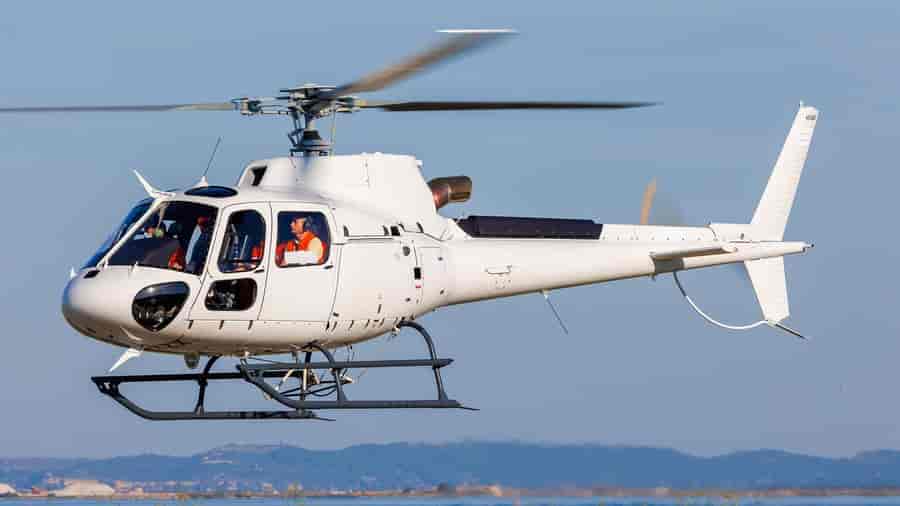
India’s aerospace ambitions just touched new heights, literally. On February 17, 2026, Prime Minister Narendra Modi and French President Emmanuel Macron virtually inaugurated the Tata Advanced Systems Limited (TASL) Final Assembly Line (FAL) for Airbus H-125 light utility helicopters in Vemagal, Karnataka, from Mumbai. This isn’t mere infrastructure; it’s a fusion of strategic trust, technological prowess, and economic firepower, propelling India’s Make-in-India and Aatmanirbhar Bharat visions skyward.A Historic Virtual Ribbon-CuttingPicture this: Leaders from two global powers, Modi and Macron, hitting the digital button to unveil a facility that symbolises Indo-French synergy. Raksha Mantri Rajnath Singh, on-site at Vemagal, called it a “milestone in the strategic partnership between India and France,” quipping that “even the sky is not the limit.” Joining him were French Minister of Armed Forces and Veterans Affairs Catherine Vautrin, Union Civil Aviation Minister KR Naidu, Karnataka’s Minister for Large & Medium Industries MB Patil, Chief of Air Staff Air Chief Marshal AP Singh, Defence Secretary Rajesh Kumar Singh, and Secretary (Defence Production) Sanjeev Kumar.This event builds directly on TASL-Airbus’ prior triumph: the C-295 military transport aircraft FAL, India’s first private-sector final assembly for military planes. Now, the H-125 line cements a full-spectrum military aerospace ecosystem, blending French engineering with Indian manufacturing muscle.H-125: The Everest-Conquering WorkhorseAt its core, the H-125 is no ordinary chopper; it’s the world’s most trusted single-engine light utility helicopter, with unmatched reliability across brutal conditions. The military-optimised H-125M variant acts as a high-altitude force multiplier: stealthy low acoustic and thermal signatures enable tactical reconnaissance and surveillance. It delivers logistics to remote frontline outposts, rushes search-and-rescue (SAR) or medical evacuations (MEDEVAC), and thrives where others falter.Why? It’s the only helicopter to land on Mount Everest’s summit, proof of its extreme performance ceiling. For India’s armed forces, battling “hot-and-high” terrains from Ladakh’s icy peaks to Siachen’s glaciers, this is gold. Traditional fleets struggle above 6,000 meters; the H-125 powers through, ensuring supply drops, troop insertions, and rapid response in oxygen-starved zones. Globally, over 9,000 H-125 family units fly missions, from VIP transport to firefighting, logging 45+ million flight hours.PM Modi captured the pride: “We take pride in manufacturing in India the world’s only helicopter capable of flying to the heights of Mount Everest and exporting it worldwide.” Raksha Mantri echoed, praising its “exceptional reliability, versatility, and outstanding performance.”Economic Engine: Jobs, Investment, and ExportsThis FAL isn’t just about rotors; it’s an economic turbocharger. Projected investment surpasses ₹1,000 crore, igniting direct and indirect jobs for India’s “skilled and hardworking youth.” It supercharges the MSME ecosystem, now boasting 16,000+ defence-linked units supplying global giants.Since 2014, under Modi, reforms have flipped the script: Ordnance Factories corporatised into seven DPSUs, liberalised FDI (up to 74% on the automatic route), and twin Defence Industrial Corridors (Uttar Pradesh-Tamil Nadu). Private sector share? A robust 25% of total defence production. Exports? Multi-fold surge, ranking India among the top global defence exporters. Foreign OEMs now tap Indian MSMEs for components, with Rajnath Singh inviting deeper tech transfers to fuel security solutions worldwide.Schemes like Production Linked Incentives (PLI), massive infrastructure (roads, ports), and startup boosts have slashed gestation periods, drawing high-capital plays like this. Result: Holistic growth, from domestic self-reliance to export powerhouse.Economic Impact MetricsDetailsInvestment>₹1,000 croreEmploymentDirect + indirect jobs for youth; boosts 16,000+ MSMEsDefence ReformsPrivate share at 25%; exports up manifoldBroader EcosystemPLI schemes, FDI liberalisation, industrial corridorsGlobal ReachComponent sourcing by foreign firms; export-ready H-125sMake-in-India’s Aerospace AscentLaunched in 2014, Make-in-India targeted manufacturing revival; Aatmanirbhar Bharat amplified it post-COVID, prioritising critical tech. Defence exemplifies: From 65% import dependence, India now produces 70%+ indigenously. Private players like TASL lead, absorbing complex tech via offsets and partnerships.This H-125 FAL exemplifies “mutually beneficial partnerships.” Airbus gains India as a low-cost hub; TASL masters final assembly, testing, and avionics integration. Future? Potential exports to friendly nations, plus civilian H-125 variants for tourism, charters, and disaster relief. Karnataka’s Vemagal, near Bengaluru’s aerospace cluster, optimises logistics, skills, and supply chains.Indo-French Ties: Boundless HorizonsIndia-France defence bonds run deep: Rafale jets, Scorpene submarines, joint exercises. Macron’s visit layered geopolitics, countering China in Indo-Pacific, onto tech ties. Vautrin’s presence signals sustained commitment. As Singh noted, collaborations are “limitless,” eyeing AI, drones, and sixth-gen fighters.Charting the Future SkiesThe Vemagal FAL isn’t an endpoint; it’s a launchpad. For troops in unforgiving Himalayas, it means swifter rescues. For workers, stable careers. For India, a louder global voice in aerospace. As helicopters hum off the line, they carry more than passengers; they ferry self-reliance, innovation, and unbreakable partnerships into tomorrow’s skies.