


PM Modi’s Mann Ki Baat: Episode – 134th
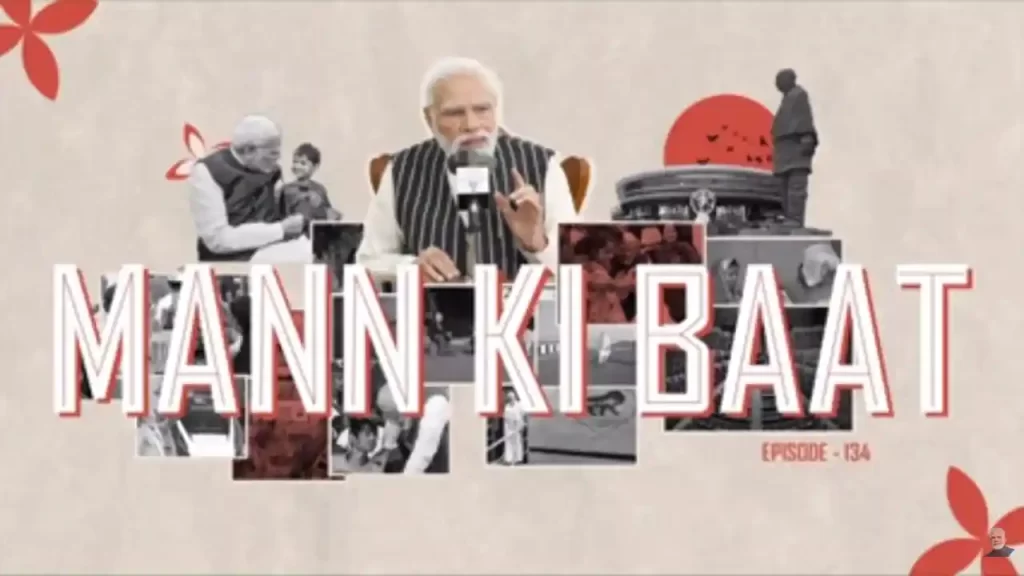
PM Modi’s Mann Ki Baat: Episode – 134thVideo: YT/NaMo
Noida International Airport Officially Opens: Commercial Flights Begin June 15, Marking New Era for Viksit UP and Viksit Bharat
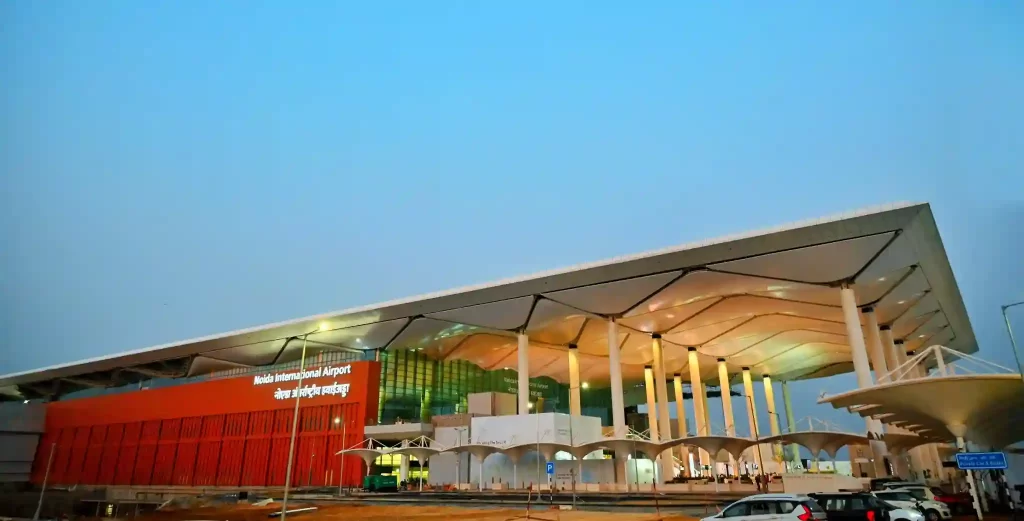
Noida, May 27, 2026 — Prime Minister Narendra Modi officially inaugurated Phase I of the Noida International Airport at Jewar in Gautam Buddha Nagar district of Uttar Pradesh on March 28, 2026, marking a transformative moment for India’s aviation sector and northern India’s connectivity. Noida International Airport at Jewar has officially opened for commercial operations, with flights scheduled to commence from June 15, 2026, marking a transformative moment for India’s aviation sector and northern India’s connectivity. Prime Minister Narendra Modi inaugurated the first phase of the airport earlier this month at Jewar in Gautam Buddha Nagar district of Uttar Pradesh, and the facility has now received final security clearance from the Bureau of Civil Aviation Security. The Prime Minister also laid the foundation stone for 40 acres of Maintenance, Repair, and Overhaul (MRO) facilities at the site during the inauguration ceremony. Speaking on the occasion, Modi declared this a new chapter for the Viksit UP and Viksit Bharat campaign, emphasizing that Uttar Pradesh has now emerged as one of the states with the highest number of international airports in India.Noida International Airport stands among the largest greenfield airport projects in the country, with Phase I developed at a total investment of approximately ₹11,200 crore under a Public-Private Partnership model. The airport will initially handle 12 million passengers per annum, with scalability up to 70 million passengers annually upon full development. Commercial flight operations officially begin June 15, following receipt of approval for its Aerodrome Security Programme from the Bureau of Civil Aviation Security, which certified that the airport’s security framework meets regulatory requirements for commercial operations. IndiGo will operate the first flight from NIA, marking the start of scheduled passenger services, followed shortly by Akasa Air and Air India Express.From Vision to Reality: A 23-Year Journey to CompletionThe airport project was first approved in 2003 during the tenure of former Prime Minister Atal Bihari Vajpayee, making this operational launch the culmination of a 23-year vision. Prime Minister Modi recalled that as soon as the current government was formed, the foundation was laid, construction happened, and now it has started operations. He expressed feeling doubly proud, first for having laid the foundation stone of this airport and now seeing it operational, and second because the name of this grand airport is linked to Uttar Pradesh, the state that chose him as its representative and made him a Member of Parliament.The airport will benefit numerous districts across western UP, including Agra, Mathura, Aligarh, Ghaziabad, Meerut, Etawah, Bulandshahr, and Faridabad, bringing new opportunities for farmers, small and medium enterprises, and the youth of the region. The site is positioned near freight corridors and logistics networks, supporting the movement of goods by air and rail. The area around Dadri, where freight routes converge, has been identified as a key logistics point for northern India. Prime Minister Modi pointed out that this area is becoming the hub of two major freight corridors with special railway tracks laid for goods trains, enhancing North India’s connectivity with the seas of Bengal and Gujarat.Economic Impact Connecting Western UP to Global MarketsPrime Minister Modi emphasized that airports are not just basic facilities in any country but give wings to progress. Due to the expansion of connectivity in the region, agricultural products of western UP will reach the global market in a much better way. The airport will bring numerous new opportunities for farmers, small and medium industries, and the youth of western Uttar Pradesh, with aircraft flying from here to the world, and the airport becoming a symbol of a developed Uttar Pradesh taking flight.The expansion of modern connectivity will further boost food processing prospects in western UP. Prime Minister Modi expressed gratitude to the farmers who gave up their lands to make this project a reality, noting that agriculture and farming hold great importance in the region’s economy. He highlighted that today, Noida is ready to welcome the entire world, and this whole area is strengthening the resolve of Aatmanirbhar Bharat. This multi-modal connectivity is making UP a major attraction for investors worldwide, as whatever farmers grow and industries produce here can now reach every corner of the world swiftly by land and by air.MRO Facility Lays Foundation for Aviation Self-RelianceAddressing a critical gap in India’s aviation ecosystem, Prime Minister Modi drew attention to the Maintenance, Repair, and Overhaul sector, noting that 85 percent of Indian aircraft still have to go abroad for MRO services. The government has resolved to make India self-reliant in the MRO sector, and the foundation stone of an MRO facility was laid at Jewar during the inauguration. When ready, it will serve aircraft from India and abroad, generating revenue for the country, keeping money within India, and creating numerous jobs for the youth.This facility will support aircraft servicing within India, where a significant share of such work is currently carried out overseas, reducing dependency on foreign MRO providers and saving foreign exchange. The government has decided to make India self-reliant in this sector as part of its broader economic policy framework, positioning India as a global hub for aircraft maintenance services.Operational Timeline and First Year ProjectionsThe airport will commence commercial flight operations from June 15 after appointing an Indian CEO, following the security regulator’s approval for its Aerodrome Security Programme. An airport official stated they are looking at 50-60 lakh passengers in the first year of operations. After domestic operations stabilize, they will launch international services, confident of going international before the end of 2026. The airport currently features one runway and one passenger terminal with a capacity to handle 12 million passengers annually, with its master plan including future expansion to accommodate over 70 million passengers each year.The launch follows the DGCA’s clearance granted in March, with PM Modi inaugurating the airport in late March. The airport said the June 15 start date marks the final stage of security clearance after regulatory concerns over a foreign CEO were addressed by appointing Chief Financial Officer Nitu Samra as interim CEO, replacing Swiss national
Spanish President Pedro Sánchez’s Official Visit to India: Strengthening Strategic Partnership
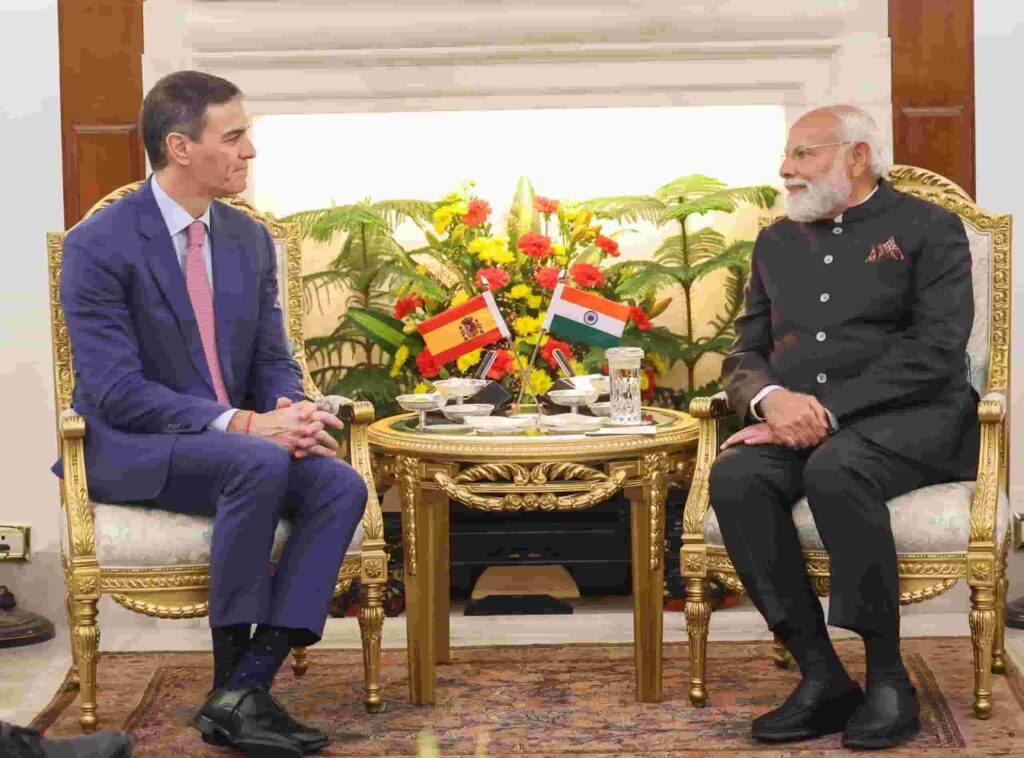
Spanish President Pedro Sánchez — President of the Government of Spain — paid an official visit to India from October 27 to 29, 2024, in a significant diplomatic engagement aimed at reinforcing bilateral ties across strategic, economic, technological and cultural domains. The visit, marked by high-level interactions with senior Indian leadership including Prime Minister Narendra Modi, underscored the evolving partnership between the two democracies in the contexts of trade, innovation, climate cooperation and global governance.This visit was the first by a Spanish head of government to India in nearly a decade, reflecting a renewed momentum in bilateral engagement driven by converging geopolitical priorities, deepening economic interdependence and shared commitments to multilateral cooperation.Arrival and Official EngagementsPresident Sánchez arrived in India on October 27, 2024, ahead of his participation in the AI Impact Summit hosted in New Delhi — an event that convened global leaders, industry experts and policymakers to discuss the future of artificial intelligence (AI), regulation frameworks and its socio-economic potential. Spanish participation in the summit signalled Spain’s interest in India’s emerging digital and technological leadership.On arrival, President Sánchez was received by senior Indian officials and engaged immediately in discussions that set the tone for substantive bilateral dialogues over the next three days.High-Level Meetings with Indian LeadershipA central component of the visit was the official meeting between President Sánchez and Prime Minister Narendra Modi at [official venue – e.g., Hyderabad House / Raisina Hill precinct]. The leaders held wide-ranging talks on issues of bilateral and global importance, reaffirming a shared vision for cooperation based on democratic values, economic partnership and sustainable development.Both leaders emphasised strengthening strategic dialogue mechanisms and enhancing cooperation in key sectors such as defence, manufacturing, green technologies, digital economy and renewable energy. They underscored the importance of elevating the India–Spain relationship into a comprehensive strategic partnership, reflecting growing political trust and mutual respect.Economic and Trade PrioritiesEconomic cooperation formed a major pillar of the visit. With bilateral trade between India and Spain having expanded over the years, both sides reiterated their intent to deepen economic engagement. Discussions focused on:Expanding trade in goods and servicesEnhanced cooperation in advanced manufacturing and innovation ecosystemsInvestment facilitation and market access for strategic sectorsTechnology partnerships in areas such as AI, mobility, health tech and clean energy solutionsPresident Sánchez and Indian counterparts acknowledged that both economies benefit from complementary industrial strengths — Spain’s advanced manufacturing and engineering capabilities and India’s growing services and technology base. They expressed optimism that targeted collaborations could accelerate investment flows and create employment opportunities in both countries.AI Impact Summit ParticipationPresident Sánchez’s participation at the AI Impact Summit underscored both nations’ interest in shaping global discourse on artificial intelligence. In his address, the Spanish leader emphasised the need for ethical, human-centric AI frameworks, equitable access to technological benefits, robust data protection standards and collaboration across nations in AI governance. The summit provided a platform for exchange of ideas on how emerging technologies can be responsibly deployed for societal benefit.Spanish delegations also engaged with Indian industry leaders, startups, research institutions and academic observers during the summit, fostering cross-border collaborations in cutting-edge research and innovation ecosystems.Defence, Security and Strategic CooperationDefence cooperation featured prominently in the discussions. Spain and India reviewed existing defence ties and explored expanded collaboration in key areas such as aerospace, naval systems, dual-use technologies and defence manufacturing partnerships. Both sides expressed interest in boosting joint research initiatives and expanding defence trade under frameworks that promote technology sharing and co-development.Security cooperation, particularly in areas such as counter-terrorism, cybersecurity and maritime security, was also prioritised. The leaders reiterated the importance of multilateral cooperation in addressing global security challenges, including in forums such as the United Nations and other international platforms.Climate Change, Renewable Energy and SustainabilityClimate action and sustainable development emerged as another key theme. India and Spain committed to enhancing cooperation on climate resilience, renewable energy deployment and green hydrogen ecosystems. Spain’s experience in wind and solar technologies aligns with India’s ambitious green energy transition targets, including the expansion of renewable capacity and sustainable urbanisation initiatives.Both sides also reaffirmed their support for multilateral climate goals under the Paris Agreement and emphasised collaborative approaches to climate finance, clean technology transfer and sustainable infrastructure development.Cultural and People-to-People ExchangesDuring his visit, President Sánchez highlighted the cultural bonds between India and Spain, noting that people-to-people ties — including tourism, academic exchange, arts and cultural collaborations — form a vital dimension of the bilateral relationship. Spain’s historical heritage and contemporary cultural vibrancy continue to find resonance with Indian audiences, even as Indian art, literature and cinema increasingly gain prominence in Spanish cultural spaces.Joint Communiqué and Future CooperationAt the conclusion of the visit, both countries released a joint communiqué outlining agreed priorities and a roadmap for future cooperation. Key commitments included:Regular high-level political consultationsEnhanced trade and investment facilitation measuresCooperative initiatives in technology, defence, climate and sustainable developmentStrengthened academic, cultural and scientific exchangesSignificance and ImpactPresident Pedro Sánchez’s visit to India in late 2024 marked a multipartite reaffirmation of the India–Spain relationship at a time of global geopolitical realignment. The emphasis on technology cooperation — particularly through Spain’s active role at the AI Impact Summit — hinted at a widening scope of cooperation beyond traditional diplomatic and defence dimensions.For India, deepening ties with Spain — a European Union member with strong global integration — adds momentum to its broader engagement strategy with Europe, aligning with India’s goals of diversifying partnerships in trade, innovation, and sustainable development.For Spain, stronger engagement with India opens pathways for Spanish companies in India’s fast-growing markets and reinforces Madrid’s diplomatic reach in Asia. Both nations signalled that their cooperation would be pragmatic, forward-looking and anchored in mutual interests.The visit has, therefore, been widely seen as a milestone moment in India–Spain ties — steering the relationship from transactional engagement toward a broader strategic partnership that spans economics, technology, culture and global governance cooperation.