


Lagaan at 25: How a Film Nobody Wanted Became a Film Nobody Can Forget
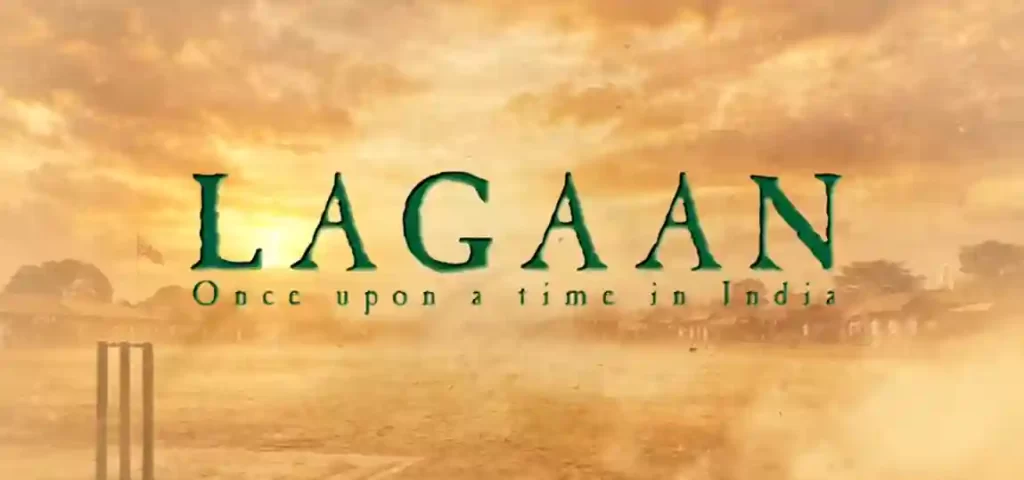
A quarter of a century ago, the Hindi film industry largely passed on a four-hour period musical about villagers playing cricket against the British Raj. This weekend, that same film returns to cinemas for a special three-day run, marking 25 years since its original release on 15 June 2001, and it will do something that a 224-minute historical sports drama has no business doing in the streaming age: it will fill halls. That is the real story of Lagaan. It is not just that the film was nominated for an Oscar, won national awards, or became a cultural touchstone. It is that a film almost nobody wanted to fund has become a film almost nobody can forget, surviving not as a museum piece but as a living, breathing part of India’s pop culture, re-watched by people who were not even born when it first released. The Bet That Became a ClassicLagaan was always a risky proposition. It combined a colonial-era setting, a village story, a cricket match as the central plot device, and a runtime that stretched beyond the usual commercial limits. In an industry that often prefers safer formulas, Ashutosh Gowariker’s vision, backed by Aamir Khan as both producer and lead, felt like a gamble that could have easily collapsed under its own ambition. Yet the film’s confidence is what makes it endure. It does not apologise for its length, its music, or its emotional grandeur. Instead, it leans into them, using the epic scale to tell a story that is at once about cricket, taxation, caste, colonialism, unity, and hope, without ever feeling like a lecture. The Songs That Carried the StoryMuch of Lagaan’s staying power lies in its soundtrack. At a recent Spotify event celebrating the album, A.R. Rahman, Javed Akhtar, Gowariker, and Khan walked through how each song came together, and their stories reveal how carefully the music was crafted to serve both the period and the present. “Ghanan Ghanan” was the first song Khan heard, and it set the tone by establishing the importance of rain for the narrative. Rahman presented nearly three hours of music and asked the team to choose what they liked, while Javed Akhtar’s lyrics arrived almost like a revelation for a fast-paced melody that initially had no words. “O Rey Chhori” was originally a slower tune from Rahman’s Maa Tujhe Salaam album, but Khan pushed for a faster version, fearing it would be overshadowed by other big romantic releases at the time. The playful English lines in the song were written by Farhan and Zoya Akhtar, a detail that now feels like a small but charming footnote in the film’s history. “Mitwa” hinged on a single word that Rahman insisted on as a hook, even though Akhtar initially felt it was not part of the intended lyric. That instinct turned out to be crucial, because “Mitwa” became one of the album’s most memorable motifs, blending period texture with modern appeal.”Radha Kaise Na Jale” was designed as the film’s central romantic track, capturing the emotional triangle between Bhuvan, Gauri, and Elizabeth. Akhtar’s lyrics introduced a surprisingly modern argument about love and devotion, with lines that felt contemporary even in a period setting.”Chale Chalo” almost became “Nasha Nasha” because Khan and Gowariker had grown so attached to Rahman’s original humming. Akhtar refused, insisting that the situation demanded a rallying cry rather than a euphoric chant, and the final lyric became not just a song but a slogan for the film itself. “O Paalanhaare” remains the spiritual anchor of the album, a devotional piece so pure in its composition that Akhtar admitted it intimidated him. Rahman wanted timeless singers for a timeless song, which is why Lata Mangeshkar and Asha Bhosle were approached, giving the track a gravity that still resonates 25 years later. A Reunion That Felt Like HomeThe 25th anniversary celebrations in Mumbai were less a nostalgia event and more a reminder that Lagaan still belongs to the present. Aamir Khan, Ashutosh Gowariker, and much of the cast gathered for a special bash, joined by industry friends such as Salman Khan, Kareena Kapoor, Juhi Chawla, Kajol, Zoya Akhtar, and others. The warmth of that reunion mattered because it showed how the film has aged in the collective memory. Salman Khan, with his rugged look, drew comparisons to his Tere Naam days, while Kareena Kapoor, elegant in a blush-pink traditional outfit, highlighted how the film’s stars have moved through different phases of their careers while still being associated with this one landmark work. Cast members like Rajendranath Zutshi, Yashpal Sharma, Aditya Lakhia, and Akhilendra Mishra were present, alongside veterans such as Suhasini Mulay, Kulbhushan Kharbanda, and Raghubir Yadav, whose careers have only grown more respected with time. The event also acknowledged those who are no longer here, A.K. Hangal, Rajesh Vivek, Shri Vallabh Vyas, Javed Khan Amrohi, and most recently Pradeep Rawat, whose Deva Singh Sodhi remains one of the film’s most powerful performances. Where the Team of Champaner Is TodayLagaan turned out to be a defining film for many of its actors, even if their careers took very different paths afterwards. Aamir Khan went on to strengthen his position as one of Hindi cinema’s biggest stars with films like 3 Idiots, PK, and Dangal, and has also produced critically acclaimed work such as Laapataa Ladies. Gracy Singh, who played Gauri, became an overnight star and later moved into television and regional cinema, making a rare public appearance at the 25-year celebration. Paul Blackthorne, remembered as the ruthless Captain Andrew Russell, built a successful career in Hollywood television, especially through Arrow, before returning to India for the anniversary.Rachel Shelley, who played the empathetic Elizabeth Russell, became known globally through The L Word and more recently appeared in the Netflix series Kohrra. Pradeep Rawat, whose Deva Singh was central to Team Champaner, went on to become one of Indian cinema’s most recognisable villains before passing away in August 2026 after a battle with cancer. Aditya Lakhia, who portrayed Kachra, continued working steadily in film and television while also mentoring aspiring actors. Yashpal Sharma, remembered
Dhurandhar 2: The Revenge — How Aditya Dhar’s Spy Epic Rewrote Indian Box Office History
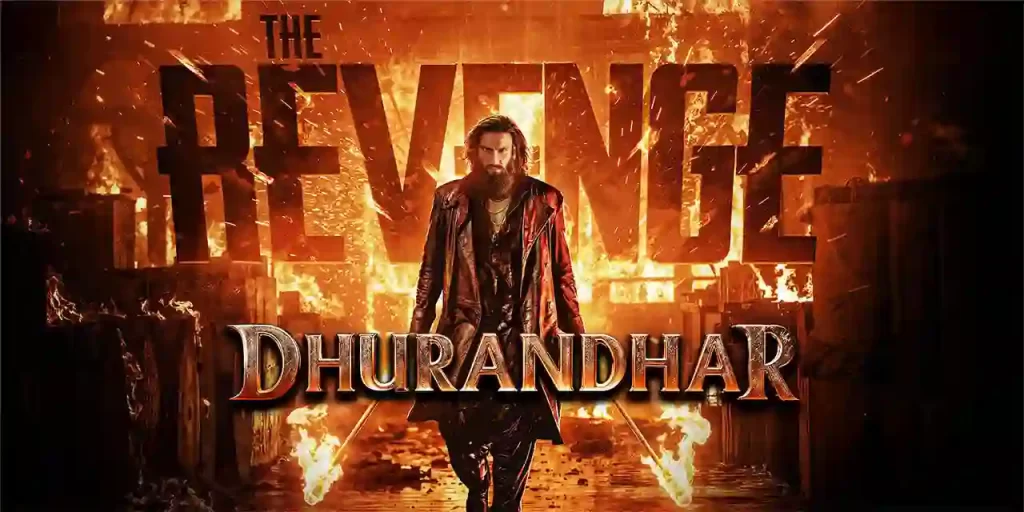
The Numbers Are Not NormalForty-eight days into its theatrical run, Dhurandhar 2: The Revenge is still selling between 20,000 and 65,000 tickets a day on BookMyShow alone. Six weeks in, most films are wrapping up their last stray shows in a handful of screens. This one is still peaking at 65,000 bookings on a Saturday. That is not a box office run. That is a cultural event that simply refused to end.Dhurandhar: The Revenge grossed over Rs 1,837 crore worldwide, becoming the second-highest-grossing Indian film of all time. It collected Rs 1,361 crore in India and Rs 475.93 crore in overseas markets — without releasing in GCC countries and China. That last point matters more than it might seem. Since China is not a regular market for most Indian releases, many analysts treat its contribution to Dangal’s total as a separate case. Dhurandhar 2 achieved what it did on its own, in open markets, without either of the two biggest supplementary territories available to Indian cinema.What the Film IsIn the film, an undercover Indian intelligence agent continues infiltrating Karachi’s criminal syndicates and political power structures in Pakistan while avenging the 26/11 attacks and confronting bigger threats. It is a direct sequel to the 2025 film Dhurandhar, which introduced the character and the world. Shot back-to-back alongside the first part, principal photography began in July 2024 in Bangkok, Thailand, and wrapped in October 2025. Filming took place across Punjab, Chandigarh, Maharashtra, Ladakh, and Himachal Pradesh in India, and Thailand, with some areas doubling for Pakistan-set sequences.The film is directed by Aditya Dhar and produced by Jio Studios and B62 Studios, and stars Ranveer Singh, Sara Arjun, Akshaye Khanna, Sanjay Dutt, Arjun Rampal, R. Madhavan, Danish Pandor, Yami Gautam, and Rakesh Bedi.The Opening: Records Before the Weekend Even StartedThe film grossed Rs 75 crore from paid previews on March 18, 2026, a day before the official release, breaking the previous Indian record held by Stree 2. That single number announced the scale of what was coming.The film earned Rs 130-174 crore on its opening day on March 19, 2026, and Rs 196-240 crore worldwide including the previous day’s premieres. This marked the highest opening day for a Bollywood film, surpassing Adipurush. The film became the first Indian film to earn more than Rs 100 crore in a single day of Hindi net collections.By the end of its opening weekend, the film had earned Rs 759.91 crore worldwide, with overseas earnings of around Rs 209.60 crore. The global opening weekend gross was over USD 80 million, only behind Project Hail Mary. An Indian film outgrossed by a single Hollywood release globally in opening weekend terms — and that Hollywood release happened to be one of the most anticipated sci-fi films in years. That is the company Dhurandhar 2 kept in its very first week.Dhurandhar 2 crossed Rs 1,006 crore worldwide in its first week. One thousand crore in seven days. Only a handful of Indian films have ever done it in their lifetime. This one did it before the second Friday.The Records That Followed, One After AnotherThe film earned USD 20.80 million in North America within nine days, surpassing Baahubali 2: The Conclusion’s USD 20.78 million lifetime record in the region. It became the highest-grossing Indian film in Australia.On April 5, 2026, the film became the first Indian film to cross USD 25 million in North America and the highest-grossing Indian film in Germany.On April 6, it became the first Hindi film to cross Rs 1,000 crore net collections in India across all languages. By April 8, it became the first Indian film to cross Rs 1,000 crore in Hindi net collections alone, making it the highest-grossing Indian film in Hindi net domestically.By the end of its fourth weekend, the film crossed Rs 1,700 crore worldwide. In its fifth week of release, it became the highest-grossing Indian film in the UK, Australia, and New Zealand.As of May 3, with a total worldwide collection of Rs 1,783.66 crore — comprising Rs 1,358.51 crore in India gross and Rs 425.15 crore from overseas — Dhurandhar 2 was within Rs 5 crore of the lifetime worldwide collection of Baahubali 2. It has since crossed that figure, becoming the second-highest-grossing Indian film of all time.The Franchise Dimension: A Once-in-a-Generation Back-to-BackWhat makes the Dhurandhar story even more remarkable is what the first film did. The first part earned Rs 894.49 crore net in India, becoming the highest grosser of 2025. The sequel repeated the same milestone in 2026 with a net collection of Rs 1,175.73 crore.Both Dhurandhar and Dhurandhar 2 became the biggest blockbusters Hindi cinema has ever seen in back-to-back years — a rare milestone to become the highest-grossing franchise of each year consecutively.The combined worldwide gross of the Dhurandhar duology surpassed Rs 3,000 crore, earning it the title of the highest-grossing Indian film franchise. Not the highest-grossing franchise this year. All time. The Dhurandhar franchise has, in two films, crossed a number that no other series in Indian cinema history has reached.The first part, Dhurandhar, currently occupies the fifth spot on the all-time global Indian box office charts with a lifetime collection of Rs 1,307.35 crore. The Dhurandhar franchise now holds two distinct spots in the top five highest-grossing Indian films of all time. Both spots were earned in consecutive years, by the same director, with the same lead actor.The Longevity: A Film That Would Not Let GoWhat separates genuine blockbusters from opening-weekend phenomena is how they hold. Dhurandhar 2 held.In its sixth week, Dhurandhar 2 collected Rs 12.40 crore in India, placing it fourth on the all-time highest sixth-week collection list behind the original Dhurandhar (Rs 26.35 crore), Stree 2 (Rs 18.60 crore), and Chhaava (Rs 16.30 crore). Sitting in the same sentence as Stree 2 and Chhaava in sixth-week performance tells you everything about the kind of audience loyalty this film generated.Even in its sixth week, daily ticket sales on BookMyShow stayed in a solid range between 20,000 and 65,000 tickets, with a
O Romeo: A Contemporary Take on Love and Modern Relationships
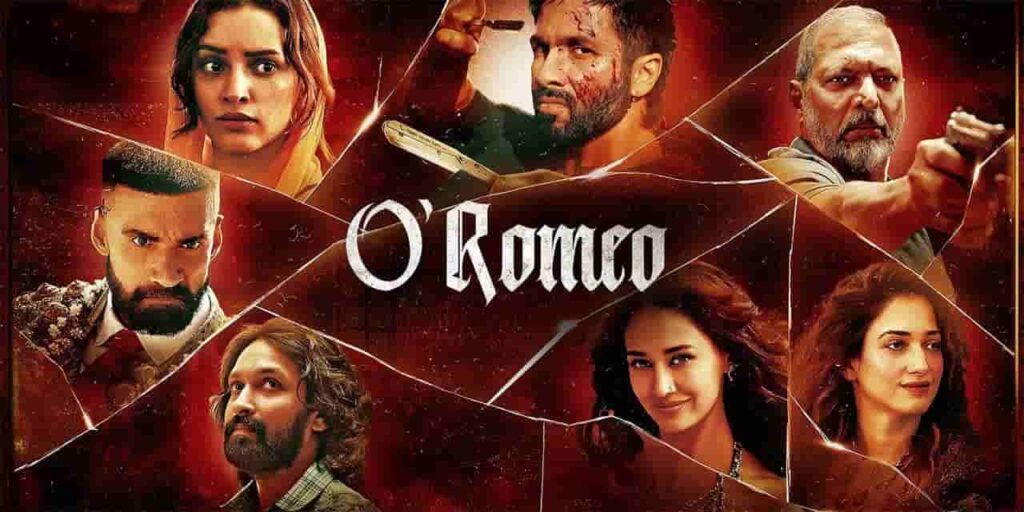
O Romeo emerged as a romantic drama that attempts to reinterpret the idea of love in today’s fast-paced, emotionally complex world. Drawing inspiration from the timeless theme of passionate romance—echoing the essence of Shakespeare’s Romeo and Juliet—the film presents a modern narrative shaped by urban relationships, individual aspirations, and emotional vulnerability.Positioned as a youth-centric film, O Romeo explores how love is experienced, expressed, and often challenged in contemporary society.Storyline and Narrative ApproachAt its core, O Romeo revolves around the journey of a young man navigating love, heartbreak, and self-discovery. The narrative follows his emotional evolution as he encounters relationships that test his understanding of commitment and identity.Unlike traditional romantic films that rely heavily on idealised love stories, O Romeo leans towards a more realistic portrayal of relationships, where misunderstandings, personal struggles, and societal expectations play a significant role.The film captures:The intensity of first loveThe confusion and vulnerability that come with emotional attachmentThe impact of external pressures on personal relationshipsThrough its storytelling, the film attempts to reflect the emotional landscape of modern youth.Themes and Emotional DepthOne of the defining aspects of O Romeo is its focus on emotional realism. The film does not present love as a flawless experience but rather as something that evolves through challenges.Key themes explored in the film include:The fragility of modern relationshipsThe conflict between personal ambition and emotional commitmentThe idea of love in the age of independence and self-identityThe narrative also touches upon heartbreak and healing, portraying how individuals cope with emotional setbacks and grow through them.Performances and Character PortrayalThe performances in O Romeo contribute significantly to its storytelling. The lead character’s journey is portrayed with a sense of relatability, capturing the confusion and intensity often associated with young love.The supporting cast adds depth to the narrative, representing different perspectives on relationships and life choices. Together, the characters create a layered portrayal of contemporary social dynamics.Music and Visual ToneAs with many romantic dramas, music plays an important role in O Romeo. The soundtrack complements the emotional tone of the film, enhancing moments of love, longing, and introspection.Visually, the film adopts a modern aesthetic, with urban settings and stylised cinematography reflecting the lifestyle and environment of its characters. The use of lighting and framing helps convey mood shifts, particularly during emotionally charged scenes.Reception and Audience ConnectO Romeo has been positioned as a film that resonates primarily with younger audiences. Its attempt to depict realistic relationships and emotional struggles makes it relatable to viewers navigating similar experiences.While it draws inspiration from classical romantic themes, its treatment is distinctly contemporary, focusing more on internal conflicts than external drama.A Modern Interpretation of Timeless LoveThe film’s title itself reflects a connection to the idea of a “Romeo”—a symbol of passionate love—but reimagined in a present-day context. Instead of grand gestures and idealised romance, O Romeo presents a more grounded and introspective view of relationships.O Romeo stands as a reflection of how love stories are evolving in modern cinema. By blending emotional realism with relatable storytelling, it attempts to capture the complexities of relationships in today’s world, offering audiences a narrative that feels both familiar and introspective.Video: YT/@NadiadwalaGrandson
SS Rajamouli’s Varanasi: Inside the Making of India’s Most Anticipated Cinematic Epic

When filmmaker S.S. Rajamouli announces a new project, it is no longer treated as just another film launch — it becomes a national and global cinema event. His upcoming film, widely known as Varanasi (also referred to in industry circles as SSMB29), has already generated extraordinary anticipation, years ahead of its release. The excitement stems not only from its scale, but from the creative forces, thematic ambition and cultural resonance that underpin the project.The Film and Its Creative BackgroundVaranasi is directed by S.S. Rajamouli, India’s most internationally recognised filmmaker, whose previous works Baahubali and RRR redefined the global perception of Indian cinema. The story is written by V. Vijayendra Prasad, Rajamouli’s father and long-time collaborator, known for crafting mythologically rooted narratives that blend emotion, scale and philosophical depth.The film is produced by K.L. Narayana under Sri Durga Arts, with S.S. Karthikeya also attached as producer. Music is composed by M.M. Keeravani, whose long association with Rajamouli culminated in an Academy Award for Naatu Naatu. This core creative team — often described as Rajamouli’s “inner circle” — has consistently delivered landmark cinema, making expectations for Varanasi exceptionally high.Why the Title ‘Varanasi’ MattersThe title itself carries immense symbolic weight. Varanasi, one of the world’s oldest continuously inhabited cities, is deeply embedded in India’s spiritual, philosophical and civilisational consciousness. Often described as a city where life, death, time and faith intersect, Varanasi provides fertile ground for storytelling that transcends linear narratives.While the makers have remained deliberately guarded about plot specifics, official material and early promotional cues indicate that the film draws heavily from Indian mythology, metaphysics and the idea of time as a cyclical force rather than a linear one. This aligns closely with Rajamouli’s filmmaking philosophy — using spectacle not as an end in itself, but as a vessel for larger cultural and emotional ideas.Mahesh Babu in the Lead: A Career-Defining RoleAt the centre of Varanasi is Mahesh Babu, one of Telugu cinema’s biggest stars, making his first collaboration with Rajamouli. This casting alone has amplified anticipation to unprecedented levels. Known for his restrained screen presence and mass appeal, Mahesh Babu is expected to be presented in a radically transformed avatar.According to official descriptions, he plays Rudra, a character whose journey forms the backbone of the narrative. While the exact contours of the role remain undisclosed, Rajamouli has indicated that the character arc is unlike anything Mahesh Babu has portrayed before — both physically and emotionally. Industry observers widely view this as a potential turning point in the actor’s career, positioning him firmly on a global stage.A Global Cast and Pan-Indian VisionAdding to the film’s reach is the inclusion of Priyanka Chopra Jonas, marking her return to Indian cinema in a major theatrical project. Her casting reinforces the film’s global ambition and cross-cultural appeal. Prithviraj Sukumaran is also part of the ensemble, reportedly in a pivotal role, further strengthening the film’s pan-Indian credentials.Rajamouli has consistently emphasised that Varanasi is not confined to a single industry or linguistic identity. The film is being mounted as a pan-Indian and international release, with plans for multiple language versions to ensure broad accessibility.Scale, Technology and Cinematic AmbitionFrom a production standpoint, Varanasi is among the most ambitious Indian films ever attempted. The project is being designed for large-format theatrical experiences, with the makers openly discussing premium visual presentation and immersive storytelling. Extensive pre-production work, advanced visual effects planning and long-term scheduling reflect Rajamouli’s methodical approach to scale.Rather than relying purely on spectacle, the filmmaker has repeatedly stated that technology will serve the story — a principle that has defined his previous successes.Why the Hype Is UnmatchedThe anticipation around Varanasi is driven by several converging factors:Rajamouli’s global credibility following the international success of RRRA mythologically rooted narrative anchored in one of India’s most symbolically powerful citiesMahesh Babu’s transformation in a role crafted specifically for a global audienceA creative team with a proven track record of delivering culturally resonant blockbustersLong-term planning and secrecy, which has only fuelled public curiosityEarly promotional events and visual teasasers have already drawn massive crowds and online engagement, indicating that audience interest is not limited to traditional fan bases.More Than a FilmVaranasi is shaping up to be more than a cinematic release — it represents a broader moment in Indian cinema’s evolution. By blending mythology, philosophy, action and global storytelling grammar, Rajamouli appears poised to once again challenge how Indian stories are told and received worldwide.As production progresses and details gradually emerge, Varanasi continues to stand at the intersection of expectation and ambition — a film that many believe could redefine the scale, scope and global positioning of Indian cinema in the years to come.Video credit: YT@/T-SeriesVideo credit: YT@/T-Series