


Sarvam Becomes India’s Newest AI Unicorn After Raising $234 Million
Bengaluru-based AI startup Sarvam has entered India’s unicorn club after raising $234 million in the first close of its Series B funding round at a post-money valuation of $1.5 billion. The funding round was led by HCLTech, with participation from Bessemer Venture Partners and existing investors Khosla Ventures and Peak XV Partners.Sarvam, an Indian artificial intelligence startup focused on building full-stack sovereign AI technology, became a unicorn in June 2026 following the latest funding round. The company is now valued at $1.5 billion, marking a significant jump in valuation and highlighting growing investor interest in India’s domestic AI ecosystem.HCLTech Leads $234 Million Funding RoundHCLTech led Sarvam’s Series B round with a strategic investment of $150 million. Bessemer Venture Partners also participated, while existing investors Khosla Ventures and Peak XV Partners continued their backing of the company.Sarvam said the $234 million represents the first close of a planned $300 million Series B round. The fresh capital is expected to support the company’s research and development efforts, expand its computing capabilities and accelerate the deployment of its AI technology across enterprises, developers and government organisations.The investment also gives Sarvam a major strategic partner in HCLTech, which brings extensive enterprise relationships and technology capabilities to the partnership. Business Standard reported that HCLTech invested $150 million for a 10.5% stake in Sarvam.What Does Sarvam Do?Founded in Bengaluru in 2023, Sarvam is developing what it describes as full-stack sovereign AI. Its work spans AI model research, training and inference infrastructure, as well as applications designed for enterprises, developers and government users.A major focus of the company is developing AI technology suited to Indian languages, voices and use cases. Its approach is aimed at enabling organisations in India to deploy AI while having greater control over the underlying technology and infrastructure.Sarvam’s founders, Vivek Raghavan and Pratyush Kumar, previously worked with AI4Bharat, an Indian-language AI research initiative associated with the Indian Institute of Technology Madras.Funding to Support Next-Generation AI ModelsSarvam plans to use the new capital to advance research into its next-generation AI models, with a focus on areas including agentic AI, coding and cybersecurity.The company also intends to increase its access to computing infrastructure as it scales its AI systems. Sarvam said its strategy involves building across the AI stack rather than focusing solely on developing language models.The company’s focus on computing infrastructure is particularly significant because training and deploying advanced AI models requires substantial amounts of specialised computing power. Sarvam’s expansion therefore reflects the wider push among Indian technology companies to develop domestic AI capabilities and reduce dependence on overseas technology providers.Sarvam’s Growing AI BusinessSarvam has been building AI products for several sectors, including financial services, insurance and government services. According to the company, its conversational AI platform handles more than two million interactions each day, while its inference platform processes around 10 million API calls daily.Its speech technology is also being used at scale. Sarvam has said its speech models process more than 500,000 hours of audio every month, while its document AI technology is being used to digitise more than 35 million pages of records.The company has also highlighted deployments involving government and large enterprises. Its multilingual voice agents have been used to collect information from millions of farmers for the Ministry of Agriculture and Farmers Welfare, while its AI technology has been deployed in insurance and fintech applications.What Sarvam’s Unicorn Status Means for India’s AI IndustrySarvam’s entry into the unicorn club comes at a time when India is placing greater emphasis on building indigenous AI capabilities.While India has a large base of AI users, developers and technology companies, the country has faced challenges in building and scaling companies developing advanced foundation models. The high cost of computing infrastructure and AI research has been one of the major barriers.Sarvam’s $1.5 billion valuation represents growing confidence from investors in the potential of India-focused AI technology. Its emphasis on Indian languages, sovereign infrastructure and enterprise applications also positions the company differently from global AI companies primarily developing general-purpose models for international markets.The company’s latest funding round follows an earlier $41 million raised across its seed and Series A rounds, according to TechCrunch. The latest investment represents a substantial increase in the capital available to the startup as it works towards scaling its AI research and commercial operations.What’s Next for Sarvam?With its new unicorn status and fresh capital, Sarvam’s next phase will focus on expanding its AI research, increasing access to computing infrastructure and taking its technology to more enterprises and government users.The company has said that its ambition is to build AI systems that can operate at India’s scale, including technology capable of understanding Indian voices and documents and delivering AI capabilities at costs that can be adopted by businesses and government organisations.Sarvam’s rise to a $1.5 billion valuation therefore marks more than another Indian startup joining the unicorn club. It also signals the increasing investment being directed towards sovereign AI, Indian-language technology and homegrown artificial intelligence infrastructure.
Skyroot Vikram-1 Launch: India’s Private Space Breakthrough and a New Chapter in Orbital Access
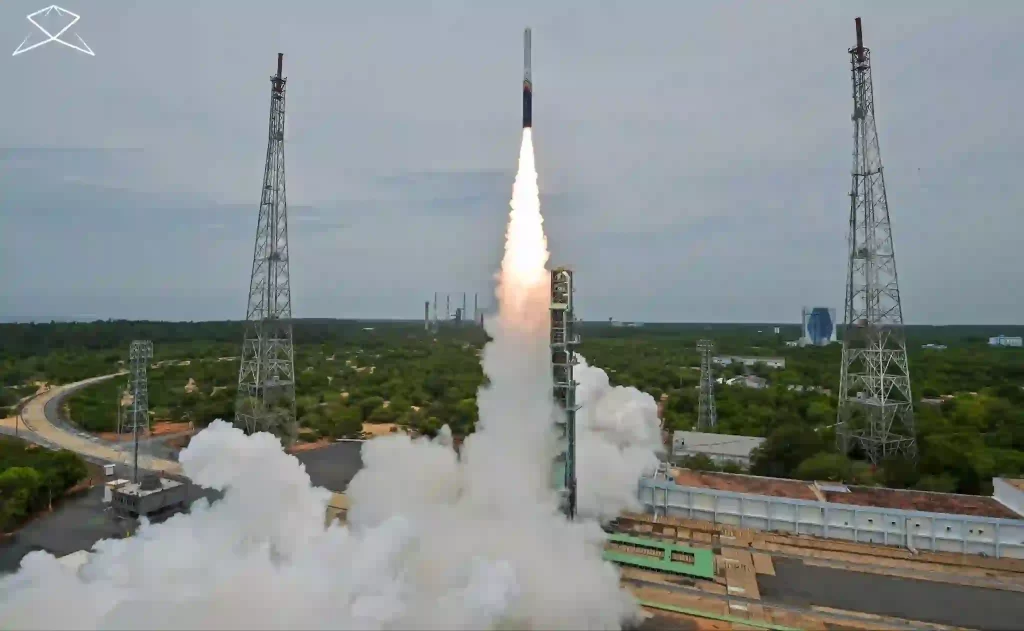
Skyroot Aerospace’s Vikram-1 mission, called Aagaman, is a landmark moment for India’s space story because it demonstrates that a privately built Indian rocket can reach orbit and place payloads successfully into low Earth orbit. For a country that has long been admired for the strength of ISRO, this is an equally important signal of something new: India’s commercial space sector is no longer just preparing for lift-off, it is already there.What makes the launch so significant is not only the technical success, but the symbolism attached to it. Vikram-1 is India’s first private orbital-class rocket, and with its successful flight from Sriharikota, India has entered a small and elite group of nations where private enterprise has independently achieved orbital launch capability.Why Vikram-1 MattersThe space industry often measures progress in very specific terms: payload mass, orbital accuracy, propulsion reliability, turnaround time, and the ability to scale launch services commercially. Vikram-1 matters because it checks several of those boxes at once, proving that an Indian private company can design, build, integrate, and launch a working orbital vehicle from Indian soil.That is a major shift from the older model in which space capability was seen primarily as the domain of the state. Today, Vikram-1 suggests that India’s space future will be shaped not just by ISRO, but by a wider ecosystem of private companies, engineering talent, investors, and customers who want Indian launch capability to be part of the global market.The Launch and Mission ProfileThe rocket lifted off from the Satish Dhawan Space Centre at Sriharikota after a planned pause shifted the launch time from 11:30 am to 12:05 pm. Built by Hyderabad-based Skyroot Aerospace, the mission achieved its intended orbital objective and placed multiple technology demonstration payloads, including postcards from Prime Minister Narendra Modi, into low Earth orbit.Vikram-1 is a three-stage rocket and stands about 22 metres tall, roughly the scale of a seven-storey building. It reportedly delivered customer payloads into an orbit around 450 km above Earth, which is a strong demonstration of practical launch capability rather than a symbolic suborbital test.A Private Rocket With National MeaningIndia has made remarkable progress in space through ISRO’s long record of dependable missions, but the Vikram-1 launch adds a new layer to that success story. It shows that India’s space economy is maturing from a government-led program into a more diversified industrial ecosystem where private players can compete, innovate, and ultimately carry national prestige into commercial markets. That matters because orbital launch is one of the hardest parts of the space business. It requires deep systems engineering, high-reliability propulsion, precision guidance, rigorous testing, and the ability to survive failure during development without losing technical momentum. A successful private orbital launch is therefore not a single achievement; it is proof that a company has built institutional competence at the highest level.The Technology Behind the RocketOne of the most interesting aspects of Skyroot’s approach is its use of modern manufacturing methods, including additive manufacturing, better known as 3D printing. In traditional rocket production, engines are built from many separate parts that must be machined, welded, sealed, and assembled with extreme precision, while 3D printing allows complex components to be built layer by layer, reducing weight, simplifying the structure, and cutting lead time. Skyroot has emphasized this approach before, noting that fully printed components can reduce mass and simplify production. For a startup, that is especially important because launch vehicles are not just engineering artifacts; they are also manufacturing systems, and every improvement in production speed, cost, and consistency improves competitiveness in a market where reliability and economics matter equally.The Commercial Space AngleVikram-1 is also important because it strengthens India’s place in the global commercial launch market. Satellite launches are increasingly driven by demand for small satellites, technology demonstrations, earth observation constellations, and rapid deployment missions, and countries that can offer dependable launch services will have a strategic and economic advantage.India already has strong space credibility through ISRO, but a successful private launcher expands the country’s offering. It suggests that future customers may one day choose India not only for low-cost space hardware or satellite services, but for launch options provided by a competitive domestic private sector. PM Modi’s Response and National SymbolismPrime Minister Narendra Modi praised the mission as a historic new frontier in India’s space journey, framing it as a reflection of the talent, entrepreneurial spirit, and ambition of India’s youth. That kind of response matters because space achievements often become national symbols, and private-sector success at orbit is particularly resonant in a country that sees technology as a key pathway to economic and strategic power. The presence of a postcard from the Prime Minister among the payloads added a distinctive symbolic touch. It turned the mission into something more than a test flight, linking the technical achievement with a broader sense of national participation in the event. What Comes NextThe real test for Vikram-1 begins after the headlines. A successful launch is a milestone, but a repeatable launch service is what turns a demonstration into a business. Skyroot’s challenge now will be to convert this success into a reliable cadence of missions, customer confidence, and operational maturity that can sustain the company over time. If it succeeds, Vikram-1 could become one of the defining vehicles in India’s commercial space era. More importantly, it could help normalize the idea that Indian private companies are not peripheral players in space, but central participants in a new national ecosystem built around launch, innovation, and scale. ConclusionThe Vikram-1 launch is historic because it marks the moment India’s private space sector moved from promise to proof. By placing payloads into orbit with a homegrown private rocket, Skyroot Aerospace has demonstrated that India’s space ambitions are no longer limited to state-led achievement alone.That makes Aagaman feel like more than the name of a mission. It reads like a declaration that a new era has arrived, one in which India’s space story will be written not only by institutions, but by entrepreneurs, engineers, and private companies ready to reach orbit on their own terms.Video: Skyroot Aerospace
ImagiNxt 2026: India’s Festival of Technology and Innovation Driving the Next Wave of Growth
IntroductionAs artificial intelligence, quantum computing, robotics and digital infrastructure reshape economies across the world, countries are increasingly investing in platforms that bring together innovators, policymakers, investors and industry leaders to accelerate technological progress. India, which has emerged as one of the world’s fastest-growing startup ecosystems, is also creating such collaborative platforms to strengthen its position as a global technology leader.One such initiative is ImagiNxt 2026, India’s first large-scale Festival of Technology and Innovation. Held on 22–23 May 2026 at the Jio World Convention Centre in Mumbai, the inaugural edition brought together technology companies, startups, investors, government leaders, researchers, educators and entrepreneurs to discuss the technologies that are expected to shape India’s economy over the coming decade.Rather than functioning as a conventional technology conference, ImagiNxt was designed as a platform for collaboration, innovation and policy dialogue. It reflected India’s growing ambition to move beyond being a global IT services hub and establish itself as a centre for research, product innovation and deep technology development.What is ImagiNxt?ImagiNxt is a national technology festival focused on emerging technologies, innovation and entrepreneurship. The platform aims to connect every stakeholder involved in the innovation ecosystem—including startups, venture capital firms, corporations, government agencies, universities, research institutions and technology professionals.The organisers describe the event as a platform where “the world meets India,” highlighting its objective of promoting India’s innovation ecosystem while encouraging international partnerships, investments and knowledge exchange. The inaugural edition attracted more than 10,000 attendees, over 150 speakers, 250 startups, 100 investors and representatives from leading global technology companies and academic institutions. The event demonstrated how India’s technology ecosystem is evolving from isolated innovation clusters into an integrated network where government policy, private investment, academic research and entrepreneurship work together.Why ImagiNxt MattersIndia has become the world’s third-largest startup ecosystem and is witnessing rapid growth in sectors such as artificial intelligence, fintech, healthtech, space technology, biotechnology and semiconductor design. However, scaling innovation requires more than talented entrepreneurs. It also depends on access to investment, policy support, research collaboration and international markets.ImagiNxt addresses this requirement by creating a common platform where innovators can directly interact with policymakers, investors and industry leaders.The event also reflects a broader shift in India’s economic strategy. For decades, India’s global reputation was built primarily on software services and information technology outsourcing. Today, the country’s focus is gradually expanding towards developing original products, intellectual property, advanced manufacturing and frontier technologies.By encouraging collaboration between different sectors, ImagiNxt seeks to accelerate this transition from a service-based economy to an innovation-driven economy.Major Themes of ImagiNxt 2026Artificial Intelligence emerged as the central theme of the inaugural edition.Discussions focused on the responsible development of AI, generative artificial intelligence, enterprise automation, healthcare applications, digital governance, education, manufacturing and financial services. Experts explored how AI is transforming industries while also examining issues related to ethics, regulation and workforce transformation.Alongside AI, several other emerging technologies received significant attention, including:Quantum computingRobotics and automationDeepTech innovationsSpace technologyCybersecurityCloud computingDigital Public InfrastructureSemiconductor technologiesClimate technology and sustainabilityExtended Reality (XR), Virtual Reality (VR) and Augmented Reality (AR)Creator economy and digital mediaThe event showcased how these technologies are increasingly converging to transform industries ranging from healthcare and agriculture to manufacturing, defence and financial services. Government Participation and Policy DiscussionsOne of the distinguishing features of ImagiNxt 2026 was the active participation of government leaders alongside industry representatives.The event featured keynote addresses from Union Minister Dr. Jitendra Singh, who oversees the Department of Science and Technology, and Maharashtra Chief Minister Devendra Fadnavis, among other policymakers.Discussions focused on India’s long-term technology strategy, including the IndiaAI Mission, the National Quantum Mission, digital public infrastructure, startup funding, research commercialisation and innovation-led economic growth.Government representatives emphasised that future economic competitiveness will increasingly depend on technological capability, advanced research and domestic innovation rather than traditional manufacturing alone. Maharashtra’s AI VisionA major announcement during the event came from the Government of Maharashtra, which outlined an ambitious roadmap to position the state as one of India’s leading artificial intelligence hubs.The state government announced plans to generate over 1.5 lakh AI-related jobs and attract approximately ₹10,000 crore in investments by 2031. It also proposed investments in AI infrastructure, innovation centres, startup ecosystems and high-performance computing facilities.The announcement reflects the increasing competition among Indian states to attract technology investments and become centres for AI research, semiconductor manufacturing and advanced digital industries. Platform for Startups and EntrepreneursStartups formed one of the biggest attractions at ImagiNxt 2026.Hundreds of emerging companies showcased innovations across healthcare, financial technology, agritech, education, mobility, defence technology and industrial automation.For many early-stage companies, the event provided opportunities to present their products before venture capital firms, angel investors, multinational corporations and government agencies.Networking sessions, startup exhibitions, investor meetings and business matchmaking programmes enabled entrepreneurs to explore funding opportunities, strategic partnerships and commercial collaborations.This ecosystem-driven approach distinguishes ImagiNxt from traditional exhibitions by focusing on business creation rather than product display alone.Focus on DeepTech and ResearchUnlike many startup conferences that concentrate mainly on software applications, ImagiNxt placed considerable emphasis on DeepTech.Research institutions, universities and technology companies presented developments in artificial intelligence, advanced robotics, quantum technologies, aerospace, biotechnology and next-generation computing.The participation of researchers alongside entrepreneurs highlighted the importance of translating laboratory research into commercially viable products.This aligns with India’s broader efforts to strengthen innovation through initiatives such as the National Quantum Mission, IndiaAI Mission and increased investment in scientific research and technology development.International CollaborationImagiNxt was conceived as an international platform rather than a purely domestic technology event.The festival welcomed global technology companies, foreign investors, international speakers and overseas innovation ecosystems, creating opportunities for cross-border collaboration.Such partnerships are becoming increasingly important as emerging technologies require global cooperation in research, investment, talent development and supply chains.International participation also helps Indian startups access foreign markets while attracting global investment into India’s growing innovation ecosystem. Skilling and Future WorkforceBeyond technology itself, ImagiNxt also addressed the growing importance of digital skills.Panel discussions explored how artificial intelligence is transforming employment, the future of work, higher education and workforce development. Experts discussed the need for continuous reskilling as automation changes the nature of jobs across multiple industries.Workshops, masterclasses and interactive sessions allowed students, developers
ASSOCHAM’s India Business Reform Summit 2026: The Measurable Outcomes for Viksit Bharat
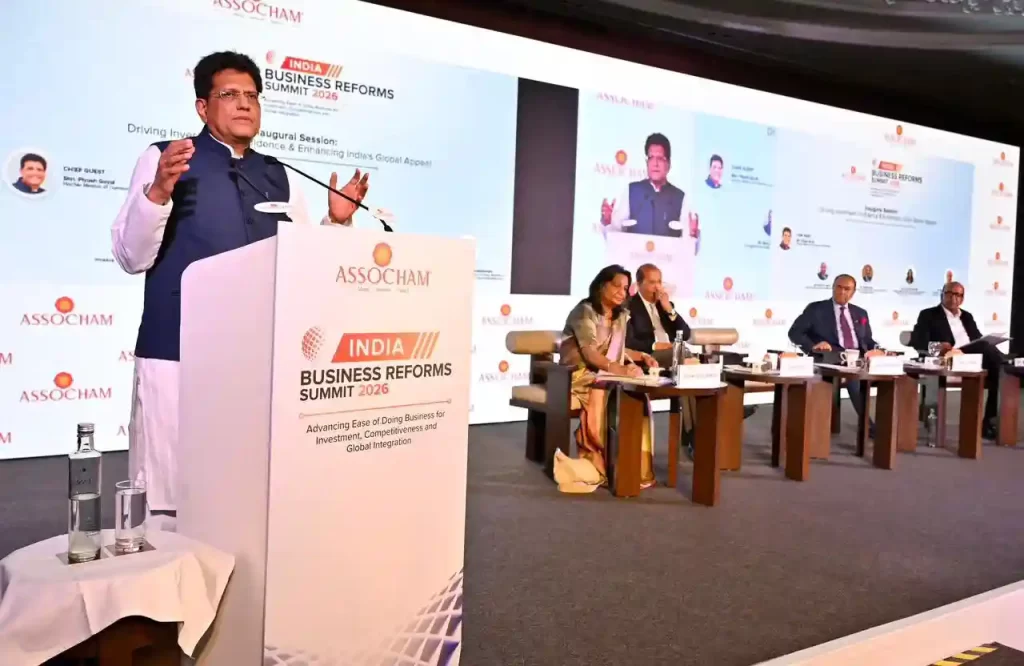
The Associated Chambers of Commerce and Industry of India (ASSOCHAM) successfully convened the India Business Reform Summit 2026 on May 19, 2026, in New Delhi, bringing together policymakers, senior bureaucrats, center-state government representatives, and industry leaders under the theme “Advancing Ease of Doing Business for Investment, Competitiveness and Global Integration.” The summit marked a critical juncture in India’s economic journey, focusing on the essential transition from reform intent to reform outcomes as the country advances towards becoming a developed economy by 2047. Over the past decade, India has undertaken significant reforms to simplify regulatory processes, reduce compliance burden, digitize approvals, and strengthen investor facilitation, but as the nation advances towards becoming a globally competitive manufacturing hub and preferred investment destination, the next phase must focus on implementation efficiency, policy predictability, and measurable outcomes.Commerce and Industry Minister Piyush Goyal delivered the keynote address as chief guest, urging Indian businesses to turn current global economic uncertainties into opportunities for growth rather than panicking over the situation. “India and Prime Minister Narendra Modi have never let a crisis go by, and the situation in the world is truly an opportunity, a moment of uncertainty that we should engage more deeply with,” Goyal remarked at the summit. “Find ways to strengthen our business processes and prepare ourselves for these uncertain times for a brighter and better future.” His address set the tone for deliberations that would explore how India could leverage global challenges to strengthen business processes, undertake faster reforms, build greater resilience, and fortify supply chains.From Reform Intent to Execution: The Next Phase of India’s Business TransformationThe summit’s core deliberations centered on moving from reform intent to execution efficiency, supply chain resilience, and making India a globally competitive manufacturing hub. In the context of evolving global supply chains, increasing private sector participation, and growing emphasis on manufacturing and MSME development, the summit provided a platform to discuss key priorities for strengthening India’s business ecosystem. The discussions highlighted the importance of strengthening Center-State cooperation for consistent policy execution and showcasing state-level investment facilitation, recognizing that successful implementation requires coordinated efforts across all levels of government.Despite global challenges such as tariffs, the Ukraine conflict, and the West Asia crisis, India’s exports reached an all-time high of USD 863 billion last fiscal year, with growth recorded in both merchandise and services exports. Minister Goyal pointed to this achievement as proof that Indian businesses could thrive even amid global turbulence. “The present global situation and geopolitical uncertainties should be viewed as an opportunity for India to strengthen business processes, undertake faster reforms, build greater resilience, and strengthen supply chains,” he emphasized. Free trade agreements finalized by India are opening doors for greater engagement, which needs to be leveraged for attracting investments and increasing exports rather than allowing imports alone to rise.MSME Empowerment: Simplifying Compliance and Enabling GrowthA significant focus of the summit was placed on targeted interventions to reduce the compliance burden on micro, small, and medium enterprises, which form the backbone of India’s economy. The final panel discussion brought together perspectives on strengthening enterprise growth, faster execution, and competitiveness across MSMEs and services-led sectors. Chaired by Smt. Mercy Epao, Joint Secretary, Ministry of Micro, Small and Medium Enterprises, Government of India, the session focused on simplified compliance frameworks, improved access to credit, stronger value chain integration, regulatory efficiency, and reforms needed to help businesses scale with greater confidence.The discussion reinforced the need for a more agile and enabling business environment that supports India’s enterprise ecosystem in its journey towards Viksit Bharat. Speaking on suggestions received during discussions with industry representatives, Minister Goyal said the government is examining the possibility of establishing a single body at industrial parks to function as a one-stop shop for all central and state approvals. This initiative, part of the “Bhavya” program for developing 100 new industrial parks with centralized clearance bodies, aims to drastically reduce the time and complexity involved in obtaining multiple approvals from different agencies.Digital Integration and One-Stop Service CentersMinister Goyal highlighted that lessons learned during the COVID period had demonstrated the effectiveness of digital engagement and remote working models. “In such a situation, we do not need to panic,” he said, adding that the West Asia crisis and emerging technologies like AI bring opportunities for the Indian industry to seize. The ministry, which has 482 offices across 216 cities under 46 organizations, is working towards consolidating operations into single-point contact centers in state capitals and major cities. This would enable businesses to access services related to organizations such as DGFT, Coffee Board, Spices Board, GeM, and other bodies through integrated and digitally connected systems.Goyal urged greater engagement from the private sector in improving government systems, while expressing concern that the national single-window system had not received adequate participation and feedback from the industry. He called upon businesses to work with the government in identifying specific pain points and improving the ease of doing business through collaborative efforts. India is now targeting exports worth USD 1 trillion, and exporters should proactively leverage upcoming FTAs by exploring new markets, conducting sampling and trial orders, and increasing global engagement even before the agreements formally come into effect.Global Opportunities Amid Uncertainty: AI, Manufacturing, and Supply Chain ResilienceThe minister urged the industry to adopt greater efficiency and reduce waste by learning from global best practices, including Japanese manufacturing systems. Referring to emerging technologies, Goyal noted that AI brings significant opportunities for the Indian industry to seize, particularly in manufacturing optimization, supply chain management, and predictive analytics. The summit brought together eminent speakers from government, industry, and leading institutions to share insights on accelerating investment, enhancing competitiveness, and improving ease of operating businesses in India.Manufacturing transformation, state-led investment facilitation, and enabling MSMEs through simplified regulatory frameworks and improved access to opportunities emerged as key priorities during the deliberations. The discussions recognized that India’s demographic dividend, combined with improving infrastructure and digital infrastructure, positions the country uniquely to benefit from global supply chain diversification as multinational corporations seek to reduce dependency on single-source manufacturing hubs.A
Skye Air Launches Drone and Robot Deliveries in Gurugram: A New Era for Fast Local Shipping
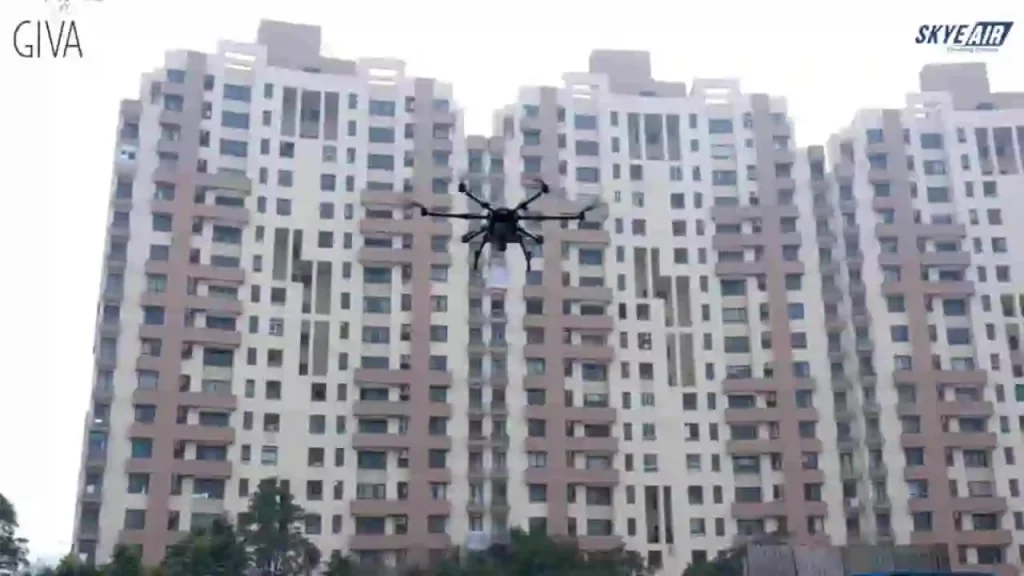
Skye Air Mobility, a drone delivery company based in Gurugram, has started a new service. They now deliver packages right to people’s doorsteps using drones and smart robots powered by artificial intelligence. This big step forward in fast local deliveries was announced at the AI Impact Summit. The summit happened recently in New Delhi. Ankit Kumar is the Founder and CEO of Skye Air. He shared details about this exciting change. The company has already done a lot with drones. Now they add robots to make deliveries even smoother and greener.How the New Delivery System Works Step by StepThe system starts with Skye Air’s special hubs called Skye Ports. These are like local delivery stations for hyperlocal areas. Drones pick up packages from these ports and fly them to the right spot. They land at smart mailboxes called Arrive Points. These mailboxes go in housing societies, apartment complexes, or office buildings. Everything happens automatically with no people needed in between.Once the drone drops the package in the Arrive Point, a robot takes over. The robot is an autonomous rover made by a US company called Autonomy. It picks up the package and drives it straight to the customer’s door. The customer just enters a simple OTP code on the rover. The door opens, and they get their shipment safely. This whole process cuts out traffic jams, saves time, and keeps things secure. No human hands touch the package after the drone drops it off. It works perfectly in busy cities like Gurugram where streets get crowded fast.Impressive Past Success and Green ImpactSkye Air has a strong track record already. Over the last two and a half years, they completed nearly 3.6 million drone deliveries. This huge number shows their experience in the field. Best of all, these flights saved over 1,000 tons of carbon emissions. That means less pollution compared to cars or bikes making the same trips. Ankit Kumar explained this at the summit. He said they connected their drone ports with physical AI setups for the first time. This mix of air and ground tech makes deliveries faster and better for the planet.The company tested drones in hilly areas and cities before. Now they bring it all together in Gurugram. This home base will test the full system before going bigger.Key Partnerships with US Tech CompaniesSkye Air teamed up with three American companies to make this possible. First is Arrive AI. This firm trades on the NASDAQ stock market. They make the Arrive Point smart mailboxes. Skye Air installs these in buildings. Drones drop packages there safely.The second partner helps with last-mile tech. The third is Autonomy. They built the smart rovers that roll from the mailbox to your door. Ankit Kumar announced these deals at the AI Impact Summit. These partnerships bring top global tech to India. They create a full automatic chain from drone to doorstep.Plans to Grow Big Across India and the WorldGurugram is just the starting point. Ankit Kumar sees it as the perfect launchpad. The city has tall buildings, traffic, and tech-savvy people. It tests the system in real urban challenges. Soon, they plan to cover every part of Gurugram. After that, expansion hits other Indian cities.India leads the way here. Ankit noted Prime Minister Narendra Modi’s words on AI growth. India laid the foundation first in the world for this kind of delivery. They want to perfect it locally before going national. The final goal is global reach. This could change how packages arrive everywhere from Delhi to Dubai.Prime Minister Modi praised the AI Impact Summit on social media. He said the world admires India’s tech skills. The event ended with the New Delhi Declaration on AI Impact. Eighty-eight countries and groups signed it. It focuses on using AI for jobs and better lives.Why This Matters for Gurugram and IndiaGurugram buzzes with offices, homes, and shops. Fast deliveries matter a lot here. Drones skip roads and fly straight. Robots handle the last few steps without getting stuck. Customers get parcels quicker and safer. Businesses save money on fuel and drivers. The environment wins too with less carbon.This fits India’s big push into drones and AI. Rules now allow more drone use. Companies like Skye Air lead innovation. They turn ideas into real services. Local jobs grow in tech and operations. Soon, anyone in Gurugram can order food, medicine, or goods and see a drone overhead.Skye Air proves India innovates at world speed. From 3.6 million deliveries to robot doorsteps, they set the pace. Watch for drones in your sky soon. The future of shopping arrives one package at a time.
Indian Startups at CES 2026: Homegrown Innovation Takes Global Spotlight in Las Vegas

Indian startups and technology firms significantly expanded their presence at CES 2026 — the world’s largest technology showcase held in Las Vegas from January 6 to 9, 2026 — reflecting the country’s evolving tech ambitions and increasing global competitiveness. The annual event, organised by the Consumer Technology Association (CTA), attracted more than 4,100 exhibitors from around 150 countries, underscoring its role as a launchpad for next-generation innovations spanning artificial intelligence (AI), digital health, robotics, mobility, enterprise technology and immersive entertainment.According to CTA executives, Indian participation has steadily grown, with a broader range of startups and established firms using the platform to showcase their products, engage with global partners and position themselves for international expansion. Indian delegations this year included innovators from healthtech, wearables, robotics and automotive systems, signalling the ecosystem’s transition from domestic focus to global impact.Ultrahuman: Metabolic Health and WearablesOne of the headline Indian participants at CES 2026 was Ultrahuman, a Bengaluru-based health technology firm co-founded by Mohit Kumar, Vinay Bhargava and Vatsal Singhal. The company displayed its suite of wearable health devices and preventive care platforms, including what it bills as the world’s lightest sleep-tracking wearable, a continuous glucose monitoring (CGM) system and a preventive blood testing solution designed to empower users with metabolic insights. Ultrahuman’s presence marked India’s growing footprint in consumer health tech at global forums.Noise: Smart Wearables Designed for Global MarketsNoise, headquartered in Gurugram and led by founders Amit Khatri and Gaurav Khatri, was another major Indian exhibitor. The company, recognised as one of the third-largest smartwatch brands in the world, showcased its latest wearable technologies at CES, emphasising advanced health metrics, design innovation and global compatibility. Noise’s participation highlighted India’s emergence not only as a producer of affordable wearables but as a designer and manufacturer capable of competing with established global brands.“We are proud to come here and compete on a world stage,” said Hamish Patel, Vice President – Product Devices at Noise, noting that the company’s R&D and manufacturing are largely based in India, enabling it to present products that match global benchmarks.aabo: MedTech InnovationsAmong the Indian startups at CES 2026 was aabo, a MedTech firm focused on AI-driven health solutions. Although not a household name, its technology emphasises the intersection of machine intelligence and healthcare delivery, an area of rising relevance as global health systems integrate data-led diagnostics and monitoring. The specifics of aabo’s product suite were highlighted among Indian exhibitors but details on founders and product characteristics are linked to its positioning as a healthtech innovator on the CES show floor.ArvyaX Technologies: Robotics and Pseudo-RealityArvyaX Technologies, founded by Shalabh Bhatnagar, showcased its robotics and pseudo-reality solutions at CES’s Eureka Park — an innovation zone dedicated to emerging startups. The Bhopal-based firm has developed technologies that blend digital and physical environments, targeting enterprise sectors such as industrial training, simulation and collaborative experiences. Shalabh Bhatnagar described participating at CES as a moment of pride, emphasising that ArvyaX’s innovations were both made and innovated in India, reflecting the nation’s rising capabilities in robotics and immersive technologies.Sona Comstar: Automotive Technology and EV SystemsThe automotive technology company Sona Comstar was another Indian participant at CES 2026, presenting its advanced electric vehicle (EV) components and systems. With a strong focus on R&D in high-power density EV motors, differential assemblies and lightweight drivetrain systems, Sona Comstar’s technology underscores India’s potential in automotive core technology development and global mobility solutions. The company’s products cater to modern EV performance requirements and highlight a broader shift toward electrification and smart mobility.Zoondia and Industry CollaborationsIn addition to standalone startups, Indian participation included Zoondia, a global technology partner offering enterprise solutions and services. Though not a startup in the strictest sense, Zoondia’s presence further reflects the breadth of Indian engagement at CES, spanning early-stage innovation to established tech services with global delivery capabilities.The Significance of Indian ParticipationExecutives at CES 2026 noted that India’s presence was broader and deeper than in previous years, building on momentum from the first dedicated Indian pavilion introduced on the CES show floor in 2024. This year’s participation spanned startups, industry bodies such as the CMAI Association of India, and firms showcasing products that compete with global innovations rather than just representing emerging market offerings.Industry observers have highlighted several key implications of India’s growing CES footprint:Global Visibility: Participation at CES elevates Indian startups to international buyers, investors and collaborators, helping them secure partnerships, pilot projects and market entry opportunities.Innovation Credibility: Demonstrating products at a major global venue signals maturity and readiness to compete on performance and design quality.Ecosystem Confidence: The increasing number of Indian participants reflects confidence among founders and investors in showcasing innovations on a global stage.Cross-Sector Representation: Startups at CES 2026 represented health tech, wearables, robotics and automotive systems, indicating that India’s startup ecosystem is diversifying beyond software into deep tech and hardware innovation.What This Means for India’s Startup EcosystemThe rising participation of Indian startups at CES 2026 comes at a time when the country’s broader startup ecosystem is experiencing structural shifts. India is now recognised as one of the largest startup ecosystems globally, with a growing emphasis on deep tech, AI, robotics and hardware innovation rather than only digital services. Initiatives such as startup support missions, increased R&D investment and industry collaborations are catalysing this transformation, enabling more Indian founders to engage in global innovation discourse and market expansion.Indian founders and CEOs attending CES emphasised that events like CES are not merely showcases but strategic platforms for networking, validation, investment engagement and collaboration, helping elevate India’s technology brands to global audiences and potential customers.Looking ForwardAs CES continues to be a global stage for breakthrough technologies, the increasing presence of Indian startups at CES 2026 reflects a broader narrative of India’s evolution from a predominantly software and services economy to a hardware and deep-tech innovator on the world stage. With continued participation in global technology showcases, Indian founders aim to build enduring technology brands that are recognised not only domestically but across markets in North America, Europe and Asia.The momentum generated at CES 2026 is expected