


INS Mahendragiri: India’s Sixth Project 17A Stealth Frigate and a New Marker of Naval Self-Reliance
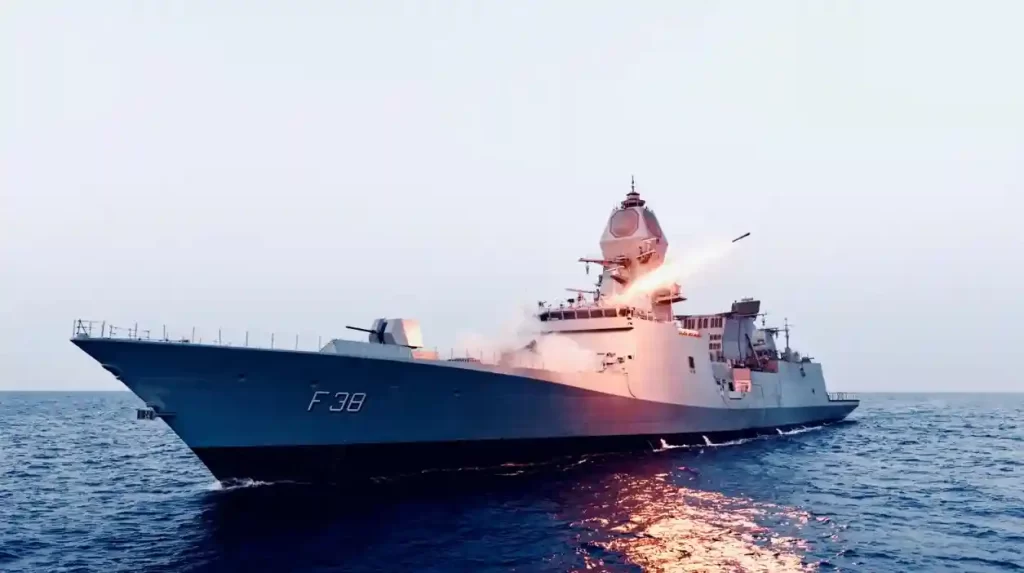
INS Mahendragiri represents a major step forward in India’s indigenous naval power, combining stealth design, advanced weapons, high indigenous content, and faster project execution into one frontline warship. Commissioned at Visakhapatnam in the presence of Defence Minister Rajnath Singh, it is the sixth Project 17A frigate to join the Indian Navy and a strong symbol of Aatmanirbhar Bharat at sea. For India, this is not just the induction of another warship; it is a statement that the country’s shipbuilding ecosystem can now design, build, test, and deliver sophisticated combat platforms that are ready for modern maritime warfare. The ship’s commissioning also strengthens India’s ability to operate across the Indian Ocean Region and the wider Indo-Pacific, where naval presence, deterrence, and rapid response now matter more than ever. A Warship Built for the New Maritime EraINS Mahendragiri belongs to the Nilgiri-class or Project 17A family, which has been developed as a new generation of multi-role stealth frigates for the Indian Navy. Designed by the Navy’s Warship Design Bureau and built by Mazagon Dock Shipbuilders Limited in Mumbai, the vessel has been created to handle a broad operational spectrum, from fleet air defence and anti-surface warfare to anti-submarine warfare, maritime interdiction, surveillance, and humanitarian assistance. That versatility is one of the ship’s most important strengths. Modern naval warfare rarely involves only one type of threat, and a ship that can defend against aircraft, submarines, and surface combatants while also supporting peacetime missions such as search and rescue must be engineered with exceptional balance. INS Mahendragiri is meant to do exactly that, which is why it is described as a frontline warship rather than a niche platform. What Makes It Stealthy?The phrase “stealth frigate” is not just a marketing label; it refers to design and systems that reduce detection and improve survivability in a contested environment. INS Mahendragiri features advanced stealth characteristics, reduced radar signature, modern sensors, and a network-centric combat system that helps it operate more effectively while remaining harder to track. In practical terms, this means the warship is better positioned to approach hostile areas, survive layered threats, and respond faster in a crisis. Its stealth profile, coupled with its electronic warfare suite and integrated combat systems, gives the Navy a ship that is more difficult to target and more adaptable to modern maritime battle conditions. Firepower and Mission SystemsINS Mahendragiri is armed for the full spectrum of naval combat, and its weapons fit the role of a highly capable multi-mission frigate. It can be equipped with the BrahMos surface-to-surface missile, widely regarded as one of the world’s fastest and most lethal cruise missiles, and it also carries medium-range surface-to-air missiles, anti-submarine rocket launchers, torpedo launchers, and a close-in weapon system for last-line defence. Beyond the headline weapons, its value lies in the combination of systems working together. An advanced multifunction radar, anti-submarine defence systems, electronic warfare gear, and an embarked multi-role helicopter create layered offensive and defensive capability, allowing the frigate to detect, classify, engage, and endure across different threat environments.Indigenous Content and Industrial DepthOne of the most important features of INS Mahendragiri is its more than 75 percent indigenous content. That figure matters because it shows how far India has come in building a defence-industrial base that is no longer dependent solely on foreign supply chains for key platforms and systems.The ship was built with the contribution of more than 200 Indian industries, including numerous MSMEs, which means its significance goes well beyond naval doctrine. It supports domestic manufacturing, precision engineering, electronics, software, propulsion-related work, logistics, and the wider industrial ecosystem that grows around a major warship programme. Faster Build, Better ProcessThe commissioning of Mahendragiri also reflects a major improvement in project execution. According to the details shared at the commissioning ceremony, the time from launch to delivery was cut from 63 months to 31 months, and the overall construction timeline fell from 95 months to 75 months. Even more strikingly, technical analyses were completed in a single sea trial instead of the usual five to seven. Those numbers matter because they show that India is not only building advanced ships, but learning how to build them more efficiently. In defence manufacturing, speed without quality is a problem, but speed with quality is a strategic advantage, and Mahendragiri appears to represent that kind of maturity. Why the Name MattersThe ship is named after the Mahendragiri mountain range in the Eastern Ghats, which gives it a sense of rootedness in India’s geography and cultural imagination. The mountain symbolism fits the vessel’s motto, “Mighty, Majestic, Matchless,” and reinforces the idea of endurance, strength, and resolve. Naming a frontline warship after a mountain range is also fitting because naval power often relies on the same qualities associated with mountains: stability, permanence, and commanding presence. In that sense, the name gives the frigate a character that is both poetic and strategic. Strategic Role in the Indo-PacificINS Mahendragiri arrives at a time when India is increasingly framing maritime security as central to national security, trade resilience, and regional stability. As Rajnath Singh noted in the commissioning address, seas matter not only for defence but also for supply chains, energy flows, commerce, and the country’s wider economic security. That is why the frigate’s role in the Eastern Fleet is especially important. It strengthens India’s blue-water reach, supports presence missions in the Indian Ocean Region, and contributes to the country’s broader posture as a net security provider and preferred security partner in the Indo-Pacific. Conventional Power and Future TechOne of the most interesting themes in the commissioning speech was the insistence that next-generation technologies and conventional platforms are not rivals but complements. Rajnath Singh’s point was that even as warfare evolves through drones, AI, cyber systems, space assets, and unmanned platforms, credible ships, trained crews, and proven military power still remain the foundation of defence.That argument is important because it places INS Mahendragiri in the real world rather than in a futuristic fantasy. The warship does not represent a rejection of new technology; it represents the idea that advanced technologies become meaningful when they are backed by solid, reliable,
India’s New Chief of Defence Staff: General N. S. Raja Subramani and the Next Phase of Military Reforms
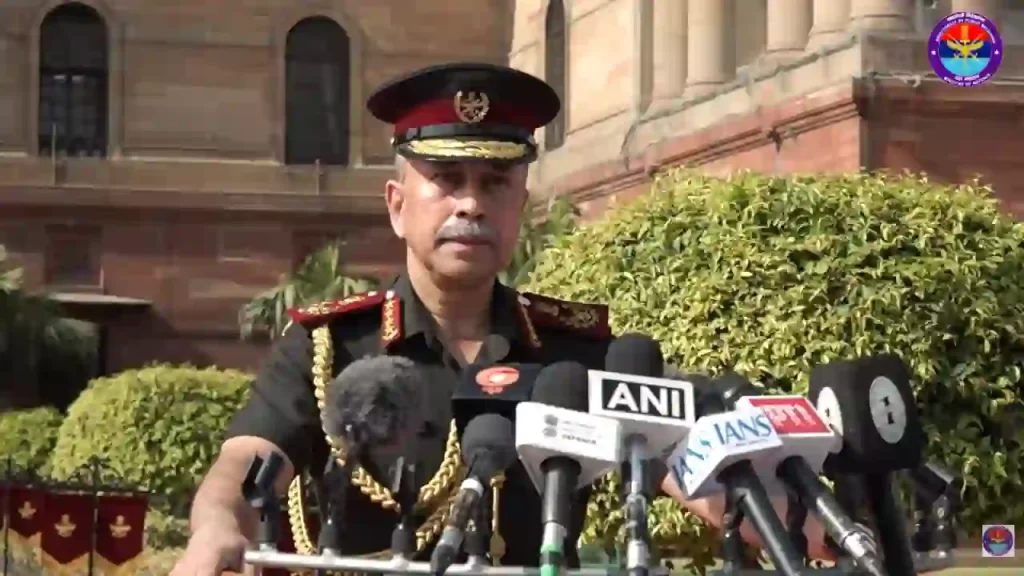
IntroductionIndia entered a new chapter in its military leadership with the appointment of General N. S. Raja Subramani as the country’s third Chief of Defence Staff (CDS). He succeeded General Anil Chauhan, who completed his tenure in May 2026. The appointment comes at a crucial time when India’s armed forces are undergoing structural reforms aimed at improving coordination among the Army, Navy and Air Force, while simultaneously modernising their capabilities to meet evolving security challenges. The position of the Chief of Defence Staff is one of the most significant military appointments in India. Created in 2020 following decades of debate, the office was envisioned to promote jointness among the three armed services, improve military planning, and strengthen India’s defence preparedness. General Raja Subramani now assumes this responsibility at a time when regional security dynamics, technological advancements and geopolitical tensions are reshaping the nature of warfare.Who is General N. S. Raja Subramani?General N. S. Raja Subramani is one of the Indian Army’s most experienced officers, with a career spanning nearly four decades. Before becoming the Chief of Defence Staff, he served as the Military Adviser at the National Security Council Secretariat. Earlier, he held the position of Vice Chief of the Army Staff and also commanded the Army’s Central Command, one of India’s key operational commandsThroughout his military career, he has held several important operational, instructional and staff appointments, including assignments in Jammu and Kashmir, the Eastern Command, Military Intelligence and the Defence Services Staff College. His experience covers border management, counter-insurgency operations, strategic planning and military administration, making him one of the country’s most accomplished senior military leaders. His appointment reflects the government’s emphasis on continuity in defence reforms while bringing experienced leadership to oversee the next phase of military modernisation.Understanding the Role of the Chief of Defence StaffThe Chief of Defence Staff serves as the highest-ranking military officer in the Indian Armed Forces and acts as the principal military adviser to the Government of India on matters involving all three services. Unlike the Chiefs of the Army, Navy and Air Force, the CDS focuses on issues that require coordination among the services rather than commanding a single branch. The CDS also functions as the Secretary of the Department of Military Affairs within the Ministry of Defence. This gives the office a unique role in integrating military planning with government decision-making.Among the CDS’s primary responsibilities are promoting joint planning, improving procurement processes, enhancing interoperability among the services and driving long-term defence reforms. The office also oversees several tri-service organisations and serves as the Permanent Chairman of the Chiefs of Staff Committee.A Position Born from the Kargil ReviewThe idea of appointing a Chief of Defence Staff dates back to the recommendations made after the 1999 Kargil War. The Kargil Review Committee and subsequent expert groups concluded that India’s military required greater integration between its three services to improve operational effectiveness and strategic planning.Despite repeated recommendations, the proposal remained pending for nearly two decades because of concerns regarding command structures and institutional responsibilities.The post was finally created in December 2019, and General Bipin Rawat became India’s first Chief of Defence Staff in January 2020. Following his death in a helicopter crash in December 2021, General Anil Chauhan assumed the role in September 2022 and continued efforts towards military integration before handing over charge to General Raja Subramani in 2026. Challenges Before the New CDSGeneral Raja Subramani takes charge at a time when India’s security environment is becoming increasingly complex.The armed forces continue to maintain operational preparedness along the Line of Actual Control (LAC) with China while simultaneously addressing security concerns along the Line of Control (LoC) with Pakistan. Maritime security in the Indian Ocean Region, cyber warfare, space-based surveillance and emerging technologies such as artificial intelligence have also become critical components of modern defence planning.In addition to external security challenges, the new CDS must continue implementing structural reforms that have been under discussion for several years.One of his most significant responsibilities will be advancing the creation of integrated theatre commands—a reform intended to bring the Army, Navy and Air Force under unified operational commands for specific geographical regions. Defence experts consider theatreisation one of the most important military reforms undertaken since Independence, although its implementation requires extensive coordination among all three services. Focus on Jointness and IntegrationOne of the defining objectives of the CDS system has been to promote “jointness” among India’s armed forces.Traditionally, the Army, Navy and Air Force have functioned through separate command structures. While this arrangement has served the country for decades, modern warfare increasingly requires seamless coordination across land, air, sea, cyber and space domains.General Raja Subramani has identified strengthening tri-service integration and organisational reforms as key priorities. Soon after assuming office, he emphasised the importance of Jointness, Atmanirbharta and Innovation (JAI) as guiding principles for the future of India’s armed forces.Improved integration is expected to enhance operational efficiency, optimise the use of military resources and strengthen India’s overall defence preparedness.Driving Defence ModernisationAnother major responsibility before the new CDS is accelerating military modernisation.India has been investing heavily in advanced defence technologies, including indigenous fighter aircraft, missile systems, drones, artificial intelligence, cyber capabilities and space-based defence infrastructure.The CDS plays an important role in prioritising procurement across the three services and ensuring that future acquisitions support integrated military operations.The government has also placed significant emphasis on Atmanirbhar Bharat in defence manufacturing, encouraging greater use of domestically developed weapons, equipment and technologies. General Raja Subramani is expected to continue this focus by promoting indigenous capability development and reducing dependence on imported defence systems. Why the Appointment MattersThe appointment of a new CDS is more than a routine change in military leadership. It comes at a time when India’s defence priorities are evolving rapidly in response to changing geopolitical realities.The nature of warfare has expanded beyond conventional military operations to include cyber attacks, information warfare, unmanned systems, artificial intelligence and space-based capabilities. These developments require closer coordination among the armed forces than ever before.The CDS plays a central role in ensuring that India’s military remains prepared