


Skyroot Vikram-1 Launch: India’s Private Space Breakthrough and a New Chapter in Orbital Access
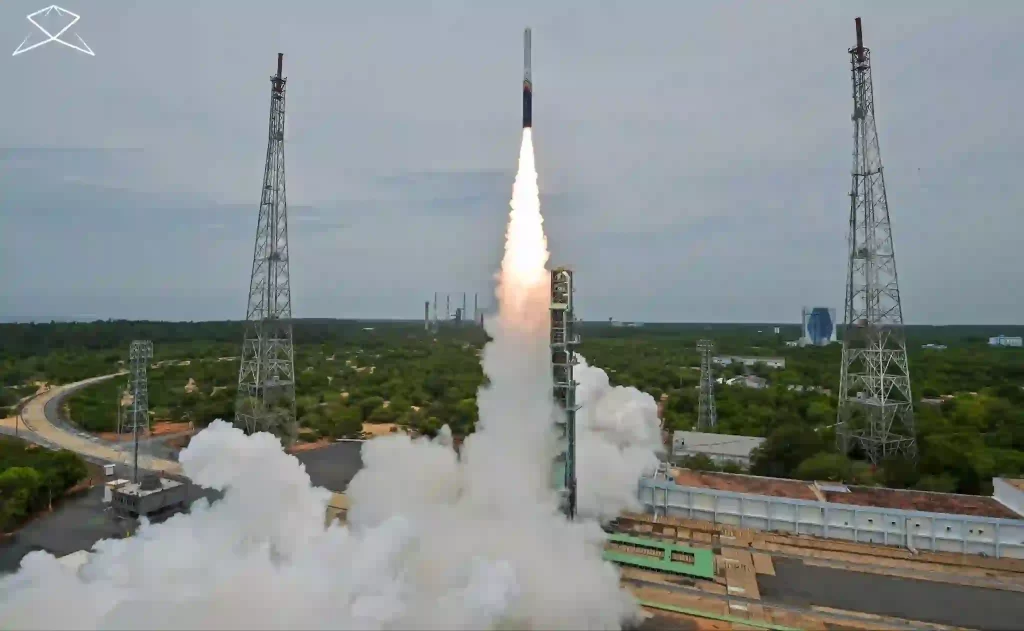
Skyroot Aerospace’s Vikram-1 mission, called Aagaman, is a landmark moment for India’s space story because it demonstrates that a privately built Indian rocket can reach orbit and place payloads successfully into low Earth orbit. For a country that has long been admired for the strength of ISRO, this is an equally important signal of something new: India’s commercial space sector is no longer just preparing for lift-off, it is already there.What makes the launch so significant is not only the technical success, but the symbolism attached to it. Vikram-1 is India’s first private orbital-class rocket, and with its successful flight from Sriharikota, India has entered a small and elite group of nations where private enterprise has independently achieved orbital launch capability.Why Vikram-1 MattersThe space industry often measures progress in very specific terms: payload mass, orbital accuracy, propulsion reliability, turnaround time, and the ability to scale launch services commercially. Vikram-1 matters because it checks several of those boxes at once, proving that an Indian private company can design, build, integrate, and launch a working orbital vehicle from Indian soil.That is a major shift from the older model in which space capability was seen primarily as the domain of the state. Today, Vikram-1 suggests that India’s space future will be shaped not just by ISRO, but by a wider ecosystem of private companies, engineering talent, investors, and customers who want Indian launch capability to be part of the global market.The Launch and Mission ProfileThe rocket lifted off from the Satish Dhawan Space Centre at Sriharikota after a planned pause shifted the launch time from 11:30 am to 12:05 pm. Built by Hyderabad-based Skyroot Aerospace, the mission achieved its intended orbital objective and placed multiple technology demonstration payloads, including postcards from Prime Minister Narendra Modi, into low Earth orbit.Vikram-1 is a three-stage rocket and stands about 22 metres tall, roughly the scale of a seven-storey building. It reportedly delivered customer payloads into an orbit around 450 km above Earth, which is a strong demonstration of practical launch capability rather than a symbolic suborbital test.A Private Rocket With National MeaningIndia has made remarkable progress in space through ISRO’s long record of dependable missions, but the Vikram-1 launch adds a new layer to that success story. It shows that India’s space economy is maturing from a government-led program into a more diversified industrial ecosystem where private players can compete, innovate, and ultimately carry national prestige into commercial markets. That matters because orbital launch is one of the hardest parts of the space business. It requires deep systems engineering, high-reliability propulsion, precision guidance, rigorous testing, and the ability to survive failure during development without losing technical momentum. A successful private orbital launch is therefore not a single achievement; it is proof that a company has built institutional competence at the highest level.The Technology Behind the RocketOne of the most interesting aspects of Skyroot’s approach is its use of modern manufacturing methods, including additive manufacturing, better known as 3D printing. In traditional rocket production, engines are built from many separate parts that must be machined, welded, sealed, and assembled with extreme precision, while 3D printing allows complex components to be built layer by layer, reducing weight, simplifying the structure, and cutting lead time. Skyroot has emphasized this approach before, noting that fully printed components can reduce mass and simplify production. For a startup, that is especially important because launch vehicles are not just engineering artifacts; they are also manufacturing systems, and every improvement in production speed, cost, and consistency improves competitiveness in a market where reliability and economics matter equally.The Commercial Space AngleVikram-1 is also important because it strengthens India’s place in the global commercial launch market. Satellite launches are increasingly driven by demand for small satellites, technology demonstrations, earth observation constellations, and rapid deployment missions, and countries that can offer dependable launch services will have a strategic and economic advantage.India already has strong space credibility through ISRO, but a successful private launcher expands the country’s offering. It suggests that future customers may one day choose India not only for low-cost space hardware or satellite services, but for launch options provided by a competitive domestic private sector. PM Modi’s Response and National SymbolismPrime Minister Narendra Modi praised the mission as a historic new frontier in India’s space journey, framing it as a reflection of the talent, entrepreneurial spirit, and ambition of India’s youth. That kind of response matters because space achievements often become national symbols, and private-sector success at orbit is particularly resonant in a country that sees technology as a key pathway to economic and strategic power. The presence of a postcard from the Prime Minister among the payloads added a distinctive symbolic touch. It turned the mission into something more than a test flight, linking the technical achievement with a broader sense of national participation in the event. What Comes NextThe real test for Vikram-1 begins after the headlines. A successful launch is a milestone, but a repeatable launch service is what turns a demonstration into a business. Skyroot’s challenge now will be to convert this success into a reliable cadence of missions, customer confidence, and operational maturity that can sustain the company over time. If it succeeds, Vikram-1 could become one of the defining vehicles in India’s commercial space era. More importantly, it could help normalize the idea that Indian private companies are not peripheral players in space, but central participants in a new national ecosystem built around launch, innovation, and scale. ConclusionThe Vikram-1 launch is historic because it marks the moment India’s private space sector moved from promise to proof. By placing payloads into orbit with a homegrown private rocket, Skyroot Aerospace has demonstrated that India’s space ambitions are no longer limited to state-led achievement alone.That makes Aagaman feel like more than the name of a mission. It reads like a declaration that a new era has arrived, one in which India’s space story will be written not only by institutions, but by entrepreneurs, engineers, and private companies ready to reach orbit on their own terms.Video: Skyroot Aerospace
GAGAN: India’s Indigenous Navigation Shield for Safer Skies and Smarter Mobility
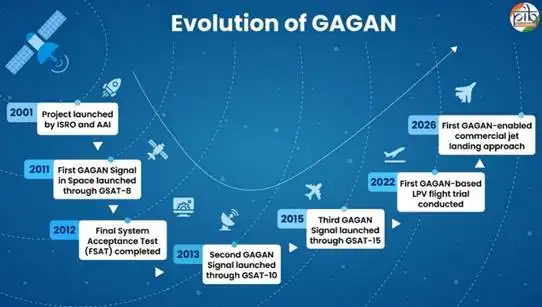
GAGAN, short for GPS Aided GEO Augmented Navigation, is one of India’s most important but least publicly understood technology achievements: a homegrown satellite-based augmentation system that strengthens GPS, improves aviation safety, and extends precise navigation far beyond the airport runway. Developed jointly by ISRO and the Airports Authority of India, it has been operational since 2015 and now sits at the heart of India’s indigenous navigation ecosystem.What makes GAGAN significant is not just that it improves location accuracy, but that it gives pilots integrity information — a real-time warning if a GPS signal should not be trusted for navigation. That single capability changes aviation from “roughly informed” to “safety-certified,” and it is why GAGAN has become a strategic pillar for Indian civil aviation and a symbol of technological self-reliance.Why GAGAN Was NeededModern aviation depends on precision, and even small positioning errors can become serious safety risks when aircraft are landing, flying in bad weather, or operating in crowded airspace. Standard GPS is helpful, but its signals can be distorted by atmospheric conditions and other sources of error, making it insufficient on its own for precision approach and landing.India’s answer was GAGAN, a Satellite-Based Augmentation System, or SBAS, that overlays correction data on top of GPS. Instead of replacing GPS, it makes GPS trustworthy enough for safety-of-life aviation applications by improving accuracy, continuity, availability, and integrity.How GAGAN WorksGAGAN operates through a tightly linked network of ground stations, control centers, uplink stations, communication networks, and geostationary satellites carrying GAGAN payloads. According to ISRO’s URSC, the system includes 15 Indian Reference Stations, 2 Indian Master Control Centres, 3 Indian Land Uplink Stations, 4 communication network chains, and 3 GEO satellites with GAGAN payloads.The process is elegant in concept and highly sophisticated in practice. Reference stations across India continuously monitor GPS signals, master control centers calculate corrections and integrity data, and uplink stations send that information to geostationary satellites, which then broadcast enhanced navigation signals back to aircraft and other users.Core System ElementsElementCountFunctionIndian Reference Stations (INRES)15Monitor GPS signals and detect errors. Indian Master Control Centres (INMCC)2Process data and generate corrections. Indian Land Uplink Stations (INLUS)3Send correction data to satellites. Communication Networks4Support secure real-time transmission. Geostationary satellites with GAGAN payloads3Broadcast corrected navigation signals. Because the satellites are geostationary, they appear fixed in the sky relative to the Earth’s rotation, which makes them ideal for steady regional augmentation services. The currently cited GAGAN payload satellites include GSAT-8, GSAT-10, and GSAT-15.Aviation Breakthrough & Global StandingGAGAN’s biggest job is to make Indian aviation safer and more efficient, especially during non-precision and precision approach procedures. ISRO’s documentation notes that the system has been certified to provide Non Precision Approach services over the Indian Flight Information Region and APV services over Indian landmass, bringing India into the select club of countries with operational SBAS capability.The significance became especially clear in June 2026, when DGCA successfully conducted India’s first satellite-based landing system approach on a commercial jet using GAGAN. That milestone was not just symbolic; it demonstrated that India can now rely on an indigenous augmentation system for advanced approach operations, reducing dependence on foreign navigation ecosystems.GAGAN places India alongside the United States, Europe, and Japan, which operate comparable augmentation systems such as WAAS, EGNOS, and MSAS. It is also interoperable with those international systems, which matters in global aviation because aircraft often cross multiple airspace regions and must move seamlessly between standards and navigation services.Another important distinction is that GAGAN is described as the first SBAS certified for the equatorial anomaly region, a technically challenging zone where ionospheric conditions can affect satellite navigation. That makes the system especially valuable not only for India but for the broader region extending well beyond the country’s borders.GAGAN vs NavICGAGAN is often mentioned alongside NavIC, but the two systems serve different purposes. NavIC is India’s independent regional navigation satellite system, providing positioning, navigation, and timing services across India and up to about 1,500 km beyond its borders, while GAGAN augments GPS with correction and integrity information for aviation-grade precision.Think of NavIC as an independent navigation backbone and GAGAN as the precision safety layer that helps GPS become reliable enough for demanding civil aviation use. Together, they form a stronger indigenous navigation stack that reduces dependence on external systems while expanding India’s strategic autonomy.Uses Beyond AviationAlthough GAGAN was created for civil aviation, its usefulness extends into several other sectors. The URSC notes applications in maritime navigation, highways, railways, disaster management, defense, telecom synchronization, surveying, and public services.That broader utility is important because navigation infrastructure has become a foundation for modern digital economies. Precise timing supports telecom networks, accurate positioning improves logistics and fleet management, and reliable geospatial data strengthens everything from mapping to emergency response.Strategic Value for IndiaGAGAN is more than a technical system; it is a statement of capability. By building and operating its own SBAS, India has created a sovereign navigation asset that improves safety, supports aviation growth, and enhances resilience in a world where critical infrastructure increasingly depends on space-based signals.The system also fits neatly into India’s broader aviation and technology ambitions. As civil aviation expands and the government pushes for more airports, stronger regional connectivity, and advanced air traffic management, GAGAN provides an indigenous precision layer that can support those goals for years to come.The Road AheadThe next phase for GAGAN is likely to be defined by wider adoption, deeper integration with aviation operations, and more cross-sector use. Its ability to support precision approaches, landing operations, and reliable positioning services makes it a key enabler for a future in which Indian infrastructure is increasingly digital, connected, and self-reliant.In practical terms, GAGAN helps India do something important: turn space technology into everyday public value. It makes flights safer, navigation smarter, and national capability stronger, all while quietly proving that indigenous systems can meet the highest international standards.ConclusionGAGAN is one of India’s clearest examples of technology serving both safety and sovereignty. Developed by ISRO and AAI, certified to international civil aviation standards, and now proven in satellite-based landing operations, it has transformed from an engineering project into
Amit Kshatriya: The NASA Lifer Who Became America’s Point Man for the Moon
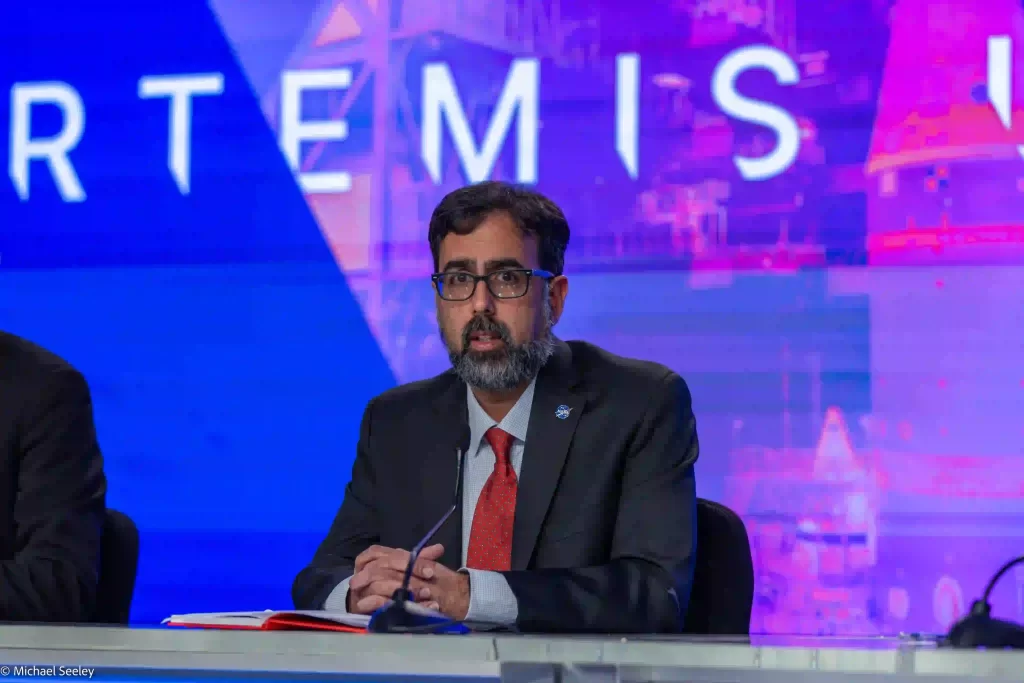
A Wisconsin Kid Who Grew Up to Run NASAThere is a particular kind of American origin story that begins in the heartland and ends somewhere extraordinary. Amit Kshatriya’s version goes from Wisconsin to the highest civil service position in the United States space agency — and the path between those two points runs through twenty-two years of calculated, relentless work at the place he always wanted to be.Kshatriya was born in Wisconsin to first-generation Indian immigrants. Growing up in Houston, he admired rocket launches as a child — which, given that Houston is home to NASA’s Johnson Space Center, meant he was watching the real thing, not television footage. That proximity to actual space operations made a future at NASA feel less like a fantasy and more like a direction.He holds a Bachelor of Science in mathematics from the California Institute of Technology in Pasadena, California, and a Master of Arts in mathematics from the University of Texas at Austin. Two degrees in mathematics. No aerospace engineering, no physics at the undergraduate level. Just the discipline that underlies all of it, pursued at two of the most demanding institutions in the United States.On September 3, 2025, acting NASA Administrator Sean P. Duffy named Amit Kshatriya as the new Associate Administrator of NASA, the agency’s top civil service role. He was, at that moment, the highest-ranking civil servant in the history of the American space agency to have Indian roots. More importantly, he was the person now responsible for making sure humans get back to the Moon.Twenty-Two Years: How You Actually Get to Run NASAThe title of NASA Associate Administrator does not come from a single impressive moment. It comes from two decades of doing every job in front of you extremely well. Kshatriya’s career at NASA is worth tracing in detail because it explains not just who he is, but how the most complex human endeavour on earth actually functions — one competent, patient professional at a time.Beginning his time at the space agency in 2003, he worked as a software engineer, robotics engineer, and spacecraft operator, primarily focused on the robotic assembly of the International Space Station. Robotic assembly of the ISS is not a glamorous assignment. It is exacting, technically demanding work with zero margin for error and very little public visibility. It is exactly the kind of work that tells you whether someone actually understands how spacecraft systems integrate, or whether they just understand the theory.From 2014 to 2017, he served as a space station flight director, where he led global teams in the operations and execution of the space station during all phases of flight. The flight director role at NASA is one of the most pressure-intensive jobs in any industry. The flight director is the person in Mission Control who, when something goes wrong, makes the call. Every system, every trade-off, every risk assessment on a mission runs through the flight director’s judgment. Kshatriya did this job for three years.He was awarded the NASA Outstanding Leadership Medal for his actions as the lead flight director for the 50th expedition to the space station. Kshatriya is also the recipient of a Silver Snoopy, an award that astronauts themselves bestow for outstanding performance contributing to flight safety. The Silver Snoopy is unusual among NASA’s many awards because it comes from the astronauts — the people whose lives depend on the quality of work done on the ground. Getting one means the people in the most dangerous seats trusted you with their lives and wanted you to know it.He also served as lead robotics officer for the SpaceX Dragon demonstration mission under the Commercial Orbital Transportation Services programme. That assignment placed him at the intersection of NASA and the commercial space industry at the precise moment that intersection became the most consequential territory in space policy. Understanding both the agency’s institutional culture and the operational culture of commercial partners is a skill set that very few people in NASA had developed at the time.From 2017 to 2021, he became deputy, and then acting manager, of the ISS Vehicle Office, where he was responsible for sustaining engineering, logistics, and hardware programme management.Then the biggest assignment of his career arrived.Moon to Mars: The Job That Defined HimIn 2021, Kshatriya was assigned to the Exploration Systems Development Mission Directorate at NASA Headquarters in Washington, D.C., where he became deputy associate administrator for the Moon to Mars Programme. In this role, he was responsible for programme planning and implementation for human missions to the Moon and Mars. He directed and led the programmes to ensure Artemis and Mars planning, development, and operations were consistent with ESDMD requirements, and served as the single point of focus for risk management.Prior to his ESDMD role, Kshatriya served as the acting deputy associate administrator for the Common Exploration Systems Development Division, where he directed and provided leadership and integration for the Space Launch System, Orion, and Exploration Ground Systems programmes, as well as associated Artemis Campaign Development Division initiatives linking the agency’s Moon to Mars objectives.In practical terms, this means Kshatriya was the person overseeing the three most expensive and technically complex elements of Artemis: the Space Launch System rocket, the Orion capsule, and the ground systems at Kennedy Space Center. The fact that those systems worked on Artemis I — the uncrewed test mission that circled the Moon in November 2022 and returned safely — reflected, among other things, the quality of the programme management he had led.In 2021, Kshatriya was assigned to NASA Headquarters as an assistant deputy associate administrator for the Exploration Systems Development Mission Directorate, where he was an integral part of the team that returned a spacecraft designed to carry humans to the Moon during the Artemis I mission.The Appointment: Why His Elevation Sent a MessageThe announcement was made by Acting NASA Administrator Sean P. Duffy: “Amit has spent more than two decades as a dedicated public servant at NASA, working to advance American leadership in space. Under his leadership,
NASA Astronaut Sunita Williams Retires After Nearly Three Decades of Spaceflight Service
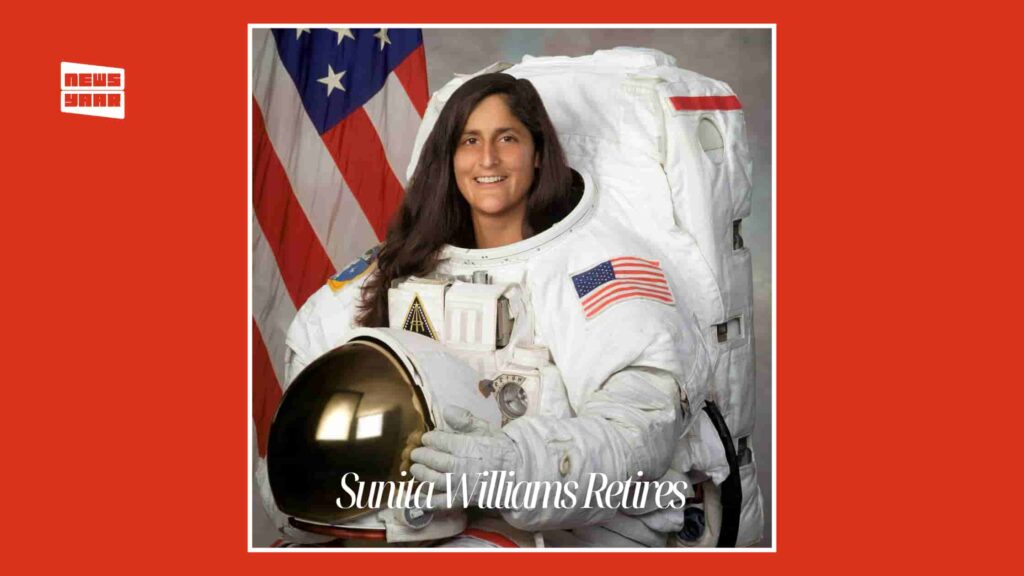
NASA astronaut Sunita “Suni” Williams has formally retired after a distinguished 27-year career with the United States space agency, closing a chapter that spans some of the most significant phases of modern human spaceflight — from the Space Shuttle programme to the International Space Station (ISS) and the emergence of commercial crew missions. NASA announced her retirement in late 2025, acknowledging Williams’ extensive contributions to space exploration, mission leadership, astronaut training and long-duration human spaceflight operations. Early Life and Professional Background Born on September 19, 1965, Sunita Williams is of Indian-Slovenian descent and grew up in the United States. She graduated from the United States Naval Academy with a degree in physical science and later earned a master’s degree in engineering management from the Florida Institute of Technology. Before joining NASA, Williams served as a commissioned officer in the US Navy, where she became a helicopter pilot and later a test pilot, flying more than 30 aircraft types. Her operational and technical experience in aviation played a key role in her selection as an astronaut. Selection as NASA Astronaut Williams was selected as part of NASA’s 1998 astronaut class, one of the agency’s most competitive intakes. She underwent extensive training in spacecraft systems, robotics, spacewalks, Russian language and survival operations — a reflection of NASA’s increasingly international mission structure at the time. Her training coincided with the early assembly years of the International Space Station, positioning her at the forefront of long-duration orbital missions. Space Missions and Time in Orbit Over the course of her career, Williams flew on three space missions, spending a cumulative 608 days in space, making her one of NASA’s most experienced astronauts in terms of time spent in orbit. Her first spaceflight came in 2006 aboard Space Shuttle Discovery (STS-116), where she joined Expedition 14 and later Expedition 15 aboard the ISS. During this mission, she played a major role in station construction and systems maintenance. Williams returned to the ISS in 2012 as part of Expedition 32, later assuming command during Expedition 33, becoming one of the few astronauts — and one of the few women — to lead the orbiting laboratory. Record-Breaking Spacewalks One of Williams’ most notable achievements was her contribution to extravehicular activity (EVA). She conducted nine spacewalks, accumulating over 62 hours outside the ISS — a record for the most spacewalk time logged by a woman astronaut at the time. Her spacewalks involved complex tasks such as station assembly, repair of external systems, installation of scientific instruments and upgrades to power and cooling infrastructure critical to ISS operations. Leadership and Scientific Contributions As Commander of the ISS, Williams was responsible for crew safety, operational coordination, scientific mission execution and liaison with ground teams across multiple countries. Her tenure coincided with an intensive research phase aboard the station, with experiments spanning human physiology, material science, fluid dynamics and Earth observation. NASA officials have consistently cited her leadership style, operational discipline and technical proficiency as instrumental in sustaining continuous human presence aboard the ISS. Role in Commercial Crew and Training In the latter part of her career, Williams supported NASA’s transition toward commercial crew programmes, contributing to astronaut training, mission evaluations and operational readiness planning. Her experience across different spacecraft platforms made her a valuable resource during this transitional period. She was also involved in mentoring younger astronauts and supporting mission simulations, ensuring continuity of institutional knowledge within NASA’s astronaut corps. Retirement and Post-Service Benefits Williams retired at the age of 60, making her eligible for federal retirement benefits based on years of service. According to public disclosures, retired NASA astronauts receive pensions under standard US federal employee retirement systems, along with healthcare and post-service benefits. While she has not announced formal post-retirement plans, retired astronauts often continue contributing through education, public engagement, advisory roles, research collaborations and private-sector aerospace initiatives. Legacy and Impact Sunita Williams’ retirement marks the end of a career that bridged multiple eras of US space exploration. Her achievements place her among the most accomplished astronauts in NASA history, particularly in the areas of long-duration missions, spacewalk operations and international cooperation aboard the ISS. Her career has also held symbolic importance for aspiring scientists and engineers worldwide, particularly in India and among the global Indian diaspora, where her achievements have long been followed with pride. As NASA prepares for future missions to the Moon, Mars and beyond, Williams’ contributions remain embedded in the operational foundations of long-duration human spaceflight.
Alaknanda: Indian Astronomers Discover a Milky Way–Like Galaxy from the Universe’s Youth
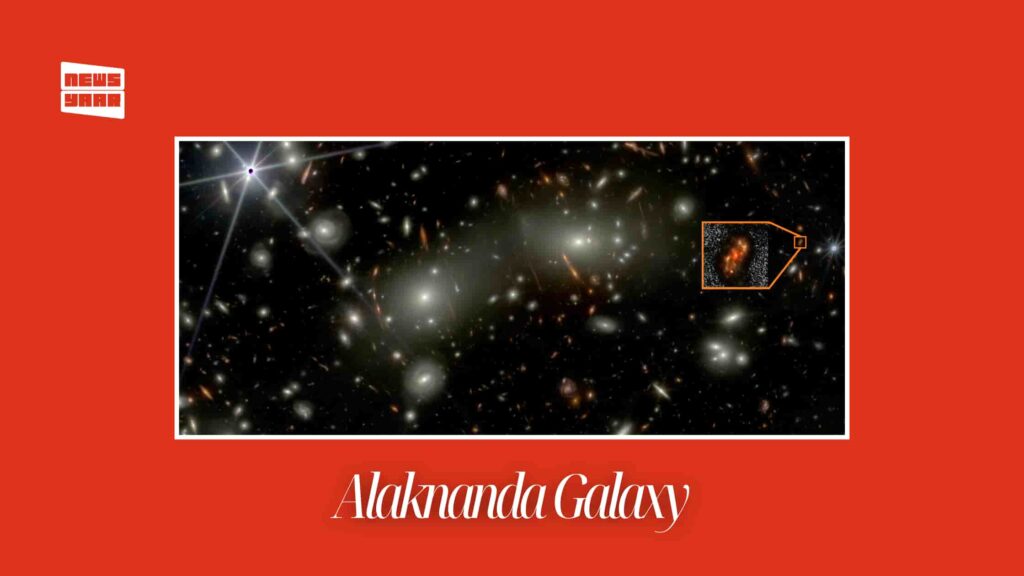
Indian astronomers have made a discovery that could rewrite prevailing theories of galaxy formation, after identifying a massive, well-structured spiral galaxy dating back nearly 12 billion years. Named Alaknanda, after the Himalayan river, the galaxy was observed when the Universe was only about 1.5 billion years old, just 10% of its current age of 13.8 billion years.The discovery was made using data from the James Webb Space Telescope (JWST) by Rashi Jain, a PhD researcher at the National Centre for Radio Astrophysics (NCRA), part of the Tata Institute of Fundamental Research in Pune, under the supervision of Professor Yogesh Wadadekar. Their findings were published in the prestigious European journal Astronomy and Astrophysics in November.What makes Alaknanda extraordinary is its structure. According to current models, galaxies that formed so soon after the Big Bang were expected to be small, irregular, and chaotic, still assembling their mass through violent mergers. Instead, Alaknanda appears as a fully formed spiral galaxy, complete with a central bulge and two symmetric spiral arms, remarkably similar to the Milky Way.Ms Jain discovered the galaxy while analysing nearly 70,000 objects captured by JWST. “There was only one grand-design spiral galaxy in the entire dataset,” she said. Spanning around 30,000 light-years, Alaknanda shows classic spiral features, including a distinctive “beads-on-a-string” pattern, clusters of stars aligned along its spiral arms, commonly seen in nearby mature galaxies.Professor Wadadekar admitted his initial reaction was disbelief. “It’s astonishing how such a large galaxy with spiral arms could have existed just 1.5 billion years after the Big Bang,” he said. Scientists estimate that Alaknanda had already formed nearly 10 billion times the mass of the Sun in stars, while also developing a stable rotating disc, an achievement that should have taken much longer according to existing cosmic timelines.The implications of this discovery are significant. It suggests that some galaxies in the early Universe evolved far more rapidly and efficiently than previously thought. The presence of such an organised structure so early challenges assumptions about the pace of star formation, the role of dark matter, and the mechanisms that lead to spiral arm formation.For Indian astronomy, the finding marks a major milestone, showcasing the country’s growing role in cutting-edge space research enabled by global observatories like JWST. For cosmology as a whole, Alaknanda opens new questions about how order emerged so quickly from the apparent chaos of the early Universe, and whether other such hidden spirals are waiting to be found.