


The Man Who Will Run Infosys Has Been Building It for 30 Years
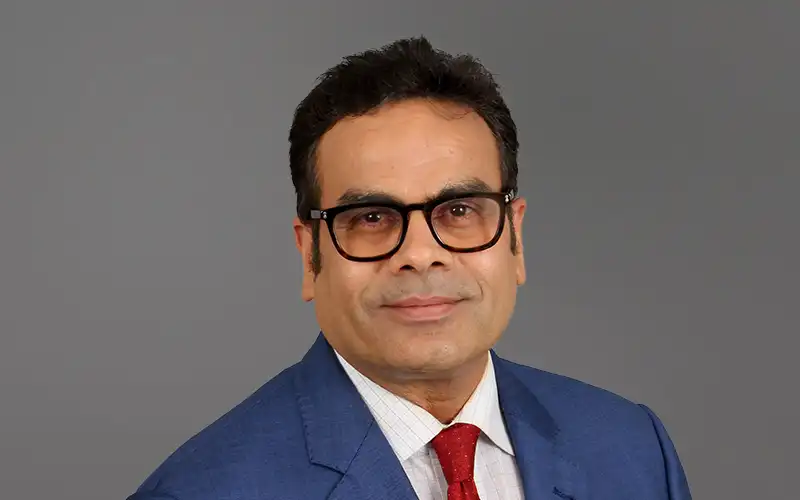
When Infosys was looking for its next CEO, it did not go to a headhunter. It did not look outside. It looked at the person who had spent over three decades inside the company, built businesses across twelve industry verticals, advised Fortune 500 clients through some of the most complex technology transitions of the last decade, and spoken at the World Economic Forum about the future of energy and sustainability.On July 23, 2026, Infosys announced the appointment of Ashiss Kumar Dash as CEO Designate. The transition takes effect on April 1, 2027, when Dash will succeed Salil Parekh as Managing Director and Chief Executive Officer following the completion of Parekh’s second term — after over nine years at the helm.The appointment needs shareholder approval, and is for a period of five years.Who Is Ashiss Kumar DashDash is currently Executive Vice President and Global Head of Services, Utilities, Resources, Energy and Enterprise Sustainability at Infosys — a portfolio that spans more than 12 industry verticals and covers leading Fortune 500 and Global 2000 enterprises.He has spent over 30 years at Infosys — joining as a young professional and rising through every layer of the organisation. Not in a single vertical. Not through one geography. Across customer-facing roles, delivery operations, global teams, and sustainability leadership. He also leads the sustainability business across the entire company — an increasingly significant responsibility as Infosys positions itself for what comes after the current AI transformation wave.He is an alumnus of the Indian Institute of Technology, Kharagpur. He has completed the Global Leadership Program at Stanford University and the Senior Executive Program at London Business School.He is currently based in Los Angeles. He runs. He swims. He practices mindfulness. He is, by the description in the official press release, an avid reader. None of that is incidental — it is the profile of someone who has been thinking about where the world is going, not just where the company’s quarterly numbers need to land.What the Board Said About Why It Chose HimNandan Nilekani, who has been the most important presence in Infosys’s boardroom since the company’s early years, chose his words carefully.”The Board was clear that our next CEO needed to combine the ability to drive bold transformation with the judgment to preserve the values and customer trust that have always distinguished Infosys,” Nilekani said. “It gives me great pleasure that we have an internal leader as our next CEO.”That second sentence is the one that matters most to the market. Infosys has had a turbulent history with leadership transitions. The 2017 boardroom crisis — when the founders publicly clashed with then-CEO Vishal Sikka before Sikka resigned — left scars that took years to heal. Salil Parekh, brought in as an outsider from Capgemini in 2018, stabilised the company and delivered sustained growth. Choosing an internal leader this time is a deliberate signal: the company is confident enough in its own bench strength that it does not need to look outside.What Salil Parekh Built — and What Dash InheritsParekh said: “I have enjoyed leading the company from $10 billion in revenue to over $20 billion in revenue through my two terms. We have established Infosys as a leader in digital transformation and have put in place a distinctive strategy for AI transformation.”A doubling of revenue in nine years — at a company of Infosys’s scale — is not a small achievement. When Parekh took over, the company was navigating governance controversy, employee attrition, and margin pressure. When he leaves, it is the fastest-growing IT services brand globally, with over 325,000 employees and operations in 59 countries.What Dash inherits is a company in good shape but at a genuinely difficult inflection point. The AI revolution is not a distant threat or an abstract opportunity for IT services firms. It is happening now, and it is disrupting the very business models — large-scale manual IT delivery, application maintenance, business process outsourcing — that built the Indian IT industry. The companies that figure out how to turn AI from a threat to their delivery headcount into a driver of higher-value client transformation will win the next decade. The ones that do not will shrink.Dash, in his own statement, acknowledged the stakes directly: “Technology is entering a new era, with AI fundamentally reshaping how businesses operate and create value. Infosys begins this next phase from a position of enormous strength — with a clearly articulated AI strategy, exceptional talent, deep client relationships, and values that have earned the trust of customers globally. My commitment is to build on those strengths while accelerating innovation, expanding our capabilities and helping our clients succeed in an increasingly AI-driven world.”The Transition TimelineThe eight months between now and April 1, 2027 are not dead time. Parekh has committed to working closely with Dash to ensure a seamless transition, and Dash will spend that period stepping deeper into the CEO’s chair while Parekh remains formally in it.For Infosys’s 325,000 employees, its shareholders, and the clients who have billion-dollar technology transformation programmes running on the company’s delivery infrastructure, a smooth eight-month handover is exactly what the board has promised and exactly what they need to see.Why This Matters Beyond InfosysInfosys is not just a company. It is one of the original symbols of India’s technology ambition — founded in 1981 by Narayana Murthy and six co-founders with $250 in starting capital, it became the first Indian company listed on NASDAQ and the company that showed the world what Indian IT could do.Every CEO transition at Infosys is therefore read as a signal about where Indian technology is heading — not just by analysts and shareholders, but by the hundreds of thousands of engineers and professionals for whom Infosys represents either an employer, a benchmark, or an aspiration.Ashiss Kumar Dash will become its CEO on April 1, 2027. He has had 30 years to prepare. The company, and the industry, will watch closely to see what he does with it.Key Facts NameAshiss Kumar DashDesignationCEO Designate, InfosysEffective DateApril 1,
Anthropic’s Claude Cowork Plug-ins Spark ‘SaaSpocalypse’: Global Tech Sell-Off Hits Indian IT Hard

Global tech markets plunged into chaos following Anthropic’s January 30, 2026, launch of 11 open-source plug-ins for its Claude Cowork agent, igniting fears that agentic AI could obliterate traditional SaaS models and disrupt India’s IT services giants. Indian IT stocks like Infosys (down 8%), TCS (6.46%), HCLTech (5.76%), Wipro, and Tech Mahindra cratered, erasing over ₹5.7 lakh crore in market cap as the Nifty IT index dropped 19% in eight sessions, its worst since 2020.The Trigger: Claude Cowork’s Game-Changing Plug-insAnthropic, founded in 2021 by ex-OpenAI leaders Dario and Daniela Amodei, shifted AI from chatbots to autonomous “coworkers.” These no-code plug-ins bundle skills, connectors, and sub-agents for enterprise roles, autonomously planning, executing, and validating multi-step tasks like document processing, cross-verification, and adaptive strategies. Key offerings target:Plug-in CategoryCore FunctionsLegalContract review, NDA analysis, compliance checks, risk flagging.SalesProspect research, deal prep, process tracking.FinanceFinancial modelling, metrics tracking.Data/Marketing/ProductQuery/visualise datasets, campaign planning, and roadmap prioritisation.Others (Productivity, Support, Biology)Task/calendar management, issue triage, and literature analysis.This “vibe coding” lets users describe intent in plain English, bypassing specialised software from Salesforce, ServiceNow, or Adobe—threatening recurring subscriptions that fueled SaaS profits.Market Carnage: Wall Street to Dalal StreetUS: Nasdaq fell 1.4-2.4%; Goldman Sachs software basket 6%; S&P 500 -0.84%. Adobe (-7.31%), Cognizant (-10.14%), Thomson Reuters (-15.67%), Gartner (-20.87%), Equifax (-12.11%), ServiceNow/Salesforce (~7%) shed $ 300 B in market cap. Even Nvidia/Meta dipped 2-3%.India: Infosys ADR -5.56% (Nasdaq); TCS mcap below ₹10 lakh crore (2020 levels); Nifty IT -3-6% daily. Sensex dragged 100+ points.Termed ‘SaaSpocalypse’: Jefferies warns AI agents compress software categories into one interface, turning tools into utilities.Palantir’s CTO noted AI slashing SAP migrations from years to weeks, amplifying panic over billable hours in legal research, compliance, and due diligence, bread-and-butter for Indian IT juniors.Indian IT Sector: Existential Threat or Overreaction?India’s IT behemoths thrived on outsourcing data processing, analysis, and support—now AI-vulnerable. Economic Survey 2025-26 flagged risks: concentrated AI data/compute erodes India’s edge if adaptation lags. Mustafa Suleyman-like warnings predict 12-month white-collar hits (lawyers, accountants, coders).Bear Case: Agentic AI automates L1 support, reporting, testing—hollowing low-end services; clients rethink headcount-heavy models.Bull Rebuttals:JPMorgan sees “compelling value” in Infosys/TCS; correction temporary.Cognizant CEO Ravi Kumar: Enterprises need integrators for AI-human bridges; no “plug-and-play” magic.Zoho’s Sridhar Vembu: Domain expertise trumps AI; SaaS woes predated agents.Happiest Minds’ Ashok Soota: Disruption expands IT roles in transformation.Experts (Pareekh Jain, Prasad Valavade): Incremental impact; humans essential for governance, legacy integration, high-stakes decisions. Legal AI needs oversight (Adv. Varun Singh).Broader Implications and Road AheadSalesforce’s 1,000 AI-driven layoffs signal restructuring. Anthropic’s Dario Amodei reassures startups: “Claude powers AI-native firms.” Indian firms pivot to AI orchestration, but face pricing pressure (fixed-fee vs. hours). JPMorgan urges buying the dip; long-term, IT survives as AI embedders.As of February 17, 2026, markets stabilise slightly, but the AI shift, from assistant to executor, reshapes software economics. Indian IT must accelerate: reskill, embed AI in processes, or risk obsolescence. The ‘SaaSpocalypse’ may be hype, but evolution is inevitable.