


Jodhpur Airport’s New Terminal: A Royal Gateway for the Blue City
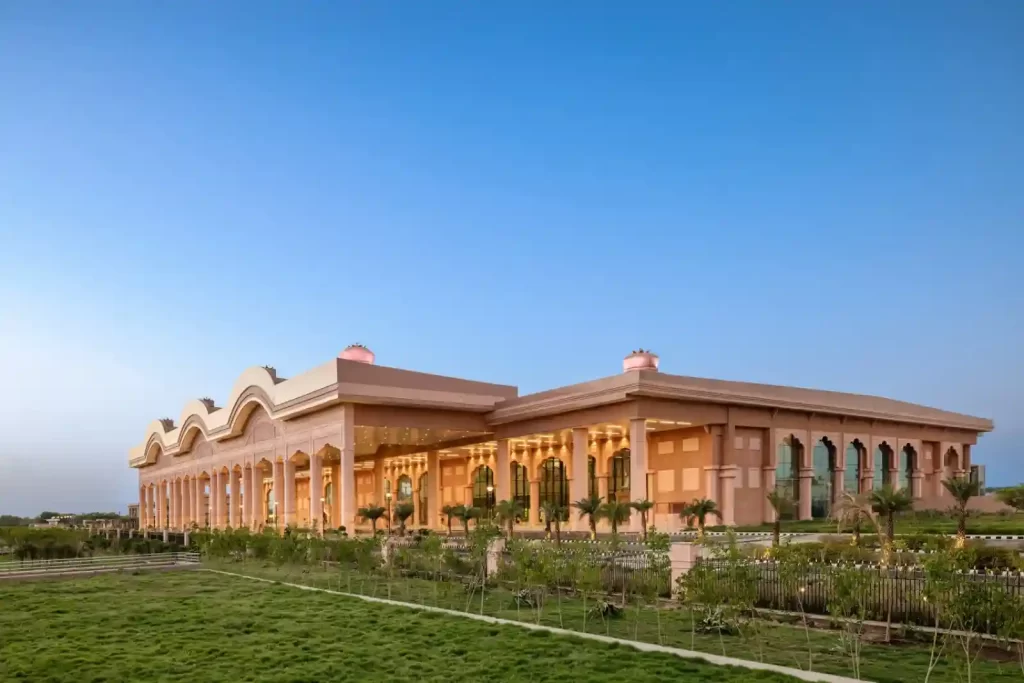
Jodhpur has always been a city that announces itself through its architecture. From the towering Mehrangarh Fort to the indigo-washed lanes of the old city, the built environment here tells a story of heritage, resilience, and royal grandeur. Now, that story has a new chapter: the newly inaugurated passenger terminal at Jodhpur Airport, a structure that manages to feel both thoroughly modern and unmistakably Rajasthani, turning a functional infrastructure project into a civic landmark that honours the city’s identity. Inaugurated by Prime Minister Narendra Modi on July 4, 2026, the new terminal replaces an older facility that had become a bottleneck for a city whose tourism and business travel were growing faster than its airport could handle. The previous setup was designed for around four lakh passengers annually; the new building, spread over 23,000–25,000 square metres (about 2.52 lakh sq ft), is engineered to handle two million passengers a year and up to 1,500 during peak hours, giving Jodhpur an airport that matches its aspirations as the gateway to Western Rajasthan. Why Jodhpur Needed a New TerminalFor years, Jodhpur Airport operated as a civil enclave within a military airfield, an arrangement that worked when passenger numbers were modest but began to strain under the weight of rising demand. The old terminal’s limited capacity meant congested check-in areas, constrained baggage handling, and restricted scope for adding more flights or larger aircraft, which in turn capped the city’s connectivity and tourism potential. The new terminal changes that equation. With 20 check-in counters, six aerobridges, and upgraded security and baggage-handling systems, it allows airlines to operate more smoothly and scale up frequency without the operational friction that comes from working in a cramped facility. Both Air India and IndiGo have already moved their operations to the new building, signalling that the airport is ready for a busier, more connected future. Architecture That Feels Like JodhpurWhat makes this terminal stand out is not just its capacity, but the way it looks and feels. Designed by the architecture firm STHAPATI, the building draws heavily from Jodhpur and Rajasthan’s heritage, translating royal motifs into a contemporary transportation hub. The grand entrance is marked by a rounded, ridged roof canopy inspired by palace architecture, while the façade features multifoil arches, carved columns, domes, and jharokhas that echo the region’s historic gateways and forts. At the centre of the façade sits a kalash, a sacred pot on a lotus base, a symbol traditionally associated with welcome and new beginnings in Indian architecture. For a building defined by arrivals and departures, the choice is both poetic and purposeful, rooting the journey in a sense of place before passengers even step inside. Inside, the sense of place continues through curated murals, regional artworks, and craft-inspired interventions developed with local artists. Peacock motifs, scenes from royal courts, and other elements from Rajasthani painting and decorative arts appear throughout, turning the terminal into a kind of gallery that introduces travellers to the essence of Marwar as soon as they land. Sustainability and Smart DesignThe terminal is not just aesthetically distinctive; it is also designed to be efficient. Passive environmental strategies, energy-efficient systems, and resource-monitoring technologies have been integrated to reduce operational demand while enhancing passenger comfort. Energy simulations indicate that the building consumes more than 50% less energy than the benchmark for comparable airport terminals, a significant achievement for a structure of this scale. Water conservation measures and green building practices are part of the design as well, with the project aiming for a 5-Star GRIHA rating. In a desert region where resource management is critical, this focus on sustainability ensures that the terminal’s growth does not come at the expense of environmental responsibility. Retail and Passenger ExperienceThe passenger experience extends beyond check-in and security into the retail and lounge areas, where the brief was clear: the retail should feel like Jodhpur, not like every other airport. Orchid Ent Outfit, led by entrepreneur Dhruv Jain, has been awarded the master retail concession and is developing a curated mix of national brands and local Marwari craft, ensuring that the shopping experience reflects the region’s identity rather than a generic airport template. This approach matters because airports are often the first and last impression a city leaves on a traveller. By embedding local craft, art, and design into the retail ecosystem, Jodhpur’s terminal turns a routine transit point into a cultural introduction, reinforcing the city’s brand as a destination worth exploring. Connectivity and Regional ImpactThe new terminal is expected to significantly boost tourism, trade, and employment in the region by enabling more flights, better connectivity, and a smoother travel experience. Jodhpur is already a key hub for Western Rajasthan, with tourists using it as a base for visits to Jaisalmer, Bikaner, and the Thar Desert. A modern airport strengthens that role, making it easier for domestic and international travellers to access the region without relying solely on road or rail. The inauguration also coincided with the launch of a modified UDAN (Ude Desh ka Aam Nagrik) scheme, which allocates around ₹28,840 crore over the next decade to enhance regional air connectivity. For a state like Rajasthan, where distances between cities are large and road travel can be time-consuming, improved aviation links can be a game-changer for business, tourism, and access to services. A Terminal That Feels Like a GiftFor Jodhpur, the new terminal is more than an infrastructure upgrade; it is a statement that the city’s growth is being taken seriously at the national level. Chief Minister Bhajanlal Sharma called it a “significant gift” to Rajasthan, while Deputy Chief Minister Diya Kumari highlighted the employment and connectivity benefits that will follow. At the same time, the terminal sets a benchmark for how regional airports in India can be designed, not as interchangeable glass boxes, but as structures that reflect local culture, climate, and craft while meeting modern operational standards. In that sense, Jodhpur’s new terminal is not just for Jodhpur; it is a model for how India’s smaller cities can build airports that feel like home. ConclusionJodhpur Airport’s new terminal is a rare example of