


Navratri and Garba Mahotsav 2026: The Festival of the Divine Feminine, Dancers, and Nights
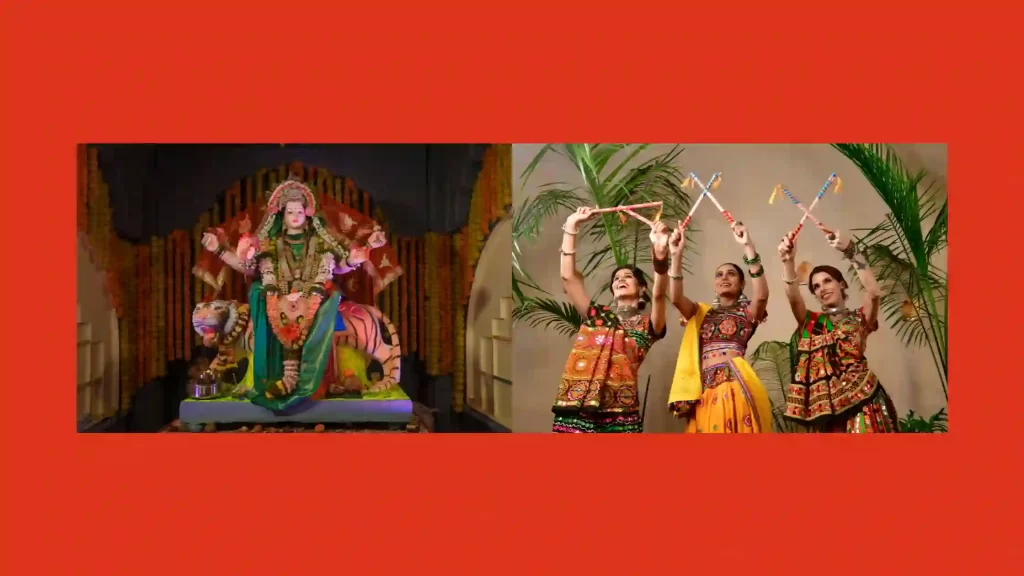
Navratri is one of those festivals that seem to be both deeply spiritual and unashamedly fun. Homes and public places across Gujarat turn into sites for both prayers and dance as people celebrate devotion to the divine feminine power and Garba circle dances for nine consecutive nights. In 2026, Sharad Navratri will be celebrated from October 11 to October 19, and Vijayadashami (Dussehra) will be held on October 20. This festival will be celebrated throughout Gujarat, Maharashtra, and other regions of the country as people observe fasts, visit temples, perform devotional songs, and participate in the popular Garba Mahotsav.What is Navratri?Literally meaning ‘nine nights’, Navratri is celebrated in honor of the divine feminine in the form of nine avatars of Goddess Durga. Each night is dedicated to a particular form of the Goddess that embodies different qualities. The most commonly observed Navratri is Sharad Navratri that falls in the month of Ashwin (October-November) in the Hindu calendar. Another version, Chaitra Navratri is celebrated in March–April, but it is the autumn festival that is associated with Garba, Dandiya Raas, and large scale public festivals. Navratri is a period of time for seeking spiritual renewal and cleansing of the mind of negative qualities. The nine-night-long festival symbolizes the eternal struggle between good and evil not only in the world around us but also within each person. By the end of the festival people are expected to have conquered their dark instincts. Each day of the festival is dedicated to a particular form of the Goddess and there is a particular set of rules for fasting and dressing. For example, the nine days of the 2026 Navratri will be devoted to the following forms of the Goddess: October 11 (Day 1): Maa Shailputri – daughter of Shail, the mountainOctober 12 (Day 2): Maa Brahmacharini – ascetic goddess, an embodiment of celibacy and self-controlOctober 13 (Day 3): Maa Chandraghanta – her forehead is decorated with a crescent moonOctober 14 (Day 4): Maa Kushmanda – creator of the universeOctober 15 (Day 5): Maa Skandamata – mother of KartikeyaOctober 16 (Day 6): Maa Katyayani – the fieriest and most powerful form of Goddess DurgaOctober 17 (Day 7): Maa Kalaratri – the embodiment of darkness, takes away ignoranceOctober 18 (Day 8): Maa Mahagauri – pure and compassionate goddessOctober 19 (Day 9): Maa Siddhidatri, goddess of supernatural powersGarba: Circle Dance In Honor Of The Divine FeminineOne of the most important elements of the Navratri celebrations in Gujarat is the Garba – a traditional dance performed in a circle to the accompaniment of devotional songs. The name Garba is believed to have been derived from the word garbha (womb) and this dance is thought to have originated from the ritual baring of a pregnant woman’s belly. In the center of the dance, there is often a garbha deep – a pot with a light in it. The pot symbolizes the womb and the life that comes from it while the dance itself is performed around it in a circle that represents the cycle of life. The dance is performed in concentric circles that move counter-clockwise and when space is limited, these circles are formed one after the other so that there are several circles of people dancing at the same time, some of which move in opposite directions. There are usually few directional moves in Garba, mostly clapping, stepping forward and back, bending, and twirling. Nevertheless, the dance creates an amazing effect when hundreds or even thousands of people move to the same rhythm. Garba used to be a women’s dance that was performed in courtyards as an offering to the Goddess, but now men also join in the dance and large public Garba events, or Garba Mahotsavs, are held. Dandiya Raas: The Dance Of SticksDandiya Raas is similar to Garba but more acrobatic and performed with sticks (dandiyas) by pairs of people who hit each other’s sticks in time with the music. It is thought that the sticks represent the swords of Goddess Durga and that Dandiya Raas depicts the battle between her and the demon Mahishasura and her eventual victory over him. Dandiya Raas is traditionally performed after Garba as a dance-fight in which people form rows or circles. They move and strike their sticks in time with the music and the rhythm is generally much livelier. In recent years, Dandiya Raas has become almost as popular as Garba and the festivals are sometimes referred to as “Garba-Dandiya nights”. Navratri is also a great festival of traditional costumes that reflect the rich variety of Gujarat’s textile traditions. Women traditionally wear a three-piece outfit called chaniya choli made of flared and elaborately decorated skirts, fitted blouses, and odhni (a piece of cloth worn over the head or across the chest). The men’s traditional costume is the kediyu: a full-sleeved kurta that is tight at the chest and flares at the waist, and kafni pajamas (pleated trousers folded at the ankle). Over the kediyu, men wear a pagdi (a type of turban). Women and men both wear bright colors and elaborate embroidery on their clothes. In recent years, contemporary designers have been experimenting with traditional motifs so that the traditional costume for men and women during Navratri is now a mix of modern and traditional elements, but the overall look is still largely Gujarati. The term Garba Mahotsav literally means big bazaars of Garba, but it actually refers to large-scale Garba events that are usually organized in public places (often stadiums) and are usually ticketed events. Ahmedabad, Vadodara, Surat, Rajkot, and other cities host large Garba Mahotsavs that draw thousands of people. There are DJs or musicians who set the rhythm for the dancers, themed decorations, food stalls, and sometimes even celebrities at such festivals. People of all ages, genders, and social groups gather at Garba Mahotsavs to enjoy dancing, music, and food. Community bonding is an important part of Garba Mahotsavs. Families, their friends, and colleagues often gather to celebrate Navratri and Garba Mahotsav together. While large commercial Garba Mahotsavs are becoming more