


Parsi New Year 2026: What Is Navroz, Why It Falls in August, and How India’s Smallest Community Celebrated Its Biggest Day
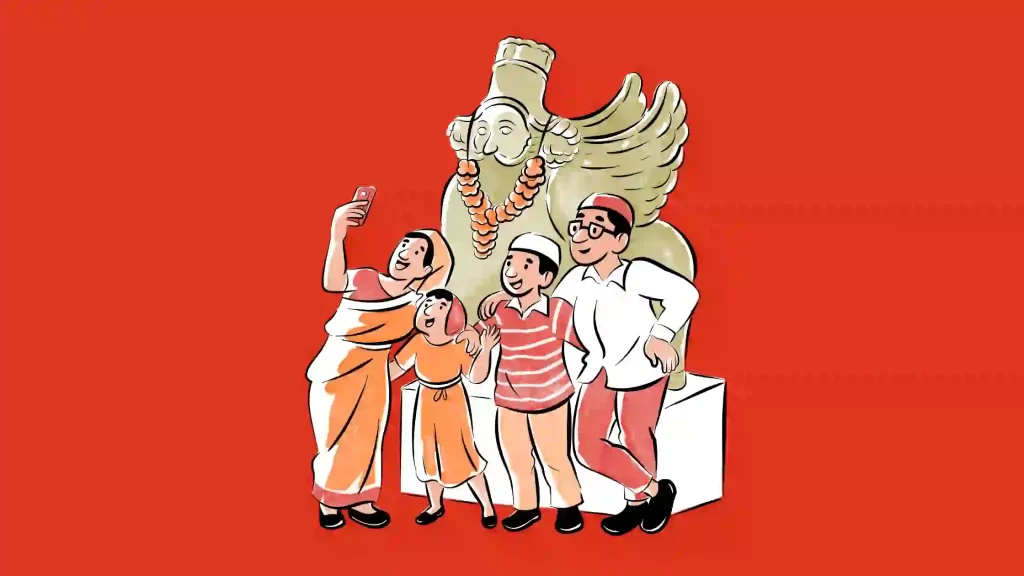
On a day that most of India was still recovering from Independence Day celebrations, the Parsi community had something equally significant on their calendar. August 16, 2026 was Navroz — the Parsi New Year. Fire temples received their morning visitors before 9 AM. Kitchens filled with the smell of Patra ni Machhi. Families dressed in new clothes and called on relatives. And across Mumbai’s Dadar Parsi Colony, the year 1396 Y.Z. — Year of Zoroaster — quietly began.It was, by every measure, a good day.Wait — Why Does the Parsi New Year Fall in August?This is the question almost everyone asks. Navroz means “new day” in Persian. It originated as a spring festival, tied to the vernal equinox — the moment in March when day and night are equal. Zoroastrians across Iran and the diaspora still celebrate it in March.But in India, it falls in August. The reason comes down to calendars.Indian Parsis follow the Shahenshahi calendar, a 365-day system that does not account for leap years. This causes it to lose one day roughly every four years compared to the Gregorian calendar. Over centuries, those lost days added up. The Parsi New Year in India is now generally 200 days after the global spring celebration. What started as a spring festival has, through the mathematics of time and tradition, migrated into the heart of the Indian monsoon season.Zoroastrians worldwide follow three different calendars — Shahenshahi in India, Fasli in Iran and parts of the diaspora which stays aligned with the March equinox, and Kadmi which falls one month ahead of Shahenshahi. So the same community, depending on where they are in the world, celebrated New Year at three different points in the year. It sounds confusing. For Parsis, it is simply the lived reality of being a community spread across continents over millennia.Pateti Came First: The Day Before the New YearThe celebrations did not begin on August 16. They began the evening of August 15.Pateti is associated with repentance, reflection, and recognising one’s mistakes. It is the eve before the New Year — a time to look back honestly at the year gone by, acknowledge where you fell short, and prepare to begin again with a cleaner conscience.In Parsi homes across Mumbai, Surat, and Pune — the cities where most of India’s Parsi community lives — August 15 evenings meant cleaning. Every corner of the house. The idea is that you do not carry the dust of the old year into the new one. Chalk patterns were drawn on thresholds, the sacred Divo — a lamp of life — was lit, and the hearth was prepared.There is something quietly profound about a community that begins its new year not with fireworks but with reflection. Before the celebration, the reckoning.Navroz: What the Day Looked LikeMost Parsis visited the Agiary, the Fire Temple, early on the morning of Navroz, ideally before 9 AM, to offer prayers and sandalwood. Fire is central to Zoroastrian worship. It is not worshipped as a god — it is venerated as a symbol of truth and purity, an outward expression of the divine light. In many Agiaries, the sacred fire has burned continuously for centuries.After prayers came everything else. New clothes. Visits to family and friends. Sweets exchanged at doorways. Special menus at Parsi restaurants and homes featured Berry Pulav and Patra ni Machhi — fish wrapped in banana leaves and steamed with green chutney, a dish that appears at nearly every significant Parsi occasion.Navroz is a celebration of heritage as much as a new year. For younger generations, it served as a reminder of who their ancestors were, where they came from, and the extraordinary journey that brought the Parsi community to India in the first place.The Story of How the Parsis Came to IndiaThis part of the story is worth telling properly, because it is one of the most remarkable stories of migration, adaptation, and quiet contribution in human history.When Arab armies conquered Persia in the 7th century and Islam spread across the region, a group of Zoroastrians refused to abandon their faith. They fled. Sailing across the Arabian Sea, they landed on the western coast of India, in what is now Gujarat, around 936 CE. The local king, Jadav Rana, was cautious about receiving refugees. According to legend, he sent them a full glass of milk as a signal — the kingdom was already full. The leader of the Parsi group, rather than arguing, dissolved sugar into the milk and sent it back. The message: we will not displace you. We will only make things sweeter.The king let them stay.That story may be legend. What is not legend is what followed. The Parsi community settled along Gujarat’s coast, learned Gujarati, adopted local customs, kept their faith, and over the centuries became one of the most disproportionately influential communities in Indian history. The Tatas, who built some of India’s most important institutions and industries, are Parsi. Homi Bhabha, who founded India’s nuclear programme, was Parsi. Field Marshal Sam Manekshaw, India’s greatest military commander, was Parsi. Freddie Mercury, born Farrokh Bulsara in Zanzibar to Parsi parents from Gujarat, carried Zoroastrian heritage into global rock music.A community of fewer than 60,000 people in India today. The contribution is staggering.A Community in Decline — and What Is Being Done About ItThe Parsi community is one of the smallest in India, and it has been shrinking for decades. The festival reminded younger generations of the history of their ancestors and the journey of the Parsi community in India. But awareness alone cannot reverse demographic decline.The government of India has been running the Jiyo Parsi scheme since 2013, a programme specifically designed to encourage young Parsi couples to have more children, offering financial assistance for fertility treatments and medical support. The scheme has had some success — the rate of decline has slowed — but the numbers remain a concern for community leaders. For a community that has contributed so much to India, the possibility of its further