


Noida International Airport Officially Opens: Commercial Flights Begin June 15, Marking New Era for Viksit UP and Viksit Bharat
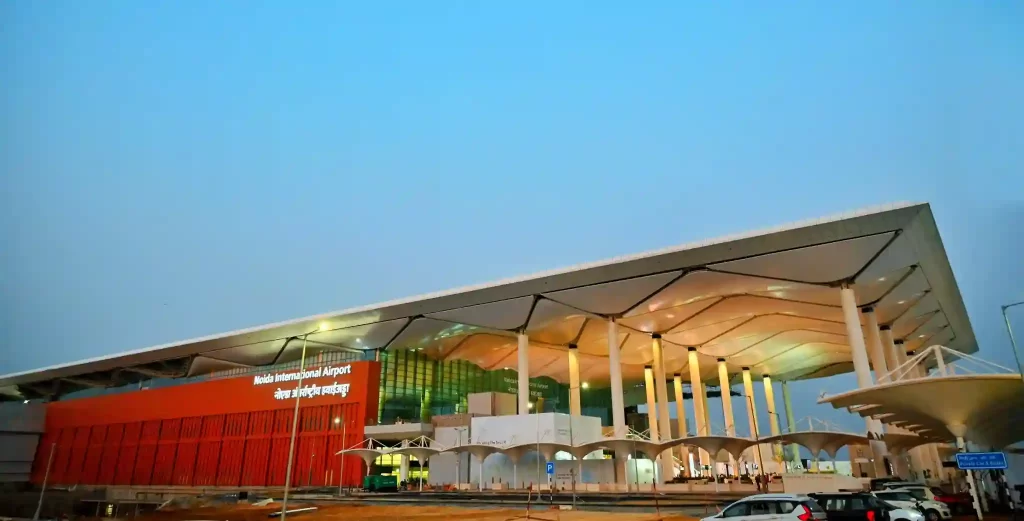
Noida, May 27, 2026 — Prime Minister Narendra Modi officially inaugurated Phase I of the Noida International Airport at Jewar in Gautam Buddha Nagar district of Uttar Pradesh on March 28, 2026, marking a transformative moment for India’s aviation sector and northern India’s connectivity. Noida International Airport at Jewar has officially opened for commercial operations, with flights scheduled to commence from June 15, 2026, marking a transformative moment for India’s aviation sector and northern India’s connectivity. Prime Minister Narendra Modi inaugurated the first phase of the airport earlier this month at Jewar in Gautam Buddha Nagar district of Uttar Pradesh, and the facility has now received final security clearance from the Bureau of Civil Aviation Security. The Prime Minister also laid the foundation stone for 40 acres of Maintenance, Repair, and Overhaul (MRO) facilities at the site during the inauguration ceremony. Speaking on the occasion, Modi declared this a new chapter for the Viksit UP and Viksit Bharat campaign, emphasizing that Uttar Pradesh has now emerged as one of the states with the highest number of international airports in India.Noida International Airport stands among the largest greenfield airport projects in the country, with Phase I developed at a total investment of approximately ₹11,200 crore under a Public-Private Partnership model. The airport will initially handle 12 million passengers per annum, with scalability up to 70 million passengers annually upon full development. Commercial flight operations officially begin June 15, following receipt of approval for its Aerodrome Security Programme from the Bureau of Civil Aviation Security, which certified that the airport’s security framework meets regulatory requirements for commercial operations. IndiGo will operate the first flight from NIA, marking the start of scheduled passenger services, followed shortly by Akasa Air and Air India Express.From Vision to Reality: A 23-Year Journey to CompletionThe airport project was first approved in 2003 during the tenure of former Prime Minister Atal Bihari Vajpayee, making this operational launch the culmination of a 23-year vision. Prime Minister Modi recalled that as soon as the current government was formed, the foundation was laid, construction happened, and now it has started operations. He expressed feeling doubly proud, first for having laid the foundation stone of this airport and now seeing it operational, and second because the name of this grand airport is linked to Uttar Pradesh, the state that chose him as its representative and made him a Member of Parliament.The airport will benefit numerous districts across western UP, including Agra, Mathura, Aligarh, Ghaziabad, Meerut, Etawah, Bulandshahr, and Faridabad, bringing new opportunities for farmers, small and medium enterprises, and the youth of the region. The site is positioned near freight corridors and logistics networks, supporting the movement of goods by air and rail. The area around Dadri, where freight routes converge, has been identified as a key logistics point for northern India. Prime Minister Modi pointed out that this area is becoming the hub of two major freight corridors with special railway tracks laid for goods trains, enhancing North India’s connectivity with the seas of Bengal and Gujarat.Economic Impact Connecting Western UP to Global MarketsPrime Minister Modi emphasized that airports are not just basic facilities in any country but give wings to progress. Due to the expansion of connectivity in the region, agricultural products of western UP will reach the global market in a much better way. The airport will bring numerous new opportunities for farmers, small and medium industries, and the youth of western Uttar Pradesh, with aircraft flying from here to the world, and the airport becoming a symbol of a developed Uttar Pradesh taking flight.The expansion of modern connectivity will further boost food processing prospects in western UP. Prime Minister Modi expressed gratitude to the farmers who gave up their lands to make this project a reality, noting that agriculture and farming hold great importance in the region’s economy. He highlighted that today, Noida is ready to welcome the entire world, and this whole area is strengthening the resolve of Aatmanirbhar Bharat. This multi-modal connectivity is making UP a major attraction for investors worldwide, as whatever farmers grow and industries produce here can now reach every corner of the world swiftly by land and by air.MRO Facility Lays Foundation for Aviation Self-RelianceAddressing a critical gap in India’s aviation ecosystem, Prime Minister Modi drew attention to the Maintenance, Repair, and Overhaul sector, noting that 85 percent of Indian aircraft still have to go abroad for MRO services. The government has resolved to make India self-reliant in the MRO sector, and the foundation stone of an MRO facility was laid at Jewar during the inauguration. When ready, it will serve aircraft from India and abroad, generating revenue for the country, keeping money within India, and creating numerous jobs for the youth.This facility will support aircraft servicing within India, where a significant share of such work is currently carried out overseas, reducing dependency on foreign MRO providers and saving foreign exchange. The government has decided to make India self-reliant in this sector as part of its broader economic policy framework, positioning India as a global hub for aircraft maintenance services.Operational Timeline and First Year ProjectionsThe airport will commence commercial flight operations from June 15 after appointing an Indian CEO, following the security regulator’s approval for its Aerodrome Security Programme. An airport official stated they are looking at 50-60 lakh passengers in the first year of operations. After domestic operations stabilize, they will launch international services, confident of going international before the end of 2026. The airport currently features one runway and one passenger terminal with a capacity to handle 12 million passengers annually, with its master plan including future expansion to accommodate over 70 million passengers each year.The launch follows the DGCA’s clearance granted in March, with PM Modi inaugurating the airport in late March. The airport said the June 15 start date marks the final stage of security clearance after regulatory concerns over a foreign CEO were addressed by appointing Chief Financial Officer Nitu Samra as interim CEO, replacing Swiss national
Noida International Airport (Jewar Airport) Inauguration: A Transformational Push to India’s Aviation and Regional Growth
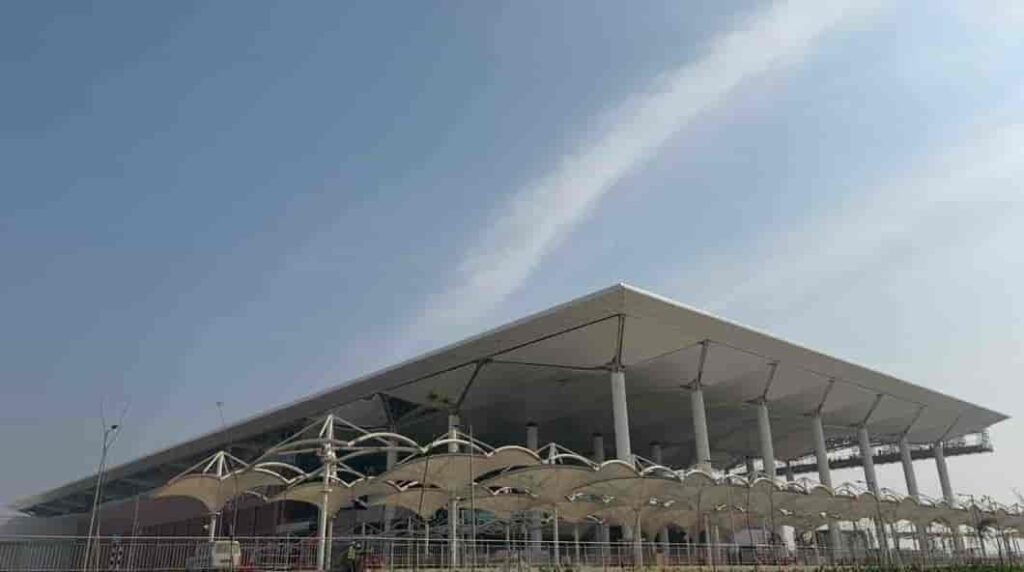
The inauguration of the Noida International Airport, widely known as Jewar Airport, marked a landmark moment in India’s aviation and infrastructure expansion. Positioned as one of the country’s largest and most ambitious greenfield airport projects, its launch has been seen as a strategic move to decongest existing aviation hubs and unlock new economic potential across northern India.Located in Jewar in Uttar Pradesh’s Gautam Buddha Nagar district, the airport has been developed to serve the rapidly growing travel demand of the National Capital Region (NCR), while also acting as a catalyst for industrial, logistical, and urban development in surrounding areas.Why India Needed a Second Major Airport in NCRFor years, the Indira Gandhi International Airport in Delhi has handled the bulk of air traffic in northern India. With passenger numbers steadily rising, the airport has been operating close to its maximum capacity, leading to congestion, delays, and operational strain.The idea of developing a second airport in the NCR was not just about expansion, but about redistributing aviation load and future-proofing infrastructure. The Noida International Airport was conceptualised to address these issues while supporting the long-term growth of one of India’s busiest urban corridors.Its location near the Yamuna Expressway provides strategic access not only to Delhi but also to key cities like Noida, Greater Noida, Ghaziabad, Agra, Mathura, and Aligarh. This makes it a regional hub rather than just an alternative airport.Scale, Design and Multi-Phase DevelopmentWhat sets the Noida International Airport apart is its scale and long-term vision. Unlike many existing airports that evolved through gradual expansion, this project has been planned from the outset as a multi-phase mega infrastructure development.In its first phase, the airport has been designed to handle around 12 million passengers annually, with a single runway and terminal. However, the long-term plan is far more ambitious. Once fully developed, the airport is expected to:Handle over 70 million passengers per yearOperate multiple runwaysInclude expansive cargo terminals and logistics parksSupport maintenance, repair, and overhaul (MRO) operationsThis phased approach ensures that the airport can scale alongside demand, making it a future-ready aviation hub.Focus on Sustainability and Modern InfrastructureOne of the defining aspects of the project is its emphasis on sustainability. The airport has been planned as an environmentally responsible infrastructure project, incorporating:Energy-efficient terminal designsWater conservation systemsReduced carbon footprint strategiesSustainable construction practicesGlobally, there has been increasing focus on green aviation infrastructure, and the Noida International Airport aligns with this shift by aiming to become one of the more eco-conscious airports in the region.Connectivity and Integration with Transport NetworksA major strength of the Jewar airport lies in its planned connectivity. The project is not being developed in isolation but as part of a larger, integrated transport ecosystem.The airport is expected to be connected through:The Yamuna Expressway and Eastern Peripheral ExpresswayProposed metro rail extensionsRegional Rapid Transit Systems (RRTS)High-speed rail links in the futureThis multi-modal integration will ensure seamless movement of passengers and goods, significantly reducing travel time and improving accessibility across the NCR and beyond.Economic Impact: A New Growth Engine for Uttar PradeshThe inauguration of the airport is expected to trigger a wave of economic activity in the region. Large infrastructure projects often act as growth multipliers, and Jewar is already witnessing rapid transformation.The airport is likely to:Generate thousands of direct and indirect employment opportunitiesBoost real estate demand in nearby areasAttract domestic and international investmentPromote development of logistics and warehousing hubsPlans for an aerotropolis—a city built around the airport—are also underway, which could include business districts, commercial centres, hotels, and industrial zones.This development is expected to strengthen Uttar Pradesh’s position as a major economic and industrial hub in northern India.Boost to Trade, Cargo and LogisticsBeyond passenger travel, the airport is expected to play a crucial role in cargo and logistics operations. With increasing demand for faster supply chains and export-oriented industries, the need for efficient cargo infrastructure has grown significantly.The Noida International Airport is being developed with dedicated cargo facilities, which will:Facilitate faster movement of goodsSupport export industries in the regionImprove connectivity for perishable and high-value goodsIts proximity to industrial clusters makes it particularly well-suited to serve as a logistics hub.Impact on Travel and Passenger ExperienceFor travellers, the airport is expected to bring noticeable improvements in convenience and efficiency. With reduced pressure on Delhi’s main airport, passengers can expect:Shorter wait timesBetter flight availabilityImproved travel experienceResidents of Noida, Greater Noida, and nearby regions will especially benefit, as they will no longer need to rely solely on Delhi for international travel.A Shift Towards Decentralised Urban DevelopmentThe development of the Jewar airport reflects a broader shift in India’s urban planning strategy—moving away from over-centralisation towards distributed growth models.By creating infrastructure hubs outside major metropolitan centres, the government aims to:Reduce pressure on existing citiesEncourage balanced regional developmentImprove quality of life in emerging urban zonesThe airport is expected to play a key role in shaping the future growth of the NCR, particularly in the Noida-Greater Noida belt.A Defining Moment in India’s Infrastructure StoryThe inauguration of the Noida International Airport is not just about adding another airport to the country’s aviation network. It represents a long-term vision for connectivity, economic expansion, and urban transformation.As air travel continues to grow in India, projects like Jewar airport will play a crucial role in ensuring that infrastructure keeps pace with demand. With its scale, strategic location, and integrated planning, the airport is poised to become one of the most important aviation hubs in the country in the coming years.In many ways, it signals how India is preparing for the next phase of growth—by investing in infrastructure that is not only large in scale but also forward-looking in design and impact.