


Somnath Amrit Parv 2026: Decades of Faith, Resilience, and Civilizational Renaissance
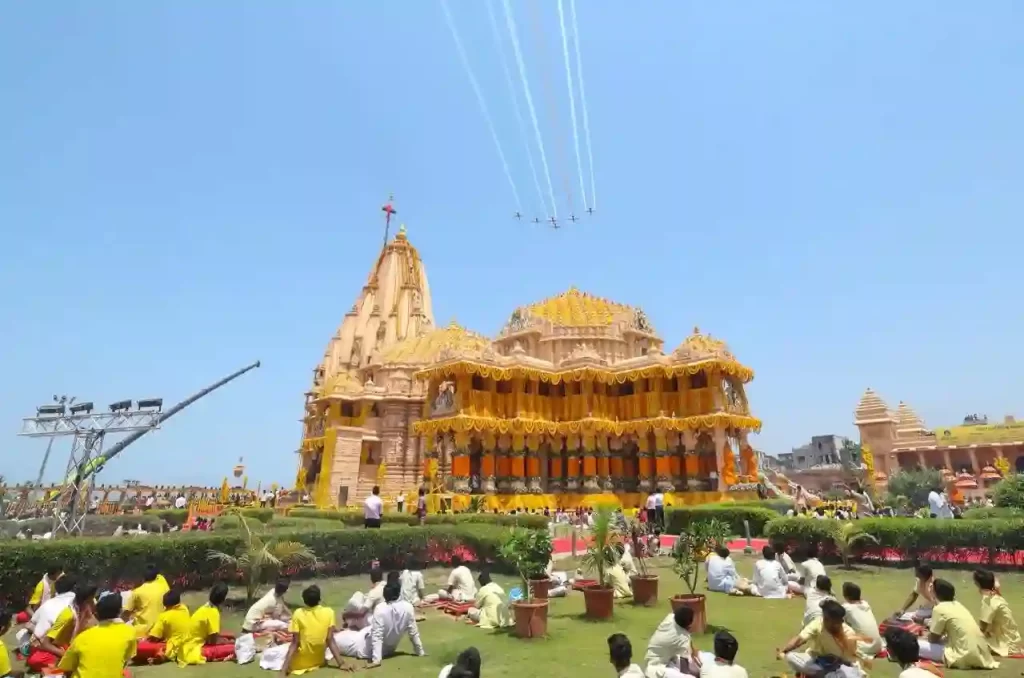
The sacred shores of Prabhas Patan near Veraval in Gujarat are resonating with an unprecedented surge of devotion as the ‘Somnath Amritparv-2026’ officially commenced, marking the 75th anniversary of the reconstruction of the Somnath Mahadev Temple, the foremost among the twelve Jyotirlingas and widely revered as the “Eternal Shrine” of Hinduism. The five-day celebration has transformed the temple precincts into a vibrant hub of Vedic chants, divine energy, and spiritual fervor, attracting devotees from across the nation who have journeyed to witness this historic milestone in India’s civilizational journey. As nearly 1.25 lakh oblations are being offered into the holy fire during the three-day Homatmak Maharudra Yagya, the sacred ritual seeks global peace and the well-being of humanity amidst current international conflicts, embodying the temple’s timeless message of universal harmony and resilience in the face of adversity.The festivities, which kicked off with the Pathatmak Atirudra ritual, will culminate on May 11th with a grand ‘Kumbhabhishek’ at the temple spire, a historic ceremony never before performed on the reconstructed shrine’s spire, using sacred water from 11 revered pilgrimage sites across India, creating a unique spiritual convergence that symbolizes the unity of India’s diverse sacred geography. Currently, the temple is adorned with magnificent decorations, and a steady stream of pilgrims from various states is arriving to seek the blessings of Lord Somnath during this momentous occasion, with Prime Minister Narendra Modi scheduled to attend the Somnath Amrit Parv 2026 celebrations to lead the festivities, highlighting the temple’s enduring legacy of resilience, faith, and national pride.The Eternal Shrine: Six Destructions and Six Rebirths Across MillenniumsThe Somnath Temple’s journey through history is nothing short of extraordinary, earning it the epithet “Eternal Shrine” due to its repeated destruction and reconstruction over centuries, reinforcing its symbolic resilience as a testament to India’s unbreakable spiritual spirit. References in the Shiva Purana and ancient inscriptions suggest worship at this site since antiquity, with multiple pre-medieval reconstructions establishing the temple’s sacred importance long before recorded history began. The temple’s location at Prabhas Patan, near Veraval in Gujarat’s Gir Somnath district, holds immense mythological significance as the place where Lord Shiva is believed to have returned after marrying Sati, and where the moon god Chandra is said to have performed penance to cure his waning affliction.The most cited historical rupture occurred in 1026 CE when Mahmud of Ghazni, the Turkic ruler of the Ghaznavid dynasty, attacked and plundered the Somnath temple during the reign of King Bhima I of the Solanki dynasty, breaking its jyotirlinga and carrying away immense wealth. This invasion marked the beginning of a tragic cycle of destruction and reconstruction that would repeat six times over the centuries. The temple was soon rebuilt around 1050 AD, with an inscription mentioning Siyaka II performing a Swarna Tula ceremony in 1045 AD, demonstrating the immediate devotion of Hindu rulers to restore the sacred shrine. King Kumarapala of the Solanki dynasty (r. 1143–1172) rebuilt the Somnath temple in “excellent stone and studded it with jewels,” according to an inscription in 1169, replacing a decaying wooden temple with a magnificent stone structure that became renowned for its architectural splendor.Post-Independence Revival: Sardar Patel’s Vision and the Temple’s RenaissanceThe modern reconstruction of Somnath Temple represents one of the most significant civilizational projects of independent India, initiated by Vallabhbhai Patel, the Iron Man of India and Deputy Prime Minister, who viewed reconstruction as a sacred civilizational duty to restore the nation’s spiritual dignity after centuries of foreign domination. On November 12, 1947, just months after India’s independence, Sardar Patel came to Junagadh and ordered the reconstruction of the Somnath temple, recognizing that restoring this sacred shrine would symbolize India’s reclaiming of its cultural and religious identity after centuries of Islamic invasions and temple destructions. Accordingly, the Somnath Trust was established to collect funds and oversee the construction of the temple, demonstrating the democratic and participatory nature of the reconstruction effort that drew contributions from ordinary Indians across the country.The new structure was built by the traditional Somapuri builders of temples in Gujarat, the same family of architects who had constructed the temple centuries earlier, ensuring that traditional architectural methods and techniques were employed rather than modern construction approaches. Architect Prabhashankar Sompura led the reconstruction effort, using traditional methods and incorporating the architectural brilliance of medieval Somnath while adapting to contemporary requirements. The temple’s shikhar (spire) was constructed using traditional techniques, with the main structure built in the Chalukya style of temple architecture that characterized medieval Gujarat temple building. On May 11, 1951, Dr. Rajendra Prasad, the first President of India, performed the installation ceremony for the temple, inaugurating the reconstructed shrine despite political differences between Prasad and Patel, demonstrating the temple’s ability to transcend political divisions and unite Indians in shared devotional purpose.Today, the temple is managed by the Somnath Trust, chaired by the Prime Minister of India, institutionalizing the central government’s ongoing commitment to the temple’s maintenance and development while ensuring that the Trust remains accountable to the highest office in the land. This unique arrangement reflects the temple’s national significance as a symbol of India’s civilizational resilience and the government’s role in protecting and promoting Hindu religious heritage. The 75 years since 1951 represent not merely the passage of time but a complete transformation of Somnath from a ruined shrine to one of India’s most visited and revered pilgrimage destinations, with millions of devotees visiting annually and the temple becoming a major economic driver for the Gir Somnath district.Somnath Amritparv-2026: Five Days of Vedic Splendor and Divine RitualsThe ‘Somnath Amritparv-2026’ officially commenced yesterday, transforming the temple precincts into a hub of Vedic chants and divine energy that has attracted devotees from across the nation who have journeyed to witness this historic milestone in the temple’s journey. The sacred shores of Somnath are resonating with devotion as the Somnath Amritparv kicks off with the Pathatmak Atirudra, a profound Vedic ritual that invokes the blessings of Lord Shiva through the chanting of sacred mantras and the performance of elaborate ceremonies that have been preserved for
A Millennium of Faith and Civilisational Pride at the Somnath Swabhiman Parv 2026

Somnath (Gujarat): The coastal town of Somnath is witnessing a grand national celebration as the Somnath Swabhiman Parv unfolds this year, honouring 1,000 years of unbroken faith and resilience tied to the iconic Somnath Temple.Observed from January 8–11, 2026, the event commemorates both a millennium since the first recorded attack on the temple and 75 years since its post-Independence reconstruction. It has drawn devotees, dignitaries and citizens from across India to reflect on India’s spiritual heritage and civilisational strength.Historic Significance Behind the CelebrationThe Somnath Swabhiman Parv marks a historic milestone in the temple’s long journey. In January 1026, the temple was attacked by Mahmud of Ghazni, initiating a series of invasions over centuries that repeatedly destroyed and tested this sacred shrine.Despite these challenges, the Somnath Temple was rebuilt numerous times, becoming a powerful symbol of Indian civilisation’s depth and resilience. This enduring spirit is central to the Parv’s celebrations, with organisers emphasising not the devastation of the past but the unbroken continuity of faith.The year 2026 is doubly significant because it also marks 75 years since the temple’s reconstruction was completed and opened to the public in 1951, following India’s independence. This intertwines the celebration with modern India’s journey of nation-building and cultural revival.Prime Minister Leads National ObservancePrime Minister Narendra Modi visited Somnath to participate in the Swabhiman Parv, highlighting the temple’s role as a symbol of civilisational courage and cultural pride.During his three-day visit, he took part in traditional rituals, offered prayers and addressed gatherings that reflected on the temple’s significance as a cornerstone of India’s spiritual identity. Modi also underscored that the Parv honours those who preserved the heritage and spirit of Somnath across the centuries.Spiritual and Cultural Activities Across the ParvThe four-day Parv featured a range of devotional and cultural events designed to engage visitors and deepen public appreciation of the temple’s legacy. A notable highlight was the 72-hour Akhand Omkar chanting, a continuous recitation symbolising unity and collective devotion. The temple town also hosted devotional music performances, cultural programmes, and spiritual discourses, creating an atmosphere of reflection and reverence.The celebrations have been so well-received that the Gujarat government extended the Parv until January 15, enabling more devotees to participate in the festivities and anniversary observances.A Symbol of Faith and National IdentityMore than a festival, the Somnath Swabhiman Parv is being viewed as a collective affirmation of India’s civilisational strength, spiritual continuity and cultural pride.As visitors from across the nation continue to join in the celebrations, the Parv reaffirms Somnath’s place not only as a revered pilgrimage site but also as a testament to the enduring faith and resilience that have defined the region across centuries.Video credit: YT@/NaMoVideo credit: YT@/NaMoVideo credit: YT@/NaMo