


SpaceX IPO: How Elon Musk’s Rocket Company Made Stock Market History
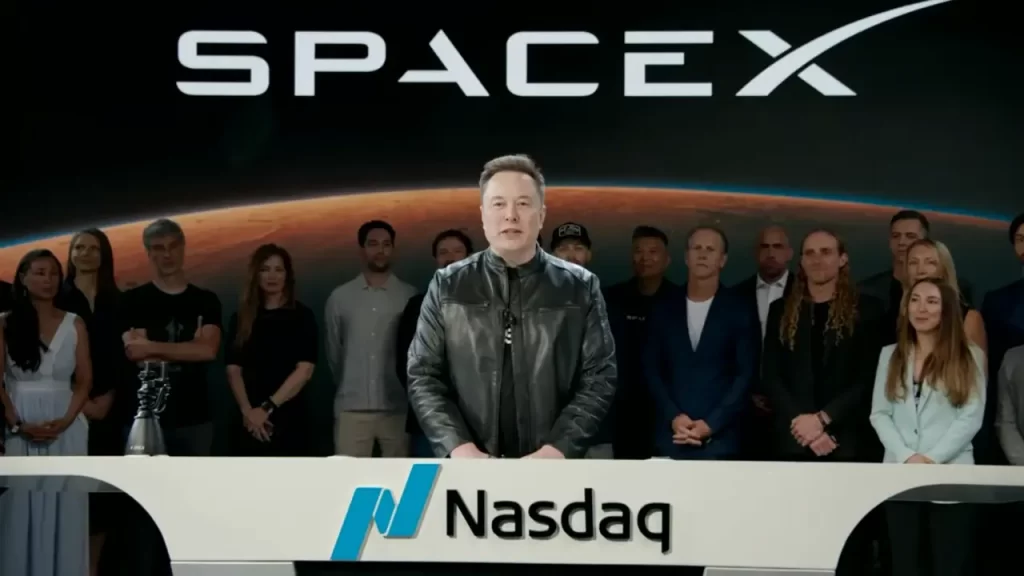
SpaceX spent nearly 24 years as one of the world’s most valuable private companies before entering the public markets. When it finally did, the company did not simply launch another initial public offering. It produced the largest IPO in history.On June 12, 2026, SpaceX began trading on the Nasdaq under the ticker SPCX, following a $75 billion share sale that valued the company at about $1.77 trillion. The stock opened at $150, above its IPO price of $135, and closed its first day at $160.95, pushing SpaceX’s market value beyond $2.1 trillion.The listing instantly placed SpaceX among the world’s largest companies and turned its founder, Elon Musk, into the first person ever to reach an estimated net worth of $1 trillion.But the IPO was about far more than Musk’s wealth.It marked a defining moment for the commercial space industry. A company that began in 2002 with the goal of reducing the cost of space transportation had grown into a business spanning rockets, satellite internet, spacecraft, government launches and, through its 2026 acquisition of xAI, artificial intelligence.The SpaceX IPO demonstrated how dramatically the global space economy has changed.A sector once dominated almost entirely by governments and established aerospace contractors is now home to a publicly traded company worth more than $2 trillion.The Biggest IPO in HistorySpaceX priced its initial public offering at $135 per share on June 11, 2026.The company sold approximately 555.56 million shares, raising $75 billion and giving SpaceX an implied valuation of around $1.77 trillion before trading began.The offering was the largest initial public offering ever completed, surpassing previous records for public-market fund-raising. The scale of the listing also meant that SpaceX entered the market as one of the most valuable listed companies in the United States from its first day of trading. Investor demand was enormous.Reports before the listing suggested that demand for the offering had reached around $250 billion, significantly exceeding the amount of stock being sold. Retail investors also placed orders worth more than $100 billion, reflecting the extraordinary level of public interest in the company. The numbers reflected a rare market moment.IPOs normally raise money for companies that are growing into public-market maturity. SpaceX entered the market already operating at an extraordinary scale.What Happened on Listing DaySpaceX began trading on the Nasdaq on June 12, 2026.The shares opened at $150, immediately trading above the $135 IPO price. The stock continued rising during the day, reaching an intraday high of $176.52 before closing at $160.95, up roughly 19% from the IPO price. The first-day rally pushed SpaceX’s market capitalisation above $2 trillion.That made the company one of the largest publicly traded businesses in the world, despite the fact that it had only just entered the stock market.The IPO also created a rare situation in which a company’s market debut immediately altered global wealth rankings.The rise in SpaceX’s publicly traded value pushed the estimated value of Elon Musk’s holdings above the $1 trillion mark.Why SpaceX Went PublicFor years, SpaceX had remained private despite its enormous valuation.Private ownership allowed the company to focus on ambitious, capital-intensive projects without the constant pressure of quarterly public-market expectations.That was particularly important for programmes such as:StarshipStarlinkReusable launch technologyHuman spaceflightMars explorationAdvanced satellite systemsBut the company’s scale had reached a point where access to public capital offered a new opportunity.The IPO raised $75 billion, giving SpaceX enormous financial resources for expansion and future projects.The public listing also created a market through which investors could buy and sell shares in a company that had previously been accessible mainly through private investment.The Unconventional IPOSpaceX’s offering differed from a conventional Wall Street IPO in several ways.The company set a fixed price of $135 per share rather than using the traditional process of marketing a price range and adjusting it based on investor feedback.The sale also attracted unusually high interest from retail investors.Retail buyers were allocated a significant share of the offering, while major institutional investors also competed for shares. The offering was underwritten by major Wall Street banks including Goldman Sachs and Morgan Stanley.SpaceX also held a historic bell-ringing event at both Nasdaq MarketSite in New York and the company’s Starbase facility in Texas, highlighting the unusual scale and symbolism of the moment. For Wall Street, the IPO was not just another large listing.It was the public-market arrival of one of the most closely watched private companies of the modern era.From a Rocket Startup to a $2 Trillion CompanySpaceX was founded by Elon Musk in 2002.Its early objective was to reduce the cost of access to space.The company entered an industry dominated by national space agencies and large aerospace contractors. Its early years were marked by financial pressure and repeated launch failures.The first three launches of the Falcon 1 rocket failed.The fourth succeeded in 2008, making it the first privately developed liquid-fuel rocket to reach orbit.That success helped establish SpaceX as a serious player in the aerospace industry.The company then developed the Falcon 9, the Dragon spacecraft and one of its most important innovations: reusable rocket technology.By recovering and reusing major parts of its launch systems, SpaceX challenged the traditional assumption that rockets had to be discarded after a single mission.That changed the economics of space launches.The Falcon ProgrammeThe Falcon rocket programme became the foundation of SpaceX’s launch business.Falcon 9 became one of the most frequently used orbital launch vehicles in the world, carrying satellites, commercial payloads, government missions and astronauts.SpaceX’s ability to recover and reuse Falcon boosters helped reduce launch costs and increase launch frequency.The company later developed Falcon Heavy for heavier payloads.But SpaceX’s ambitions continued to move beyond traditional rocket launches.Dragon and Human SpaceflightThe Dragon spacecraft established SpaceX as an important partner in human spaceflight.The company became the first private operator to regularly transport astronauts to and from the International Space Station.This was a significant shift in the relationship between governments and private aerospace companies.Human spaceflight had once been almost entirely the domain of national governments.SpaceX demonstrated that private companies could become major participants in the sector.NASA became one of the company’s most important customers, while SpaceX also