


FIFA World Cup Final: Spain, Argentina, and the Night That Defined a Tournament
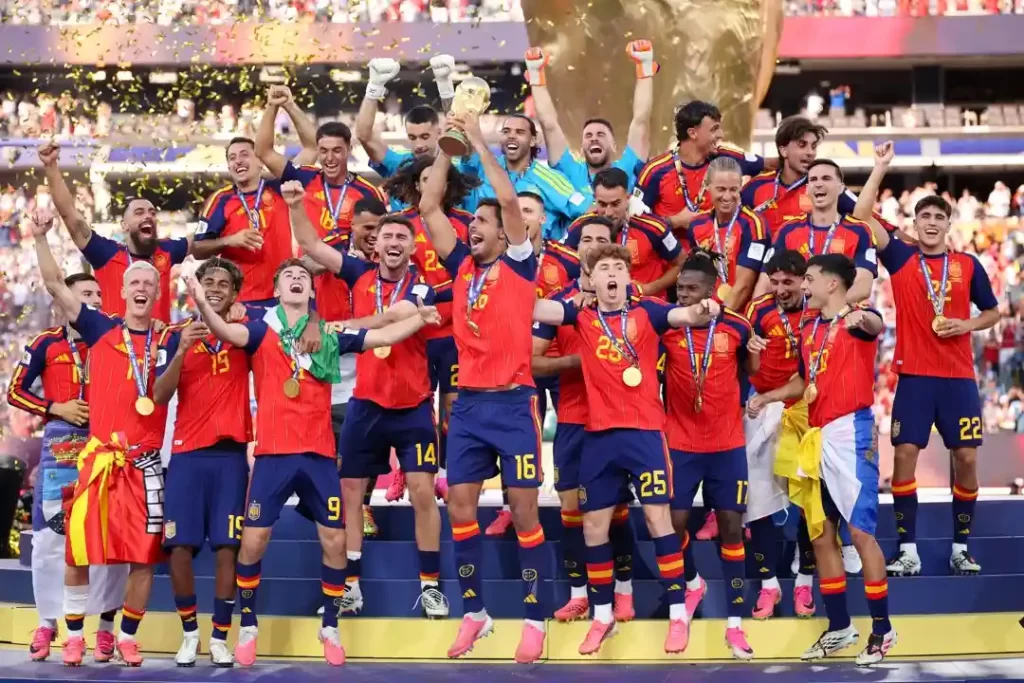
The FIFA World Cup 2026 final between Spain and Argentina delivered everything a title match should offer: elite tactical tension, high emotion, a late decisive goal, and a closing chapter that will be discussed for years. Spain won 1-0 after extra time at New York New Jersey Stadium, capping a tournament that began with 48 teams across 16 host cities and ended in a final that felt both historic and deeply human.What made the match so compelling was not only the quality on the pitch, but the contrast between the two finalists. Spain arrived as the kings of Europe, built on control, structure, and composure, while Argentina, led by Lionel Messi, came into the final riding a surge of drama and belief after a bruising knockout run.A final worthy of the stageThe match itself unfolded like a classic World Cup final: tense, carefully balanced, and decided by fine margins rather than chaos for most of its duration. Spain’s 1-0 extra-time win came through Ferran Torres, and the result was enough to deny Argentina a second consecutive world title.Spain’s performance reflected a team that knew how to manage pressure in a final. Argentina, meanwhile, were pushed into a reactive role after the momentum shifted late in the contest, especially once Enzo Fernandez was sent off in the second half, leaving Lionel Scaloni’s side to finish with 10 players. The emotional weight of defeatFor Argentina, the loss was especially painful because the team had entered the final with a sense of destiny. Messi’s presence made the occasion even heavier, since every late run, missed chance, and defensive scramble seemed to carry the emotional burden of an entire era.Enzo Fernandez spoke publicly after the defeat and described how the group’s effort mattered more than the result itself, a reminder that World Cup finals are often measured not only by the scoreline but by the meaning attached to them. In Argentina’s case, the disappointment was real, but so was the pride in having gone so far. The post-match breakdownThe closing whistle did not end the drama. Reports say that tensions exploded into a post-match melee involving players and staff from both sides, with Leandro Paredes, Nahuel Molina, Thiago Almada, Roberto Ayala, Rodri, Gavi, and Eric Garcia among those drawn into the altercation.FIFA has since opened disciplinary proceedings and appointed a disciplinary and ethics prosecutor to investigate the incident under its code. The governing body is treating the matter seriously, and sanctions could range from fines to suspensions depending on what the prosecutor concludes about the conduct and who is found responsible.Why FIFA is involvedThe key issue for FIFA is not just violence, but whether the behavior violated the principles of decent conduct and brought the sport into disrepute. That is a broader standard than a simple on-field red card, which means the disciplinary process can examine the entire context of the post-match incident, including the actions of staff and the atmosphere around the celebration.Argentina’s situation is complicated further by the fact that FIFA was already reviewing conduct linked to the semifinal celebration involving a banner reading “Las Malvinas son Argentinas.” That means the federation is not dealing with a single isolated issue, but with a pattern that FIFA may view as politically or disciplinarily problematic.Argentina’s wider disciplinary riskThe likely outcome is that individual bans, if any, will be targeted rather than sweeping, but FIFA has shown in past cases that it can impose meaningful penalties when it believes conduct crosses the line. The investigation process can take time, and the governing body has not set a public deadline for its decision.There is also precedent for FIFA and other governing bodies using disciplinary tools for conduct that goes beyond the normal boundaries of competition. That is why this case matters: it is not simply about one ugly moment after a final, but about how football’s institutions respond when emotion spills into behavior that the sport considers unacceptable.The tournament’s larger storyEven with the controversy at the end, the 2026 World Cup will be remembered as a landmark event. It was the first tournament to feature 48 teams, spread across three host countries and 16 host cities, and it produced a mix of new contenders, familiar giants, dramatic upsets, and memorable individual performances.The visual memory of the tournament will be rich as well: fans packed into stadiums, giant public screenings, legends like Messi and Mbappé on the global stage, and emerging stories that gave the competition depth beyond the final itself. That broader texture is part of what makes the World Cup such a singular event in world sport.What Spain’s win meansFor Spain, the victory confirms a return to the top of world football and a style of play that once again proved effective under the highest pressure. Their success was built on midfield control, defensive stability, and the ability to stay composed when the stakes were at their peak.A World Cup final is rarely only about who scores the goal. It is about who can absorb tension, make the fewest mistakes, and hold the shape of the game when everyone else in the stadium is being pulled by emotion. Spain did that better on the night, and that is why they left with the trophy.Closing perspectiveThe 2026 final had all the ingredients of a defining football moment: a heavyweight matchup, a dramatic outcome, emotional aftermath, and a disciplinary storyline that will continue after the celebrations fade. Spain earned the title on the field, but the scenes afterward ensured that the match will be remembered for more than the scoreline.In that sense, the final captured what the World Cup often does best and worst at once: it delivers beauty, pressure, and national pride, but it can also expose how thin the line is between competitive passion and conduct that football’s authorities cannot ignore.
Spanish President Pedro Sánchez’s Official Visit to India: Strengthening Strategic Partnership
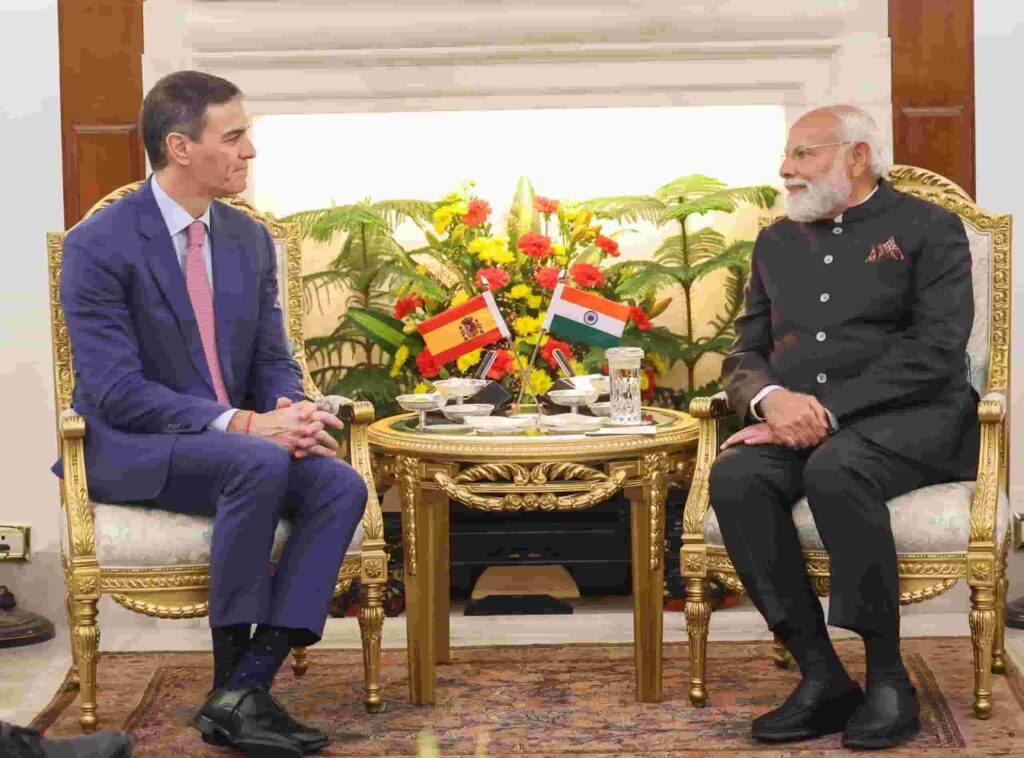
Spanish President Pedro Sánchez — President of the Government of Spain — paid an official visit to India from October 27 to 29, 2024, in a significant diplomatic engagement aimed at reinforcing bilateral ties across strategic, economic, technological and cultural domains. The visit, marked by high-level interactions with senior Indian leadership including Prime Minister Narendra Modi, underscored the evolving partnership between the two democracies in the contexts of trade, innovation, climate cooperation and global governance.This visit was the first by a Spanish head of government to India in nearly a decade, reflecting a renewed momentum in bilateral engagement driven by converging geopolitical priorities, deepening economic interdependence and shared commitments to multilateral cooperation.Arrival and Official EngagementsPresident Sánchez arrived in India on October 27, 2024, ahead of his participation in the AI Impact Summit hosted in New Delhi — an event that convened global leaders, industry experts and policymakers to discuss the future of artificial intelligence (AI), regulation frameworks and its socio-economic potential. Spanish participation in the summit signalled Spain’s interest in India’s emerging digital and technological leadership.On arrival, President Sánchez was received by senior Indian officials and engaged immediately in discussions that set the tone for substantive bilateral dialogues over the next three days.High-Level Meetings with Indian LeadershipA central component of the visit was the official meeting between President Sánchez and Prime Minister Narendra Modi at [official venue – e.g., Hyderabad House / Raisina Hill precinct]. The leaders held wide-ranging talks on issues of bilateral and global importance, reaffirming a shared vision for cooperation based on democratic values, economic partnership and sustainable development.Both leaders emphasised strengthening strategic dialogue mechanisms and enhancing cooperation in key sectors such as defence, manufacturing, green technologies, digital economy and renewable energy. They underscored the importance of elevating the India–Spain relationship into a comprehensive strategic partnership, reflecting growing political trust and mutual respect.Economic and Trade PrioritiesEconomic cooperation formed a major pillar of the visit. With bilateral trade between India and Spain having expanded over the years, both sides reiterated their intent to deepen economic engagement. Discussions focused on:Expanding trade in goods and servicesEnhanced cooperation in advanced manufacturing and innovation ecosystemsInvestment facilitation and market access for strategic sectorsTechnology partnerships in areas such as AI, mobility, health tech and clean energy solutionsPresident Sánchez and Indian counterparts acknowledged that both economies benefit from complementary industrial strengths — Spain’s advanced manufacturing and engineering capabilities and India’s growing services and technology base. They expressed optimism that targeted collaborations could accelerate investment flows and create employment opportunities in both countries.AI Impact Summit ParticipationPresident Sánchez’s participation at the AI Impact Summit underscored both nations’ interest in shaping global discourse on artificial intelligence. In his address, the Spanish leader emphasised the need for ethical, human-centric AI frameworks, equitable access to technological benefits, robust data protection standards and collaboration across nations in AI governance. The summit provided a platform for exchange of ideas on how emerging technologies can be responsibly deployed for societal benefit.Spanish delegations also engaged with Indian industry leaders, startups, research institutions and academic observers during the summit, fostering cross-border collaborations in cutting-edge research and innovation ecosystems.Defence, Security and Strategic CooperationDefence cooperation featured prominently in the discussions. Spain and India reviewed existing defence ties and explored expanded collaboration in key areas such as aerospace, naval systems, dual-use technologies and defence manufacturing partnerships. Both sides expressed interest in boosting joint research initiatives and expanding defence trade under frameworks that promote technology sharing and co-development.Security cooperation, particularly in areas such as counter-terrorism, cybersecurity and maritime security, was also prioritised. The leaders reiterated the importance of multilateral cooperation in addressing global security challenges, including in forums such as the United Nations and other international platforms.Climate Change, Renewable Energy and SustainabilityClimate action and sustainable development emerged as another key theme. India and Spain committed to enhancing cooperation on climate resilience, renewable energy deployment and green hydrogen ecosystems. Spain’s experience in wind and solar technologies aligns with India’s ambitious green energy transition targets, including the expansion of renewable capacity and sustainable urbanisation initiatives.Both sides also reaffirmed their support for multilateral climate goals under the Paris Agreement and emphasised collaborative approaches to climate finance, clean technology transfer and sustainable infrastructure development.Cultural and People-to-People ExchangesDuring his visit, President Sánchez highlighted the cultural bonds between India and Spain, noting that people-to-people ties — including tourism, academic exchange, arts and cultural collaborations — form a vital dimension of the bilateral relationship. Spain’s historical heritage and contemporary cultural vibrancy continue to find resonance with Indian audiences, even as Indian art, literature and cinema increasingly gain prominence in Spanish cultural spaces.Joint Communiqué and Future CooperationAt the conclusion of the visit, both countries released a joint communiqué outlining agreed priorities and a roadmap for future cooperation. Key commitments included:Regular high-level political consultationsEnhanced trade and investment facilitation measuresCooperative initiatives in technology, defence, climate and sustainable developmentStrengthened academic, cultural and scientific exchangesSignificance and ImpactPresident Pedro Sánchez’s visit to India in late 2024 marked a multipartite reaffirmation of the India–Spain relationship at a time of global geopolitical realignment. The emphasis on technology cooperation — particularly through Spain’s active role at the AI Impact Summit — hinted at a widening scope of cooperation beyond traditional diplomatic and defence dimensions.For India, deepening ties with Spain — a European Union member with strong global integration — adds momentum to its broader engagement strategy with Europe, aligning with India’s goals of diversifying partnerships in trade, innovation, and sustainable development.For Spain, stronger engagement with India opens pathways for Spanish companies in India’s fast-growing markets and reinforces Madrid’s diplomatic reach in Asia. Both nations signalled that their cooperation would be pragmatic, forward-looking and anchored in mutual interests.The visit has, therefore, been widely seen as a milestone moment in India–Spain ties — steering the relationship from transactional engagement toward a broader strategic partnership that spans economics, technology, culture and global governance cooperation.