


ImagiNxt 2026: India’s Festival of Technology and Innovation Driving the Next Wave of Growth
IntroductionAs artificial intelligence, quantum computing, robotics and digital infrastructure reshape economies across the world, countries are increasingly investing in platforms that bring together innovators, policymakers, investors and industry leaders to accelerate technological progress. India, which has emerged as one of the world’s fastest-growing startup ecosystems, is also creating such collaborative platforms to strengthen its position as a global technology leader.One such initiative is ImagiNxt 2026, India’s first large-scale Festival of Technology and Innovation. Held on 22–23 May 2026 at the Jio World Convention Centre in Mumbai, the inaugural edition brought together technology companies, startups, investors, government leaders, researchers, educators and entrepreneurs to discuss the technologies that are expected to shape India’s economy over the coming decade.Rather than functioning as a conventional technology conference, ImagiNxt was designed as a platform for collaboration, innovation and policy dialogue. It reflected India’s growing ambition to move beyond being a global IT services hub and establish itself as a centre for research, product innovation and deep technology development.What is ImagiNxt?ImagiNxt is a national technology festival focused on emerging technologies, innovation and entrepreneurship. The platform aims to connect every stakeholder involved in the innovation ecosystem—including startups, venture capital firms, corporations, government agencies, universities, research institutions and technology professionals.The organisers describe the event as a platform where “the world meets India,” highlighting its objective of promoting India’s innovation ecosystem while encouraging international partnerships, investments and knowledge exchange. The inaugural edition attracted more than 10,000 attendees, over 150 speakers, 250 startups, 100 investors and representatives from leading global technology companies and academic institutions. The event demonstrated how India’s technology ecosystem is evolving from isolated innovation clusters into an integrated network where government policy, private investment, academic research and entrepreneurship work together.Why ImagiNxt MattersIndia has become the world’s third-largest startup ecosystem and is witnessing rapid growth in sectors such as artificial intelligence, fintech, healthtech, space technology, biotechnology and semiconductor design. However, scaling innovation requires more than talented entrepreneurs. It also depends on access to investment, policy support, research collaboration and international markets.ImagiNxt addresses this requirement by creating a common platform where innovators can directly interact with policymakers, investors and industry leaders.The event also reflects a broader shift in India’s economic strategy. For decades, India’s global reputation was built primarily on software services and information technology outsourcing. Today, the country’s focus is gradually expanding towards developing original products, intellectual property, advanced manufacturing and frontier technologies.By encouraging collaboration between different sectors, ImagiNxt seeks to accelerate this transition from a service-based economy to an innovation-driven economy.Major Themes of ImagiNxt 2026Artificial Intelligence emerged as the central theme of the inaugural edition.Discussions focused on the responsible development of AI, generative artificial intelligence, enterprise automation, healthcare applications, digital governance, education, manufacturing and financial services. Experts explored how AI is transforming industries while also examining issues related to ethics, regulation and workforce transformation.Alongside AI, several other emerging technologies received significant attention, including:Quantum computingRobotics and automationDeepTech innovationsSpace technologyCybersecurityCloud computingDigital Public InfrastructureSemiconductor technologiesClimate technology and sustainabilityExtended Reality (XR), Virtual Reality (VR) and Augmented Reality (AR)Creator economy and digital mediaThe event showcased how these technologies are increasingly converging to transform industries ranging from healthcare and agriculture to manufacturing, defence and financial services. Government Participation and Policy DiscussionsOne of the distinguishing features of ImagiNxt 2026 was the active participation of government leaders alongside industry representatives.The event featured keynote addresses from Union Minister Dr. Jitendra Singh, who oversees the Department of Science and Technology, and Maharashtra Chief Minister Devendra Fadnavis, among other policymakers.Discussions focused on India’s long-term technology strategy, including the IndiaAI Mission, the National Quantum Mission, digital public infrastructure, startup funding, research commercialisation and innovation-led economic growth.Government representatives emphasised that future economic competitiveness will increasingly depend on technological capability, advanced research and domestic innovation rather than traditional manufacturing alone. Maharashtra’s AI VisionA major announcement during the event came from the Government of Maharashtra, which outlined an ambitious roadmap to position the state as one of India’s leading artificial intelligence hubs.The state government announced plans to generate over 1.5 lakh AI-related jobs and attract approximately ₹10,000 crore in investments by 2031. It also proposed investments in AI infrastructure, innovation centres, startup ecosystems and high-performance computing facilities.The announcement reflects the increasing competition among Indian states to attract technology investments and become centres for AI research, semiconductor manufacturing and advanced digital industries. Platform for Startups and EntrepreneursStartups formed one of the biggest attractions at ImagiNxt 2026.Hundreds of emerging companies showcased innovations across healthcare, financial technology, agritech, education, mobility, defence technology and industrial automation.For many early-stage companies, the event provided opportunities to present their products before venture capital firms, angel investors, multinational corporations and government agencies.Networking sessions, startup exhibitions, investor meetings and business matchmaking programmes enabled entrepreneurs to explore funding opportunities, strategic partnerships and commercial collaborations.This ecosystem-driven approach distinguishes ImagiNxt from traditional exhibitions by focusing on business creation rather than product display alone.Focus on DeepTech and ResearchUnlike many startup conferences that concentrate mainly on software applications, ImagiNxt placed considerable emphasis on DeepTech.Research institutions, universities and technology companies presented developments in artificial intelligence, advanced robotics, quantum technologies, aerospace, biotechnology and next-generation computing.The participation of researchers alongside entrepreneurs highlighted the importance of translating laboratory research into commercially viable products.This aligns with India’s broader efforts to strengthen innovation through initiatives such as the National Quantum Mission, IndiaAI Mission and increased investment in scientific research and technology development.International CollaborationImagiNxt was conceived as an international platform rather than a purely domestic technology event.The festival welcomed global technology companies, foreign investors, international speakers and overseas innovation ecosystems, creating opportunities for cross-border collaboration.Such partnerships are becoming increasingly important as emerging technologies require global cooperation in research, investment, talent development and supply chains.International participation also helps Indian startups access foreign markets while attracting global investment into India’s growing innovation ecosystem. Skilling and Future WorkforceBeyond technology itself, ImagiNxt also addressed the growing importance of digital skills.Panel discussions explored how artificial intelligence is transforming employment, the future of work, higher education and workforce development. Experts discussed the need for continuous reskilling as automation changes the nature of jobs across multiple industries.Workshops, masterclasses and interactive sessions allowed students, developers
India AI Impact Summit 2026: Detailed Agenda for Global AI Action in New Delhi
New Delhi, February 9, 2026 – India gears up for the India AI Impact Summit 2026, set for February 16-20 at Bharat Mandapam, Pragati Maidan, New Delhi, the primary venue for the India AI Impact Summit 2026, which will host the main events on February 19-20.Hosted by the Ministry of Electronics and Information Technology (MeitY), this first Global South edition, billed by Union Minister Ashwini Vaishnaw as the “largest yet,” transitions AI discourse from vision to verifiable impact under the “Three Sutras”: People, Planet, and Progress.Some sources mention a broader program across February 16-20, potentially using additional Delhi venues like Sushma Swaraj Bhawan for side events, sessions, or exhibitions. Bharat Mandapam, one of India’s largest convention centers, was upgraded by NDMC for this flagship gathering. Chief Guests and Stellar LineupPrime Minister Narendra Modi serves as the Chief Guest, inaugurating on February 16 with a keynote and hosting a leaders’ dinner. Expected heads of government include representatives from Singapore, the UAE, and Brazil (15-20 total), plus 50+ ministers. Key speakers feature Google’s Sundar Pichai, Anthropic’s Dario Amodei, Microsoft’s Satya Nadella, and Indian luminaries like Nandan Nilekani (Infosys co-founder) and Ola’s Bhavish Aggarwal. Over 40 CEOs from Reliance, TCS, and global firms join, along with a Chinese delegation, signaling a thaw in collaboration. Event Schedule and Dialogues Feb 16: Inauguration, Modi address, CEO roundtable.Feb 17-18: Plenary sessions and seven “Chakras” (working groups) on core topics.Feb 19: Startup showcase (500+ ventures), AI model launches, bilateral dialogues.Feb 20: Closing with actionable declarations.Expect 500+ parallel sessions, hackathons, and exhibitions. Dialogues include G20-style tracks on AI ethics, public-private partnerships, and Global South priorities. Participating Governments in India AI Impact Summit 2026 The summit, hosted by India’s Ministry of Electronics and Information Technology (MeitY) under the IndiaAI Mission, expects involvement from over 100 countries. Key highlights:High-Level Representation: 15-20 heads of government and 50+ ministers confirmed, including from Singapore, UAE, Brazil, and others.China: Delegation attending after India’s formal invitation, signaling AI collaboration.Preceding Hosts: Builds on summits by UK (2023 Bletchley), South Korea (2024 Seoul), France (2025 Paris).Collaborators: NITI Aayog (India’s policy think tank), state governments like Uttarakhand (pre-summit host), and international bodies (ITU, World Economic Forum).Global Engagement: Multinational working groups across Chakras, with US, UK, EU, and ASEAN nations active in prep consultations. Key Topics and Seven ChakrasThe India AI Impact Summit 2026 is structured around three foundational “Sutras” (People, Planet, Progress) that guide its discussions, with seven interconnected “Chakras” (working groups) translating these into specific, actionable themes.Core SutrasPeople: Focuses on human-centric AI, including safeguarding rights, enhancing access to services (e.g., healthcare, education), building user trust, workforce reskilling amid job impacts, and ensuring equitable benefits across societies.Planet: Addresses sustainable AI deployment, such as energy-efficient models, responsible resource use (e.g., reducing GPU/data center power demands), and AI applications for climate action, environmental monitoring, and resilience.Progress: Emphasizes inclusive innovation, capacity-building, productivity gains in sectors like agriculture and manufacturing, economic growth, and bridging the AI divide for the Global South. Seven Chakras (Key Discussion Topics)These working groups, involving 100+ countries, cover:AI governance and ethical frameworks.Trust and safety protocols for AI models (e.g., bias mitigation, transparency).AI’s impact on work and future jobs.Sector-specific applications (healthcare, agriculture, industry).Innovation and scalable solutions.Sustainability and environmental integration.Equitable access, inclusion, and development outcomes.Sessions will also spotlight IndiaAI Mission launches, startup innovations, and global standards, prioritizing “on-ground” results over regulations. What to Expect in India AI Summit?MeitY leads with partners like NITI Aayog, NASSCOM, World Economic Forum, and ITU. Corporate backers include Google, Microsoft, NVIDIA (GPU focus), and Indian firms like Tata and Adani (data centers). Governments from US, UK, EU, and ASEAN collaborate. Attendees (10,000+), policymakers, researchers, startups, NGOs, can expect networking zones, live demos (e.g., edge AI), policy labs, and a “Global AI Talent Fair.” Launches include indigenous foundational models under the Rs 10,370 crore IndiaAI Mission. India’s Strategic Push Amid HurdlesEchoing Bletchley (2023), Seoul (2024), and Paris (2025), India’s summit prioritizes “on-ground” wins for 1.4 billion people, as per Secretary S. Krishnan. AI could add $500B to GDP (NASSCOM), but challenges like GPU imports persist—eased by US trade deals and data center tax holidays to 2047. Budget 2026-27 tweaks fund nuclear-powered AI infra, as Vaishnaw eyes energy self-reliance.Vaishnaw hailed “phenomenal” global buy-in, with NDMC upgrading venues. Beyond talks, expect MoUs on compute sharing, talent visas, and sustainable AI pacts, positioning India as an AI diplomacy hub.This summit promises not just dialogue, but deliverables: inclusive, green AI for humanity’s progress.Video credit: YT@/Digital India
India’s DHRUV64: The First 1 GHz, 64-Bit Dual-Core Microprocessor
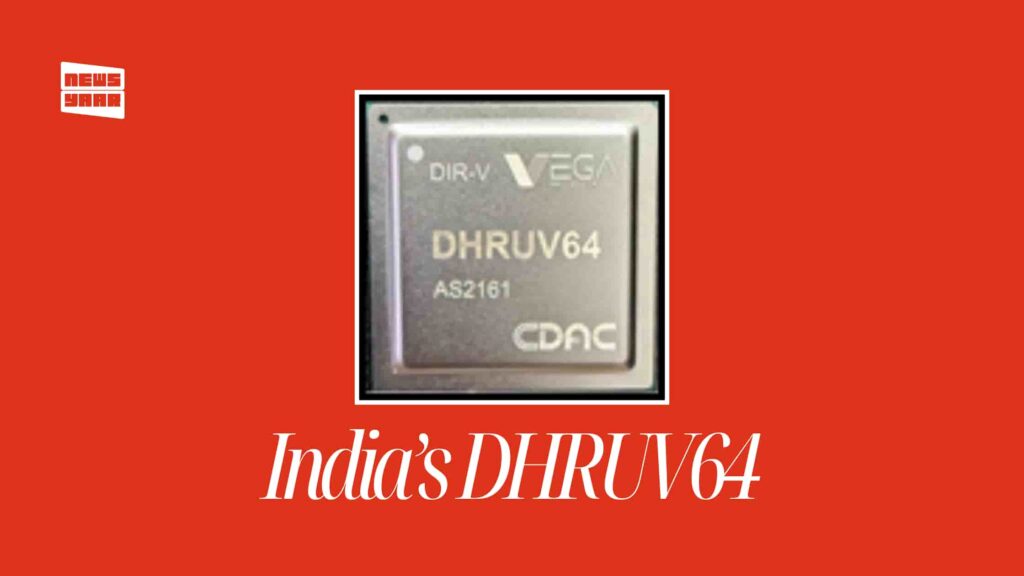
In a landmark moment for India’s semiconductor ambitions, the Centre for Development of Advanced Computing (C-DAC) has unveiled DHRUV64, the country’s first 1 GHz, 64-bit dual-core microprocessor.Developed under the government’s Microprocessor Development Programme and showcased as part of the Digital India RISC-V (DIR-V) initiative, DHRUV64 represents a major stride toward self-reliance in advanced chip design and computing technology. A Milestone in Indigenous Chip DesignDHRUV64 is built on an open-source RISC-V architecture, an increasingly popular set of instructions that allows chip designers to innovate without costly licensing fees from foreign companies.Operating at a clock speed of 1.0 GHz with dual processing cores and 64-bit capability, it brings India into the realm of gigahertz-class embedded processors, a class previously dominated by global players.Unlike earlier academic or specialised chips, DHRUV64 is designed for broader strategic and commercial applications, including industrial automation, automotive electronics, 5G infrastructure, consumer devices, and Internet of Things (IoT) systems. It supports modern operating systems, integrates with diverse hardware systems, and provides multitasking efficiency suited for a range of real-world deployments. How Does It Matter?India currently consumes roughly 20 percent of the world’s microprocessors, yet historically has relied heavily on imports for core computing technology.Developing a homegrown processor like DHRUV64 is significant not only for technological sovereignty but also for enhancing security, reducing supply-chain vulnerabilities, and building local expertise in semiconductor design.By creating a platform that domestic startups, researchers, and established companies can build upon, DHRUV64 is expected to boost innovation across the electronics ecosystem and support cheaper prototyping and product development.It also provides a foundation for a growing pipeline of skilled chip design professionals, further energising India’s tech sector.A Step Toward Aatmanirbhar Bharat in TechnologyDHRUV64 marks a continuation of India’s journey toward an Aatmanirbhar (self-reliant) semiconductor ecosystem. The chip follows earlier indigenous designs such as SHAKTI, AJIT, VIKRAM, and THEJAS64, and sits alongside future variants like Dhanush and Dhanush+ in the development pipeline.While India still relies on global fabrication technologies for manufacturing, the design and strategic deployment of processors like DHRUV64 signal a slow but steady shift toward autonomous capabilities in core computing technologies, a critical competitiveness marker in the global tech landscape.