


Borivali–Thane Tunnel Project: Mumbai’s Underground Connectivity Revolution
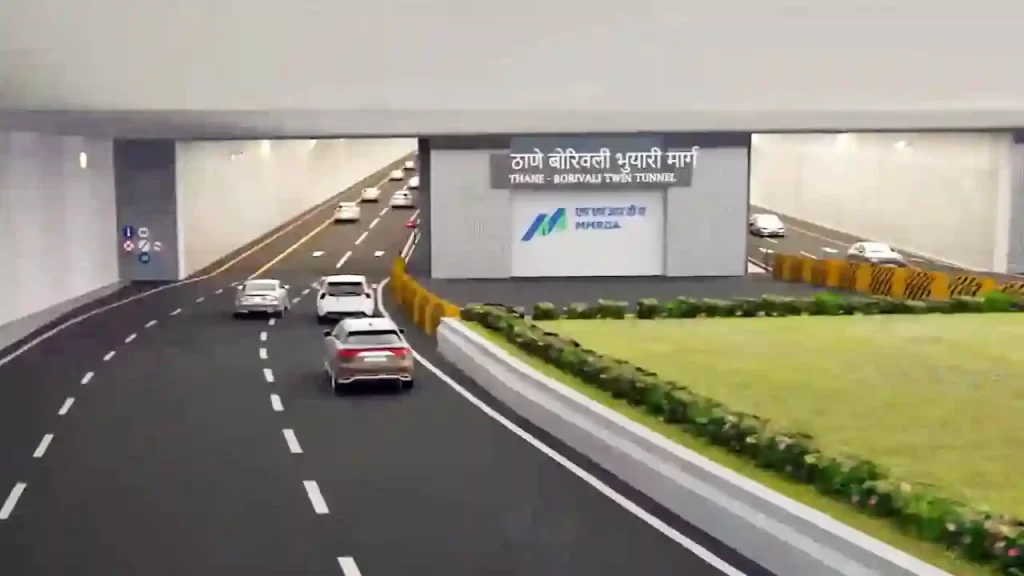
IntroductionThe Borivali–Thane Tunnel Project has emerged as one of the most ambitious urban infrastructure initiatives in India, promising to redefine mobility across the Mumbai Metropolitan Region (MMR). Designed to establish a direct underground road link between Borivali in Mumbai’s western suburbs and Thane city, the project aims to address one of the region’s most persistent transportation challenges—long travel times caused by severe traffic congestion.For decades, commuters travelling between Mumbai’s western suburbs and Thane have depended largely on Ghodbunder Road, a corridor that has become synonymous with bottlenecks, delays, and increasing traffic pressure. As residential development expanded rapidly in both Thane and the western suburbs, existing road infrastructure struggled to keep pace with growing demand.The Borivali–Thane Tunnel Project was conceived as a transformative solution to this problem. By creating a direct underground route beneath the Sanjay Gandhi National Park, the project seeks to reduce travel time dramatically while enhancing regional connectivity and supporting future urban growth.Infrastructure experts have described the tunnel as a game-changing project that could reshape commuting patterns across the Mumbai Metropolitan Region in much the same way that metro rail networks and expressways have transformed mobility in other major cities.Why the Project Became NecessaryMumbai and Thane together form one of India’s largest urban agglomerations. Every day, lakhs of people travel between the two cities for employment, education, business, healthcare, and other purposes.However, despite their geographical proximity, road connectivity between Borivali and Thane has historically been inadequate.The primary route connecting the two locations passes through Ghodbunder Road, a stretch that experiences some of the highest traffic volumes in the region. During peak hours, commuters often spend more than an hour travelling between the two destinations, with travel times occasionally extending beyond ninety minutes due to congestion.The situation has worsened over the years because of rapid urbanisation. Areas such as Thane, Mira-Bhayandar, Borivali, Kandivali, and Dahisar have witnessed substantial residential and commercial growth, leading to a significant increase in vehicular traffic.Urban planners recognised that simply widening existing roads would not be sufficient to address future transportation needs. A new high-capacity corridor was required—one that could bypass congested surface roads while preserving environmentally sensitive areas.This led to the concept of an underground tunnel connecting Borivali and Thane.Project Design and Technical SpecificationsThe tunnel system will be equippeThe project is being implemented by the Mumbai Metropolitan Region Development Authority (MMRDA) and represents one of the most technically complex road infrastructure projects currently underway in India.The tunnel will consist of twin underground tubes carrying traffic in opposite directions. Each tunnel has been designed to accommodate multiple lanes, allowing a large volume of vehicles to move efficiently between Mumbai and Thane.The alignment has been planned carefully to minimise disruption to existing urban areas while ensuring the shortest possible route between the two destinations.One of the most notable features of the project is that it passes beneath the Sanjay Gandhi National Park, enabling a direct connection without disturbing large portions of the protected forest at the surface level.The tunnel system will be equipped with state-of-the-art infrastructure, including: Modern ventilation systemsIntelligent traffic management systemsHigh-definition surveillance camerasEmergency communication networksFire detection and suppression mechanismsDedicated evacuation passagesAdvanced lighting systemsReal-time monitoring and control centresThese features are intended to ensure both operational efficiency and passenger safety. The Engineering Challenge Beneath a National ParkConstructing a tunnel beneath a protected national park presents extraordinary engineering challenges.The Sanjay Gandhi National Park is one of the few national parks located within a major metropolitan area and serves as an important ecological zone. It is home to diverse flora and fauna, including leopards and numerous bird species.Engineers must therefore ensure that tunnelling activities do not adversely affect wildlife habitats or destabilise the geological structure of the region.Extensive geotechnical surveys were conducted before finalising the alignment. These studies examined rock formations, soil characteristics, groundwater movement, and seismic conditions.The project is expected to rely on advanced Tunnel Boring Machines (TBMs), which allow underground excavation with minimal surface disturbance. These machines can cut through rock and soil while simultaneously installing tunnel lining segments, making construction safer and more efficient.Experts have noted that the project represents one of the most sophisticated applications of underground transportation engineering in India.Travel Time Reduction: The Biggest BenefitPerhaps the most significant advantage of the Borivali–Thane Tunnel Project is the dramatic reduction in travel time it promises.At present, a journey between Borivali and Thane can take anywhere between 60 and 90 minutes depending on traffic conditions.Once operational, the tunnel is expected to reduce travel time to approximately 15–20 minutes.This reduction will fundamentally change commuting patterns across the region.For daily commuters, it means:Less time spent in trafficReduced fuel consumptionLower transportation costsImproved productivityBetter work-life balanceFor businesses, faster connectivity translates into improved logistics, reduced delays, and greater operational efficiency.Environmental Debate and ConcernsDespite its expected benefits, the project has attracted considerable environmental scrutiny.The Sanjay Gandhi National Park is regarded as one of Mumbai’s most important green lungs, and environmental groups have raised concerns regarding potential impacts on biodiversity and ecological balance.Project authorities have argued that the underground alignment was specifically chosen to minimise ecological disruption.Compared with conventional road construction through forest land, tunnelling offers several advantages:Reduced tree cuttingMinimal disturbance to wildlife movementLower land acquisition requirementsPreservation of surface ecosystemsNevertheless, environmental clearances were subject to detailed assessments, and various mitigation measures have been incorporated into project planning.Balancing infrastructure development with environmental conservation remains one of the most closely watched aspects of the project.Economic Significance for the Mumbai Metropolitan RegionThe Borivali–Thane Tunnel is expected to generate substantial economic benefits extending far beyond transportation.Improved connectivity often acts as a catalyst for economic activity. Regions that become easier to access typically attract higher levels of investment, commercial development, and real estate growth.The tunnel is expected to strengthen economic integration between Mumbai’s western suburbs and Thane, creating new opportunities for businesses and industries.Real estate experts anticipate that enhanced connectivity could increase demand for residential and commercial properties in both regions.The project is also expected to create employment opportunities during construction and operation, benefiting multiple sectors including engineering, construction, materials manufacturing, and services.Integration with Mumbai’s Expanding Infrastructure NetworkThe tunnel
New Mayors Take Charge in Mumbai, Pune, and 27 Other Maharashtra Cities
In a big win for the ruling Bharatiya Janata Party (BJP), the party has grabbed 20 out of 28 mayoral posts in Maharashtra’s municipal corporations. This comes after elections in 29 cities, with results from 28 announced so far. The BJP also won 17 deputy mayor posts. Only Bhiwandi Nizampur waits, its mayor poll is on February 20. This sweep shows the BJP’s strong hold in urban areas after winning most seats in the January 2026 civic polls. The polls covered 29 municipal corporations (MCs), including big ones like Mumbai (BMC), Pune, Nagpur, Thane, Nashik, and Pimpri-Chinchwad. BJP-led Mahayuti alliance (BJP + Shinde Shiv Sena + Ajit NCP) took control of 25 MCs, including cash-rich BMC. BJP alone won 1,425 of 2,869 seats statewide—a clear majority in many places. How the Mayor Elections Went Mayors are picked from elected corporators. In 28 MCs, BJP got 20 mayors (71%). Others: Shiv Sena (Shinde faction) 3, Shiv Sena UBT 1, Congress 1, NCP 1, Bahujan Vikas Aghadi (BVA) 1, Samajwadi Party 1 (Malegaon). For deputy mayors: BJP 17, Shiv Sena 4, Congress 2, and 1 each for NCP, UBT, BVA, RPI(A), Yuva Swabhiman, Samajwadi Party. Key wins: Mumbai (BMC): Mayor Ritu Tawde (BJP). BJP got 89/227 seats, alliance 118 (majority 114). Ends Thackeray’s rule after 25 years. Pune: Mayor Manjusha Nagpure (BJP). BJP won 110+ seats alone—unopposed in spots. Focus on roads, water. Nagpur: Mayor Samir Rajurkar (BJP), Deputy Rajendra Janjal (Shiv Sena-Shinde). BJP took ~100/150 wards. RSS base stays solid; general quota. Thane: Mayor Nita Thakre (BJP), Deputy Vilas Shinde? (Shiv Sena-Shinde). BJP majority (70+ seats); SC reservation, but alliance win. Thakre family rivalry (BJP vs UBT). Nashik: Mayor Himagauri Adke-Aher (BJP), Deputy Manoj Chaudhary (Shiv Sena-Shinde). BJP 72/122 seats; women’s general quota. Minister Girish Mahajan backs; Kumbh prep ahead. Bhiwandi (90 seats, majority 46) has 10 mayoral candidates, 7 for deputy, tense contest ahead. Reservation Lottery Sparks Row On February 19 (or Thursday per reports), the Urban Development Department ran a lottery for mayor seats in all 29 MCs. Based on the 2011 census quotas: 1 ST, 3 SC (2 women SC), 8 OBC (4 women), 17 General (9 women).Mumbai, Navi Mumbai, Mira-Bhayandar, and Nagpur are among 15 cities getting women mayors. Shiv Sena (UBT) cried foul, calling it “rigged” to favour rulers. They said the draw helpedthe BJP-Shinde picks. BJP dismissed it as sour grapes after poll loss. Nagpur: BJP’s Samir Rajurkar as Mayor Mayor: Samir Rajurkar (BJP). Deputy Mayor: Rajendra Janjal (Shiv Sena-Shinde faction). Details: BJP swept the Nagpur Municipal Corporation (NMC) with around 100 of 150 wards. Rajurkar, a seasoned BJP leader, was elected unopposed or with alliance support. Nagpur (orange city, RSS base) remains a BJP stronghold. Reservations favored general category; the process was smooth. Thane: BJP’s Nita Thakre as Mayor Mayor: Nita Thakre (BJP). Deputy Mayor: Process ongoing or Vilas Shinde (Shiv Sena-Shinde). Details: Thane MC was reserved for the SC category, but the BJP’s majority (over 70 seats) secured it. Thakre, a BJP corporator, takes charge amid Mahayuti control. Thakre brothers’ rivalry (BJP vs UBT) played out, with the BJP winning big. Nashik: BJP’s Himagauri Adke (or Deepmala Kale?) as Frontrunner Mayor: Himagauri Adke-Aher (BJP, likely; reports mention Deepmala Kale or process). Deputy Mayor: Manoj Chaudhary (Shiv Sena-Shinde). Details: Nashik MC is reserved for the general woman category. BJP won 72 of 122 seats, a clear majority. Adke-Aher (ex-standing committee chair) leads the race, backed by Minister Girish Mahajan. Names like Deepali Kulkarni floated; final call soon. BJP eyes Kumbh Mela prep. Background: Civic Polls Shake-Up Polls held January 15, 2026 (results Jan 16), first in 9 years for BMC, delayed by court cases. Turnout 46-50%. BJP’s solo strategy in Pune paid off; Thackeray brothers allied vs BJP-Shinde but lost BMC. AIMIM grabbed 125 seats, mostly in Mumbai. Mahayuti won 25/29 MCs; BJP chief Chandrashekhar Bawankule hailed it “historic.” State Election Commission data: BJP 1,372-1,425 seats statewide; Shiv Sena 394, Congress 315, UBT 149. What It Means BJP’s urban dominance boosts CM Devendra Fadnavis ahead of state polls. Funds control (BMC’s ₹60,000 crore budget) means more development push—roads, water, waste. Opposition warns of “one-party rule.” New mayors face trash piles, flooding, and slums, but the BJP eyes quick wins. For Pune’s Manjusha Nagpure (elected unopposed?), It’s development time.