


Skyroot Vikram-1 Launch: India’s Private Space Breakthrough and a New Chapter in Orbital Access
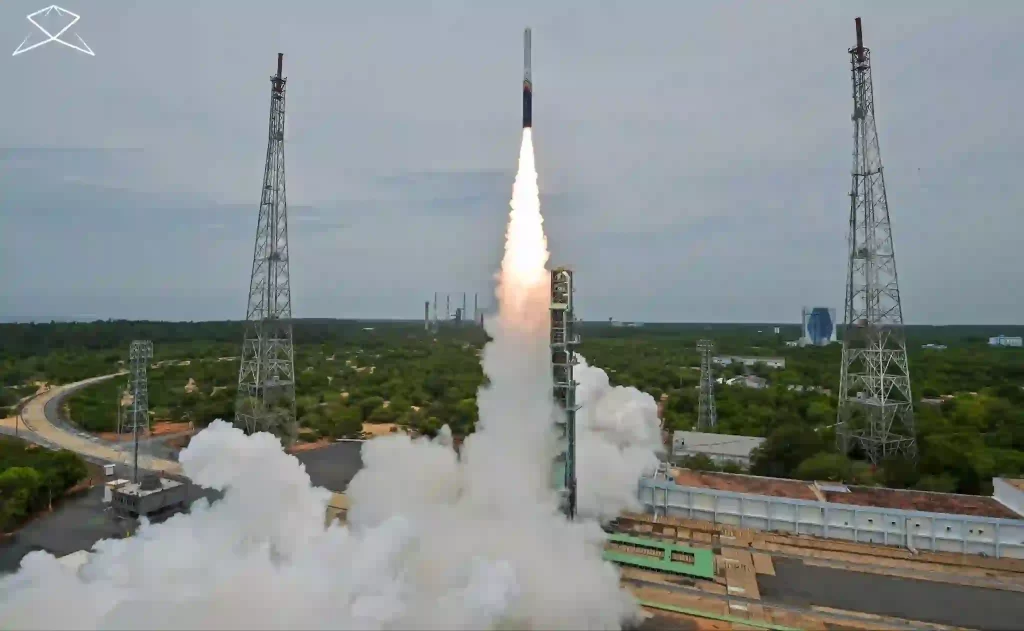
Skyroot Aerospace’s Vikram-1 mission, called Aagaman, is a landmark moment for India’s space story because it demonstrates that a privately built Indian rocket can reach orbit and place payloads successfully into low Earth orbit. For a country that has long been admired for the strength of ISRO, this is an equally important signal of something new: India’s commercial space sector is no longer just preparing for lift-off, it is already there.What makes the launch so significant is not only the technical success, but the symbolism attached to it. Vikram-1 is India’s first private orbital-class rocket, and with its successful flight from Sriharikota, India has entered a small and elite group of nations where private enterprise has independently achieved orbital launch capability.Why Vikram-1 MattersThe space industry often measures progress in very specific terms: payload mass, orbital accuracy, propulsion reliability, turnaround time, and the ability to scale launch services commercially. Vikram-1 matters because it checks several of those boxes at once, proving that an Indian private company can design, build, integrate, and launch a working orbital vehicle from Indian soil.That is a major shift from the older model in which space capability was seen primarily as the domain of the state. Today, Vikram-1 suggests that India’s space future will be shaped not just by ISRO, but by a wider ecosystem of private companies, engineering talent, investors, and customers who want Indian launch capability to be part of the global market.The Launch and Mission ProfileThe rocket lifted off from the Satish Dhawan Space Centre at Sriharikota after a planned pause shifted the launch time from 11:30 am to 12:05 pm. Built by Hyderabad-based Skyroot Aerospace, the mission achieved its intended orbital objective and placed multiple technology demonstration payloads, including postcards from Prime Minister Narendra Modi, into low Earth orbit.Vikram-1 is a three-stage rocket and stands about 22 metres tall, roughly the scale of a seven-storey building. It reportedly delivered customer payloads into an orbit around 450 km above Earth, which is a strong demonstration of practical launch capability rather than a symbolic suborbital test.A Private Rocket With National MeaningIndia has made remarkable progress in space through ISRO’s long record of dependable missions, but the Vikram-1 launch adds a new layer to that success story. It shows that India’s space economy is maturing from a government-led program into a more diversified industrial ecosystem where private players can compete, innovate, and ultimately carry national prestige into commercial markets. That matters because orbital launch is one of the hardest parts of the space business. It requires deep systems engineering, high-reliability propulsion, precision guidance, rigorous testing, and the ability to survive failure during development without losing technical momentum. A successful private orbital launch is therefore not a single achievement; it is proof that a company has built institutional competence at the highest level.The Technology Behind the RocketOne of the most interesting aspects of Skyroot’s approach is its use of modern manufacturing methods, including additive manufacturing, better known as 3D printing. In traditional rocket production, engines are built from many separate parts that must be machined, welded, sealed, and assembled with extreme precision, while 3D printing allows complex components to be built layer by layer, reducing weight, simplifying the structure, and cutting lead time. Skyroot has emphasized this approach before, noting that fully printed components can reduce mass and simplify production. For a startup, that is especially important because launch vehicles are not just engineering artifacts; they are also manufacturing systems, and every improvement in production speed, cost, and consistency improves competitiveness in a market where reliability and economics matter equally.The Commercial Space AngleVikram-1 is also important because it strengthens India’s place in the global commercial launch market. Satellite launches are increasingly driven by demand for small satellites, technology demonstrations, earth observation constellations, and rapid deployment missions, and countries that can offer dependable launch services will have a strategic and economic advantage.India already has strong space credibility through ISRO, but a successful private launcher expands the country’s offering. It suggests that future customers may one day choose India not only for low-cost space hardware or satellite services, but for launch options provided by a competitive domestic private sector. PM Modi’s Response and National SymbolismPrime Minister Narendra Modi praised the mission as a historic new frontier in India’s space journey, framing it as a reflection of the talent, entrepreneurial spirit, and ambition of India’s youth. That kind of response matters because space achievements often become national symbols, and private-sector success at orbit is particularly resonant in a country that sees technology as a key pathway to economic and strategic power. The presence of a postcard from the Prime Minister among the payloads added a distinctive symbolic touch. It turned the mission into something more than a test flight, linking the technical achievement with a broader sense of national participation in the event. What Comes NextThe real test for Vikram-1 begins after the headlines. A successful launch is a milestone, but a repeatable launch service is what turns a demonstration into a business. Skyroot’s challenge now will be to convert this success into a reliable cadence of missions, customer confidence, and operational maturity that can sustain the company over time. If it succeeds, Vikram-1 could become one of the defining vehicles in India’s commercial space era. More importantly, it could help normalize the idea that Indian private companies are not peripheral players in space, but central participants in a new national ecosystem built around launch, innovation, and scale. ConclusionThe Vikram-1 launch is historic because it marks the moment India’s private space sector moved from promise to proof. By placing payloads into orbit with a homegrown private rocket, Skyroot Aerospace has demonstrated that India’s space ambitions are no longer limited to state-led achievement alone.That makes Aagaman feel like more than the name of a mission. It reads like a declaration that a new era has arrived, one in which India’s space story will be written not only by institutions, but by entrepreneurs, engineers, and private companies ready to reach orbit on their own terms.Video: Skyroot Aerospace