India has long been one of the world's largest exporters of talent, with millions of skilled professionals heading overseas in search of better career prospects and higher wages. But there are growing signs that this long-standing trend may be shifting dramatically. An increasing number of Indian professionals are now choosing to return home, drawn by a rapidly expanding startup ecosystem, a booming digital economy, and improving job opportunities across key sectors. This "reverse brain drain" is occurring at a critical moment when immigration policies are tightening in many parts of the world, particularly in the United States, traditionally the top destination for Indian talent.
Among those making the move back is aspiring business owner Shambhavi Gupta, originally from Lucknow in northern India. She pursued her undergraduate studies at the University of California before landing a role at a leading investment bank in San Francisco. Despite a promising career in the US, Gupta had long harbored ambitions of building her own company. With India going through rapid economic and technological growth, she decided to return two years ago. "I felt that India was having its own moment on the global stage," she told CNA. "India is a really young country. We're on a very new financial sector journey, and we're still building up our systems." Now based in Mumbai, she runs Nine Spot Seven, a financial insights and events platform, and says she has no regrets about her decision to return.
From Brain Drain to Brain Circulation: A Fundamental Shift
Gupta's experience reflects a broader trend transforming India's relationship with its global diaspora. About one-third of roughly 600 high-tech startups founded in India between 2016 and 2023 were established by entrepreneurs who had returned from abroad, according to analysis by New Delhi-based think tank Observer Research Foundation. India still has a vast diaspora estimated at around 35 million people living overseas, but as domestic opportunities expand, more professionals are reconsidering the need to build careers abroad.
The narrative is shifting from "brain drain" to what experts now call "brain circulation." A recent survey by the CFA Institute reveals that 70 percent of Indian graduates are either planning or considering studying abroad, yet most of them are not treating this as permanent migration. Instead, they intend to return to India for employment after completing their education. The story is no longer about loss but about movement and return. Studying abroad is increasingly being seen as an extension of Indian education rather than an escape from it. The idea is not to leave India behind but to step out, build competence, and come back stronger.
Powerful Pull Factors Driving Professionals Home
Recruiters say they are seeing a noticeable uptick in returnees, particularly as India cements its position as the world's fastest-growing major economy. Varun Sachdeva, senior vice president at recruitment firm NLB Services, points to strong demand in emerging sectors as a key pull factor. "Growth opportunities in startups, artificial intelligence, digital infrastructure, and global capability centres being created in India are generating high-quality roles," he said.
The scale of interest in overseas education is unmistakable, with Indian students continuing to look outward for advanced degrees, specialized courses, and global exposure. From engineering and finance to data science and public policy, international universities remain powerful magnets offering better research infrastructure, industry-linked curricula, and the promise of global networks.
At the same time, rising living costs overseas and growing uncertainty around immigration policies are pushing some to rethink their options. "There's a lot of unpredictability, of volatile situations across the globe, with changing visa norms. That is also contributing to people thinking about either staying in India or returning," Sachdeva said. The shift has been significant enough for his company to launch a dedicated executive search practice focused on helping professionals secure roles in India as they relocate home.
Quality of Life Improvements Making India More Attractive
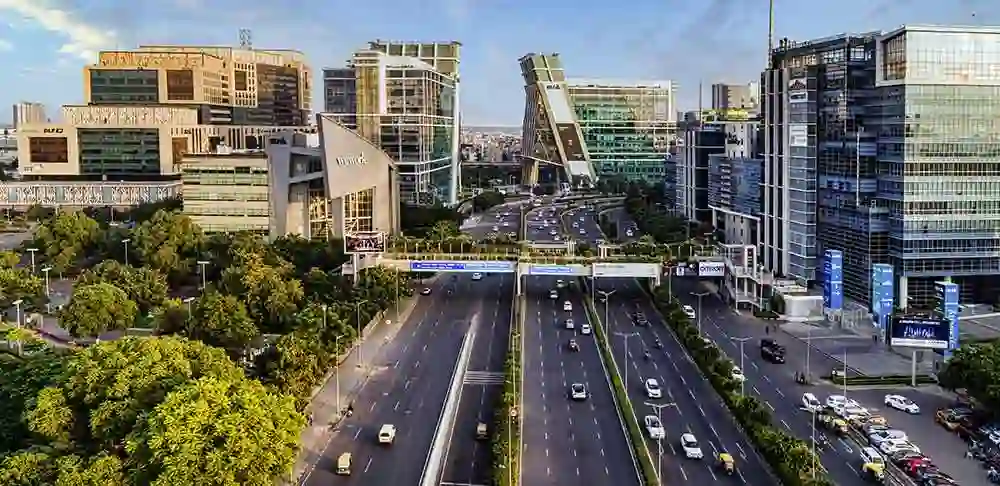
Beyond career prospects, improvements in quality of life are also making India more attractive to returning professionals. Major cities now offer more cosmopolitan lifestyles, better infrastructure, and broader career options than in the past. Sangram Raje is among those who made the move earlier, returning to India in 2014 after spending six years in New York as a quantitative analyst. With a background in computer science, he went on to co-found Prodigal, an AI-driven platform for loan servicing and collections.
Raje believes the mindset among Indian professionals has shifted significantly. "The fascination of going to the US has definitely decreased over the years. I have seen a material shift in people's thinking towards staying in India," he said. He added that today's India offers not just professional growth but also a richer lifestyle: "You can have a much more comfortable, varied, multicultural life, especially in cities like Mumbai, Bangalore, Pune, Hyderabad, and Delhi." Importantly, he noted that the range of opportunities available domestically is far stronger than they were two decades ago, when going abroad was often seen as the default path to success.
The Hidden Calculation: Financial and Strategic Realities
The decision to study abroad or return is rarely emotional alone, it is financial, strategic, and increasingly calculated. Tuition costs, visa uncertainties, job market volatility in foreign countries, and long-term residency challenges all play into the equation. Against this backdrop, India's growing economic momentum is becoming a strong counterweight. For many families, the logic is shifting from "how do we stay abroad?" to "how do we make this experience work for India later?"
An international degree is no longer just a symbol of prestige but is becoming a tool that is judged differently than before. Indian employers are increasingly looking beyond the degree itself and focusing on what it represents: adaptability, problem-solving in diverse environments, and exposure to global systems. At the same time, graduates are becoming more pragmatic, aware that staying abroad permanently is not always the most stable or rewarding option, especially when India's own job market is expanding in sectors like finance, technology, and consulting.
The Loop That Matters More Than the Line
This emerging pattern is less about brain drain and more about brain circulation. The cycle is becoming clearer: Indian students leave, acquire education and exposure, gain international experience, and then return with enhanced skills and a global perspective. It is not a straight line outward but a loop, and in that loop lies a strategic advantage. Graduates are no longer just job seekers in one geography but are positioning themselves as globally trained professionals who can compete in multiple markets, but choose to contribute in India.
What stands out in the data is not just the willingness to go abroad but the strong intention to return. For a long time, return migration was treated as an exception, something that happened when plans didn't work out abroad or personal circumstances intervened. That logic is now shifting, with many graduates now seeing India as the eventual destination for their careers. A fast-growing digital economy, expanding financial markets, and a surge in startup activity are changing perceptions of opportunity at home. In simple terms, India is no longer being seen as what students leave behind but as where they come back to build.
A Generation Moving with a Return Ticket
What emerges from this trend is a different kind of student mindset. This is a generation that is comfortable crossing borders but equally deliberate about returning, one that sees education as global but careers as increasingly anchored in India's evolving economy. The old fear of brain drain still lingers in policy discussions, but on the ground, among graduates themselves, a reality is taking shape where leaving is temporary and coming back is the plan.
The phrase "brain drain" suggests a permanent loss, but what is unfolding now is more complicated and arguably more optimistic. India is not just sending students out but is also, increasingly, getting them back with sharper skills, global exposure, and broader perspectives. The CFA Institute findings underline this shift: ambition is rising, mobility is increasing, but permanence abroad is no longer the default outcome. This is a generation that moves with a return ticket, comfortable with global mobility while deliberately choosing to build their futures in India's rapidly transforming economy.
The reverse brain drain gathering pace across India represents more than just a demographic shift; it signals confidence in India's economic trajectory, entrepreneurial ecosystem, and quality of life. As the country continues its ascent as a global economic power, the loop of talent flowing out and returning with enhanced capabilities is becoming India's strategic advantage in the global competition for skilled professionals.