Introduction
Apple is preparing for one of the most consequential leadership transitions in its modern history. After more than 15 years at the helm, Tim Cook is set to step down as the company's Chief Executive Officer, bringing an end to one of the longest and most transformative CEO tenures in Apple's history.
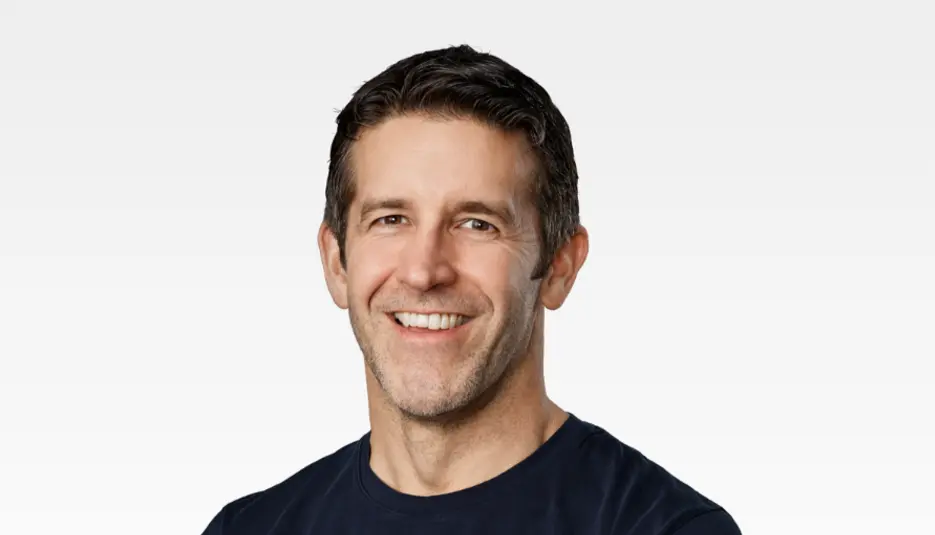
His successor is John Ternus, Apple's Senior Vice President of Hardware Engineering and a veteran who has spent more than two decades at the company.
Apple announced on April 20, 2026, that Ternus will become Chief Executive Officer effective September 1, 2026. Cook will become Apple's Executive Chairman, while continuing to support the company in areas including engagement with policymakers around the world. The transition was unanimously approved by Apple's board and is the result of what the company described as a long-term succession planning process.
Ternus's appointment is significant because it represents a shift from an operations and supply-chain-focused CEO to an executive whose career has been closely tied to Apple's products and engineering organisation. The man responsible for overseeing some of Apple's most important hardware development efforts will now be responsible for leading the entire company at a time when artificial intelligence, changing consumer behaviour and intense competition are reshaping the technology industry.
Who Is John Ternus?
John Ternus is a mechanical engineer who has spent most of his professional career at Apple.
Born in 1975, Ternus studied Mechanical Engineering at the University of Pennsylvania. Before joining Apple, he worked as a mechanical engineer at Virtual Research Systems, gaining experience in product development before moving to the technology industry.
Ternus joined Apple in 2001, initially becoming part of the company's product design organisation. Over the following two decades, he moved through Apple's hardware engineering ranks and became one of the company's most senior engineering executives.
He was appointed Vice President of Hardware Engineering in 2013 and joined Apple's executive team in 2021 when he became Senior Vice President of Hardware Engineering, reporting directly to Tim Cook.
His career is therefore deeply intertwined with Apple's evolution during the post-Steve Jobs era.
A Career Built Around Apple's Products
Unlike CEOs whose careers are centred primarily around finance, marketing or operations, Ternus has spent his professional life close to Apple's hardware.
As head of Hardware Engineering, he has overseen teams involved in the development of some of the company's most important products, including the iPhone, iPad, Mac, Apple Watch and AirPods.
That experience has made him particularly familiar with Apple's product-development process, which brings together industrial design, engineering, software, silicon development and manufacturing.
Apple's hardware business is central to the company's identity and remains the foundation for much of its wider ecosystem. The devices serve as the entry point through which millions of customers use Apple's software and services.
Ternus's role has therefore given him exposure to virtually every major part of Apple's hardware ecosystem.
His Role in the Mac and Apple Silicon Era
One of the most important periods of Ternus's career at Apple has been the company's transition towards its own silicon.
Apple began replacing Intel processors in its Mac computers with internally designed Apple silicon in 2020. The transition allowed Apple to integrate its hardware and software more tightly and improve performance and power efficiency across its computers.
Ternus was among the senior executives overseeing Apple's hardware organisation during this transformation.
The move was strategically important because it strengthened Apple's control over the technologies at the heart of its products. Instead of depending on an external processor supplier for a central component of its computers, Apple increasingly controlled the design of its chips, operating systems and hardware.
The result was a closer integration between Apple's silicon and its broader product ecosystem.
The Executive Behind Apple's Recent Hardware Push
Ternus has also played a prominent role in Apple's more recent hardware developments.
As hardware chief, he has been involved in the company's efforts across multiple product categories and has increasingly become one of the public faces of Apple's product-development organisation.
His responsibilities have included overseeing engineering teams working on the iPhone, Mac, iPad and other major devices. Reuters noted that Ternus has played an important role in Apple's hardware strategy and in the company's efforts to strengthen products such as the Mac.
His most recent high-profile product role has included the development of Apple's redesigned iPhone Air, which represented one of the company's most significant iPhone design changes in years.
That background is likely to influence how he approaches the CEO position.
From Steve Jobs to Tim Cook to John Ternus
Ternus's appointment completes an important leadership transition at Apple.
Steve Jobs, Apple's co-founder, returned to the company in 1997 and oversaw its transformation into one of the world's most influential technology companies. Under Jobs, Apple introduced products including the iMac, iPod, iPhone and iPad, fundamentally changing several consumer technology categories.
When Jobs stepped down as CEO in August 2011 because of his declining health, Tim Cook succeeded him.
Cook had joined Apple in 1998 and had served as the company's Chief Operating Officer before becoming CEO. His leadership style was different from Jobs's, with a greater emphasis on operations, supply chains, services, global expansion and business execution.
Over Cook's tenure, Apple expanded dramatically in scale. The company grew its services business, expanded the Apple Watch and AirPods into important product categories, moved further into financial and subscription services and became one of the world's most valuable companies.
John Ternus will now inherit that much larger organisation.
Why Apple Chose John Ternus
Apple's decision to appoint Ternus reflects several considerations.
First, he has extensive institutional knowledge. Having joined the company in 2001, he understands Apple's culture, product-development philosophy and internal decision-making processes.
Second, he has worked closely with Tim Cook. This provides continuity during a transition that could otherwise create uncertainty for investors, employees and consumers.
Third, his engineering background gives him a direct connection to the products that define Apple's brand.
Apple's board described Ternus as having a "love of Apple", strong leadership qualities, deep technical knowledge and a relentless focus on creating products. The board said it believed he was the best possible leader to succeed Cook.
His appointment also means Apple is once again choosing an insider for its top leadership position, maintaining continuity rather than making a dramatic external change.
The Challenges Awaiting Ternus
Despite his long experience at Apple, becoming CEO of a company of Apple's scale will represent a fundamentally different challenge.
Ternus will take charge of Apple at a time when the technology industry is undergoing another major transformation, this time driven by artificial intelligence.
Companies across Silicon Valley are investing heavily in generative AI, AI-powered assistants, autonomous systems and new forms of computing. Apple has been working to integrate artificial intelligence more deeply into its products and operating systems, but the company faces intense competition from technology companies that have made AI their central strategic priority.
For Ternus, the challenge will be to ensure that Apple's AI strategy becomes a meaningful part of the company's products without compromising the product quality and user experience on which Apple has built its reputation.
The AI Challenge
Artificial intelligence is likely to be one of the defining issues of the Ternus era.
Apple has historically differentiated itself through the integration of hardware, software and services. AI creates an opportunity to extend that model, but it also requires Apple to move quickly in a field where competitors have already established strong positions.
The company's future AI strategy will influence everything from the iPhone and Mac to Siri, operating systems and potentially entirely new categories of devices.
Ternus's hardware background could become particularly important if AI leads to a shift in how consumers interact with technology.
The smartphone remains Apple's most important product, but the next generation of computing could involve a broader combination of devices, wearable technology, intelligent assistants and other hardware.
An executive with deep experience in hardware engineering may therefore be well positioned to guide Apple through this transition.
Can Ternus Continue Apple's Product Culture?
Apple's success has always been closely connected to its ability to develop products that combine technology with design and ease of use.
Ternus has spent much of his career inside that product-development culture.
The key question will be whether he can translate that experience into a broader company-wide vision.
As CEO, he will have to oversee far more than hardware engineering. Apple's operations include software development, services, retail, finance, marketing, supply chains, regulatory affairs and a global workforce.
He will also be responsible for balancing the demands of investors with Apple's traditionally long-term approach to product development.
That will require Ternus to expand from being an engineering leader into a global corporate leader while preserving the product-focused culture that helped him rise through Apple's ranks.
The Tim Cook Legacy
Ternus is not simply succeeding an ordinary CEO. He is taking over from a leader who has shaped Apple for more than a decade.
Cook became CEO in 2011 and remained in the position through a period of extraordinary expansion. During his tenure, Apple broadened its product ecosystem, developed services into a major business, expanded its retail and global presence and became the world's first publicly traded company to reach several landmark valuations.
Cook also guided Apple through major changes in its supply chain, regulatory environment and relationship with governments around the world.
As Executive Chairman, he will not disappear from the company completely. Apple has said that Cook will continue to assist with certain aspects of the business, including engagement with policymakers globally.
This arrangement provides Ternus with continuity while allowing Apple to begin a new leadership chapter.
A Different Leadership Style
One of the most closely watched aspects of Ternus's tenure will be his leadership style.
Jobs was known for his intense focus on design and innovation. Cook became known for operational discipline, supply-chain management and business execution.
Ternus's career suggests that his leadership may place considerable emphasis on engineering and product development.
However, it would be premature to assume that he will simply continue Apple's existing hardware strategy. The CEO role will require him to make decisions across every part of the company.
His biggest task may therefore be balancing continuity with change: protecting the strengths that have made Apple successful while responding to technologies and markets that are developing faster than ever.
Apple's Hardware Future
Hardware will remain central to Apple's strategy under Ternus.
The company has continued to invest in the iPhone, Mac, iPad, Apple Watch and AirPods while exploring new product categories.
Ternus's background gives him an unusually detailed understanding of Apple's hardware organisation and its engineering capabilities.
His experience could prove particularly valuable as Apple explores how artificial intelligence can be incorporated into physical products.
The future of consumer technology may increasingly depend on the relationship between powerful on-device computing, cloud services, sensors, cameras, wearable devices and AI systems.
Apple's ability to combine these technologies into products that consumers actually want to use could become one of the defining challenges of Ternus's tenure.
Apple Beyond the iPhone
Another long-term challenge for Ternus will be reducing Apple's dependence on the iPhone while maintaining its importance.
The iPhone remains the centre of Apple's ecosystem, connecting users to services such as iCloud, Apple Music, Apple Pay and the App Store.
However, Apple has spent years expanding into other areas.
The Apple Watch and AirPods have become important hardware categories, while services have grown into a major part of the company's business.
Apple has also expanded its presence in entertainment through Apple TV and Apple TV+, including original films and television programming.
Ternus will therefore inherit a company that is considerably more diversified than the Apple that Cook took over in 2011.
Apple's Growing Services Business
Under Cook, Apple increasingly shifted from being primarily a hardware company to an ecosystem combining hardware, software and services.
Services now include the App Store, Apple Music, Apple TV+, iCloud, Apple Pay and other subscription and digital offerings.
This business provides Apple with recurring revenue and strengthens customer loyalty because users who invest in the company's ecosystem are more likely to continue purchasing Apple products.
Ternus will have to maintain this balance.
His hardware expertise may be his biggest strength, but Apple's future growth will depend on how effectively hardware works together with software and services.
Global Competition
Ternus will also face increasing competition from companies across the technology industry.
Samsung and other smartphone manufacturers continue to compete aggressively in premium devices. Chinese companies have become increasingly sophisticated in smartphones, wearables and consumer electronics.
At the same time, companies such as Google, Microsoft, Amazon and a growing number of AI-focused firms are competing for influence over the next generation of computing.
Apple's advantage remains its integrated ecosystem and enormous global customer base.
The challenge for Ternus will be ensuring that this advantage does not become a source of complacency.
The Significance of an Engineer at Apple's Helm
Ternus's appointment is notable because Apple will be placing an engineer with decades of product-development experience at the top of the organisation.
His career is almost entirely connected to the development of Apple's hardware.
That could give him a particularly close understanding of the engineering decisions behind the products used by hundreds of millions of people.
At the same time, the appointment demonstrates Apple's preference for continuity. Rather than bringing in an outsider to radically change the company's direction, Apple has selected an executive who has spent more than 20 years inside its product organisation.
What the Ternus Era Could Mean for Apple
It is too early to predict precisely what Apple will look like under Ternus. His formal tenure as CEO begins on September 1, 2026, and the company's long-term strategy will become clearer only as he begins making decisions in the role.
What is clear is that he inherits an unusually strong but increasingly complex company.
Apple has enormous financial resources, a powerful global brand, a loyal customer base and one of the world's most integrated technology ecosystems.
At the same time, it faces major questions around artificial intelligence, innovation, regulatory pressure, global supply chains and the future of consumer computing.
Ternus's engineering background may influence how Apple approaches these challenges, particularly as hardware and AI become increasingly interconnected.
Conclusion
John Ternus represents a new chapter for Apple, but not a complete break with its past.
He has spent more than two decades inside the company, rising from a product-design engineer to its Senior Vice President of Hardware Engineering and becoming one of the executives responsible for Apple's most important hardware products.
His appointment as CEO marks the end of Tim Cook's tenure while maintaining a strong degree of continuity within Apple's leadership.
The transition is also taking place at a critical moment for the technology industry. Artificial intelligence is changing the competitive landscape, consumer expectations are evolving and companies are searching for the next major computing platform.
Ternus's challenge will be to take everything Apple has built under Jobs and Cook and determine what comes next.
If Cook's era was defined by Apple's transformation into a global technology and services powerhouse, the Ternus era could be defined by how successfully Apple adapts its hardware, software and ecosystem to the age of AI.
For a company built around the idea that technology should disappear into products people simply want to use, the next chapter will depend on whether John Ternus can turn Apple's considerable engineering strength into its next generation of innovation.