


John Ternus: The Engineer Set to Lead Apple After Tim Cook
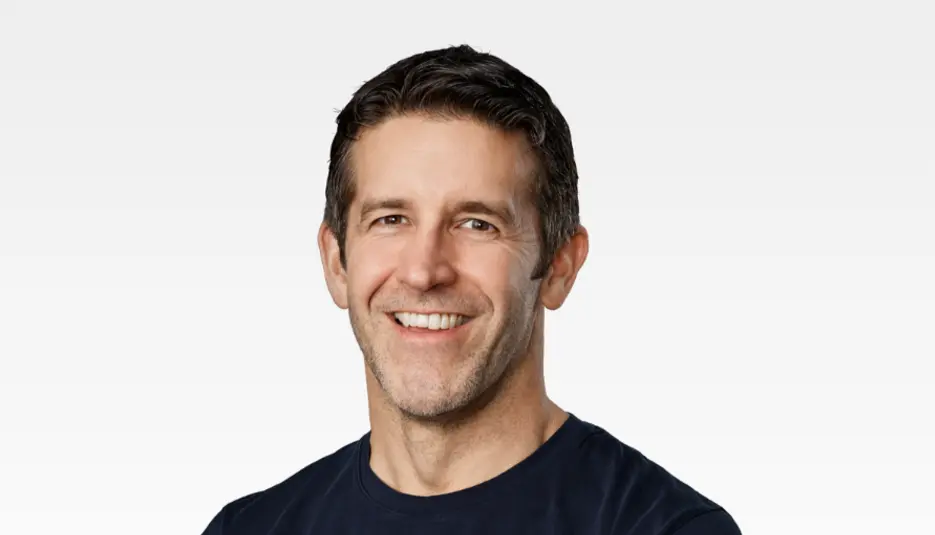
IntroductionApple is preparing for one of the most consequential leadership transitions in its modern history. After more than 15 years at the helm, Tim Cook is set to step down as the company’s Chief Executive Officer, bringing an end to one of the longest and most transformative CEO tenures in Apple’s history.His successor is John Ternus, Apple’s Senior Vice President of Hardware Engineering and a veteran who has spent more than two decades at the company.Apple announced on April 20, 2026, that Ternus will become Chief Executive Officer effective September 1, 2026. Cook will become Apple’s Executive Chairman, while continuing to support the company in areas including engagement with policymakers around the world. The transition was unanimously approved by Apple’s board and is the result of what the company described as a long-term succession planning process.Ternus’s appointment is significant because it represents a shift from an operations and supply-chain-focused CEO to an executive whose career has been closely tied to Apple’s products and engineering organisation. The man responsible for overseeing some of Apple’s most important hardware development efforts will now be responsible for leading the entire company at a time when artificial intelligence, changing consumer behaviour and intense competition are reshaping the technology industry.Who Is John Ternus?John Ternus is a mechanical engineer who has spent most of his professional career at Apple.Born in 1975, Ternus studied Mechanical Engineering at the University of Pennsylvania. Before joining Apple, he worked as a mechanical engineer at Virtual Research Systems, gaining experience in product development before moving to the technology industry.Ternus joined Apple in 2001, initially becoming part of the company’s product design organisation. Over the following two decades, he moved through Apple’s hardware engineering ranks and became one of the company’s most senior engineering executives.He was appointed Vice President of Hardware Engineering in 2013 and joined Apple’s executive team in 2021 when he became Senior Vice President of Hardware Engineering, reporting directly to Tim Cook.His career is therefore deeply intertwined with Apple’s evolution during the post-Steve Jobs era.A Career Built Around Apple’s ProductsUnlike CEOs whose careers are centred primarily around finance, marketing or operations, Ternus has spent his professional life close to Apple’s hardware.As head of Hardware Engineering, he has overseen teams involved in the development of some of the company’s most important products, including the iPhone, iPad, Mac, Apple Watch and AirPods.That experience has made him particularly familiar with Apple’s product-development process, which brings together industrial design, engineering, software, silicon development and manufacturing.Apple’s hardware business is central to the company’s identity and remains the foundation for much of its wider ecosystem. The devices serve as the entry point through which millions of customers use Apple’s software and services.Ternus’s role has therefore given him exposure to virtually every major part of Apple’s hardware ecosystem.His Role in the Mac and Apple Silicon EraOne of the most important periods of Ternus’s career at Apple has been the company’s transition towards its own silicon.Apple began replacing Intel processors in its Mac computers with internally designed Apple silicon in 2020. The transition allowed Apple to integrate its hardware and software more tightly and improve performance and power efficiency across its computers.Ternus was among the senior executives overseeing Apple’s hardware organisation during this transformation.The move was strategically important because it strengthened Apple’s control over the technologies at the heart of its products. Instead of depending on an external processor supplier for a central component of its computers, Apple increasingly controlled the design of its chips, operating systems and hardware.The result was a closer integration between Apple’s silicon and its broader product ecosystem.The Executive Behind Apple’s Recent Hardware PushTernus has also played a prominent role in Apple’s more recent hardware developments.As hardware chief, he has been involved in the company’s efforts across multiple product categories and has increasingly become one of the public faces of Apple’s product-development organisation.His responsibilities have included overseeing engineering teams working on the iPhone, Mac, iPad and other major devices. Reuters noted that Ternus has played an important role in Apple’s hardware strategy and in the company’s efforts to strengthen products such as the Mac.His most recent high-profile product role has included the development of Apple’s redesigned iPhone Air, which represented one of the company’s most significant iPhone design changes in years.That background is likely to influence how he approaches the CEO position.From Steve Jobs to Tim Cook to John TernusTernus’s appointment completes an important leadership transition at Apple.Steve Jobs, Apple’s co-founder, returned to the company in 1997 and oversaw its transformation into one of the world’s most influential technology companies. Under Jobs, Apple introduced products including the iMac, iPod, iPhone and iPad, fundamentally changing several consumer technology categories.When Jobs stepped down as CEO in August 2011 because of his declining health, Tim Cook succeeded him.Cook had joined Apple in 1998 and had served as the company’s Chief Operating Officer before becoming CEO. His leadership style was different from Jobs’s, with a greater emphasis on operations, supply chains, services, global expansion and business execution.Over Cook’s tenure, Apple expanded dramatically in scale. The company grew its services business, expanded the Apple Watch and AirPods into important product categories, moved further into financial and subscription services and became one of the world’s most valuable companies.John Ternus will now inherit that much larger organisation.Why Apple Chose John TernusApple’s decision to appoint Ternus reflects several considerations.First, he has extensive institutional knowledge. Having joined the company in 2001, he understands Apple’s culture, product-development philosophy and internal decision-making processes.Second, he has worked closely with Tim Cook. This provides continuity during a transition that could otherwise create uncertainty for investors, employees and consumers.Third, his engineering background gives him a direct connection to the products that define Apple’s brand.Apple’s board described Ternus as having a “love of Apple”, strong leadership qualities, deep technical knowledge and a relentless focus on creating products. The board said it believed he was the best possible leader to succeed Cook.His appointment also means Apple is once again choosing an insider for its top leadership position, maintaining continuity
Tim Cook: The CEO Who Transformed Apple
Part 1: The Man Who Had to Follow a LegendWhen Steve Jobs resigned as Apple’s Chief Executive Officer on August 24, 2011, the announcement sent shockwaves across the technology industry. Jobs was not merely a CEO; he was the face of Apple and the visionary behind products that had transformed personal computing, music, smartphones and digital entertainment. His return to Apple in 1997 had rescued the company from near bankruptcy and turned it into one of the world’s most admired businesses. Few believed anyone could fill his shoes.The person chosen to succeed him was Timothy Donald Cook, Apple’s Chief Operating Officer. Unlike Jobs, Cook was not known for dramatic product launches or charismatic keynote speeches. He rarely appeared in the media and had built his reputation behind the scenes by transforming Apple’s operations and supply chain into one of the most efficient in corporate history. Many investors questioned whether an operations expert could successfully lead the world’s most innovative technology company. Analysts wondered whether Apple would continue to innovate without Steve Jobs at its helm.More than a decade later, those doubts have largely disappeared. Under Tim Cook’s leadership, Apple has become the first publicly traded company to cross market capitalizations of $1 trillion, $2 trillion and $3 trillion, while expanding into new businesses including wearables, digital services, custom silicon, healthcare technologies and mixed reality. The company’s annual revenue has more than doubled since Cook became CEO, and Apple today serves more than two billion active devices worldwide.Cook did not try to become the next Steve Jobs. Instead, he transformed Apple in his own way—through operational excellence, strategic expansion, disciplined execution and long-term planning. His tenure represents one of the most successful CEO transitions in modern corporate history.Early Life: Growing Up in AlabamaTim Cook was born on November 1, 1960, in the small town of Mobile, Alabama, and grew up in nearby Robertsdale, a close-knit community in southern Alabama. His father, Donald Cook, worked at a shipyard, while his mother, Geraldine Cook, worked at a pharmacy. Unlike many Silicon Valley entrepreneurs, Cook did not grow up surrounded by technology or venture capital. His upbringing was modest, grounded in discipline, education and hard work.From an early age, Cook developed a reputation for being quiet, analytical and highly organized. Teachers described him as diligent rather than flamboyant. While many future technology leaders displayed entrepreneurial instincts during childhood, Cook’s strengths lay in problem-solving, planning and attention to detail—qualities that would later define his management style.After completing high school, he enrolled at Auburn University, where he studied Industrial Engineering. The discipline combines engineering principles with business management and focuses on improving systems, increasing efficiency and optimizing production processes. These concepts would later become central to Cook’s transformation of Apple’s global operations.He graduated from Auburn University in 1982 with a Bachelor of Science degree in Industrial Engineering.Recognizing the importance of business education, Cook later pursued a Master of Business Administration (MBA) at Duke University’s Fuqua School of Business, earning his degree in 1988. At Duke, he graduated as a Fuqua Scholar, an honour awarded to students who graduate in the top ten percent of their class.His educational background—combining engineering with business management—prepared him for a career focused on operational excellence rather than product design.The IBM Years: Learning Global OperationsCook began his professional career at IBM, one of the world’s largest technology companies during the 1980s.He spent twelve years at IBM, working primarily in manufacturing, logistics and supply chain management. These years proved crucial in shaping his understanding of how global technology businesses operate.Rather than designing products, Cook focused on ensuring they could be manufactured efficiently, delivered quickly and produced at competitive costs. His responsibilities included managing inventory, improving manufacturing systems and coordinating international operations.IBM exposed him to complex global supply chains long before globalization became a defining feature of the technology industry. He learned how to manage suppliers across multiple countries, forecast demand, reduce operational inefficiencies and improve manufacturing productivity.These skills rarely attracted public attention, but they laid the foundation for what would later become one of Apple’s greatest competitive advantages.Moving Beyond IBMAfter leaving IBM in 1994, Cook joined Intelligent Electronics, where he served as Chief Operating Officer of its reseller division.Although his tenure lasted only a few years, it broadened his understanding of technology distribution and commercial operations.In 1997, Cook accepted a position as Vice President of Corporate Materials at Compaq Computer Corporation, then one of the world’s leading PC manufacturers.At the time, Compaq appeared to offer everything a senior executive could want. The company was financially strong, rapidly growing and one of the dominant players in the personal computer market.Cook had little reason to leave.Yet less than a year later, he accepted what many considered one of the riskiest career decisions of his life.Joining Apple: A Company Fighting for SurvivalWhen Steve Jobs approached Tim Cook in 1998, Apple was a very different company from the global giant it is today.Although Jobs had returned as CEO after Apple’s acquisition of NeXT, the company was still recovering from years of declining sales, poor product decisions and financial instability.Apple had recently reported heavy losses and was widely viewed as a struggling computer manufacturer facing an uncertain future. Microsoft dominated personal computing, while Dell and Compaq controlled much of the PC market.Friends and colleagues questioned Cook’s decision to leave Compaq for Apple.By every conventional business measure, it appeared irrational.Cook himself later recalled that joining Apple was one of the easiest and most important decisions of his career because Steve Jobs convinced him that Apple had the opportunity to change the world—not simply sell computers.He joined Apple as Senior Vice President for Worldwide Operations in March 1998.Transforming Apple’s Supply ChainIf Steve Jobs was responsible for creating extraordinary products, Tim Cook became responsible for ensuring those products reached customers efficiently.When Cook arrived, Apple maintained large inventories of finished products.This created major problems because technology products depreciate rapidly. Every week a computer sat in storage reduced its market value.Cook immediately began restructuring Apple’s manufacturing strategy.He closed numerous factories and warehouses.Instead
WWDC26: Apple’s Biggest Bet in Years Was a $1 Billion Deal With Google
Apple spent 90 minutes at Apple Park on June 8 announcing the future of its software. Siri was mentioned more than 100 times. That number tells you everything about where Apple’s priorities are, and how much catching up the company believes it needs to do.techSiri AI was the most talked about thing at WWDC 2026. Not iOS 27. Not macOS Golden Gate. Not the parental controls that got a standing ovation. Siri — the assistant that users have been complaining about for years, the one that handed queries off to ChatGPT when it could not cope, the one that became a punchline while Google Assistant and Samsung’s Galaxy AI were shipping features Apple kept promising — was finally, completely rebuilt.And it is powered by Google.The Biggest Reveal: Siri Is Now an AI, and Google Built the EngineApple introduced Siri AI, a new version of its digital assistant that integrates deeply with its new Apple Intelligence system. The assistant is now designed to be more conversational, context-aware, and capable of executing tasks across apps and devices, developed in collaboration with Google’s Gemini models.Apple is paying Google $1 billion a year for this. That’s a significant strategic bet. Apple did not acknowledge the partnership during the keynote itself. But the structure of the deal was known, and its implications are significant: the company that spent years insisting on vertical integration and privacy-first AI architecture has decided that the fastest way to fix Siri is to use someone else’s models.Siri will be more conversational, detailed, and engaging, and will no longer hand off your query to third-party AI providers like ChatGPT — that is, if you ignore the fact that Siri AI is powered by Google’s Gemini model.The new Siri gets its own standalone app. It has full on-screen awareness — it reads what you are looking at in real time. It handles cross-app actions, meaning it can move between your calendar, your messages, your email, and your files in a single conversation without losing context. To go along with its Siri AI overhaul, Apple announced a slew of new Apple Intelligence updates across its apps, including tab management for Safari, one-tap password updating, and cross-app context awareness.Craig Federighi, Apple’s SVP of Software Engineering, said during the keynote: “We believe privacy in AI is non-negotiable. Data is only used to execute your request.” The privacy framing was deliberate. Apple knows the Gemini partnership will raise questions. Its answer is that all processing goes through its Private Cloud Compute infrastructure, with Apple’s privacy architecture sitting between the user and Google’s models.iOS 27 and macOS Golden Gate: Performance FirstApple announced updates across iOS 27, macOS 27 Golden Gate, iPadOS 27, watchOS 27, tvOS 27, and visionOS 27, with a focus on performance, reliability, and deeper AI integration.The performance numbers are the kind Apple rarely volunteers unprompted:An 80 percent improvement to AirDrop transfer times. Photos that render 70 percent more quickly after capture. CPU scheduler improvements that extend performance gains to older devices, with iOS 27 supporting models as far back as the iPhone 11.That last point is deliberately inclusive. Apple is telling its existing installed base — hundreds of millions of devices — that they do not need to upgrade their hardware to benefit from this software cycle. It is a significant statement in a year where no new hardware was shown at WWDC.macOS’s new version is called Golden Gate, referring to the strait near San Francisco. It carries the Liquid Glass visual language introduced last year, with Apple refining rather than reinventing. The Liquid Glass design gets new customisation options, improved readability, and greater consistency across apps.On the creative tools front: a new spatial “Reframe” feature will let users use AI to adjust the perspective of an image as if they had repositioned the camera in the original scene. A new “Extend” tool expands images to adjust the aspect ratio or add more to a scene.Parental Controls: The Feature That Got the Longest ApplauseIn a keynote dominated by AI, the segment that generated the most visible emotional response from the audience was about children.Apple spent a significant amount of time showcasing tools for parents looking for greater control over what their children’s devices can and can’t do. Parents will be able to determine who their child can call and what apps and websites they can access, with Apple making suggestions about how those restrictions can change over time.New communication safety tools require parental approval for each new contact a child connects with and can trigger automatic interventions when explicit or violent content is detected. Daily time allowances across entertainment, games, and social media apps are available, with recommended limits based on guidance from clinical and child development experts.Parental controls got a major overhaul, including mandatory child accounts for under-13s and new website-approval tools for Safari — the “Ask to Browse” feature limits access, while “Ask to Buy” covers app purchases.In the context of India, where child safety online has become a significant legislative and social concern, these changes will be closely watched by parents and regulators alike.The EU Problem: Siri AI Launches Everywhere Except EuropeDue to the Digital Markets Act, Apple has confirmed that Siri AI will not be available on iPhones or iPads in the EU at launch. Apple needs more time to meet the requirements of the law, which requires giving third-party AI assistants the same deep system access as its own tools. macOS and visionOS users in the EU will still get the update.For European iPhone users, it is a frustrating situation. The most significant software update Apple has shipped in years will not be available on their devices when it launches this autumn. The irony — that a law designed to make platforms more open is delaying access to a new platform feature — will not be lost on anyone watching.The Closing Act Nobody Expected: Tim Cook’s Last WWDCApple announced a CEO transition on April 20, naming Senior Vice President of Hardware Engineering John Ternus as Tim Cook’s replacement.
Apple’s Retail Journey in India: From First Stores to a Growing Network of Tech Hubs
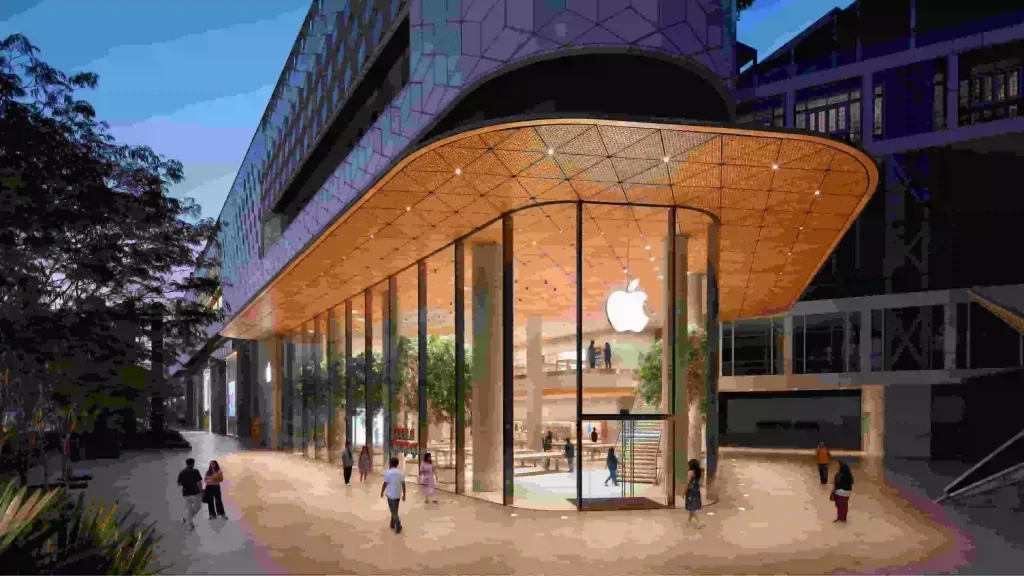
Apple, the world’s most valuable company known for its iPhones, MacBooks, and sleek designs, has made India a key part of its global growth story. Over the past few years, Apple has opened official retail stores across major cities, moving beyond online sales and small authorized shops. These stores are not just places to buy gadgets; they are modern spaces where customers can test products, get expert help, learn new skills, and feel part of the Apple community. As of April 2026, Apple runs six flagship stores in India, with more likely on the way. This expansion shows Apple’s big bet on India’s young, tech-savvy buyers and its fast-growing middle class. Let’s take a simple, step-by-step look at this exciting retail story.The Big Start: First Two Stores in 2023Apple’s official retail adventure in India kicked off in April 2023 with not one, but two grand openings. The very first was Apple BKC in Mumbai’s upscale Bandra Kurla Complex (BKC), inside the Jio World Drive mall. This two-story store welcomed customers with shiny product displays, Genius Bar support for repairs, and free “Today at Apple” sessions—like learning to edit photos on iPhone or make music on iPad.Just days later, Apple Saket opened in New Delhi at the Select CITYWALK mall in Saket. Deirdre O’Brien, Apple’s Senior Vice President of Retail, called these launches a “milestone” for connecting directly with Indian customers. Each store hired local teams from across India, many of whom spoke Hindi, Tamil, and other languages, to offer personal setup assistance, trade-ins for old devices, and financing options. These stores run on 100% renewable energy and are carbon-neutral, aligning with Apple’s green goals.From day one, crowds flocked in. Indians loved hands-on demos of the latest iPhones, Apple Watches, and AirPods. Sales boomed as “Make in India” iPhones (assembled locally by Foxconn and Tata) made devices more affordable.Rapid Growth in 2025: Bengaluru, Pune, and Noida Join the PartyApple didn’t stop. In 2025, the company added three more stores, reaching five. First up was Apple Hebbal in Bengaluru on September 2, 2025. Located in the massive Phoenix Mall of Asia on Bellary Road, its barricade featured stunning peacock-inspired artwork—India’s national bird in vibrant feathers, symbolizing pride and creativity. The store’s 70 team members came from 15 Indian states. Customers raved about the Genius Bar fixes and free sessions on everything from photo editing to coding basics.Just two days later, on September 4, 2025, Apple Koregaon Park opened in Pune at The KOPA mall (G8-G10, Koregaon Park). This was Apple’s first store in Pune, a city famous for education, history, and startups. Deirdre O’Brien praised it as a “destination for creativity.” With 68 team members from 11 states, it offers the full Apple lineup—like iPhone 16, M4 MacBook Air, and iPad Air with Apple Pencil Pro. Walk in for trade-ins, iOS switch help, Apple Music trials, or business tools for small companies. A special pickup area makes online orders easy—just grab and go.Then came Apple Noida at DLF Mall of India (D123-D128). This fifth store brought Apple to the Delhi-NCR suburbs, serving tech workers and families. Like others, it focuses on personal service, Today at Apple classes, and eco-friendly operations.The Latest: Apple Borivali Makes It Six in February 2026Apple hit six stores with Apple Borivali in Mumbai on February 26, 2026, at 1 PM. Located at G4, Sky City Mall off Western Express Highway (Borivali, Mumbai 400066), it’s the second Apple store in Mumbai after BKC. Its eye-catching peacock design (first seen in Hebbal and Pune) signals “confidence and creativity.” Inside, explore iPhones, iPads, Macs, and services like Apple TV+. Get help from Specialists, Creatives, Geniuses, and business teams. Free daily sessions teach skills, and perks like trade-ins, financing, and iOS setup await. Ahead of launch, Apple shared Mumbai-inspired playlists and wallpapers. “Namaskar, Borivali,” their site cheered.What Makes These Stores Special? A Full Apple ExperienceEvery Apple Store feels like a premium lounge, not a shop. Here’s what you get:Hands-On Shopping: Test iPhone 16 cameras, MacBook speed, or Watch fitness tracking.Expert Help: Genius Bar for repairs; one-on-one setup for new users.Learning Fun: Free “Today at Apple” sessions—make movies, draw with Apple Pencil, or code.Services Galore: Trade old phones for credit, easy financing, business support.Green Vibes: 100% renewable energy, carbon neutral.Local Touch: Teams speak regional languages; designs nod to India (peacock motifs).These stores pair with Apple’s online shop, app, and pickup options for seamless buying.Quick List of All Six Apple Stores in India (April 2026)Apple BKC – G1-G2, Jio World Drive, Bandra Kurla Complex, Mumbai.Apple Saket – F-11, Select CITYWALK, Saket, New Delhi.Apple Hebbal – F-39-F-43, Phoenix Mall of Asia, Bengaluru.Apple Koregaon Park – G8-G10, The KOPA, Pune.Apple Noida – D123-D128, DLF Mall of India, Noida.Apple Borivali – G4, Sky City Mall, Borivali, Mumbai.What’s Next? More Cities on the HorizonTim Cook hinted at Delhi-NCR, more Mumbai/Pune/Bengaluru spots. With iPhone 17 rumors and AI features coming, stores will showcase them first. India’s Apple journey is just starting, blending global tech with local pride.If you’re near one, drop in. It’s more than shopping; it’s inspiration. Apple isn’t selling products, it’s building a community, one store at a time.