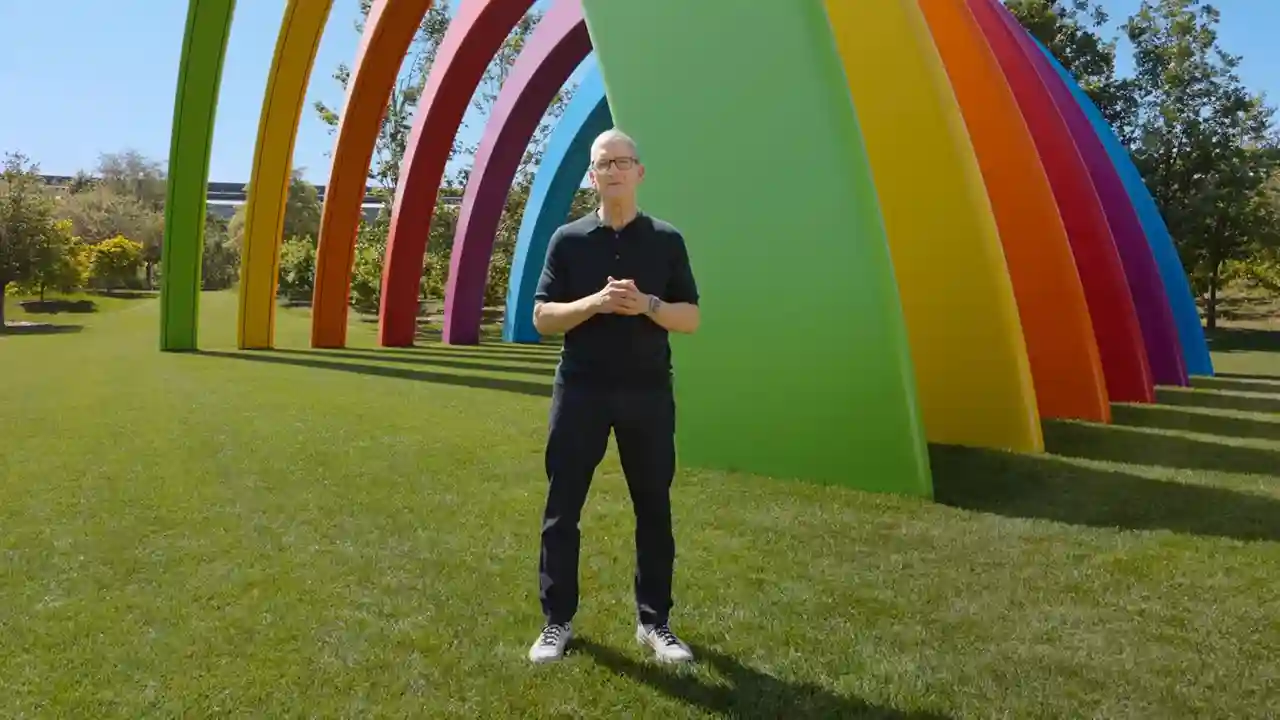
Apple spent 90 minutes at Apple Park on June 8 announcing the future of its software. Siri was mentioned more than 100 times. That number tells you everything about where Apple's priorities are, and how much catching up the company believes it needs to do.tech
Siri AI was the most talked about thing at WWDC 2026. Not iOS 27. Not macOS Golden Gate. Not the parental controls that got a standing ovation. Siri — the assistant that users have been complaining about for years, the one that handed queries off to ChatGPT when it could not cope, the one that became a punchline while Google Assistant and Samsung's Galaxy AI were shipping features Apple kept promising — was finally, completely rebuilt.
And it is powered by Google.
The Biggest Reveal: Siri Is Now an AI, and Google Built the Engine
Apple introduced Siri AI, a new version of its digital assistant that integrates deeply with its new Apple Intelligence system. The assistant is now designed to be more conversational, context-aware, and capable of executing tasks across apps and devices, developed in collaboration with Google's Gemini models.
Apple is paying Google $1 billion a year for this. That's a significant strategic bet. Apple did not acknowledge the partnership during the keynote itself. But the structure of the deal was known, and its implications are significant: the company that spent years insisting on vertical integration and privacy-first AI architecture has decided that the fastest way to fix Siri is to use someone else's models.
Siri will be more conversational, detailed, and engaging, and will no longer hand off your query to third-party AI providers like ChatGPT — that is, if you ignore the fact that Siri AI is powered by Google's Gemini model.
The new Siri gets its own standalone app. It has full on-screen awareness — it reads what you are looking at in real time. It handles cross-app actions, meaning it can move between your calendar, your messages, your email, and your files in a single conversation without losing context. To go along with its Siri AI overhaul, Apple announced a slew of new Apple Intelligence updates across its apps, including tab management for Safari, one-tap password updating, and cross-app context awareness.
Craig Federighi, Apple's SVP of Software Engineering, said during the keynote: "We believe privacy in AI is non-negotiable. Data is only used to execute your request." The privacy framing was deliberate. Apple knows the Gemini partnership will raise questions. Its answer is that all processing goes through its Private Cloud Compute infrastructure, with Apple's privacy architecture sitting between the user and Google's models.
iOS 27 and macOS Golden Gate: Performance First
Apple announced updates across iOS 27, macOS 27 Golden Gate, iPadOS 27, watchOS 27, tvOS 27, and visionOS 27, with a focus on performance, reliability, and deeper AI integration.
The performance numbers are the kind Apple rarely volunteers unprompted:
An 80 percent improvement to AirDrop transfer times. Photos that render 70 percent more quickly after capture. CPU scheduler improvements that extend performance gains to older devices, with iOS 27 supporting models as far back as the iPhone 11.
That last point is deliberately inclusive. Apple is telling its existing installed base — hundreds of millions of devices — that they do not need to upgrade their hardware to benefit from this software cycle. It is a significant statement in a year where no new hardware was shown at WWDC.
macOS's new version is called Golden Gate, referring to the strait near San Francisco. It carries the Liquid Glass visual language introduced last year, with Apple refining rather than reinventing. The Liquid Glass design gets new customisation options, improved readability, and greater consistency across apps.
On the creative tools front: a new spatial "Reframe" feature will let users use AI to adjust the perspective of an image as if they had repositioned the camera in the original scene. A new "Extend" tool expands images to adjust the aspect ratio or add more to a scene.
Parental Controls: The Feature That Got the Longest Applause
In a keynote dominated by AI, the segment that generated the most visible emotional response from the audience was about children.
Apple spent a significant amount of time showcasing tools for parents looking for greater control over what their children's devices can and can't do. Parents will be able to determine who their child can call and what apps and websites they can access, with Apple making suggestions about how those restrictions can change over time.
New communication safety tools require parental approval for each new contact a child connects with and can trigger automatic interventions when explicit or violent content is detected. Daily time allowances across entertainment, games, and social media apps are available, with recommended limits based on guidance from clinical and child development experts.
Parental controls got a major overhaul, including mandatory child accounts for under-13s and new website-approval tools for Safari — the "Ask to Browse" feature limits access, while "Ask to Buy" covers app purchases.
In the context of India, where child safety online has become a significant legislative and social concern, these changes will be closely watched by parents and regulators alike.
The EU Problem: Siri AI Launches Everywhere Except Europe
Due to the Digital Markets Act, Apple has confirmed that Siri AI will not be available on iPhones or iPads in the EU at launch. Apple needs more time to meet the requirements of the law, which requires giving third-party AI assistants the same deep system access as its own tools. macOS and visionOS users in the EU will still get the update.
For European iPhone users, it is a frustrating situation. The most significant software update Apple has shipped in years will not be available on their devices when it launches this autumn. The irony — that a law designed to make platforms more open is delaying access to a new platform feature — will not be lost on anyone watching.
The Closing Act Nobody Expected: Tim Cook's Last WWDC
Apple announced a CEO transition on April 20, naming Senior Vice President of Hardware Engineering John Ternus as Tim Cook's replacement. Cook will take the role of Executive Chairman on September 1.
WWDC 2026 was Tim Cook's final keynote as CEO. The man who took over from Steve Jobs in 2011 and built Apple into the world's most valuable company stood on stage for what those in the audience knew was the last time in this capacity, and said that 1,000 apps are submitted to the App Store every hour.
It also marks CEO Tim Cook's last WWDC, after announcing he's handing things off to Senior Vice President of Hardware Engineering John Ternus on September 1. Ternus has been at Apple for 25 years.
John Ternus, the incoming CEO, did not appear in the presentation at all, which was noted by many observers. He is a hardware person who has never done a public keynote — that is going to be an interesting adjustment.
The transition is significant beyond the personality change. Apple's next CEO is a hardware engineer, arriving at precisely the moment when the company's most important bets are in software and AI. How Ternus navigates that tension — between his background in designing physical devices and the software-defined future Apple has just committed to — will be the defining question of the next chapter.
What Was Not Shown
No hardware. No foldable iPhone — which has been leaked so many times it is practically confirmed, but Apple chose not to show it here. Apple's AI glasses have reportedly been pushed to late 2027. The Vision Pro got software updates — panorama-to-spatial-scene conversion, Siri AI as a floating orb — but no new hardware.
WWDC 2026 was entirely a software story. The hardware will come later. The fall iPhone launch, likely in September, will be when the full Siri AI experience ships to consumers alongside new devices.
The Honest Assessment
WWDC 2025 was primarily a design year. WWDC 2026 is almost the mirror image. The design story is refinement, not revolution. The AI story is finally here.
Apple spent 2025 redesigning its interfaces with Liquid Glass while the AI team worked on the real problem: making Siri not embarrassing. The Gemini partnership is the result of that work — an admission that the fastest path to a competitive AI assistant ran through Mountain View rather than Cupertino.
Whether it works is a question that September will begin to answer. The developer betas are out. The public beta arrives in July. The final versions ship in the fall. Apple has shown its hand. The question is whether Siri AI, rebuilt and Gemini-powered, can close the gap with what Google Assistant, Samsung Galaxy AI, and OpenAI's products have been doing for the last two years.
After 100 mentions in 90 minutes, it had better.
Video: Apple