


WWDC26: Apple’s Biggest Bet in Years Was a $1 Billion Deal With Google
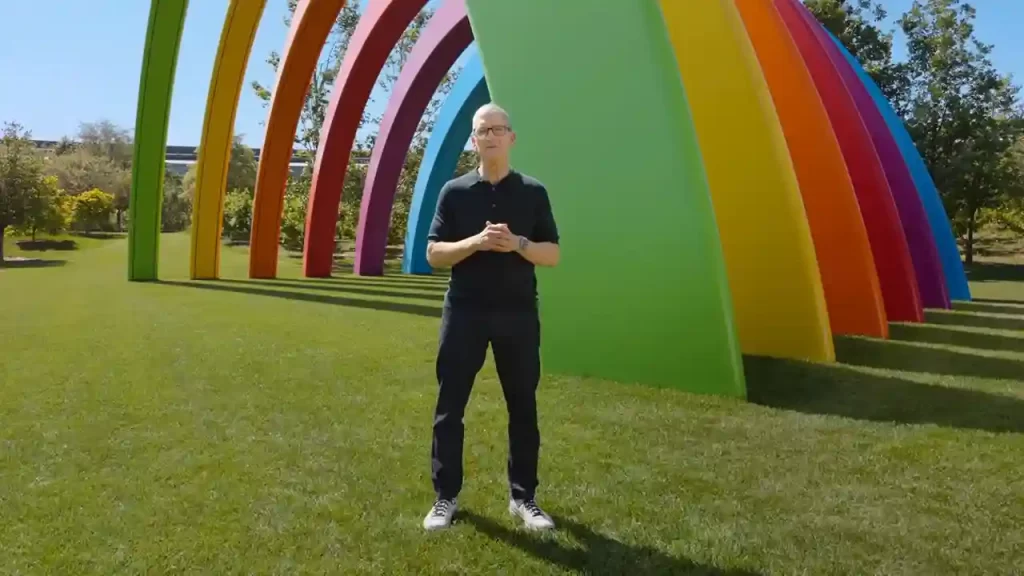
Apple spent 90 minutes at Apple Park on June 8 announcing the future of its software. Siri was mentioned more than 100 times. That number tells you everything about where Apple’s priorities are, and how much catching up the company believes it needs to do.techSiri AI was the most talked about thing at WWDC 2026. Not iOS 27. Not macOS Golden Gate. Not the parental controls that got a standing ovation. Siri — the assistant that users have been complaining about for years, the one that handed queries off to ChatGPT when it could not cope, the one that became a punchline while Google Assistant and Samsung’s Galaxy AI were shipping features Apple kept promising — was finally, completely rebuilt.And it is powered by Google.The Biggest Reveal: Siri Is Now an AI, and Google Built the EngineApple introduced Siri AI, a new version of its digital assistant that integrates deeply with its new Apple Intelligence system. The assistant is now designed to be more conversational, context-aware, and capable of executing tasks across apps and devices, developed in collaboration with Google’s Gemini models.Apple is paying Google $1 billion a year for this. That’s a significant strategic bet. Apple did not acknowledge the partnership during the keynote itself. But the structure of the deal was known, and its implications are significant: the company that spent years insisting on vertical integration and privacy-first AI architecture has decided that the fastest way to fix Siri is to use someone else’s models.Siri will be more conversational, detailed, and engaging, and will no longer hand off your query to third-party AI providers like ChatGPT — that is, if you ignore the fact that Siri AI is powered by Google’s Gemini model.The new Siri gets its own standalone app. It has full on-screen awareness — it reads what you are looking at in real time. It handles cross-app actions, meaning it can move between your calendar, your messages, your email, and your files in a single conversation without losing context. To go along with its Siri AI overhaul, Apple announced a slew of new Apple Intelligence updates across its apps, including tab management for Safari, one-tap password updating, and cross-app context awareness.Craig Federighi, Apple’s SVP of Software Engineering, said during the keynote: “We believe privacy in AI is non-negotiable. Data is only used to execute your request.” The privacy framing was deliberate. Apple knows the Gemini partnership will raise questions. Its answer is that all processing goes through its Private Cloud Compute infrastructure, with Apple’s privacy architecture sitting between the user and Google’s models.iOS 27 and macOS Golden Gate: Performance FirstApple announced updates across iOS 27, macOS 27 Golden Gate, iPadOS 27, watchOS 27, tvOS 27, and visionOS 27, with a focus on performance, reliability, and deeper AI integration.The performance numbers are the kind Apple rarely volunteers unprompted:An 80 percent improvement to AirDrop transfer times. Photos that render 70 percent more quickly after capture. CPU scheduler improvements that extend performance gains to older devices, with iOS 27 supporting models as far back as the iPhone 11.That last point is deliberately inclusive. Apple is telling its existing installed base — hundreds of millions of devices — that they do not need to upgrade their hardware to benefit from this software cycle. It is a significant statement in a year where no new hardware was shown at WWDC.macOS’s new version is called Golden Gate, referring to the strait near San Francisco. It carries the Liquid Glass visual language introduced last year, with Apple refining rather than reinventing. The Liquid Glass design gets new customisation options, improved readability, and greater consistency across apps.On the creative tools front: a new spatial “Reframe” feature will let users use AI to adjust the perspective of an image as if they had repositioned the camera in the original scene. A new “Extend” tool expands images to adjust the aspect ratio or add more to a scene.Parental Controls: The Feature That Got the Longest ApplauseIn a keynote dominated by AI, the segment that generated the most visible emotional response from the audience was about children.Apple spent a significant amount of time showcasing tools for parents looking for greater control over what their children’s devices can and can’t do. Parents will be able to determine who their child can call and what apps and websites they can access, with Apple making suggestions about how those restrictions can change over time.New communication safety tools require parental approval for each new contact a child connects with and can trigger automatic interventions when explicit or violent content is detected. Daily time allowances across entertainment, games, and social media apps are available, with recommended limits based on guidance from clinical and child development experts.Parental controls got a major overhaul, including mandatory child accounts for under-13s and new website-approval tools for Safari — the “Ask to Browse” feature limits access, while “Ask to Buy” covers app purchases.In the context of India, where child safety online has become a significant legislative and social concern, these changes will be closely watched by parents and regulators alike.The EU Problem: Siri AI Launches Everywhere Except EuropeDue to the Digital Markets Act, Apple has confirmed that Siri AI will not be available on iPhones or iPads in the EU at launch. Apple needs more time to meet the requirements of the law, which requires giving third-party AI assistants the same deep system access as its own tools. macOS and visionOS users in the EU will still get the update.For European iPhone users, it is a frustrating situation. The most significant software update Apple has shipped in years will not be available on their devices when it launches this autumn. The irony — that a law designed to make platforms more open is delaying access to a new platform feature — will not be lost on anyone watching.The Closing Act Nobody Expected: Tim Cook’s Last WWDCApple announced a CEO transition on April 20, naming Senior Vice President of Hardware Engineering John Ternus as Tim Cook’s replacement.
Amazon, Microsoft, Google Announce $67B India Growth Push: What you need to know?
In a landmark development that could reshape India’s digital economy, three global tech giants, Amazon, Microsoft, and Google, have unveiled a combined $67 billion investment plan for India over the coming years. The multi-billion-dollar commitment highlights the country’s central role in the future of technology, cloud computing, digital infrastructure, and innovation.The announcement, which follows India’s ongoing push toward digital transformation and strategic technology partnerships, signifies escalating competition among the world’s largest cloud and internet companies to expand in one of the fastest-growing tech markets.Over the past decade, India has emerged as a hub for startups, data centers, and digital services, driven by rising internet penetration, affordable data, and a large talent pool. Details of the Investment Plans: The Overview Each company’s commitment targets strategic areas of strength and collaboration with India’s public and private sectors:Amazon said it will invest roughly $30 billion in India through its cloud division, Amazon Web Services (AWS), over the next 10-12 years. The funds will support cloud infrastructure expansion, data center development, and training initiatives that aim to build digital skills across industries in India.Microsoft announced plans to invest $20 billion focused on expanding its cloud footprint through Azure data centers, partnerships with local enterprises, and programs to boost artificial intelligence (AI) adoption and digital literacy. Microsoft also reiterated its commitment to supporting India’s data governance initiatives while prioritizing data privacy and sovereignty.Google pledged $17 billion toward its India strategy, with investments in cloud infrastructure, AI research, and initiatives to support startups and developers. Google’s investment is expected to enhance its cloud services as well as expand local innovation programs in areas such as machine learning and language technologies.Collectively, these investments, totaling $67 billion, represent some of the largest foreign tech commitments in India’s history, reflecting confidence in India’s market potential and policy environment. Strategic Drivers and Implications India’s digital economy is projected to exceed $1 trillion by 2030, according to industry estimates, driven by cloud growth, mobile services, e-commerce, and AI-enabled technologies.With a population exceeding 1.4 billion and a young, tech-savvy workforce, global tech leaders see India as a strategic partner for long-term innovation and market expansion.Experts suggest that the latest funding commitments will accelerate digital infrastructure build-out, boost job creation, and stimulate growth in sectors ranging from fintech and healthtech to manufacturing and education technology. The emphasis on cloud services and AI also aligns with India’s ambitions to become a leader in emerging technologies. Policy and Public Response Government officials welcomed the investments as a vote of confidence in India’s tech ecosystem and regulatory framework. Analysts note that sustained collaboration between the tech industry and policymakers could further strengthen India’s position on the global innovation map.As Amazon, Microsoft, and Google deepen their footprints, India’s digital future appears poised for rapid transformation, with significant economic and societal implications in the years ahead.