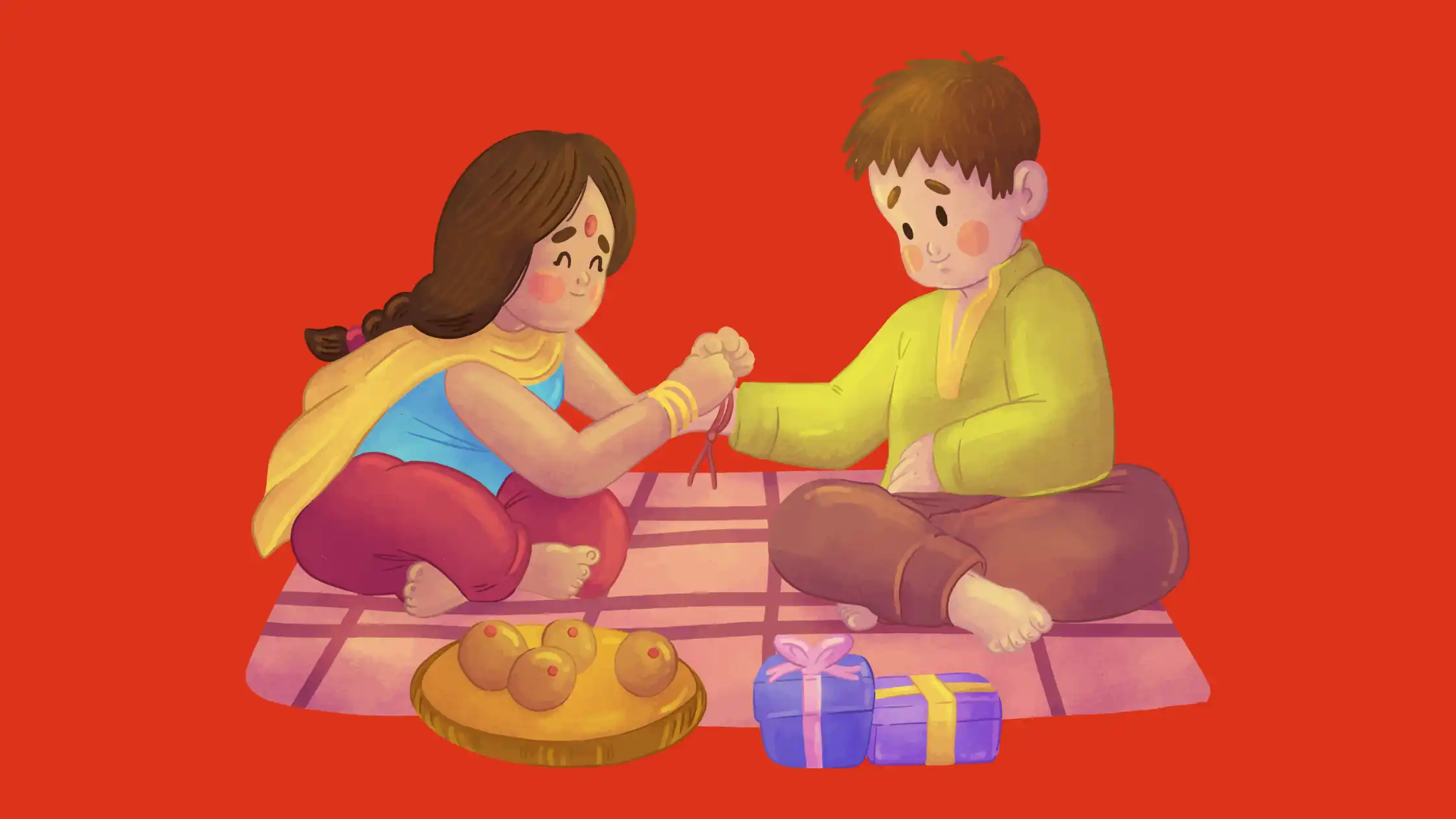
Raksha Bandhan is one of those festivals that feels both intimate and universal. At its heart is a simple ritual: a sister ties a thread around her brother’s wrist, offering prayers for his well-being, while he promises to protect and support her. Yet that small act carries layers of meaning, about family, duty, affection, memory, and the changing ways in which relationships are lived and understood in contemporary India. In 2026, Raksha Bandhan will be observed on August 28, on the full moon day (Purnima) of the Hindu month of Shravana. Across the country, homes will fill with the scent of sweets, phones will buzz with video calls between siblings who live far apart, and markets will overflow with colourful rakhis, gift boxes, and festive decorations.
When is Raksha Bandhan 2026?
Raksha Bandhan falls on Shravan Purnima, the full moon day in the month of Shravana, which usually corresponds to July or August in the Gregorian calendar. In 2026, the festival is expected to be observed on Thursday, August 28. As with many Hindu festivals, the exact timing of rituals may vary slightly depending on regional calendars and local traditions, but the central date remains anchored to the full moon of Shravana, a month traditionally associated with devotion, monsoon, and familial bonds.
The core ritual of Raksha Bandhan is straightforward but deeply symbolic. Sisters tie a rakhi, a sacred thread, often decorated with beads, motifs, or small charms, around their brothers’ wrists. Along with the rakhi, they may offer sweets, perform a small puja, and apply a tilak on the brother’s forehead. In return, brothers give gifts, often in the form of money, clothes, jewellery, or other tokens, and make a verbal promise to protect and support their sisters. This exchange is not merely transactional; it is a reaffirmation of a relationship that is expected to endure across distance, time, and life’s changes. For many families, the ritual extends beyond biological siblings. Cousins, close friends, and even neighbours may participate, turning Raksha Bandhan into a broader celebration of kinship and care. In some communities, women also tie rakhis to priests, mentors, or public figures as a mark of respect and symbolic protection.
Origins and Evolving Meanings
Like many Indian festivals, Raksha Bandhan does not have a single, fixed origin story. Over time, it has accumulated multiple layers of myth, history, and cultural practice. Some accounts link it to ancient legends in which queens sent rakhis to neighbouring rulers as a plea for protection, while others connect it to stories from the epics where divine or royal figures exchanged threads as a symbol of alliance and care. What is clear is that the festival has evolved. In earlier periods, it may have been more closely tied to ideas of martial protection and political alliance. In modern times, it has become more domesticated, centred on sibling relationships, emotional bonds, and the practical realities of family life in a rapidly changing society. One of the most striking aspects of contemporary Raksha Bandhan is how it adapts to new realities. In a country where migration for education and work is common, many siblings no longer live in the same city, let alone the same home. Yet the festival persists, often reimagined through technology and logistics. Rakhis are couriered across states and countries. Video calls replace physical presence, with sisters tying rakhis on screen while brothers do the same on their end. Gifts are ordered online and delivered directly, sometimes with personalised messages or customised designs. For many families, the ritual is no longer bound by geography; it is sustained by intention and effort. This adaptation does not diminish the festival’s meaning. Instead, it shows how deeply the idea of sibling connection is valued. Even when physical proximity is not possible, the act of tying a rakhi, exchanging gifts, and speaking words of care remains a way of saying: “You matter to me, and our bond endures.”
While Raksha Bandhan is popularly described as a “brother–sister” festival, its social reach is wider. In some communities, women tie rakhis to other women, redefining the ritual as a celebration of mutual support rather than gendered protection. In other contexts, rakhis are tied to soldiers, police personnel, or public servants as a gesture of gratitude and collective responsibility. There are also growing conversations about how the festival can be made more inclusive. For families where sibling relationships are complicated by distance, estrangement, loss, or gender dynamics, Raksha Bandhan can be both a comfort and a challenge. Some choose to celebrate the day by honouring friends, mentors, or chosen family, while others use it as a moment to reflect on what protection, care, and responsibility mean in their own lives. Raksha Bandhan has a significant economic dimension. In the weeks leading up to the festival, markets fill with rakhis of every kind, from simple threads to elaborate designer pieces, from traditional motifs to characters from popular culture. Sweet shops, gift stores, jewellery outlets, and online platforms all see a surge in demand. For many small businesses, this period is an important part of the annual cycle. Artisans who make rakhis, confectioners who prepare festive sweets, and delivery services that handle the rush all benefit from the heightened activity. At the same time, there is growing awareness around sustainability, with many consumers opting for eco-friendly rakhis, locally made products, and gifts that prioritise quality over quantity.
Raksha Bandhan As A Public Observance
Raksha Bandhan is listed as an optional or restricted holiday in India. This means that while individuals can choose to take the day off, most government offices, businesses, and schools remain open. The flexible holiday system reflects the country’s diverse religious landscape, allowing people to observe festivals according to their own traditions without imposing a uniform shutdown. For many families, this means that celebrations often take place in the evening or on the nearest weekend, when siblings can gather without conflicting with work or school schedules. The festival’s timing, therefore, is shaped not only by the lunar calendar but also by the rhythms of modern urban life. Raksha Bandhan endures because it speaks to something fundamental about human relationships: the need for connection, care, and a sense of belonging. In a world where relationships are often mediated by screens, schedules, and distance, the festival offers a structured moment to pause and reaffirm bonds that might otherwise be taken for granted. It also endures because it is flexible. It can be traditional or modern, intimate or public, religious or cultural. It can celebrate biological siblings, chosen family, or broader communities. It can be a day of gifts and sweets, or a day of reflection and conversation. That flexibility allows it to remain relevant across generations and contexts.
Conclusion
Raksha Bandhan 2026, on August 28, will once again turn homes, markets, and digital spaces into sites of connection. Sisters will tie rakhis, brothers will give gifts, families will share meals, and siblings separated by distance will find ways to be together, even if only virtually. But beyond the rituals and routines, the festival remains a reminder that relationships require attention. The rakhi is not just a thread; it is a promise, a memory, and a marker of a bond that is expected to last. In that sense, Raksha Bandhan is not only about one day in August; it is about the ongoing work of caring for one another throughout the year.