
Introduction
Few sporting contests capture the attention of cricket fans like an India-Pakistan encounter. While the rivalry has traditionally been associated with men's cricket, the women's game has developed its own fiercely competitive narrative over the past decade. Every meeting between the two sides attracts millions of viewers, intense media coverage and enormous public interest, regardless of the tournament or venue.
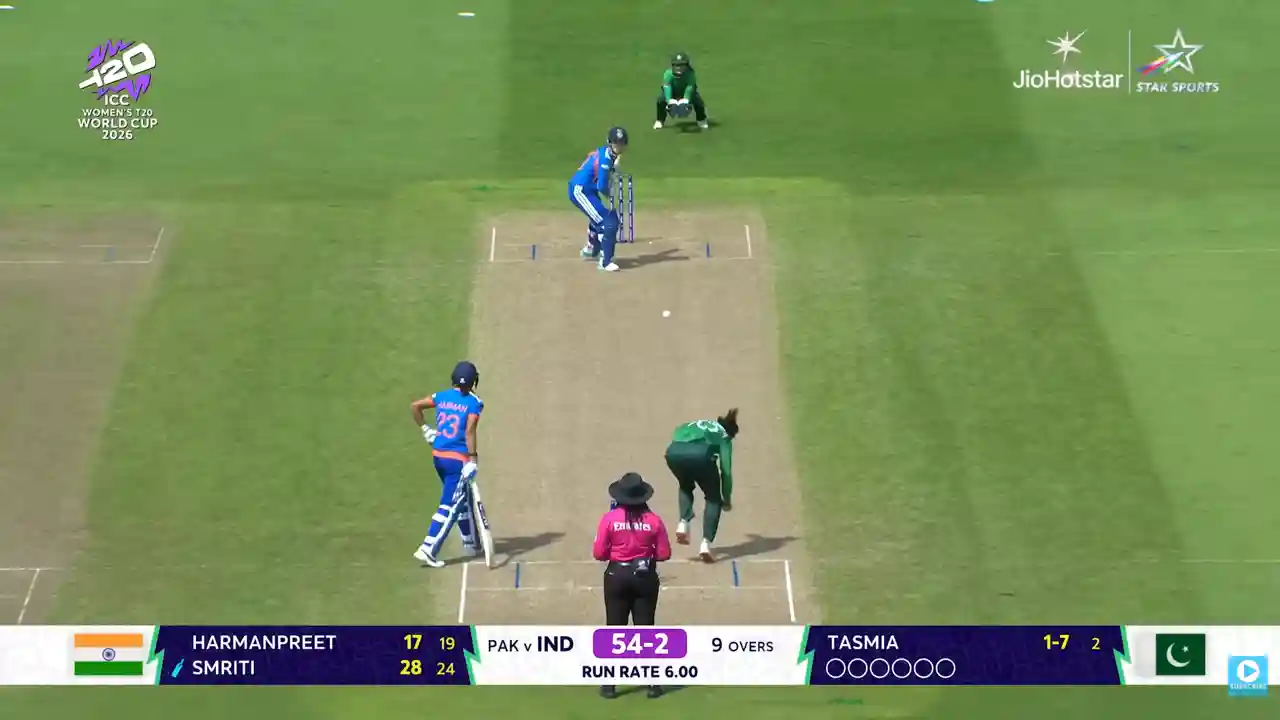
The 2026 ICC Women's T20 World Cup witnessed another memorable chapter in this rivalry as India registered a comprehensive 64-run victory over Pakistan in their opening Group A fixture at Edgbaston, Birmingham. Powered by a commanding batting performance from Smriti Mandhana and an exceptional five-wicket haul by Deepti Sharma, India began its World Cup campaign on a winning note while extending its dominance over Pakistan in ICC women's tournaments.
A Rivalry Beyond Cricket
India and Pakistan share one of the most celebrated rivalries in international sport. Political history, geographical proximity and decades of intense competition have ensured that every meeting between the two nations carries significance far beyond the boundary ropes.
In women's cricket, the rivalry has steadily grown in stature alongside the rapid development of the women's game. Increased television viewership, greater investment by cricket boards and the success of franchise leagues such as the Women's Premier League (WPL) have elevated the profile of women's cricket, making India-Pakistan contests major global sporting events.
Unlike bilateral series, which remain limited because of strained political relations, ICC tournaments and multi-nation competitions provide some of the few opportunities for the two teams to face each other. As a result, every encounter assumes enormous importance for players, supporters and broadcasters alike.
The Match: India Make a Strong Start
The much-anticipated Group A clash was played before a record group-stage crowd of 18,814 spectators at Edgbaston, highlighting the growing popularity of women's cricket. India won the toss and elected to bat first, posting an impressive total of 170 for 6 in their allotted 20 overs.
Opening batter Smriti Mandhana laid the foundation with an elegant 66 off 44 deliveries, combining fluent stroke play with intelligent strike rotation. She shared an important partnership with captain Harmanpreet Kaur, helping India recover after an early setback.
The middle order ensured that India maintained momentum during the latter half of the innings. Aggressive batting in the closing overs pushed the total well beyond the psychological 160-run mark, leaving Pakistan with a challenging target under scoreboard pressure.
Deepti Sharma's Match-Winning Spell
If Mandhana's innings gave India control with the bat, Deepti Sharma completely changed the contest with the ball.
Pakistan's chase never gathered momentum as India's spin attack consistently applied pressure. Deepti produced one of the finest bowling performances in Women's T20 World Cup history, claiming 5 wickets for just 10 runs in her four-over spell. It was the second five-wicket haul of her T20 International career and earned her the Player of the Match award.
Her disciplined bowling dismantled Pakistan's middle order, preventing any meaningful partnerships from developing. Supported by India's fielders and fellow bowlers, Deepti ensured that Pakistan were bowled out for 106 runs in 17 overs, handing India a convincing 64-run victory.
Individual Performances That Stood Out
Several Indian players made significant contributions to the victory.
Smriti Mandhana once again demonstrated why she remains one of the world's leading batters in white-ball cricket. Her well-paced innings combined classical stroke-making with aggressive intent, allowing India to build a competitive total.
Captain Harmanpreet Kaur played a composed supporting role during the middle overs, while Richa Ghosh added valuable runs towards the end of the innings, helping India maximise the final overs.
With the ball, Deepti Sharma stole the spotlight, but India's bowling unit collectively maintained disciplined lines and lengths throughout the innings. The spinners successfully exploited the conditions, while the pace bowlers ensured Pakistan never gained momentum during the Powerplay.
A Statement Victory
The significance of the victory extended beyond two points in the group stage.
Opening matches often shape a team's confidence in a major ICC tournament, and India's comprehensive win immediately strengthened its campaign. Defeating Pakistan also provided an important psychological advantage in one of cricket's most closely followed rivalries.
For Pakistan, the defeat exposed weaknesses in both batting and fielding, highlighting areas that required improvement in the remaining group-stage matches.
Although India's campaign later ended before the semi-finals following defeats to South Africa and Australia, the victory over Pakistan remained one of the team's standout performances in the tournament.
The Growing Popularity of Women's Cricket
One of the biggest takeaways from the match was the remarkable level of public interest it generated.
The attendance at Edgbaston set a new record for a Women's T20 World Cup group-stage fixture, reflecting the rapid growth of women's cricket across the world. Increased investment by cricket boards, professional domestic leagues and greater media coverage have significantly raised the profile of the women's game over the past decade.
India has played a central role in this transformation. The emergence of internationally recognised stars such as Smriti Mandhana, Harmanpreet Kaur, Jemimah Rodrigues, Shafali Verma and Deepti Sharma has inspired a new generation of young cricketers and attracted larger audiences to women's cricket.
India's Dominance Over Pakistan in ICC Events
Historically, India has maintained a strong record against Pakistan in ICC women's tournaments. Their disciplined bowling, experienced batting line-up and superior tournament experience have often given them the upper hand in high-pressure matches.
The 2026 victory further reinforced that trend, demonstrating India's ability to perform confidently against its biggest rival on the international stage. Such victories not only contribute to tournament standings but also strengthen the team's reputation as one of the leading forces in women's cricket.
What the Match Signifies
The India-Pakistan clash at the 2026 Women's T20 World Cup represented much more than a group-stage fixture. It reflected the growing competitiveness of women's cricket, the increasing commercial success of the sport and the expanding global audience that now follows the women's game with the same passion traditionally associated with men's cricket.
The match also highlighted the rising standard of cricket played by both nations, where tactical planning, athletic fielding and high-quality performances continue to elevate women's international cricket.
Conclusion
India's emphatic victory over Pakistan in the ICC Women's T20 World Cup 2026 was a statement performance that combined disciplined batting, outstanding bowling and clinical execution under pressure. Smriti Mandhana's fluent half-century and Deepti Sharma's remarkable five-wicket haul ensured India began its World Cup campaign with one of the tournament's most memorable victories.
Beyond the result, the match once again demonstrated why India-Pakistan contests remain among the biggest attractions in international cricket. As women's cricket continues to grow in popularity and competitiveness, encounters between the two neighbours are expected to remain defining moments of every major ICC tournament, drawing global audiences and further strengthening the sport's expanding legacy.
Video: Star Sports