


Noida International Airport Officially Opens: Commercial Flights Begin June 15, Marking New Era for Viksit UP and Viksit Bharat
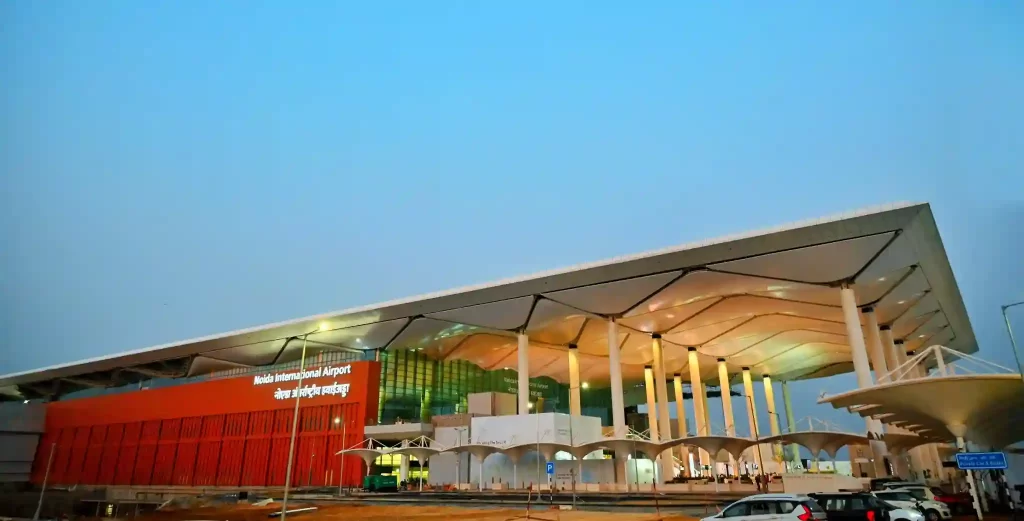
Noida, May 27, 2026 — Prime Minister Narendra Modi officially inaugurated Phase I of the Noida International Airport at Jewar in Gautam Buddha Nagar district of Uttar Pradesh on March 28, 2026, marking a transformative moment for India’s aviation sector and northern India’s connectivity. Noida International Airport at Jewar has officially opened for commercial operations, with flights scheduled to commence from June 15, 2026, marking a transformative moment for India’s aviation sector and northern India’s connectivity. Prime Minister Narendra Modi inaugurated the first phase of the airport earlier this month at Jewar in Gautam Buddha Nagar district of Uttar Pradesh, and the facility has now received final security clearance from the Bureau of Civil Aviation Security. The Prime Minister also laid the foundation stone for 40 acres of Maintenance, Repair, and Overhaul (MRO) facilities at the site during the inauguration ceremony. Speaking on the occasion, Modi declared this a new chapter for the Viksit UP and Viksit Bharat campaign, emphasizing that Uttar Pradesh has now emerged as one of the states with the highest number of international airports in India.Noida International Airport stands among the largest greenfield airport projects in the country, with Phase I developed at a total investment of approximately ₹11,200 crore under a Public-Private Partnership model. The airport will initially handle 12 million passengers per annum, with scalability up to 70 million passengers annually upon full development. Commercial flight operations officially begin June 15, following receipt of approval for its Aerodrome Security Programme from the Bureau of Civil Aviation Security, which certified that the airport’s security framework meets regulatory requirements for commercial operations. IndiGo will operate the first flight from NIA, marking the start of scheduled passenger services, followed shortly by Akasa Air and Air India Express.From Vision to Reality: A 23-Year Journey to CompletionThe airport project was first approved in 2003 during the tenure of former Prime Minister Atal Bihari Vajpayee, making this operational launch the culmination of a 23-year vision. Prime Minister Modi recalled that as soon as the current government was formed, the foundation was laid, construction happened, and now it has started operations. He expressed feeling doubly proud, first for having laid the foundation stone of this airport and now seeing it operational, and second because the name of this grand airport is linked to Uttar Pradesh, the state that chose him as its representative and made him a Member of Parliament.The airport will benefit numerous districts across western UP, including Agra, Mathura, Aligarh, Ghaziabad, Meerut, Etawah, Bulandshahr, and Faridabad, bringing new opportunities for farmers, small and medium enterprises, and the youth of the region. The site is positioned near freight corridors and logistics networks, supporting the movement of goods by air and rail. The area around Dadri, where freight routes converge, has been identified as a key logistics point for northern India. Prime Minister Modi pointed out that this area is becoming the hub of two major freight corridors with special railway tracks laid for goods trains, enhancing North India’s connectivity with the seas of Bengal and Gujarat.Economic Impact Connecting Western UP to Global MarketsPrime Minister Modi emphasized that airports are not just basic facilities in any country but give wings to progress. Due to the expansion of connectivity in the region, agricultural products of western UP will reach the global market in a much better way. The airport will bring numerous new opportunities for farmers, small and medium industries, and the youth of western Uttar Pradesh, with aircraft flying from here to the world, and the airport becoming a symbol of a developed Uttar Pradesh taking flight.The expansion of modern connectivity will further boost food processing prospects in western UP. Prime Minister Modi expressed gratitude to the farmers who gave up their lands to make this project a reality, noting that agriculture and farming hold great importance in the region’s economy. He highlighted that today, Noida is ready to welcome the entire world, and this whole area is strengthening the resolve of Aatmanirbhar Bharat. This multi-modal connectivity is making UP a major attraction for investors worldwide, as whatever farmers grow and industries produce here can now reach every corner of the world swiftly by land and by air.MRO Facility Lays Foundation for Aviation Self-RelianceAddressing a critical gap in India’s aviation ecosystem, Prime Minister Modi drew attention to the Maintenance, Repair, and Overhaul sector, noting that 85 percent of Indian aircraft still have to go abroad for MRO services. The government has resolved to make India self-reliant in the MRO sector, and the foundation stone of an MRO facility was laid at Jewar during the inauguration. When ready, it will serve aircraft from India and abroad, generating revenue for the country, keeping money within India, and creating numerous jobs for the youth.This facility will support aircraft servicing within India, where a significant share of such work is currently carried out overseas, reducing dependency on foreign MRO providers and saving foreign exchange. The government has decided to make India self-reliant in this sector as part of its broader economic policy framework, positioning India as a global hub for aircraft maintenance services.Operational Timeline and First Year ProjectionsThe airport will commence commercial flight operations from June 15 after appointing an Indian CEO, following the security regulator’s approval for its Aerodrome Security Programme. An airport official stated they are looking at 50-60 lakh passengers in the first year of operations. After domestic operations stabilize, they will launch international services, confident of going international before the end of 2026. The airport currently features one runway and one passenger terminal with a capacity to handle 12 million passengers annually, with its master plan including future expansion to accommodate over 70 million passengers each year.The launch follows the DGCA’s clearance granted in March, with PM Modi inaugurating the airport in late March. The airport said the June 15 start date marks the final stage of security clearance after regulatory concerns over a foreign CEO were addressed by appointing Chief Financial Officer Nitu Samra as interim CEO, replacing Swiss national
Shri Ram Yantra to Be Installed in Ayodhya Ram Mandir: President Murmu to Lead Mega Spiritual Event
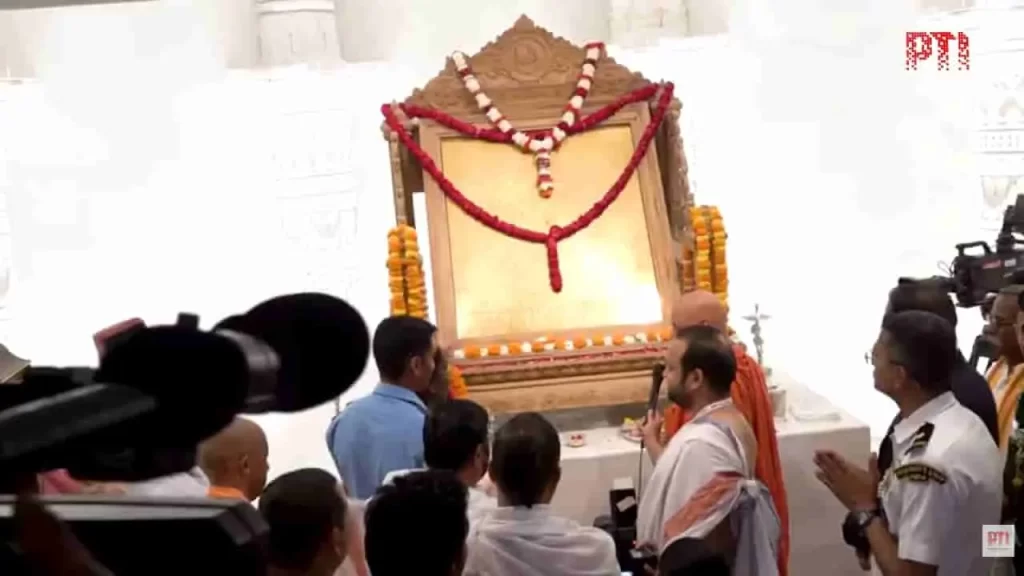
Ayodhya is preparing for another historic spiritual milestone as the Shri Ram Janmabhoomi temple gears up to host the installation of the Shri Ram Yantra on March 19, in the presence of President Droupadi Murmu on the auspicious first day of Chaitra Navratri and Hindu New Year (Varsha Pratipada).Historic ceremony on March 19The Shri Ram Yantra will be ceremonially installed on the upper floor of the Ram Mandir complex in a grand Vedic ritual that the Shri Ram Janmabhoomi Teerth Kshetra Trust is billing as the next major chapter after the pran pratishtha of Ram Lalla.President Droupadi Murmu will be the chief guest and is expected to arrive at the temple around late morning, with the main installation scheduled in an auspicious muhurat close to noon.The ceremony coincides with Chaitra Shukla Pratipada, which marks the beginning of the Vikram Samvat Hindu New Year and the first day of Chaitra Navratri, considered especially sacred for new beginnings and major religious undertakings.news.Around 7,000 invited participants, including seers, scholars, saints, key engineers, artisans, and workers who contributed to the construction of the Ram Mandir, are expected to attend and be felicitated by the Trust.hindi.Trust officials say that after the installation, devotees visiting the temple will be able to have darshan of both Ram Lalla and the Shri Ram Yantra during their visit.What is the Shri Ram Yantra?According to Shri Ram Janmabhoomi Teerth Kshetra general secretary Champat Rai, the Shri Ram Yantra was sent to Ayodhya about two years ago in a ceremonial procession led by seer Vijayendra Saraswati.The yantra is described as being based on Vedic mathematics and sacred geometry and is believed to be a medium that concentrates divine energies and attracts positive spiritual vibrations into the garbhagriha and temple complex.Until now, the yantra has been kept before the idol of Ram Lalla and worshipped daily as part of regular rituals; after March 19, it will be formally installed on an upper floor of the shrine as a permanent spiritual focal point.Priests and members of the Trust have emphasized that the installation has been timed with great care to align with an “extremely auspicious” muhurat on New Year day, reinforcing the belief that the yantra will strengthen the spiritual ambience of the entire complex.news.New rules for devotees: mobiles and weapons bannedIn parallel with preparations for the ceremony and the Chaitra Navratri–Ram Navami rush, the temple administration and district authorities have notified a stricter set of guidelines for devotees visiting the Ram Mandir.Champat Rai has clearly stated that mobile phones will now be completely banned inside the Shri Ram Janmabhoomi temple premises.Devotees will not be allowed to carry mobile phones beyond designated security points; this rule applies to all visitors, including those accompanied by personal security staff.Licensed weapons such as revolvers, pistols, swords, or other firearms are strictly prohibited in the temple complex, even if the person possesses valid legal licenses.An exception is being made for members of the Sikh community, who will be allowed to carry their traditional small kirpan in line with religious practice; the Trust has clarified that this exemption is purely out of respect for faith and is limited to the customary symbolic blade.Officials say these measures aim to strengthen security, reduce crowd-management challenges, and maintain a disciplined, distraction-free environment for darshan amid rapidly increasing footfall.Special arrangements for Chaitra Navratri and Ram NavamiChaitra Navratri this year runs from March 19 to March 27, culminating in Ram Navami, the birthday of Lord Ram, which traditionally sees some of the largest crowds in Ayodhya.To handle the surge of pilgrims, the Trust and administration are putting in place additional facilities and service arrangements:Fasting-friendly food: For devotees observing Navratri fasts, stalls and counters will offer appropriate items such as fruits, milk-based preparations, peanuts, butter, and light dishes made from potatoes and other vrat-compliant ingredients, so that those on fast are not inconvenienced during long queues and extended stays.Basic amenities: Adequate drinking water points and temporary as well as permanent toilet blocks are being arranged around the temple complex and in holding areas for queues, with more units to be added as crowd estimates firm up.Crowd flow and gates: The administration has indicated that detailed information on entry and exit gates, queue lanes, holding zones, and timing-wise crowd management plans will be shared in the days leading up to the main dates as assessments are finalized.Given the President’s visit on March 19, VIP darshan passes are expected to be suspended for certain time slots so that security and protocol arrangements can be managed smoothly.Appeal for orderly darshanThe Shri Ram Janmabhoomi Teerth Kshetra and district administration have jointly appealed to devotees to strictly follow the new guidelines, particularly the ban on mobile phones and weapons, and to cooperate with security forces during the high-traffic Navratri and Ram Navami period.Officials underline that adherence to these rules will not only enhance security but also ensure that all pilgrims, many of whom travel long distances, can experience peaceful, unhurried darshan of Ram Lalla and, after March 19, of the newly installed Shri Ram Yantra.For Ayodhya, which witnessed a landmark moment with the consecration of Ram Lalla in January and is now set for the formal installation of the Shri Ram Yantra on Hindu New Year, this year’s Chaitra Navratri is emerging as a powerful convergence of faith, symbolism, and meticulous planning.
Delhi–Meerut RRTS Fully Operational: India’s First Regional Rapid Transit Corridor Becomes a Reality
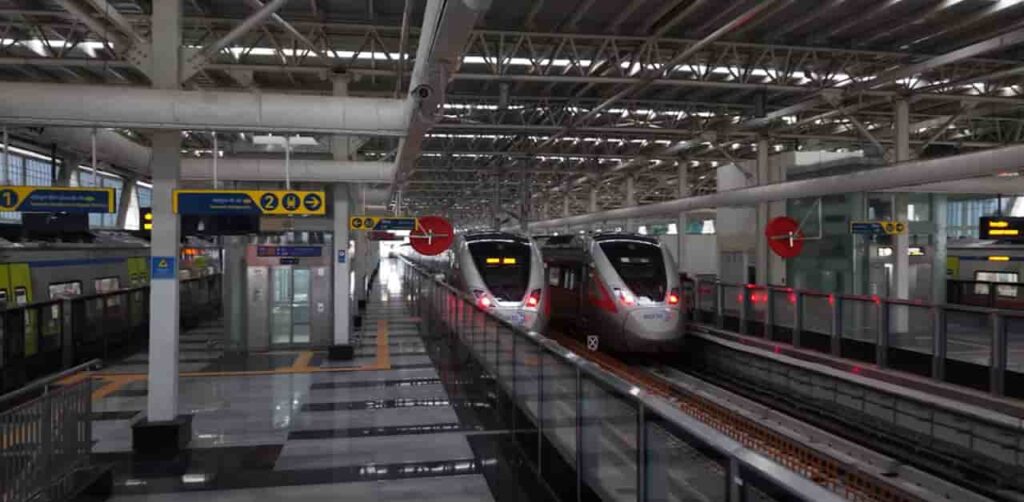
In a major milestone for India’s urban transport infrastructure, the full stretch of the Delhi–Meerut Regional Rapid Transit System (RRTS) has now been opened for public operations. Developed by the National Capital Region Transport Corporation (NCRTC), the corridor marks the country’s first semi-high-speed regional rail system, designed to significantly reduce travel time between Delhi and key cities in western Uttar Pradesh.The corridor connects Delhi, Ghaziabad, and Meerut, transforming daily commuting across the National Capital Region into a faster, more efficient experience.A High-Speed Alternative to Road TravelThe Delhi–Meerut RRTS corridor spans approximately 82 kilometres, making it one of the most advanced regional rail projects in the country. With trains designed to operate at a maximum speed of 180 km/h and an operational speed of around 160 km/h, the system drastically cuts down travel time.Commuters can now travel between Delhi and Meerut in less than one hour, compared to the earlier duration of over two to three hours by road, depending on traffic conditions. This is expected to ease congestion on highways and reduce dependence on private vehicles.Modern Stations and InfrastructureThe corridor includes over 20 strategically located stations, covering major residential, commercial, and transit hubs along the route. Key stations include:Sarai Kale Khan (Delhi)Anand ViharGhaziabadModinagarMeerut SouthMeerut CentralThese stations are equipped with modern facilities such as:Platform screen doorsAutomated ticketing systemsEscalators and elevatorsSeamless integration with metro and bus networksThe infrastructure has been designed keeping in mind accessibility, safety, and passenger comfort.Advanced Technology and Passenger ExperienceThe RRTS introduces a new standard of rail travel in India, combining speed with technology-driven convenience.Trains on the corridor are fully air-conditioned and feature:Ergonomic seatingDedicated luggage spaceOnboard information systemsWi-Fi connectivityCCTV surveillance for securityA separate premium coach has also been introduced, offering business-class-like seating and additional comfort for passengers willing to pay a higher fare.Integration with Urban Transport NetworksOne of the key advantages of the RRTS is its integration with existing urban transit systems. Stations such as Anand Vihar and Sarai Kale Khan connect with metro lines, railway stations, and bus terminals, enabling seamless last-mile connectivity.This multimodal approach is expected to encourage greater use of public transport and reduce traffic congestion in the region.Economic and Regional ImpactThe full operationalisation of the Delhi–Meerut RRTS corridor is expected to have far-reaching economic implications.Improved connectivity will:Boost real estate development along the corridorFacilitate faster movement of workforce between citiesEncourage business expansion beyond DelhiSupport balanced regional development in NCRCities like Ghaziabad and Meerut are likely to witness increased investment and urban growth as commuting becomes more convenient.Environmental BenefitsBy providing a fast and reliable alternative to road travel, the RRTS is also expected to contribute to environmental sustainability.Reduced vehicular traffic will lead to:Lower carbon emissionsDecreased fuel consumptionImproved air quality in the NCR regionThe project aligns with India’s broader goals of promoting sustainable and green mobility solutions.A New Era of Regional ConnectivityThe Delhi–Meerut RRTS is the first of several planned corridors under the regional rapid transit system network. Its successful implementation sets a benchmark for similar projects connecting other parts of the National Capital Region.With high-speed travel, modern infrastructure, and seamless connectivity, the corridor represents a significant leap in how intercity commuting is approached in India—bringing cities closer while improving quality of life for millions of daily commuters.