
Ayodhya is preparing for another historic spiritual milestone as the Shri Ram Janmabhoomi temple gears up to host the installation of the Shri Ram Yantra on March 19, in the presence of President Droupadi Murmu on the auspicious first day of Chaitra Navratri and Hindu New Year (Varsha Pratipada).
Historic ceremony on March 19
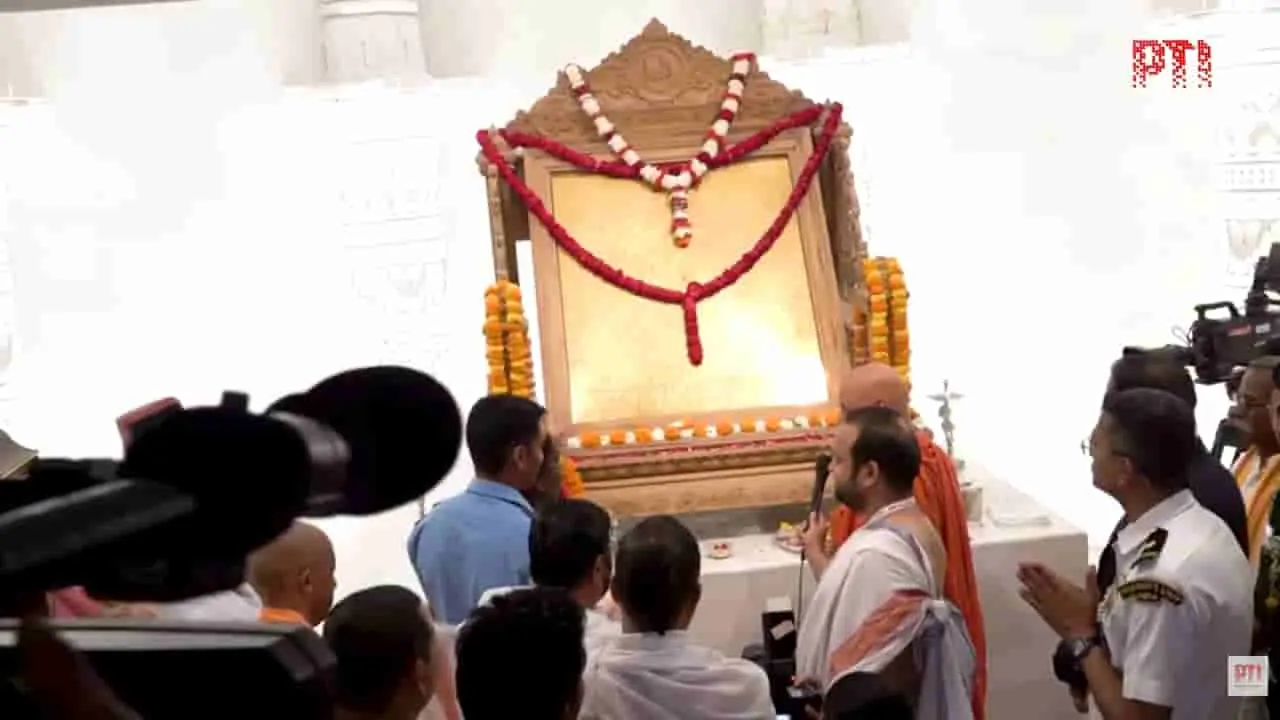
The Shri Ram Yantra will be ceremonially installed on the upper floor of the Ram Mandir complex in a grand Vedic ritual that the Shri Ram Janmabhoomi Teerth Kshetra Trust is billing as the next major chapter after the pran pratishtha of Ram Lalla.
- President Droupadi Murmu will be the chief guest and is expected to arrive at the temple around late morning, with the main installation scheduled in an auspicious muhurat close to noon.
- The ceremony coincides with Chaitra Shukla Pratipada, which marks the beginning of the Vikram Samvat Hindu New Year and the first day of Chaitra Navratri, considered especially sacred for new beginnings and major religious undertakings.news.
- Around 7,000 invited participants, including seers, scholars, saints, key engineers, artisans, and workers who contributed to the construction of the Ram Mandir, are expected to attend and be felicitated by the Trust.hindi.
Trust officials say that after the installation, devotees visiting the temple will be able to have darshan of both Ram Lalla and the Shri Ram Yantra during their visit.
What is the Shri Ram Yantra?
According to Shri Ram Janmabhoomi Teerth Kshetra general secretary Champat Rai, the Shri Ram Yantra was sent to Ayodhya about two years ago in a ceremonial procession led by seer Vijayendra Saraswati.
- The yantra is described as being based on Vedic mathematics and sacred geometry and is believed to be a medium that concentrates divine energies and attracts positive spiritual vibrations into the garbhagriha and temple complex.
- Until now, the yantra has been kept before the idol of Ram Lalla and worshipped daily as part of regular rituals; after March 19, it will be formally installed on an upper floor of the shrine as a permanent spiritual focal point.
Priests and members of the Trust have emphasized that the installation has been timed with great care to align with an “extremely auspicious” muhurat on New Year day, reinforcing the belief that the yantra will strengthen the spiritual ambience of the entire complex.news.
New rules for devotees: mobiles and weapons banned
In parallel with preparations for the ceremony and the Chaitra Navratri–Ram Navami rush, the temple administration and district authorities have notified a stricter set of guidelines for devotees visiting the Ram Mandir.
Champat Rai has clearly stated that mobile phones will now be completely banned inside the Shri Ram Janmabhoomi temple premises.
- Devotees will not be allowed to carry mobile phones beyond designated security points; this rule applies to all visitors, including those accompanied by personal security staff.
- Licensed weapons such as revolvers, pistols, swords, or other firearms are strictly prohibited in the temple complex, even if the person possesses valid legal licenses.
- An exception is being made for members of the Sikh community, who will be allowed to carry their traditional small kirpan in line with religious practice; the Trust has clarified that this exemption is purely out of respect for faith and is limited to the customary symbolic blade.
Officials say these measures aim to strengthen security, reduce crowd-management challenges, and maintain a disciplined, distraction-free environment for darshan amid rapidly increasing footfall.
Special arrangements for Chaitra Navratri and Ram Navami
Chaitra Navratri this year runs from March 19 to March 27, culminating in Ram Navami, the birthday of Lord Ram, which traditionally sees some of the largest crowds in Ayodhya.
To handle the surge of pilgrims, the Trust and administration are putting in place additional facilities and service arrangements:
- Fasting-friendly food: For devotees observing Navratri fasts, stalls and counters will offer appropriate items such as fruits, milk-based preparations, peanuts, butter, and light dishes made from potatoes and other vrat-compliant ingredients, so that those on fast are not inconvenienced during long queues and extended stays.
- Basic amenities: Adequate drinking water points and temporary as well as permanent toilet blocks are being arranged around the temple complex and in holding areas for queues, with more units to be added as crowd estimates firm up.
- Crowd flow and gates: The administration has indicated that detailed information on entry and exit gates, queue lanes, holding zones, and timing-wise crowd management plans will be shared in the days leading up to the main dates as assessments are finalized.
Given the President’s visit on March 19, VIP darshan passes are expected to be suspended for certain time slots so that security and protocol arrangements can be managed smoothly.
Appeal for orderly darshan
The Shri Ram Janmabhoomi Teerth Kshetra and district administration have jointly appealed to devotees to strictly follow the new guidelines, particularly the ban on mobile phones and weapons, and to cooperate with security forces during the high-traffic Navratri and Ram Navami period.
Officials underline that adherence to these rules will not only enhance security but also ensure that all pilgrims, many of whom travel long distances, can experience peaceful, unhurried darshan of Ram Lalla and, after March 19, of the newly installed Shri Ram Yantra.
For Ayodhya, which witnessed a landmark moment with the consecration of Ram Lalla in January and is now set for the formal installation of the Shri Ram Yantra on Hindu New Year, this year’s Chaitra Navratri is emerging as a powerful convergence of faith, symbolism, and meticulous planning.